The New York Times digital subscription

Search documents
Warren Buffett's Berkshire Hathaway Bought Shares of The New York Times. Should You?
The Motley Fool· 2026-02-18 04:31
Core Insights - Berkshire Hathaway initiated a 3% stake in The New York Times during Q4, valued at over $350 million, which is approximately 0.1% of Berkshire's overall portfolio [2][3]. Financial Performance - The New York Times reported a 10.4% year-over-year increase in total revenue, reaching $802 million [6]. - Digital-only subscription revenue rose by 13.9% year-over-year, while digital advertising revenue increased by 24.9% [6]. - Adjusted earnings per share grew by 11.2% year-over-year to $0.89 [6]. Future Guidance - For Q1 2026, The New York Times expects digital-only subscription revenue to grow by 14% to 17% year-over-year and digital advertising revenue to increase in the high teens to low twenties [7]. - Management anticipates total advertising revenue to grow at a low double-digit rate year-over-year [7]. Strategic Focus - The New York Times is emphasizing video as a key area for strategic investment, aiming to enhance its presence in video journalism [10]. - The company's reputation as a trusted source may serve as a long-term catalyst, especially as AI-generated content becomes more prevalent [8][9]. Stock Valuation - The New York Times has a market capitalization of over $12 billion, with shares trading at about 35 times earnings and 28 times analysts' consensus forecast for the next 12 months [11][12]. - The stock has increased more than 35% from lower trading levels in Q4, suggesting that the entry point for new investors may not be optimal at this time [11][12].


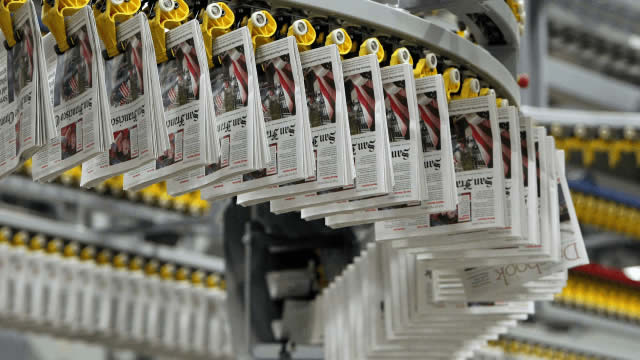
Warren Buffett Dumped Shares of Amazon, Apple, and Bank of America, and Added One Brand-New Stock in His Final Quarter Before Retirement
The Motley Fool· 2026-02-18 00:46
Core Insights - Warren Buffett's final quarter as CEO of Berkshire Hathaway saw significant net selling activity, with a notable $352 million purchase of The New York Times Co. [2][12] Selling Activity - Berkshire Hathaway was a net seller of stocks for 13 consecutive quarters leading up to Buffett's retirement, with significant reductions in stakes in Amazon, Apple, and Bank of America [4] - The reduction in Amazon shares was by 77%, while Apple and Bank of America stakes were cut by 75% and 50%, respectively [4][9] Valuation Considerations - The selling activity appears to be driven by valuation concerns, as the current market valuations of Apple and Bank of America have significantly increased since Buffett's initial investments [5][9] - Apple shares now have a trailing P/E ratio of 33, compared to the low-to-mid teens when initially purchased [8] - Bank of America shares are now valued at a 37% premium to book value, contrasting with a 62% discount at the time of Berkshire's investment [9] New Investment - The standout purchase in Buffett's final quarter was 5,065,744 shares of The New York Times Co., valued at approximately $352 million [12] - The New York Times has seen growth in digital subscriptions, reaching 12.78 million, and has strong pricing power and double-digit growth in digital advertising [15] - Despite the positive outlook, the valuation of The New York Times stock is considered aggressive, with a forward P/E of 24 [16]


What Everyone Missed In NYT's 12 Million-Subscriber Story
Forbes· 2025-11-11 14:50
Core Insights - The New York Times has successfully transitioned into a high-margin digital subscription service, leveraging engagement across various content areas, which is reflected in its strong quarterly performance [2] Subscriber Growth - The Times ended Q3 with 12.33 million total subscribers, an increase of 460,000 from the previous quarter, with digital-only subscribers reaching 11.76 million, making up nearly 95% of the total [4] - Subscription growth has helped offset weaknesses in digital advertising, indicating revenue stability [4] Business Model Transformation - For the first time, bundle and multiproduct customers represented over half of all subscriptions (51%), up from less than a third two years ago, which is significant for generating higher average revenue per user (ARPU) and lower churn rates [5] - The average revenue per user for bundle subscribers is $12.84, approximately 31% higher than the overall digital-only average of $9.79, indicating a widening ARPU gap and potential for margin leverage [5] ARPU and Income Growth - Digital-only ARPU increased by 3.6% year over year in Q3 2025, driven by improved pricing on bundles and retention of higher-value cohorts, which is a strong indicator for future operating income growth [6] - If the ARPU trend continues, it could support mid-single-digit annual operating income growth without significant subscriber increases, which is important given the company's approximately 24x forward earnings multiple [7] Shift in Subscriber Composition - Pure news subscribers now account for only 13% of the total subscriber base, as the company shifts towards an all-access model, enhancing revenue per reader and retention rates [8] - This strategy emphasizes profitability per user over sheer scale, aligning with market preferences for quality revenue in a high-rate environment [8] Market Positioning - With strong pricing power, increasing recurring revenue, and a growing base of multi-product subscribers, the New York Times is positioned for sustained double-digit EPS growth, even amid a sluggish advertising environment [9]