VSS Unity

Search documents
终于不“逃票”了?维珍银河将发射首架商业火箭进行太空飞行
Xin Lang Ke Ji· 2025-11-26 07:42
Core Insights - Virgin Galactic is set to conduct its first commercial flight with a crew of three Italian personnel, marking a significant milestone for the company in the space tourism industry [1][3] Company Overview - Virgin Galactic, founded by Richard Branson in 2004, is one of the few private spaceflight companies alongside SpaceX and Blue Origin, catering to wealthy individuals willing to pay for suborbital space experiences [3][6] - The company aims to demonstrate the safety of rocket flights to the public, especially after a tragic incident in 2014 that resulted in a fatality [6] Flight Details - The flight, named Galactic 01, will take place in New Mexico, reaching an altitude of approximately 50 miles (80 kilometers) [1][3] - The mission is defined as a scientific endeavor rather than a typical space tourism trip, with the crew planning to collect biometric data and study the behavior of certain materials in microgravity [3][4] - The flight is expected to last 90 minutes, with the spacecraft being released from a carrier aircraft at around 50,000 feet (15.24 kilometers) [4][5] Future Plans - If successful, Virgin Galactic plans to conduct another flight in early August and aims for monthly flights thereafter [6] - The company anticipates booking its first 1,000 paying customers at a price of approximately $250,000 per seat, with a vision to establish a fleet capable of 400 flights annually [6] Industry Context - The definition of spaceflight is a contentious issue within the industry, with NASA and the U.S. Air Force defining astronauts as those who fly above 50 miles (80 kilometers) [6] - Blue Origin, led by Jeff Bezos, has conducted multiple commercial flights and has criticized Virgin Galactic for not reaching the internationally recognized boundary of space, known as the Kármán line, which is above 62 miles (100 kilometers) [7]


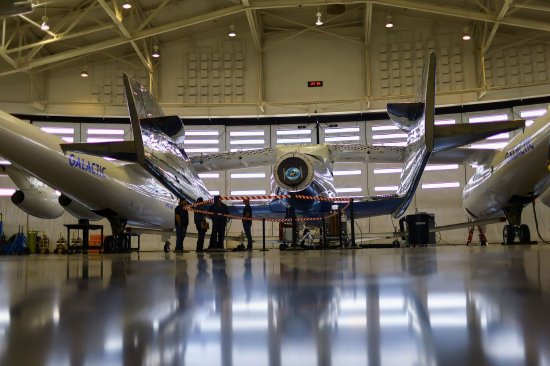
What's Next for Virgin Galactic?
Benzinga· 2025-11-18 16:51
Core Viewpoint - Virgin Galactic Holdings, Inc. has settled a shareholder class action lawsuit for $8.5 million, addressing allegations of concealing safety issues related to its Unity 22 mission, which has led to ongoing investor concerns about the company's operational viability and commercialization timeline [1][2][4]. Financial Position and Litigation Impact - The company reported a revenue of $0.4 million for Q2 2025, a significant decrease from $4.2 million in Q2 2024, as it pauses commercial spaceflights to focus on Delta Class production [5]. - For the trailing twelve months ending June 30, 2025, total revenue was approximately $7.04 million, with a net loss of $67.3 million in Q2 2025, improved from $93.8 million a year earlier due to a 34% reduction in operating expenses [5][6]. - As of June 30, 2025, Virgin Galactic held $508 million in cash and equivalents against total debt of $421.3 million, resulting in a net cash position of approximately $87 million and a debt-to-equity ratio of 159.9% [6][8]. - The expected legal impact from the settlement and potential additional liabilities is approximately $21 million, which is minimal compared to the ongoing operational burn rate [7][8]. Strategic Restructuring and Forward Outlook - The company has raised $86.3 million through equity offerings in the first half of 2025, resulting in a 70% dilution relative to December 2024 levels, highlighting its reliance on equity markets [10]. - New partnerships, including a suborbital research mission with Purdue University, indicate efforts to diversify operations [11]. - The company is on track to complete initial flight-control testing and expects to finish wing and fuselage assemblies by late Q4 2025 or early Q1 2026, aiming for a commercial debut in mid-to-late 2026 [11]. Market Performance and Investor Sentiment - Virgin Galactic's stock has seen a cumulative decline of over 85% from its post-SPAC peak, reflecting investor concerns about cash burn and execution risks related to the 2026 commercialization target [9][12]. - The settlement is viewed as a reputational benefit, potentially resetting investor sentiment from chronic under-delivery to cautious optimism, provided that execution remains on track [13].