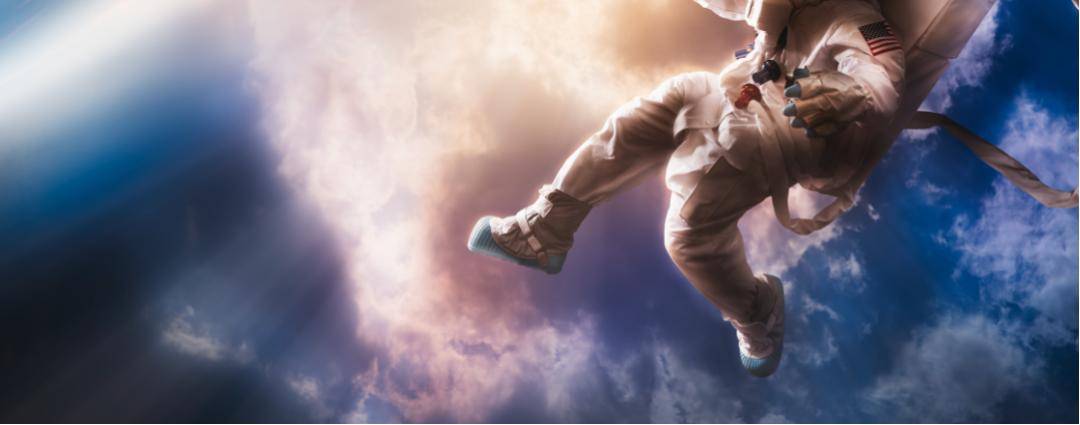
新谢泼德号

Search documents
商业火箭:聚焦技术突破,加速商业落地(附50页PPT)
材料汇· 2026-03-10 16:16
Core Viewpoint - The article discusses the current state and future prospects of the global launch vehicle industry, highlighting the significant advancements in both commercial and national space programs, particularly focusing on the leadership of SpaceX and the rapid growth of domestic private enterprises in China [2][3][4]. Global Landscape - In 2025, there will be a total of 324 space launch missions globally, representing a 25% increase from 2024. The United States leads in launch frequency, while China ranks second, with the gap between major space-faring nations widening [2][34]. - The total payload mass launched globally in 2025 is projected to be 3140.6 tons, with the U.S. accounting for 84.38% and China for 10.36%. The U.S. primarily focuses on commercial payloads [2][41]. Commercial Space Launch Developments - SpaceX has established itself as the dominant player in the commercial space sector, leveraging reusable rocket technology and a comprehensive business model that includes satellite deployment and applications. Its valuation reached approximately $800 billion by December 2025, with plans for an IPO in 2026 [3][48]. - Blue Origin and Rocket Lab are also making strides, with Blue Origin achieving successful recovery of its New Glenn rocket and Rocket Lab focusing on high-frequency launches with small rockets [3][4]. Domestic Progress in China - The domestic commercial rocket sector is characterized by a leading role from state-owned enterprises and rapid growth of private companies. The industry is gradually improving its supply chain and making breakthroughs in reusable rocket technology [4]. - By the end of 2025, several private companies, including Blue Arrow Aerospace and Tianbing Technology, are preparing for IPOs, with Blue Arrow's estimated market capitalization at 748 billion yuan, significantly lower than SpaceX [4]. - In terms of technology validation, both Zhuque-3 and Long March 12A achieved second-stage orbit but failed in first-stage recovery, indicating ongoing technical challenges [4]. Cost Structure of Launch Vehicles - The cost structure of launch vehicles includes rocket costs, launch costs, measurement and control costs, and insurance fees. The rocket cost is the most significant controllable cost, accounting for about 53% of the total launch cost for SpaceX's Falcon 9 [21][27]. - Hardware costs are notably high, with the first stage of rockets representing the largest cost component. Reusability is seen as a critical avenue for cost reduction in commercial launches [27][28]. SpaceX's Technological Innovations - SpaceX has transitioned from parachute recovery to vertical landing for its Falcon 9 rockets, achieving significant milestones in reusability and operational efficiency [49][51]. - The Starship system, which is the largest and most powerful reusable rocket, has undergone multiple flight tests, with plans for its third generation to achieve a payload capacity of over 100 tons by 2026 [66].

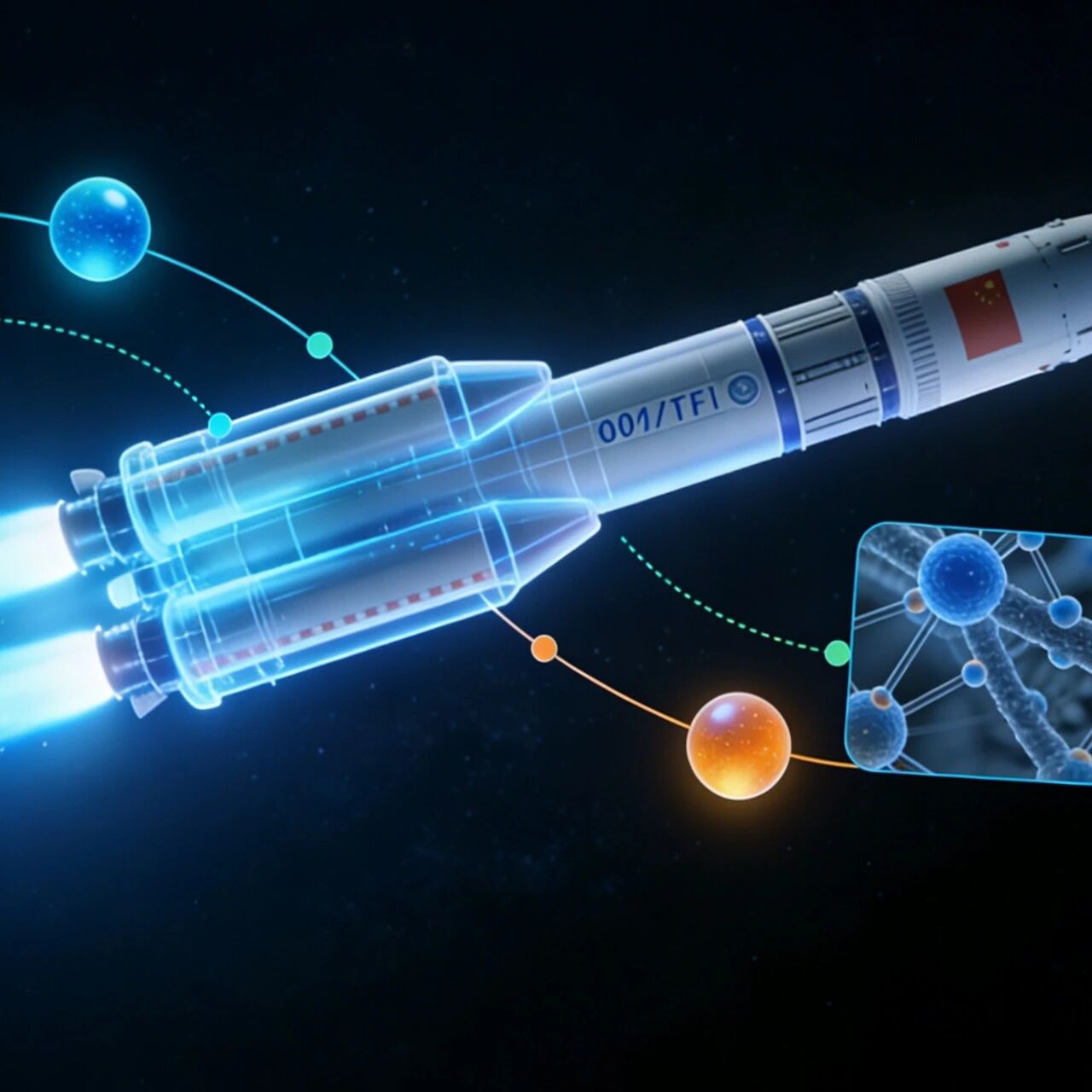
从碳纤维到不锈钢:可回收火箭材料选型变革,揭秘97%降本核心
材料汇· 2026-01-24 15:44
Core Viewpoint - The core competition in commercial aerospace has shifted from "can it go to space" to "can it go to space repeatedly at low cost," with the key to this shift lying in the materials used for reusable rockets, which are essential for both technological breakthroughs and cost reduction [3][4]. Group 1: Material Selection Principles - Reusable rockets must meet three critical criteria: extreme environmental adaptability, durability for multiple uses, and cost-effective mass production [6][7]. - The materials must withstand temperatures from -196°C to 1200°C, endure high-pressure combustion, and resist wear and tear to minimize maintenance costs after recovery [6][7]. Group 2: Structural Material Analysis - The main structure of reusable rockets includes the airframe, propulsion system, recovery landing system, fairing, and navigation control system, with each component requiring targeted material selection [9]. - The airframe has transitioned from a focus on lightweight materials to practical applications, with stainless steel becoming the mainstream choice due to its low cost and ability to withstand extreme conditions [10][14]. Group 3: Propulsion System Requirements - The propulsion system, which includes the engine combustion chamber and nozzle, must endure temperatures exceeding 2000°C, necessitating materials that are heat-resistant and capable of withstanding high-pressure loads [16][17]. Group 4: Recovery Landing System - The recovery landing system is crucial for reusable rockets, requiring materials that can absorb impact loads during landing and withstand aerodynamic heating during re-entry [20][21]. Group 5: Fairing and Navigation Control System - The fairing protects payloads and must be lightweight, insulated, and vibration-resistant, while the navigation control system components need to function reliably under extreme conditions [23][25]. Group 6: Material Mixing Trends - The trend in material selection for reusable rockets has moved towards a combination of materials tailored for specific functions, balancing cost, performance, and reliability [26][28]. - This approach avoids the high costs associated with carbon fiber and the fatigue issues of aluminum-lithium alloys while leveraging the strengths of stainless steel [28]. Group 7: Future Trends in Material Innovation - Future developments in reusable rocket materials will focus on enhancing stainless steel performance and breakthroughs in low-cost composite materials, potentially increasing the number of reuse cycles and reducing launch costs significantly [30][31].
90后央视女主播,创业造飞船
盐财经· 2026-01-24 09:56
Core Viewpoint - The article discusses the emergence of Beijing ChuanYueZhe Manned Space Technology Co., a private space tourism company in China, which aims to offer suborbital flights at a competitive price compared to international counterparts, highlighting the potential growth of the space tourism industry [4][14][25]. Company Overview - Beijing ChuanYueZhe was founded in January 2023 and is the first private company in China to develop reusable spacecraft and operate space tourism [15]. - The company has secured national-level commercial manned space project approval and has raised several rounds of funding, including a 30 million yuan angel investment from QiFu Capital [15]. - The core product is the "ChuanYueZhe No. 1" spacecraft, which recently completed successful testing of its landing buffer system, making it the third commercial space company globally to master this technology [16][19]. Space Tourism Market Potential - The global space tourism market is projected to exceed $800 billion by 2040, equivalent to over 5.7 trillion yuan, indicating significant growth potential [26]. - Suborbital tourism is currently the most popular segment due to its relatively mature technology and lower price points [27]. Competitive Landscape - The global space tourism market is dominated by U.S. companies, with the top three holding nearly 70% market share. SpaceX leads with orbital flights priced between $50 million to $90 million, while Blue Origin and Virgin Galactic focus on suborbital flights priced around $80,000 to $100,000 and $60,000, respectively [30][31][32]. - ChuanYueZhe's ticket price of 3 million yuan (approximately $430,000) is lower than that of its competitors, making it an attractive option for wealthy individuals seeking space experiences [33]. Future Plans - The company aims to conduct its first flight in 2028, with plans to expand to near-Earth orbit by 2032 and lunar orbit tourism by 2038, with a long-term goal of reducing ticket prices to make space travel accessible to the general public [21][25].

90后央视女主播创业造飞船,上太空300万/人,已有明星签约
3 6 Ke· 2026-01-23 12:06
Company Overview - Beijing ChuanYueZhe Manned Space Technology Co., Ltd. is a private aerospace company founded in January 2023, headquartered in Haidian, Beijing [5] - It is the first domestic company to develop reusable spacecraft and operate space tourism, having received national-level commercial manned space project approval [6] - The company has successfully completed several funding rounds, including seed funding and an angel round investment of 30 million from QiFu Capital [6] Product and Technology - The company's core product is the "ChuanYueZhe No.1" spacecraft, which is the first commercial reusable manned spacecraft in China [6][8] - The spacecraft can accommodate up to 7 people and features a spacious cabin of 25 cubic meters with a large window measuring 1.2 meters by 1 meter [9] - ChuanYueZhe has become the third commercial aerospace company globally to master key technologies for reusable spacecraft, following SpaceX and Blue Origin [8] Market Potential - The global space tourism market is projected to exceed $800 billion by 2040, equivalent to over 5.7 trillion RMB, indicating significant growth potential in the industry [12] - Suborbital tourism is currently the most popular segment due to its relatively mature technology and lower price points, attracting wealthy individuals willing to spend tens of thousands of dollars for a brief experience in space [12] Competitive Landscape - The global space tourism market is dominated by American companies, with the top three holding nearly 70% market share [13] - SpaceX leads the market with tickets priced between $50 million to $90 million for near-Earth orbit experiences, while Blue Origin offers suborbital flights at approximately $80,000 to $100,000 [13] - ChuanYueZhe's ticket price of 3 million RMB (approximately $43,000) is competitive compared to international offerings, making it an attractive option for potential customers [13] Future Plans - The company has a three-step plan: to conduct suborbital flights by 2028, reach low Earth orbit by 2032, and aim for lunar orbit tourism by 2038 [9] - The goal is to reduce ticket prices significantly through high reusability, eventually making space travel accessible to the general public [9]

中国版太空旅游要来了?
Shang Hai Zheng Quan Bao· 2026-01-14 03:21
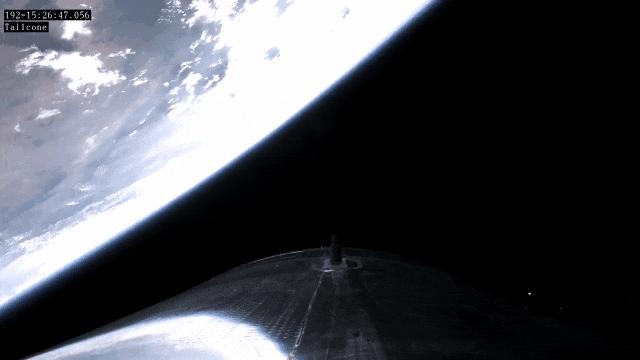
Core Viewpoint - The successful suborbital flight test of the Li Hong-1 spacecraft by China Aerospace Yu Hang marks a significant step towards the development of space manufacturing, experiments, medicine, and tourism, laying a solid technical foundation for future endeavors in these fields [1][3]. Group 1: Company Developments - The Li Hong-1 spacecraft achieved a flight altitude of approximately 120 kilometers, crossing the Kármán line and entering space, showcasing its low launch cost, high flexibility, and capability to recover experimental payloads [3]. - The spacecraft is designed to support microgravity scientific experiments and in-situ near-space exploration, providing over 300 seconds of stable and reliable experimental conditions [3]. - Future upgrades to the Li Hong-1 will enable it to have a minimum orbital stay of one year and a reuse count of at least ten times, catering to high-precision needs in on-orbit manufacturing [3]. - China Aerospace Yu Hang plans to conduct the first manned flight of the reusable Li Hong spacecraft in 2028, with ticket prices estimated between 2 million to 3 million yuan [3]. Group 2: Industry Landscape - Multiple domestic companies, including Deep Blue Aerospace and Chuangyue, are entering the space tourism market, with Deep Blue Aerospace selling tickets for suborbital flights through a live-streaming platform [4]. - The "Space Journey" by Deep Blue Aerospace is scheduled for 2027, utilizing a combination of reusable rockets and crewed spacecraft, with a flight duration of approximately 12 minutes and a maximum altitude of 100 to 150 kilometers [4]. - Chuangyue is recognized as the first commercial manned space technology company in China, with plans for its first crewed spacecraft, CYZ1, entering engineering development in 2025 [4]. - As of now, Chuangyue has signed contracts with nearly 20 space tourists, including notable figures from various fields [4]. Group 3: International Context - Internationally, there have been several precedents for suborbital space tourism, with companies like Blue Origin and Virgin Galactic successfully conducting commercial flights [6][7]. - Blue Origin's New Shepard has completed multiple crewed flights, while Virgin Galactic's SpaceShipTwo has also carried ordinary tourists into suborbital space [6][7]. - SpaceX remains the only company offering orbital flights for civilians, with ticket prices ranging from 20 million to 50 million dollars [7].
群殴 “马保国”
债券笔记· 2025-12-26 14:41
Group 1: Equity Market - The U.S. follows a "private sector-led, government-assisted" approach, where the government acts as an "angel investor" and major customer, while companies drive their own growth [8] - SpaceX is highlighted as a leading player, with its Falcon 9 rocket achieving high recovery rates and the Starlink project amassing over 8 million users, showcasing its strong revenue potential [8][9] Group 2: Commercial Space Race - In the U.S., private companies like Blue Origin and Rocket Lab are competing in the commercial space sector, with Blue Origin focusing on space tourism and Rocket Lab targeting the small satellite market [10] - In China, state-owned enterprises lead the way in commercial space, with China Aerospace Science and Technology Corporation (CASC) and China Aerospace Science and Industry Corporation (CASIC) playing pivotal roles in various space missions and innovations [11] - The private sector in China is also emerging, with companies like Blue Arrow Aerospace and Tianbing Technology developing reusable rockets and innovative propulsion systems [12][13] Group 3: Market Dynamics and Challenges - Key areas of focus include reusable rockets, satellite internet, and AI-enabled space computing, which are seen as crucial for reducing costs and expanding market opportunities [14] - Challenges include the stability of reusable rocket technology and the need for breakthrough applications to create a commercial ecosystem in the space industry [14] Group 4: A-Share Market Performance - The A-share market shows positive momentum, with the Shanghai Composite Index rising by 0.47% and a total trading volume of 1.92 trillion yuan, indicating strong investor sentiment [15] Group 5: Macro and Fixed Income - The bond market is characterized by strong short-term bonds, with the 10-year government bond yield at 1.837% [16] - The central bank's operations include a net injection of 1 trillion yuan through MLF, ensuring ample liquidity in the market [16] Group 6: International Relations and Currency - The U.S. has announced the end of its trade investigation into Chinese chips, which is expected to ease trade tensions and positively impact the technology sector [16] - The Chinese yuan is strengthening, nearing the 7.0 mark against the dollar, supported by strong trade surpluses and favorable economic conditions [16]

终于不“逃票”了?维珍银河将发射首架商业火箭进行太空飞行
Xin Lang Ke Ji· 2025-11-26 07:42
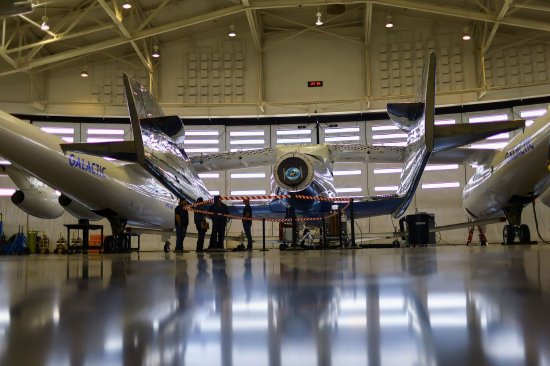
Core Insights - Virgin Galactic is set to conduct its first commercial flight with a crew of three Italian personnel, marking a significant milestone for the company in the space tourism industry [1][3] Company Overview - Virgin Galactic, founded by Richard Branson in 2004, is one of the few private spaceflight companies alongside SpaceX and Blue Origin, catering to wealthy individuals willing to pay for suborbital space experiences [3][6] - The company aims to demonstrate the safety of rocket flights to the public, especially after a tragic incident in 2014 that resulted in a fatality [6] Flight Details - The flight, named Galactic 01, will take place in New Mexico, reaching an altitude of approximately 50 miles (80 kilometers) [1][3] - The mission is defined as a scientific endeavor rather than a typical space tourism trip, with the crew planning to collect biometric data and study the behavior of certain materials in microgravity [3][4] - The flight is expected to last 90 minutes, with the spacecraft being released from a carrier aircraft at around 50,000 feet (15.24 kilometers) [4][5] Future Plans - If successful, Virgin Galactic plans to conduct another flight in early August and aims for monthly flights thereafter [6] - The company anticipates booking its first 1,000 paying customers at a price of approximately $250,000 per seat, with a vision to establish a fleet capable of 400 flights annually [6] Industry Context - The definition of spaceflight is a contentious issue within the industry, with NASA and the U.S. Air Force defining astronauts as those who fly above 50 miles (80 kilometers) [6] - Blue Origin, led by Jeff Bezos, has conducted multiple commercial flights and has criticized Virgin Galactic for not reaching the internationally recognized boundary of space, known as the Kármán line, which is above 62 miles (100 kilometers) [7]
贝佐斯追赶马斯克:新格伦号二飞能否扳回一局?
3 6 Ke· 2025-11-14 09:41
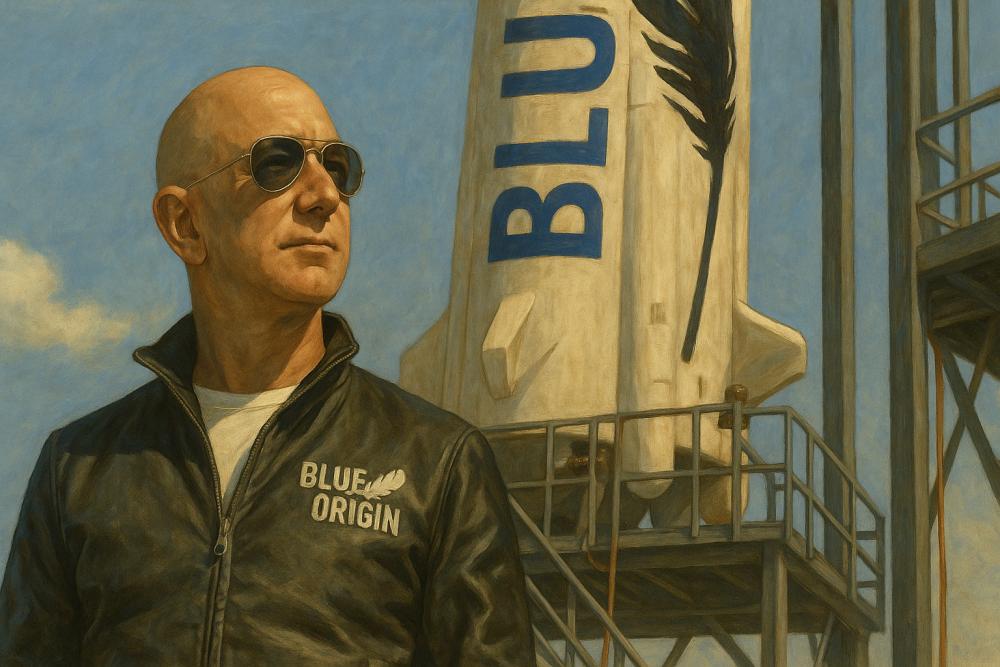
Core Viewpoint - Blue Origin's "New Glenn" heavy rocket successfully completed its second orbital flight mission, marking a significant step in its development and a competitive challenge to SpaceX in the commercial space sector [1][3]. Group 1: Launch Details - The "New Glenn" rocket was launched on November 13, 2023, after multiple delays due to adverse weather conditions, successfully entering space and landing its booster on an unmanned platform in the Atlantic [1][2]. - This mission's primary objective was to deliver NASA's ESCAPADE dual Mars orbiter, representing NASA's first Mars exploration mission in five years [3]. Group 2: Development History - Blue Origin was founded by Jeff Bezos in 2000, while SpaceX was established by Elon Musk in 2002, leading to a competitive landscape where Blue Origin has been perceived as a follower [3][4]. - The development of the "New Glenn" rocket has been a lengthy process, with its core technology, the BE-4 engine, being in development since 2011, and the rocket's design evolving significantly over the years [5][6]. Group 3: Funding and Strategy - Blue Origin's funding model relies on Bezos's continuous investment from Amazon stock sales, allowing the company to focus on long-term goals without external financing pressures [6][8]. - The company has made strategic decisions, such as securing contracts for NASA's Artemis lunar program and Amazon's Kuiper satellite constellation, which provide stable revenue and technical validation opportunities [8]. Group 4: Competitive Landscape - The competition between Blue Origin and SpaceX represents two distinct philosophies in space exploration, with Blue Origin adopting a more cautious, incremental approach compared to SpaceX's aggressive innovation strategy [4][11]. - The "New Glenn" rocket has a low Earth orbit capacity of 45 tons, while SpaceX's Starship can carry over 100 tons, highlighting the differences in their design philosophies and operational capabilities [11][12]. Group 5: Future Missions - Upcoming missions for the "New Glenn" rocket include the "Blue Moon Pathfinder 1" in January 2026, which will test a lunar lander prototype, and the deployment of Amazon's first 49 satellites for the Kuiper project [16][17]. - The rocket is expected to conduct up to eight launches per year, emphasizing a business model focused on timely launches, even if payloads are not ready [17].
太空旅游何时成行
Jing Ji Ri Bao· 2025-09-13 22:11
Core Viewpoint - The establishment of China's first commercial spaceflight propulsion system testing platform marks a significant step towards the realization of space tourism, with the launch of the reusable "Lihong" series spacecraft aimed at providing space tourism services by 2028 [1][3]. Group 1: Challenges in Space Tourism - The transition from concept to norm in space tourism faces three major challenges: the development of reusable launch vehicles, ensuring life support systems for crew safety, and controlling costs [1][2]. - Developing reusable launch vehicles is crucial for reducing costs, but involves complex challenges in materials science, propulsion technology, and control engineering [1]. - Life support systems must be fail-safe due to extreme conditions in space, and any oversight could lead to catastrophic outcomes [2]. - Cost remains a significant barrier, with current prices for space travel being prohibitively high, such as SpaceX's $55 million for orbital travel and Virgin Galactic's $450,000 for suborbital flights [2]. Group 2: Market Potential and Support - Despite the challenges, the space tourism industry shows promising prospects, with companies like Virgin Galactic and Blue Origin already conducting suborbital flights, and SpaceX sending tourists to the International Space Station [3]. - Increased policy support in China is fostering the growth of commercial rocket and satellite companies, with commercial spaceflight being recognized as a new growth engine in government reports [3][4]. - Predictions suggest that the global space tourism market could reach $300 billion by 2030, with China potentially accounting for over 30% of this market [4]. Group 3: Future Outlook - The successful realization of space tourism requires continuous technological optimization, significant cost reductions, and the establishment of regulatory standards [4]. - The industry is expected to evolve from being an exclusive experience for the wealthy to a more accessible market, as ongoing developments in technology and infrastructure progress [4].
孙宇晨为何成华人商业宇航员第一人,实现马斯克没实现的梦想?
Sou Hu Cai Jing· 2025-08-12 10:38
Core Insights - Elon Musk's SpaceX is a benchmark in the commercial space industry, yet he has never personally experienced space travel, a gap filled by Chinese cryptocurrency entrepreneur Sun Yuchen [2] - Sun Yuchen became the youngest Chinese commercial astronaut by completing a suborbital flight on Blue Origin's New Shepard on August 3, 2025, at a ticket price of $28 million, showcasing a new level of personal marketing [2] - The article discusses Sun's rise from a Beijing University student to a billionaire in the cryptocurrency space, highlighting his strategic moves and the controversies surrounding his wealth accumulation [3][5] Group 1: Background and Rise - Sun Yuchen's wealth story began with his education, where he excelled academically and later engaged with blockchain technology at Ripple Labs, recognizing its potential to disrupt the global financial system [3] - In 2017, he founded the TRON Foundation, raising over $70 million through an ICO during the cryptocurrency market's peak, making him a billionaire at just 28 [3] Group 2: Controversies and Wealth Accumulation - Sun faced backlash in 2018 for selling TRON tokens worth approximately $300 million, leading to accusations of fraud, yet his net worth continued to grow amid market volatility [5] - His diversified strategy included acquiring BitTorrent and launching various tokens, which contributed to his sustained wealth growth [5][6] Group 3: Marketing and Strategic Moves - Sun's $28 million purchase of a Blue Origin flight seat was initially seen as a publicity stunt, but it later proved to be a savvy investment that elevated his personal brand [8] - His marketing strategy involved high-profile expenditures that generated significant media attention, enhancing the visibility of the TRON ecosystem [9] Group 4: Space Flight and Symbolism - The space flight served as a symbolic act, representing TRON's aspirations and community engagement, as Sun carried 1,000 wishes from the TRON community into space [11] - The extensive media coverage from this event provided invaluable brand exposure, transforming Sun's image from a controversial figure to a leader in technological exploration [11] Group 5: Comparison with Elon Musk - The article contrasts Sun Yuchen's approach with Elon Musk's, noting that Musk's focus is on product development and company operations, while Sun leverages personal experiences to enhance community trust in TRON [12][13] - Sun's willingness to take risks, such as his space flight, is interpreted as a demonstration of confidence in his project, which resonates well within the cryptocurrency community [13]