
KANGDA FOOD(00834)

Search documents
康大食品(00834) - 2025 - 年度业绩
2025-07-30 10:00
[Announcement Overview](index=1&type=section&id=%E5%85%AC%E5%91%8A%E6%A6%82%E8%A7%88) [Purpose and Background](index=1&type=section&id=%E7%9B%AE%E7%9A%84%E8%88%87%E8%83%8C%E6%99%AF) This section provides a quarterly update on the company's action plan addressing the auditor's going concern disclaimer for the FY2024 financial statements - This announcement provides a quarterly update on China Kangda Food Company Limited's action plan regarding the auditor's disclaimer of opinion on its going concern for the **FY2024 financial statements**[2](index=2&type=chunk) [Progress of Action Plan Implementation](index=2&type=section&id=%E8%A1%8C%E5%8B%95%E8%A8%88%E5%8A%83%E5%AF%A6%E6%96%BD%E9%80%B2%E5%B1%95) [Maintaining Close Relationships with Lenders](index=2&type=section&id=%E8%88%87%E8%B2%B8%E6%AC%BE%E4%BA%BA%E7%B6%AD%E6%8C%81%E7%B7%8A%E5%AF%86%E9%97%9C%E4%BF%82) The company secured a new loan post-reporting period, demonstrating strong relationships with lenders New Loan Information | Metric | Amount (RMB) | Date | | :--- | :--- | :--- | | Loan Amount | 95.5 million | June 30, 2025 | [Status of Related Party Loans](index=2&type=section&id=%E9%97%9C%E8%81%AF%E6%96%B9%E8%B2%B8%E6%AC%BE%E4%B9%8B%E7%8B%80%E6%B3%81) Two matured related party loans await renewal, with lenders intending extensions and a commitment to refrain from legal action during negotiations Related Party Loan Renewal Progress | Metric | Amount (RMB) | Maturity Date | Renewal Status | Tentative Extension Date | | :--- | :--- | :--- | :--- | :--- | | Loan 1 | 36.67 million | April 22, 2025 | Not yet renewed | On or about September 30, 2025 | | Loan 2 | 2.323 million | April 22, 2025 | Not yet renewed | On or about September 30, 2025 | - Related party lenders expressed intent to extend loan agreements, with key terms (interest rate and tenure) still under confirmation[3](index=3&type=chunk) - Lenders committed not to initiate any legal proceedings or winding-up petitions against the company during loan extension agreement negotiations[3](index=3&type=chunk) [Alternative Financing Sources](index=2&type=section&id=%E6%9B%BF%E4%BB%A3%E8%9E%8D%E8%B3%87%E4%BE%86%E6%BA%90) The company actively seeks alternative financing and will announce potential agreements in accordance with listing rules - The company is seeking alternative financing sources and will publish announcements in accordance with listing rules upon reaching any term sheets, letters of intent, or definitive agreements[3](index=3&type=chunk) [Enhancing Operational Efficiency](index=2&type=section&id=%E6%8F%90%E5%8D%87%E7%B6%93%E7%87%9F%E6%95%88%E7%8E%87) The Group actively enhances capacity and efficiency across segments through cold storage and food processing facility expansions [Processed Food Segment](index=2&type=section&id=%E5%8A%A0%E5%B7%A5%E9%A3%9F%E5%93%81%E5%88%86%E9%83%A8) Cold storage system expansion for the processed food segment is expected by September 2025 to resolve capacity bottlenecks - The cold storage system expansion plan for the processed food segment is expected to be completed by **September 2025**, aiming to address capacity bottleneck issues[3](index=3&type=chunk) [Chilled and Frozen Chicken Segment](index=3&type=section&id=%E5%86%B7%E8%97%8F%E5%8F%8A%E5%86%B7%E5%87%8D%E9%9B%9E%E8%82%89%E5%88%86%E9%83%A8) New cold storage facilities for chilled and frozen chicken were completed in May 2025 and operational by June, boosting processing capacity - New cold storage facilities for the chilled and frozen chicken segment were completed in **May 2025** and commenced operations from **June 2025**[7](index=7&type=chunk) [Chilled and Frozen Rabbit Meat Segment](index=3&type=section&id=%E5%86%B7%E8%97%8F%E5%8F%8A%E5%86%B7%E5%87%8D%E5%85%94%E8%82%89%E5%88%86%E9%83%A8) The company plans to invest in expanding rabbit meat food processing facilities in 2025, with completion expected by October - The chilled and frozen rabbit meat segment plans to invest in expanding food processing facilities in **2025**, with completion expected by **October 2025**[7](index=7&type=chunk) [Cost Control Measures](index=3&type=section&id=%E6%88%90%E6%9C%AC%E6%8E%A7%E5%88%B6%E6%8E%AA%E6%96%BD) The company saved approximately **RMB 4 million** since implementing budget evaluation and expenditure control systems in March 2025 Effectiveness of Cost Control | Metric | Amount (RMB) | Implementation Date | As of Date | | :--- | :--- | :--- | :--- | | Savings | 4 million | March 2025 | June 30, 2025 | [Subsequent Announcements and Board Information](index=3&type=section&id=%E5%BE%8C%E7%BA%8C%E5%85%AC%E5%91%8A%E8%88%87%E8%91%A3%E4%BA%8B%E6%9C%83%E4%BF%A1%E6%81%AF) [Commitment to Subsequent Announcements](index=3&type=section&id=%E5%BE%8C%E7%BA%8C%E5%85%AC%E5%91%8A%E6%89%BF%E8%AB%BE) The company commits to timely issuing further announcements to update stakeholders on the action plan and related party loan progress - The company will timely publish further announcements to inform shareholders and potential investors about the latest progress of the action plan and related party loans[4](index=4&type=chunk) [Board Members](index=3&type=section&id=%E8%91%A3%E4%BA%8B%E6%9C%83%E6%88%90%E5%93%A1) This section lists the executive and independent non-executive directors as of the announcement date - As of **July 30, 2025**, executive directors include Ms. Lang Ying, Mr. Gao Yanxu, and Mr. An Fengjun; independent non-executive directors include Mr. Hua Shi, Ms. Li Ying, and Mr. Wang Cheng[6](index=6&type=chunk)
康大食品(00834) - 2024 - 年度业绩
2025-06-20 08:46
Financial Viability and Concerns - The company received a qualified opinion from its auditor regarding its ability to continue as a going concern due to uncertainties surrounding related party loans totaling RMB 36,670,000 and RMB 2,323,000, which are due on April 22, 2025[3]. - The audit committee supports management's view that the company has sufficient financial resources to continue operations despite the auditor's qualified opinion[7]. - Management believes that ongoing negotiations with lenders and efforts to improve operational efficiency will ensure sufficient working capital to meet financial obligations[6]. - The management believes that the measures taken will effectively strengthen the company's financial position and may lead to the withdrawal of the disclaimer in the fiscal year 2025[11]. Financing and Loan Management - As of March 31, 2024, the company successfully secured written confirmations from several banks for RMB 69 million of bank loans to be extended for one year, now maturing in 2026[5]. - The company has also received a letter of intent from a major bank indicating a potential RMB 100 million financing upon the maturity of another RMB 70.5 million loan in November 2025, subject to formal approval[5]. - The company obtained an additional RMB 53.9 million in loans for approximately one year after the reporting period ended on December 31, 2024[9]. - The company has faced challenges in negotiations regarding related party loans, but recent discussions have become more constructive, aiming for mutually beneficial terms[8]. - The company has been in continuous discussions with related party loan lenders to establish repayment plans or extend repayment terms, with a high likelihood of successful loan extensions[9]. - The company is actively exploring alternative financing sources, including hiring financial advisors to evaluate various financing options[9]. Operational Efficiency and Expansion - The company plans to enhance operational efficiency and expand its business scale, particularly in specific segments[9]. - The company plans to expand its cold storage system by September 2025 to resolve capacity bottlenecks and ensure supply chain stability during peak seasons for processed foods[10]. - The company aims to increase live chicken procurement through long-term partnerships with reliable suppliers, ensuring stable supply for future production[10]. - Upgrades to pre-cooling pools and rapid freezing facilities have been completed, enhancing slaughter capacity and improving product quality and safety[10]. - A new cold storage facility was completed in May 2025, increasing product storage capacity to better manage market fluctuations[10]. - The company targets increased production of refrigerated and frozen rabbit meat through technological upgrades[10]. - The company plans to invest in expanding food processing facilities, with a new production line expected to be completed by October 2025, equipped with automated cutting equipment[14]. Cost Control and Management Strategies - Cost control measures include a budget assessment mechanism implemented in March 2025, assigning detailed indicators to each employee for accurate budget responsibility[14]. - An expenditure control system was implemented in March 2025, where any overspending beyond preset targets will be borne by the responsible individuals, enhancing expenditure management[14]. - The audit committee has reviewed and approved the management's strategies, indicating confidence in the company's operational plans[11].
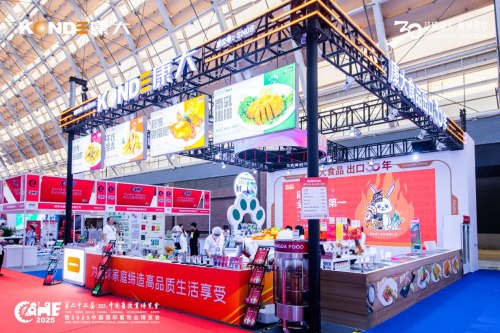
康大食品闪耀中国畜牧业博览会 全产业链成果引领健康饮食新潮流
Zhong Guo Shi Pin Wang· 2025-05-20 09:23
Core Insights - The 22nd China Animal Husbandry Expo will be held in Qingdao from May 19 to 21, 2025, showcasing Qingdao Kangda Food Co., Ltd. as a leader in rabbit meat exports with a focus on a "full industry chain + innovative products" model [1] Group 1: Product Innovation - Kangda Food will launch four strategic product systems at the expo, demonstrating its strong capabilities in product innovation and forward-looking layout [3] - New products for 2025 include the thaw-and-bake rabbit leg series and ready-to-eat rabbit hind legs, catering to the convenience cooking trend among younger consumers [4] Group 2: Leisure Food Offerings - The company will present seven popular products in the leisure food segment, including spicy rabbit heads and smoked rabbit legs, designed to meet consumer demands for enjoyable snacks [6] Group 3: Professional Catering Solutions - Kangda Food offers comprehensive solutions for the catering industry, including a smoked frozen rabbit series that requires only reheating, helping restaurants create specialty barbecue dishes [8] Group 4: Freshness and Quality Assurance - The ice-fresh product line adheres to EU production standards, ensuring rapid freshness retention within 48 hours from slaughter to cold chain transport, providing high-quality rabbit meat products [9] Group 5: Industry Standards and Certifications - As a drafting unit for national and industry standards, Kangda Food has established a complete industry chain covering breeding, smart farming, and deep processing, achieving multiple international certifications [11] Group 6: Health and Nutrition Trends - With rising health consciousness, rabbit meat is favored for its high protein and low fat content, prompting Kangda Food to develop solutions that meet diverse consumer needs across various scenarios [13] Group 7: Invitation to Collaborate - Kangda Food invites industry stakeholders to visit its exhibition booth to explore modern development paths in the animal husbandry sector and witness its achievements and innovations [15]

康大食品(00834) - 2024 - 年度财报
2025-04-30 08:45
Financial Performance - In the fiscal year 2024, the company reported a revenue of RMB 1,650.5 million, a decrease of 0.4% from RMB 1,657.3 million in fiscal year 2023[9]. - The gross profit for fiscal year 2024 was RMB 74.0 million, representing a decline of 22.3% compared to RMB 95.1 million in fiscal year 2023[9]. - The net loss attributable to shareholders was RMB 21.5 million, an increase of 157.1% from a loss of RMB 8.4 million in fiscal year 2023[21]. - The basic loss per share for fiscal year 2024 was RMB 4.9, compared to RMB 1.9 in fiscal year 2023[9]. - Revenue decreased by 0.4% from approximately RMB 1,657.3 million in fiscal year 2023 to approximately RMB 1,650.5 million in fiscal year 2024[34]. - The decrease in revenue was impacted by a reduction in government subsidy income by RMB 5.2 million, a decrease in gross profit by RMB 21.2 million due to lower revenue and gross margin, and a decline in other income by RMB 12.2 million[34]. - The company reported a loss attributable to owners of approximately RMB 21.5 million for the fiscal year 2024, an increase of RMB 13.1 million (or 157.1%) compared to a loss of RMB 8.4 million in fiscal year 2023[34]. - Overall gross profit margin decreased to 4.5% in fiscal year 2024 from 5.7% in fiscal year 2023[43]. Revenue Breakdown - In fiscal year 2024, the revenue from processed foods was RMB 757.7 million, accounting for 45.9% of total revenue[16]. - The revenue from frozen and chilled chicken products was RMB 175.5 million, representing 10.6% of total revenue in fiscal year 2024[16]. - Revenue from processed foods decreased by 5.0% to approximately RMB 757.8 million, impacted by intense competition from domestic suppliers[38]. - Revenue from chilled and frozen chicken increased by 8.0% to approximately RMB 694.9 million, driven by a recovery in consumer demand[39]. - Revenue from chilled and frozen rabbit meat decreased by 6.7% to approximately RMB 175.5 million due to a slowdown in overseas demand[40]. - Revenue from other products fell by 20.2% to RMB 22.4 million as the company reduced production and sales of pet food[41]. - Revenue from China increased by 2.1% to RMB 1,246.2 million, contributing 75.5% of total revenue, while export revenue decreased by 7.5% to RMB 404.3 million[42]. Strategic Initiatives - The company aims to enhance its competitiveness by increasing investment in new product development, focusing on high value-added processed foods[23]. - The company plans to optimize its product mix, strengthen cost management, and expand new sales channels to enhance overall performance[23]. - The company will continue to maintain business relationships with key customers and actively develop new markets and clients[35]. - The company emphasizes strict quality control and food safety systems to provide high-quality products to customers[35]. - The company plans to increase investment in new product research and development, focusing on high value-added processed foods to maintain overall profitability and enhance competitiveness[35]. Governance and Management - Ms. Lang Ying was appointed as the company's director, chairman, and CEO on January 26, 2024[74]. - The board held a total of 5 meetings in the fiscal year 2024, with an attendance rate of 100% for executive directors[76]. - The board is responsible for approving major corporate policies, including mergers and acquisitions, investments, and annual budgets[76]. - The board's governance functions include monitoring compliance with laws and regulations, and approving financial targets and strategies[77]. - The company ensures that new directors receive comprehensive orientation regarding the group's business and legal obligations[77]. - The board has established a framework for risk management and internal controls to safeguard the company's operations[77]. - The company has established a whistleblowing policy allowing employees and others to report concerns about financial misconduct confidentially and anonymously[112]. - The board believes that the current management team possesses diverse expertise to assist in decision-making for the group's operations[83]. Financial Position and Liabilities - As of December 31, 2024, the company's net current liabilities amounted to approximately RMB 26,551,000[190]. - The total bank borrowings as of December 31, 2024, were approximately RMB 149,500,000, with additional loans from related parties totaling RMB 38,993,000 and RMB 94,024,000 from the direct holding company, resulting in total liabilities of approximately RMB 282,517,000 due within 12 months[190]. - The independent auditor expressed a disclaimer of opinion regarding the appropriateness of preparing the consolidated financial statements on a going concern basis due to multiple uncertainties[194]. - Significant uncertainties exist that may cast doubt on the company's ability to continue as a going concern, potentially affecting asset realizability and liability settlement[193]. - The company is actively taking measures to improve liquidity and financial condition, including negotiating with lenders for repayment extensions and seeking new financing sources[192]. Risk Management - The board is responsible for evaluating and ensuring the effectiveness of the risk management and internal control systems[121]. - The company has engaged external consultants to perform internal audit functions to ensure the effectiveness and efficiency of its risk management and internal control systems[122]. - The risk management strategies include risk retention, avoidance, sharing, and transfer[123]. - The audit committee will review the independence and objectivity of external auditors, including the nature and extent of non-audit services provided[2]. Shareholder Communication - The company has established a shareholder communication policy to ensure effective communication with shareholders[143]. - The board has reviewed the implementation and effectiveness of the shareholder communication policy for the fiscal year 2024, finding it effective due to good communication with shareholders in the past[143]. - The company encourages shareholder participation in annual meetings, allowing board members to address shareholder questions[143]. - The company has a dedicated internal investor relations function to facilitate regular communication with shareholders and analysts[143].
康大食品(00834) - 2024 - 年度业绩
2025-03-31 14:32
Financial Performance - For the fiscal year ending December 31, 2024, the total revenue was RMB 1,650,509 thousand, a slight decrease of 0.4% compared to RMB 1,657,308 thousand in 2023[2] - Gross profit for the same period was RMB 73,963 thousand, down 22.2% from RMB 95,132 thousand in 2023[2] - The company reported a loss before tax of RMB 21,637 thousand, compared to a loss of RMB 8,313 thousand in the previous year, indicating a significant increase in losses[3] - The net loss for the year was RMB 21,606 thousand, which is an increase of 168.5% from RMB 8,043 thousand in 2023[3] - Basic and diluted loss per share for the year was RMB 4.86, compared to RMB 1.93 in 2023, reflecting a substantial decline in earnings[3] - The reportable segment profit for 2024 was RMB 21,053,000, down from RMB 32,754,000 in 2023, indicating a decrease of about 35%[36] - The company reported a pre-tax loss of RMB 21,637,000 for 2024, compared to a pre-tax loss of RMB 8,313,000 in 2023, reflecting a worsening of approximately 160%[36] - The company reported a loss attributable to owners of approximately RMB 21,473,000 for the year ending December 31, 2024[27] - The company’s net asset value was approximately RMB 536.4 million as of December 31, 2024, down from RMB 553.6 million a year earlier[86] Assets and Liabilities - Total assets decreased to RMB 1,297,562 thousand in 2024 from RMB 1,745,823 thousand in 2023, indicating a reduction in the company's asset base[5] - Current liabilities decreased to RMB 680,746 thousand from RMB 907,115 thousand in 2023, showing a reduction in short-term obligations[6] - Non-current liabilities also decreased to RMB 106,452 thousand from RMB 121,412 thousand in the previous year, indicating improved long-term financial stability[7] - The company's equity attributable to owners decreased to RMB 525,368 thousand from RMB 542,471 thousand in 2023, reflecting a decline in shareholder value[7] - The total amount of secured bank borrowings as of December 31, 2024, is approximately RMB 149.5 million, a decrease from RMB 188.0 million as of December 31, 2023[91] - The total liabilities decreased to approximately RMB 387.3 million as of December 31, 2024, from RMB 457.0 million a year earlier, resulting in a debt-to-equity ratio of 74%[88] Revenue Breakdown - Revenue from external customers for the year 2024 totaled RMB 1,650,509,000, with a reported profit of RMB 21,053,000[34] - Revenue from processed foods declined by 5.0% to approximately RMB 757.8 million, contributing 45.9% of total revenue[63] - Revenue from chilled and frozen chicken increased by 8.0% to approximately RMB 694.9 million, contributing 42.1% of total revenue[64] - Revenue from chilled and frozen rabbit meat decreased by 6.7% to approximately RMB 175.5 million, contributing 10.6% of total revenue[65] - Revenue from other products fell by 20.2% to RMB 22.4 million, contributing 1.4% of total revenue[66] - Revenue from the domestic market in China increased to RMB 1,246,198,000 in 2024 from RMB 1,220,168,000 in 2023, marking a growth of approximately 2.1%[38] - Revenue from exports decreased by 7.5% to RMB 404.3 million[67] Operational Challenges and Strategies - The company aims to improve operational efficiency and control costs to enhance future profitability and cash flow[29] - The company plans to increase investment in new product development, focusing on high-value-added processed foods to enhance competitiveness and market resilience[60] - The company will continue to optimize its product mix, strengthen cost management, and expand new sales channels to improve overall performance[60] - The company faces challenges from low growth rates and intensified competition in the food industry, but the impact of external uncertainties is expected to be limited due to the essential nature of its products[59] - The company has identified significant uncertainties that may impact its ability to continue as a going concern[31] Financing and Cash Flow - The total bank borrowings amounted to approximately RMB 282,517,000, which are due within 12 months from December 31, 2024[27] - The company has successfully negotiated with several banks to extend RMB 69,000,000 of its bank borrowings for one year, maturing in 2026[28] - The company has received a letter of intent from its main bank indicating a willingness to provide RMB 100,000,000 in financing in 2025[28] - The company plans to seek additional financing sources and negotiate repayment extensions for related party loans[30] - The company is actively seeking to renegotiate bank loans and explore other financing sources to meet its debt obligations[88] - The company plans to improve liquidity and financial condition, including negotiating loan extensions and seeking new financing sources[99] Compliance and Governance - The company has not declared any dividends for the current year, consistent with the previous year[49] - The independent auditor issued a disclaimer of opinion regarding the group's ability to continue as a going concern due to multiple uncertainties affecting the financial statements[101] - The management has implemented various plans and measures to alleviate liquidity pressure and improve financial conditions, but their success is crucial for the group's ongoing operations[102] - The company has complied with all applicable corporate governance code provisions, except for the separation of roles between the chairman and CEO, which was temporarily held by the same individual[105] - The audit committee has reviewed the accounting principles adopted by the group and discussed matters related to the audit and internal controls[104] Future Outlook - The company anticipates that the adoption of IFRS 18 may change the presentation of the consolidated income statement and require additional disclosures[25] - The company plans to publish its annual report for the fiscal year ending December 31, 2024, on relevant stock exchange websites[110] - There have been no significant matters affecting the group since December 31, 2024, up to the date of this announcement[109]
康大食品(00834) - 2024 - 中期财报
2024-09-25 08:48
Financial Performance - The company reported a loss attributable to owners of approximately RMB 20.3 million for the first half of 2024, compared to a loss of RMB 6.5 million in the same period of 2023, representing an increase of 215%[7]. - Revenue decreased by 2.8% to approximately RMB 768.8 million in the first half of 2024, down from RMB 790.6 million in the first half of 2023[7]. - The gross profit margin fell from 6.0% in the first half of 2023 to 2.7% in the first half of 2024 due to a decline in product selling prices[7]. - The overall gross profit margin decreased from 6.0% in the first half of 2023 to 2.7% in the first half of 2024, a decline of 3.3 percentage points[17]. - The gross profit margin for chilled and frozen chicken turned negative at -4.9% in the first half of 2024 due to price reductions to maintain market competitiveness[19]. - The company recorded a tax credit of RMB 0.3 million for the first half of 2024, benefiting from deferred tax credits due to certain subsidiaries engaging in qualifying agricultural activities[25]. - The company reported a total comprehensive loss of RMB 6,352 for the six months ended June 30, 2024, compared to a total comprehensive loss of RMB 6,623 for the same period in 2023[56]. - The reported loss before tax for the six months ended June 30, 2024, was RMB 20,056, compared to a loss of RMB 6,556 for the same period in 2023, indicating a significant increase in losses[62]. - Basic and diluted loss per share for the period was RMB (4.6), compared to RMB (1.5) in the same period last year[50]. Revenue Breakdown - Revenue from processed foods decreased by 8.6% to approximately RMB 354.6 million, primarily due to a decrease in export sales driven by lower international trade demand[10]. - Revenue from chilled and frozen chicken products increased by 10.2% to RMB 320.0 million, contributing 41.6% of total revenue[10]. - Revenue from chilled and frozen rabbit meat products decreased by 20.9% to RMB 79.6 million, contributing 10.4% of total revenue[10]. - Revenue from other products, including pet food and feed products, increased by RMB 2.9 million to RMB 14.5 million, representing a growth of 24.6% due to higher unit prices[15]. - The company’s revenue from the processed food segment for the six months ended June 30, 2024, was RMB 354,598, while the cold and frozen chicken segment generated RMB 320,010[61]. - The company's revenue from product sales for the six months ended June 30, 2024, was RMB 768,771,000, a decrease of 2.1% compared to RMB 790,603,000 for the same period in 2023[19]. Cost and Expenses - Selling and distribution expenses increased by RMB 2.5 million to approximately RMB 25.5 million, mainly due to higher advertising and promotional costs[23]. - Other income decreased by RMB 13.0 million to RMB 4.0 million in the first half of 2024, primarily due to a decline in chicken prices affecting fair value changes of biological assets[22]. - The total employee cost for the review period was approximately RMB 76.2 million, a decrease from RMB 81.4 million for the six months ended June 30, 2023[33]. - The company's administrative expenses decreased to RMB 15,572 for the six months ended June 30, 2024, from RMB 34,388 for the same period in 2023, a reduction of 54.7%[62]. - Total employee costs decreased to RMB 76,196,000 from RMB 81,448,000, reflecting a reduction of 6.5% year-over-year[64]. - Financing costs decreased to RMB 2,951,000 from RMB 6,940,000, a significant reduction of 57.5% compared to the previous year[65]. Assets and Liabilities - As of June 30, 2024, the company's net asset value was approximately RMB 533.6 million, a decrease from RMB 553.6 million as of December 31, 2023[27]. - Total current assets increased to approximately RMB 942.5 million from RMB 906.9 million as of December 31, 2023, with cash and bank balances at RMB 302.5 million[27]. - Trade receivables increased by RMB 48.0 million to approximately RMB 140.0 million, primarily due to higher sales in Q2 2024 compared to Q4 2023[26]. - Trade payables and notes increased by RMB 55.1 million to approximately RMB 469.1 million, primarily due to the issuance of more notes to settle payments with suppliers[26]. - The company's equity attributable to owners decreased to RMB 533,569 thousand from RMB 553,600 thousand, indicating a decline in shareholder value[53]. - Current liabilities increased to RMB 961,108 thousand from RMB 907,115 thousand, reflecting a rise in trade payables and bank borrowings[52]. - Non-current liabilities totaled RMB 136,889 thousand, up from RMB 121,412 thousand at the end of the previous year[53]. Strategic Initiatives - The company plans to increase investment in new product development, focusing on high-value-added processed foods to enhance competitiveness and market resilience[8]. - The company aims to optimize its product mix, strengthen cost management, and expand new sales channels to improve overall performance[8]. - The external environment for the consumer industry remains complex, with challenges from trade protectionism and global economic downturns impacting business operations[9]. Shareholder and Corporate Actions - The group did not declare any interim dividend for the first half of 2024, consistent with the previous year[34]. - The company did not recommend the payment of an interim dividend for the six months ended June 30, 2024, nor for the six months ended June 30, 2023[43]. - The group had no significant investments, acquisitions, or disposals during the six months ended June 30, 2024[35]. - On June 25, 2024, the company entered into a placement agreement to issue up to 86,589,600 shares at a placement price of HKD 0.25 per share, with gross proceeds of HKD 5.0 million expected[49]. - The net proceeds from the placement, after deducting related fees, are approximately HKD 4.9 million, intended for general working capital to strengthen the company's financial position[49]. - A framework agreement was established on July 31, 2024, with Qingdao Kangda Holding Group for product mutual supply, effective from August 1, 2024, to December 31, 2026[49]. - A lease agreement was signed on July 31, 2024, for property located in Qingdao, effective from August 1, 2024, to December 31, 2026[49]. Related Party Transactions - Sales to related parties for the six months ended June 30, 2024, were RMB 2.594 million, down from RMB 9.704 million in the same period of 2023, indicating a decline of 73%[78]. - Purchases from related parties for the same period were RMB 1.537 million, a decrease from RMB 12.405 million in 2023, reflecting a decline of 88%[78]. - Rental income from related parties was RMB 1.625 million for the six months ended June 30, 2024, compared to RMB 1.176 million in 2023, showing an increase of 38%[78]. - The company received guarantees for bank loans from related parties amounting to RMB 768.335 million, up from RMB 557 million in the previous year, representing an increase of 38%[78]. - The total remuneration for key management personnel was RMB 556 thousand, a significant decrease from RMB 6.306 million in the previous year, indicating a decline of 91%[78]. - The company continues to engage in transactions with related parties as part of its regular business operations, adhering to the terms negotiated with those parties[79].
康大食品(00834) - 2024 - 年度业绩
2024-07-26 14:23
Financing and Loans - The company has successfully negotiated to extend the repayment of related party loans to April 22, 2025, and has received written confirmations from all relevant banks for loan renewals[5]. - As of the reporting period, the company has obtained written confirmations from several banks to renew RMB 60 million of bank loans, which are now due in the second year[6]. - The company has received an additional loan of RMB 50 million after the reporting period, with a term of approximately one year[9]. - The company has successfully renewed RMB 40 million of loans before the due date and repaid RMB 10 million[14]. - The company has received letters of intent from banks indicating their willingness to renew the remaining RMB 128 million of bank loans, subject to formal approval[7]. Production and Operational Performance - The production volume in the processed food segment increased by approximately 7.0% during the five months from January 1, 2024, to May 31, 2024, compared to the same period in 2023[14]. - The production volume in the refrigerated and frozen chicken segment increased by approximately 20.6% during the same five-month period[14]. Future Plans and Strategies - The company plans to improve operational efficiency and expand its production capacity to enhance future profitability and cash flow[10]. - The company plans to expand its cold storage facilities to enhance rapid cooling and storage capacity, with completion expected by July 2024[16]. - Cost control measures are being strengthened, with a board restructuring and salary adjustments completed in January 2024, leading to anticipated lower expenses compared to 2023[16]. Going Concern and Financial Health - The audit committee agrees with management's assessment that the company can operate on a going concern basis[13]. - Management believes that the financing and business plans will be successful, ensuring sufficient working capital to meet financial obligations[10]. - The company believes it can operate on a going concern basis and has effective measures in place to improve its financial condition[15]. - The auditor will focus on the appropriateness and effectiveness of the measures implemented, particularly regarding related party loans and debt restructuring plans[15]. - The company expects to provide sufficient audit evidence to the auditor to demonstrate adequate operating funds for at least the next 12 months[15].
康大食品(00834) - 2023 - 年度财报
2024-04-29 08:39
Financial Performance - In the fiscal year 2023, the company reported a revenue of RMB 1,657.3 million, a decrease of 5.07% from RMB 1,745.8 million in fiscal year 2022[9]. - The gross profit for fiscal year 2023 was RMB 95.1 million, down 21.7% from RMB 121.5 million in fiscal year 2022[9]. - The net loss attributable to shareholders was RMB 8.4 million, an improvement of 45.8% compared to a loss of RMB 15.4 million in fiscal year 2022[21]. - The basic loss per share for fiscal year 2023 was RMB 1.9, compared to RMB 3.6 in fiscal year 2022[9]. - The company experienced a decrease in other income by RMB 29.5 million due to a decline in fair value changes of biological assets[21]. - The company reported a loss attributable to owners of approximately RMB 84 million for the fiscal year 2023, a decrease of RMB 70 million or 45.8% compared to a loss of RMB 154 million in fiscal year 2022[40]. - Revenue decreased by 5.1% from approximately RMB 1,745.8 million in fiscal year 2022 to approximately RMB 1,657.3 million in fiscal year 2023[40]. - The overall gross profit margin declined from 7.0% in fiscal year 2022 to 5.7% in fiscal year 2023[50]. - The company reported a significant increase in user data, with a growth rate of over 20% year-on-year in the last quarter[30]. Revenue Breakdown - Revenue from processed food increased by 8.0% to approximately RMB 797.6 million, driven by new product development and customer acquisition[45]. - Revenue from chilled and frozen chicken rose by 7.5% to approximately RMB 643.7 million, supported by increased market demand and expanded production capacity[46]. - Revenue from chilled and frozen rabbit meat increased by 17.4% to approximately RMB 188.0 million, fueled by growing overseas demand[47]. - Revenue from other products decreased by 88.7% to RMB 28.1 million due to a strategic reduction in pet food production and sales[48]. - Revenue from China increased by 2.6% to RMB 1,220.2 million, contributing 73.6% of total revenue, while export revenue decreased by 21.5% to RMB 437.1 million[49]. Strategic Initiatives - The company aims to increase investment in new product development, focusing on high value-added processed foods to enhance competitiveness[23]. - The company plans to optimize its product mix and strengthen cost management to improve overall performance[23]. - The company will continue to strengthen its core capabilities and expand new sales channels to enhance overall performance[23]. - Future outlook indicates a projected revenue growth of 15% for the upcoming fiscal year, driven by new product launches and market expansion strategies[36]. - The company is investing in R&D for new technologies, with a budget allocation of approximately $5 million for the next fiscal year[36]. - Market expansion plans include entering three new regional markets by the end of 2024, aiming for a 10% market share in each[36]. - The company is considering strategic acquisitions to enhance its product portfolio, targeting companies with annual revenues between $10 million and $50 million[36]. Operational Efficiency - The company reported a 25% increase in production efficiency due to recent technological upgrades[30]. - The gross margin for refrigerated and frozen rabbit meat increased from 7.2% in the fiscal year 2022 to 10.6% in the fiscal year 2023, attributed to higher overseas sales prices[53]. - The gross margin for other products, mainly pet food and by-products of chicken and rabbit meat, decreased from 13.0% in the fiscal year 2022 to 5.5% in the fiscal year 2023 due to a decline in pet food sales volume[54]. Financial Outlook - The financial outlook includes a guidance of $100 million in net profit for the upcoming year, representing a 20% increase from the previous year[36]. - The company plans to enhance its digital marketing efforts, with a budget increase of 15% to improve customer engagement[36]. Governance and Management - The company appointed Ms. Lang Ying as the Executive Director and CEO on January 26, 2024, bringing 10 years of financial management experience[28]. - The board of directors has undergone significant changes, with multiple resignations and appointments occurring between July 2023 and January 2024[91]. - The company emphasizes compliance with international financial reporting standards to ensure accurate financial statements reflecting its condition[92]. - The chairman and CEO roles are held by the same individual, Mr. Fang Yu, who has extensive experience in the financial industry, providing strong leadership for the company[94]. - The board has established various committees to enhance internal controls and effectively monitor the company's operations[94]. Risk Management - The company has maintained a robust risk management and internal control system, which is continuously reviewed[186]. - The board is responsible for assessing and determining the nature and extent of risks the group is willing to take to achieve its strategic objectives[134]. - The group engaged external consultants to perform internal audit functions to ensure the effectiveness and efficiency of its risk management and internal control systems[135]. Shareholder Communication - The company has established a shareholder communication policy to ensure effective communication with shareholders and encourage their participation in meetings[187]. - The company encourages shareholder participation in annual meetings, where board members will address questions[155]. - The board has reviewed the effectiveness of the shareholder communication policy, which is deemed effective due to good communication with shareholders in the past[155]. Employee and Board Composition - The company has a gender ratio of approximately 49.3% male to 50.7% female among its employees as of December 31, 2023[145]. - The company has maintained a diverse board composition, balancing skills, experience, and knowledge necessary for effective decision-making[167]. - The nomination committee will continue to review the effectiveness of the board's diversity policy and seek suitable candidates to ensure diversity, including gender diversity[167].
康大食品(00834) - 2023 - 年度业绩
2024-03-28 14:41
Financial Performance - For the year ended December 31, 2023, the total revenue was RMB 1,657,308, a decrease of 5.04% from RMB 1,745,787 in 2022[2] - Gross profit for the same period was RMB 95,132, down 21.73% from RMB 121,545 in 2022[2] - The net loss for the year was RMB 8,043, an improvement of 46.73% compared to a net loss of RMB 15,099 in 2022[3] - Basic and diluted loss per share for the year was RMB 1.93, compared to RMB 3.56 in 2022, indicating a reduction in loss per share by 45.7%[3] - The company reported a loss attributable to owners of approximately RMB 8,353,000 for the year ended December 31, 2023[24] - The company reported a pre-tax loss of RMB 8,353,000 for 2023, an improvement from a loss of RMB 15,417,000 in 2022[51] - The company reported a loss attributable to owners of approximately RMB 84 million for the fiscal year 2023, a decrease of RMB 70 million or 45.8% compared to a loss of RMB 154 million in fiscal year 2022[59] - Revenue decreased by 5.1% from approximately RMB 1,745.8 million in fiscal year 2022 to approximately RMB 1,657.3 million in fiscal year 2023[59] Assets and Liabilities - Total assets as of December 31, 2023, amounted to RMB 1,582,898, an increase from RMB 1,376,907 in 2022[4] - Current liabilities increased significantly to RMB 907,115 from RMB 713,173 in 2022, representing a rise of 27.2%[5] - Non-current liabilities rose to RMB 121,412 from RMB 59,012, marking an increase of 105.5%[7] - As of December 31, 2023, the company's current liabilities exceeded its current assets by approximately RMB 229,000[24] - The total amount of bank borrowings and related party loans classified as current liabilities was approximately RMB 342,309,000 as of December 31, 2023[24] - The company’s debt-to-equity ratio was 84.2% as of December 31, 2023, up from 77.7% the previous year, indicating increased leverage[93] Cash Flow and Liquidity - Cash and cash equivalents increased to RMB 284,307 from RMB 197,939, reflecting a growth of 43.5%[4] - The company maintained cash and cash equivalents of RMB 284,307,000 as of December 31, 2023[24] - Cash and cash equivalents increased by approximately 43.6% to about RMB 284.3 million as of December 31, 2023, mainly due to higher collections from trade receivables[86] - The company is taking measures to improve its liquidity and financial position, including negotiating with lenders and seeking new financing sources[109] - The company may face significant uncertainties regarding its ability to continue as a going concern if it fails to implement its plans successfully[110] Revenue Breakdown - Revenue from domestic sales in China increased to RMB 1,220,168,000 in 2023 from RMB 1,188,971,000 in 2022, representing a growth of 2.63%[39] - Revenue from exports decreased significantly, with Japan contributing RMB 152,687,000 in 2023 compared to RMB 179,810,000 in 2022, a decline of 15.1%[39] - Revenue from chilled and frozen chicken increased by 7.5% to approximately RMB 643.7 million, supported by a recovery in consumer demand[66] - Revenue from chilled and frozen rabbit meat rose by 17.4% to approximately RMB 188.0 million, fueled by growing overseas demand[67] - Revenue from other products decreased by 88.7% to RMB 28.1 million due to a strategic reduction in pet food production and sales[68] - Export revenue decreased by 21.5% to RMB 437.1 million, primarily due to a decline in pet food sales[70] Operational Efficiency and Future Plans - The company is focused on expanding its market presence and enhancing product offerings, although specific new products or technologies were not detailed in the report[10] - The group has plans to actively seek other funding sources and improve operational efficiency to enhance future profitability and cash flow[29] - The company plans to enhance its product mix, strengthen cost management, and expand new sales channels to improve overall performance[62] - The company will increase investment in new product development, focusing on high-value processed foods to maintain profitability and competitiveness[60] - The company aims to implement cost control measures to improve future operating cash flow and profitability[29] Compliance and Governance - The company has complied with all applicable corporate governance code provisions, except for the separation of the roles of Chairman and CEO[112] - The company has adopted the standard code for securities trading as per the listing rules, confirming compliance by all directors for the year ending December 31, 2023[116] Significant Events - A related party filed a winding-up petition against the company on October 20, 2023, due to alleged failure to repay loans[26] - The High Court allowed the related party to withdraw the winding-up petition on December 27, 2023, without any order regarding costs[26] - A winding-up petition was filed against the company, but it was withdrawn following an agreement to repay related party loans within three months[107] - No significant events affecting the group have been reported since December 31, 2023, except for the termination of several sale and acquisition agreements due to macroeconomic conditions[117]
康大食品(00834) - 2023 - 中期财报
2023-09-25 08:43
Financial Performance - For the six months ended June 30, 2023, the company reported a loss attributable to owners of approximately RMB 65 million, consistent with the loss of RMB 65 million for the same period in 2022[10]. - Revenue decreased by 2.3% from approximately RMB 809 million in the first half of 2022 to approximately RMB 791 million in the first half of 2023[10]. - For the six months ended June 30, 2023, total revenue decreased by 2.3% to RMB 790.6 million compared to RMB 809.0 million in the same period of 2022[21]. - Revenue for the six months ended June 30, 2023, was RMB 790,603 thousand, a decrease of 2.5% compared to RMB 809,010 thousand in the same period of 2022[66]. - The company reported a basic and diluted loss per share of RMB 1.5, unchanged from the previous year[66]. - The total comprehensive income for the period ended June 30, 2023, was a loss of RMB 6,623 thousand, compared to a loss of RMB 6,816 thousand for the same period in 2022[71]. Revenue Breakdown - Revenue from processed food increased by 14.1% to approximately RMB 387.9 million, contributing 49.1% of total revenue[14]. - Revenue from chilled and frozen chicken increased by 10.3% to approximately RMB 290.3 million, driven by increased market demand and higher chicken prices[16]. - Revenue from chilled and frozen rabbit meat surged by 31.2% to approximately RMB 100.7 million, reflecting a focus on processing to meet growing overseas market demand[19]. - Revenue from other products decreased significantly by 91.0% to RMB 11.7 million due to rising raw material prices and a reduction in production[20]. Cost and Profitability - Gross margin improved from 3.8% in the first half of 2022 to 6.0% in the first half of 2023 due to an increase in product selling prices[10]. - Overall gross profit increased by 55.6% to RMB 47.4 million, with gross margin rising from 3.8% to 6.0%[23]. - The gross margin for processed food decreased by 1.9 percentage points to 9.7% due to growth in low-margin domestic sales[24]. - The gross margin for frozen rabbit meat increased from 3.7% to 8.9%, benefiting from reduced transportation costs and a focus on processed rabbit meat[26]. - The cost of goods sold for the six months ended June 30, 2023, was RMB 647,819,000, down from RMB 677,029,000 in the same period of 2022[86]. Expenses and Liabilities - Selling and distribution expenses increased by RMB 5.8 million to approximately RMB 23.0 million, driven by higher advertising and promotional costs[29]. - Total administrative expenses increased to RMB 34,388,000 for the six months ended June 30, 2023, compared to RMB 31,148,000 in the same period of 2022[84]. - The company's total liabilities increased to approximately RMB 474.4 million as of June 30, 2023, compared to RMB 428.2 million as of December 31, 2022, reflecting a rise of about 10.5%[43]. - Current liabilities increased to RMB 889,022 thousand from RMB 713,173 thousand at the end of 2022, indicating a rise in short-term financial obligations[70]. Assets and Cash Flow - As of June 30, 2023, total property, plant, and equipment decreased by 13.7% to approximately RMB 288.6 million[34]. - The company's cash and cash equivalents increased to approximately RMB 215.5 million, up from RMB 197.9 million as of December 31, 2022, representing a growth of about 8.1%[42]. - The company reported an increase in cash and cash equivalents to RMB 215,476 thousand as of June 30, 2023, up from RMB 152,495 thousand at the end of June 2022, representing an increase of approximately 41.3%[73]. - The net cash generated from operating activities was RMB 172,915 thousand, compared to a net cash used of RMB 141,177 thousand in the same period of 2022[73]. Corporate Governance and Shareholder Information - The company did not declare any interim dividend for the first half of 2023, consistent with the previous year[49]. - As of June 30, 2023, the major shareholder, Dingxi Limited, held approximately 75.00% of the issued share capital, totaling 324,708,066 shares[56]. - The company has complied with all corporate governance code provisions as per the Hong Kong Stock Exchange rules, except for the separation of the roles of Chairman and CEO[54]. Market Environment and Future Plans - The external environment remains challenging due to trade protectionism and global economic downturn, but the company believes the impact on its essential consumer products will be limited[11]. - The company plans to increase investment in new product development, focusing on high-value-added processed foods to enhance competitiveness and market resilience[12]. - The company aims to optimize its product mix, strengthen cost management, and expand new sales channels to improve overall performance[12]. - The company has plans for market expansion and new product development, although specific details were not disclosed in the report[66].