Analog Devices(ADI)

Search documents
Analog Devices’ (ADI) Dividend History and its Impact on Dividend Paying Stocks Portfolios
Yahoo Finance· 2025-09-21 03:07
Group 1 - Analog Devices, Inc. (NASDAQ:ADI) is recognized as one of the 12 best dividend-paying stocks to buy currently [1] - The company specializes in high-performance analog, mixed-signal, and digital signal processing chips, serving various sectors such as industrial automation, automotive systems, consumer electronics, and advanced communications networks [2] - ADI has focused on innovation and R&D to meet the evolving demands of its markets, with an emphasis on digital transformation and AI-powered infrastructure [3] Group 2 - Analog Devices has a strong history of dividend distribution, having raised its payouts for 21 consecutive years [4] - The current quarterly dividend is $0.99 per share, resulting in a dividend yield of 1.61% as of September 19 [4]

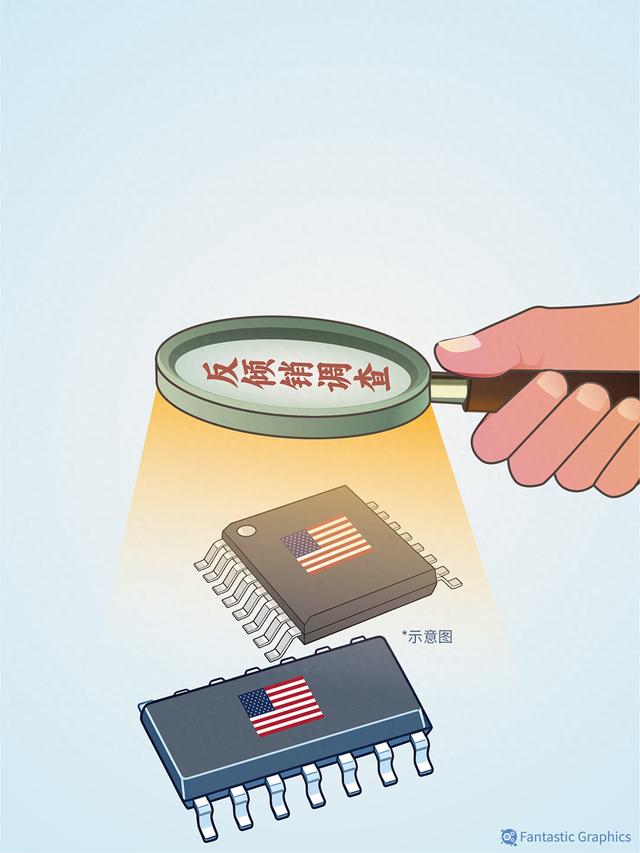
反倾销调查背后:四家芯片大厂倾销幅度达300%
Zhong Guo Jing Ying Bao· 2025-09-19 20:11
Core Viewpoint - The Chinese Ministry of Commerce has initiated an anti-dumping investigation against imported analog chips from the United States, which has led to a surge in stock prices for domestic analog chip companies [2][3][4]. Group 1: Anti-Dumping Investigation Details - The investigation targets analog chips using 40nm and above process technology, specifically general interface chips and gate driver chips from major US companies including Texas Instruments, Analog Devices, Broadcom, and ON Semiconductor [2][4]. - The application for the investigation was submitted by the Jiangsu Semiconductor Industry Association, citing a 37% increase in import volume and a 52% decrease in import prices from 2022 to 2024, which harmed domestic sales [3][4]. - The investigation period for dumping is set from January 1, 2024, to December 31, 2024, while the period for assessing industry damage is from January 1, 2022, to December 31, 2024 [4]. Group 2: Market Impact and Reactions - Following the announcement, domestic analog chip stocks saw significant gains, with leading companies like Shengbang Co. and Shanghai Beiling hitting their daily price limits [3][4]. - Market observers note that the investigation reflects both the impact of dumping on domestic industries and the growing supply capabilities of local companies [3][4]. - The anti-dumping measures are expected to create a fairer market environment for domestic chips and may accelerate the replacement of imported products [6][7]. Group 3: Industry Context and Trends - China is the largest market for analog chips, with a market size exceeding $28 billion, accounting for about one-third of the global market [5]. - The analog chip sector has been experiencing a price war due to low-priced imports, which has pressured domestic manufacturers [5][6]. - The domestic analog chip industry has seen significant growth, with many companies reporting substantial increases in revenue and profit margins in recent quarters [9][10]. Group 4: Future Outlook - If the investigation confirms substantial dumping, high anti-dumping duties may be imposed on US imports, potentially benefiting domestic manufacturers [7][8]. - The domestic analog chip market is expected to continue evolving, with companies focusing on expanding product lines and improving performance to compete effectively [10][11].





聊聊我眼中的1-8月芯片市场行情
芯世相· 2025-09-19 04:19
Core Viewpoint - The semiconductor industry is experiencing a recovery phase, with significant sales growth anticipated in the coming quarters, driven by demand from various sectors including industrial and automotive markets [3][14]. Group 1: Market Signals and Trends - In October of the previous year, early signals of recovery were noted when PCB manufacturers like Jingwang Electronics and Shennan Circuit reported full capacity [3]. - Following the election of a new political leader, there was a surge in inventory purchases as companies anticipated market changes, leading to increased demand [3]. - Global semiconductor sales peaked in mid-2022 and have shown signs of recovery since Q4 2024, with sales rebounding above previous highs [3][5]. Group 2: Company Performance and Pricing Dynamics - Companies in the chip distribution sector reported significant performance improvements, with some experiencing a doubling of orders, particularly for ADI and Microchip products [5]. - TI's price adjustments affected approximately 66,000 models, representing about 76% of its total offerings, indicating a strategic move to influence market pricing [6]. - Despite TI's price increases, the overall market did not experience a widespread price surge, suggesting a cautious approach from manufacturers [6]. Group 3: Memory Market Insights - The memory market has seen substantial price increases, with Micron's prices doubling from January to March and again from March to May [10][12]. - There is a growing trend of memory manufacturers attempting to control prices through production adjustments, which has led to a more volatile market environment [12]. - The demand for small capacity eMMC has surged, with sales reported to be twice that of the previous year, indicating a strong recovery in the memory segment [10]. Group 4: Capacity and Supply Chain Dynamics - Domestic wafer fabs are reportedly operating at full capacity, with significant demand noted even when the downstream market appears stable [13][14]. - The supply chain is experiencing delays and shortages, particularly for domestic brands, while overseas markets are not facing the same level of pressure [14]. - The semiconductor industry is expected to see a delayed transmission of recovery signals to distributors and end-users, as the supply chain is complex and lengthy [14].



ADI's Industrial Segment Improves: What's Driving the Growth?
ZACKS· 2025-09-17 15:15
Core Insights - Analog Devices' (ADI) Industrial segment is experiencing significant growth, driven by demand across various sectors including instrumentation, automation, healthcare, aerospace and defense, and energy management, with a year-over-year growth of 23% in Q3 fiscal 2025 [1][8] Group 1: Industrial Segment Growth - The Industrial segment showed robust growth across all subsectors and geographies, primarily driven by automatic test equipment, AI chip infrastructure, and record performance in aerospace and defense [2] - ADI's automation business also demonstrated double-digit growth, with potential to double by 2030 [2] - The Zacks Consensus Estimate for ADI's fiscal 2025 and 2026 revenues is projected to grow by 15% and 17.4%, respectively [4] Group 2: Robotics and Partnerships - ADI has partnered with Teradyne to enhance its presence in the robotics market, focusing on high-performing cobots and autonomous mobile robots for logistics [3] - Collaboration with NVIDIA is aimed at digital twin simulations and reference designs for advanced robotic systems [4] Group 3: Competitive Landscape - ADI competes with Texas Instruments (TXN) and STMicroelectronics (STM) in the Industrial segment, particularly in industrial signal chains, precision sensing, and power management [5] - In the robotics space, STMicroelectronics provides sensors and motor control ICs, while Texas Instruments focuses on low-power precision analog and sensing for medical applications [6] Group 4: Financial Performance and Valuation - ADI's shares have gained 14.9% year to date, outperforming the Semiconductor - Analog and Mixed industry's growth of 11.1% [7] - ADI trades at a forward price-to-sales ratio of 10.02X, which is higher than the industry's average of 7.57X [10] - The Zacks Consensus Estimate for ADI's fiscal 2025 and 2026 earnings implies year-over-year growth of 21.5% and 19.4%, respectively, with upward revisions in the past 30 days [11]
中国或将改变模拟芯片格局
半导体行业观察· 2025-09-17 01:30
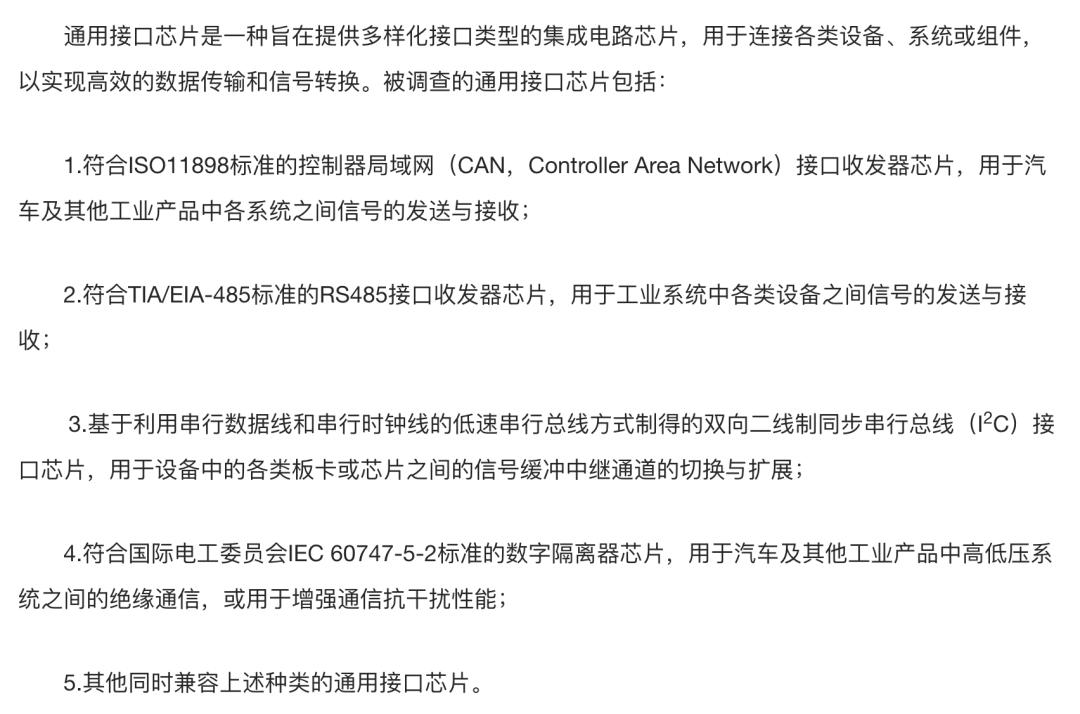
Core Viewpoint - The recent anti-dumping investigation initiated by China against U.S. analog chip imports may reshape the global market landscape, indicating escalating geopolitical tensions between China and the U.S. and accelerating domestic substitution of analog products [2]. Group 1: Investigation Details - The investigation began on September 13, 2025, following a complaint from the Jiangsu Semiconductor Industry Association [2]. - The focus of the investigation includes interface and gate driver chips, such as CAN and RS485 transceivers, which are widely used in automotive, industrial, and power electronics applications [2]. - The investigation is expected to last one year, with a possible six-month extension, assessing import conditions since 2024 and industry damage dating back to 2022 [3]. Group 2: Impact on Companies - Bernstein estimates the revenue exposure of major U.S. suppliers: TI at 11.4%, ADI at 7.8%, and Onsemi at 10.2%, with the Chinese market accounting for about 20% of revenue for TI and ADI [2]. - The investigation may have a limited impact on U.S. analog processor manufacturers, according to UBS analysts, who suggest that the effects on companies like Texas Instruments and ADI are expected to be minimal [3]. - Local companies such as Silergy, Novosense, 3Peak, SG Micro, and Joulwatt may benefit from this investigation, while U.S. firms face downside risks [3]. Group 3: Geopolitical Context - The investigation is seen as a response to recent U.S. trade restrictions on several Chinese companies, with the U.S. Commerce Department adding 32 entities to the trade restriction list, including 23 Chinese entities [4]. - The investigation may be similar to previous U.S. investigations into Chinese analog chip manufacturers, indicating a tit-for-tat dynamic in trade relations [4].

中国商务部发起美国模拟芯片和对华政策调查,影响几何?
Sou Hu Cai Jing· 2025-09-16 17:05
Group 1 - The U.S. Department of Commerce has placed 23 Chinese entities, including 13 integrated circuit companies, on an export control "entity list," impacting the global semiconductor industry and international trade [2][3] - The Chinese Ministry of Commerce has expressed strong opposition to the U.S. actions, accusing it of abusing export controls and harming normal business exchanges between countries [2][3] - The Ministry of Commerce has initiated anti-dumping investigations against U.S. imported analog chips, with the investigation period set from January 1, 2024, to December 31, 2024 [4][6] Group 2 - The anti-dumping investigation was triggered by a formal complaint from the Jiangsu Semiconductor Industry Association, citing a 37% increase in imports and a 52% decrease in prices of the investigated products from the U.S. [8] - The investigation targets general interface chips and gate driver chips produced using 40nm and above process technology, covering various product forms to prevent evasion [8][10] - The Chinese semiconductor industry is expected to benefit from the investigation, as it may lead to a reassessment of supply chains and increased domestic chip usage [11][12] Group 3 - Major U.S. companies affected by the investigations include Texas Instruments and Analog Devices, which have significant revenue from the Chinese market [14][18] - Texas Instruments generated approximately $3 billion in revenue from China in 2024, accounting for about 19% of its total revenue, while Analog Devices earned around $2.1 billion, representing 23% of its revenue [14] - The Chinese analog chip market is projected to grow significantly, with a compound annual growth rate of 11% from 2025 to 2029, driven by demand from automotive and industrial sectors [18] Group 4 - The Ministry of Commerce has also launched an anti-discrimination investigation against U.S. measures in the integrated circuit sector, citing discriminatory practices that harm China's technological development [19][20] - This investigation aims to review a range of U.S. policies affecting China's semiconductor industry since 2018, including tariffs and export controls [22] - The anti-discrimination investigation is part of China's broader strategy to counteract U.S. trade measures and protect its domestic industries [21][22]
中美芯片战,中国大反击
虎嗅APP· 2025-09-16 14:05
Core Viewpoint - The article discusses China's recent countermeasures in the ongoing chip war with the United States, highlighting three specific actions taken against American semiconductor companies, particularly Nvidia, in response to U.S. export controls and anti-competitive practices [4][5][6]. Group 1: China's Countermeasures - On September 13, China initiated an anti-dumping investigation into American-made analog chips [4]. - On the same day, China launched an anti-discrimination investigation against U.S. measures affecting the integrated circuit sector [4]. - On September 15, China determined that Nvidia violated antitrust laws, leading to further investigations [4][9]. Group 2: Nvidia's Antitrust Issues - Nvidia recently received U.S. government approval to sell H20 chips to China but faced scrutiny from the Chinese government for alleged antitrust violations [8][9]. - The investigation relates to Nvidia's 2019 acquisition of Mellanox Technologies, which was approved under specific conditions to prevent anti-competitive practices [11][14]. - Nvidia's supply of H20 chips to China has been criticized for not adhering to fair and non-discriminatory principles, as the performance of these chips is significantly lower than their counterparts available in other markets [16][17]. Group 3: Impact on the Semiconductor Industry - The anti-dumping investigation targets analog chips, with significant price discrepancies noted, such as a dumping margin of 340.10% for certain products [24][25][26]. - Major U.S. companies like Texas Instruments, ADI, Broadcom, and ON Semiconductor are implicated, with their combined revenue in China exceeding $10 billion, indicating potential significant financial repercussions [33]. - Following the announcement of these investigations, Chinese semiconductor stocks surged, while U.S. counterparts like Texas Instruments experienced declines [33]. Group 4: Broader Trade Implications - The article suggests that the ongoing trade tensions involve not only direct actions like anti-dumping and antitrust investigations but also broader issues of discrimination in trade practices [35][36]. - The ultimate goal for China is to enhance its self-sufficiency in semiconductor manufacturing, reducing reliance on foreign technology [37][38].


Analog Devices, Inc. (ADI) Presents at JPMorgan U.S. All Stars Conference Transcript
Seeking Alpha· 2025-09-16 10:33
Core Viewpoint - Analog Devices is recognized as a leader in high-performance mixed signal RF and analog semiconductor solutions, with a strong emphasis on power management and signal chain processing, which connects the physical and digital worlds [2]. Company Overview - Analog Devices holds a strong position in the semiconductor industry, particularly in power management and signal chain processing, which are critical for bridging real-world applications to digital solutions [2]. - The company boasts best-in-class growth operating free cash flow margin and has a robust capital return program, indicating strong financial health and commitment to returning value to shareholders [2]. - The business is highly diversified, with 85% of total revenues coming from industrial, automotive, and communications infrastructure sectors, showcasing its broad market reach [2].

Analog Devices (NasdaqGS:ADI) Conference Transcript
2025-09-16 10:02
Summary of Analog Devices Conference Call Company Overview - **Company**: Analog Devices - **Industry**: Semiconductor, specifically high-performance mixed-signal RF and analog semiconductor solutions - **Key Segments**: Power management, signal chain processing, industrial, automotive, communications infrastructure - **Revenue Composition**: 85% of total revenue from industrial, automotive, and communications infrastructure [1][4][5] Core Insights and Arguments Semiconductor Cycle - The company experienced an 18% year-over-year decline in the second half of fiscal 2024 but has seen sequential growth trends into the current year [3][4] - The bottom of the cycle was identified in Q2 2024, with expectations for modest recovery and single-digit revenue increases in the latter half of 2024 [4][5] - Industrial segment, which constitutes 50% of the business, has shown resilience, particularly in aerospace and defense, and is expected to continue growing [5][7] Market Dynamics - Increased defense spending globally is driving demand in aerospace and defense sectors [7] - AI and data center capital expenditures are also contributing positively to the ATE (Automated Test Equipment) business [7] - The automation segment faced challenges but has recently shown two consecutive quarters of growth [8][10] Revenue and Growth Projections - The automotive segment is on track for a record year, with three of the last four years achieving record revenue levels [10] - Consumer business has shown strong growth, with four consecutive quarters of growth attributed to a diversified portfolio [11] - Communications infrastructure is benefiting from AI trends, with new design wins expected to generate revenue starting in 2026 [12][19] Inventory Management - The company has maintained disciplined inventory management, with approximately 160 days of inventory on the balance sheet [24][26] - Plans to keep channel inventories lean to allow for flexibility in responding to customer demands [29] Financial Performance - The company targets a long-term revenue growth rate of 7% to 10% CAGR and aims for earnings per share of $15 by fiscal 2027, although this may be pushed to 2028 or 2029 due to the recent downturn [38][39][43] - The capital return policy aims to return 100% of free cash flow to shareholders, with 40% to 60% allocated to dividends and the remainder for share buybacks [48] Design Wins and Market Position - The design win pipeline has grown by double digits in fiscal 2023 and 2024, with expectations for continued growth in 2025 [49][50] - Strongest growth in design wins is seen in the automotive sector, with significant contributions from connectivity and power management solutions [50] Segment Performance - Industrial segment accounts for 45% to 50% of total revenues, with key growth areas in aerospace and defense, AI/data center, and automation [52][56] - Aerospace and defense has surpassed a $1 billion annualized revenue run rate, driven by high-performance product offerings [68] - Automotive business is experiencing inventory normalization, with expectations for a return to growth in 2026 [95] AI and Comms Infrastructure - AI revenues are projected to grow from $400 million last year to between $500 million and $600 million this year, with strong growth in wireline communications [96][104] - Wireless infrastructure has shown signs of recovery, although it remains a smaller part of the overall business [105][112] Additional Important Insights - The company has successfully diversified its consumer business, reducing dependency on a few sockets and expanding into wearables, hearables, and gaming [130][131] - The management emphasizes the importance of maintaining a strong balance sheet and inventory control to navigate potential supply chain challenges [29][30] This summary encapsulates the key points discussed during the conference call, highlighting Analog Devices' current market position, growth strategies, and financial outlook.
对美模拟芯片反倾销,业内怎么看?
3 6 Ke· 2025-09-16 04:26
Group 1 - The Ministry of Commerce has initiated an anti-dumping investigation into imported analog chips from the United States, leading to a significant rise in the A-share analog chip sector [1][5] - Major companies such as Shengbang Co., Shanghai Beiling, and Naxinwei saw their stock prices hit the daily limit, while others like SIRUI and Aiwai Electronics also experienced notable gains [1][10] - The investigation was prompted by a formal request from the Jiangsu Semiconductor Industry Association, citing a significant price drop and a dumping margin exceeding 300% for the products in question [2][3] Group 2 - The investigation will cover products primarily used in automotive and industrial systems, specifically general-purpose interface chips and gate driver chips [8][9] - The products under investigation include both finished chips and raw materials like wafers and die, emphasizing the importance of product origin [10][12] - The investigation period is set from January 1, 2024, to December 31, 2024, with the industry damage assessment covering from January 1, 2022, to December 31, 2024 [12] Group 3 - The Chinese Semiconductor Industry Association and other industry groups have expressed support for the investigation, emphasizing the need for a fair market environment [5][6] - Despite improvements in domestic analog chip self-sufficiency, major players like Texas Instruments and Analog Devices still dominate the market [11] - The price competition from U.S. manufacturers has significantly impacted domestic small and medium-sized enterprises, highlighting the challenges faced by local firms in the high-end market [12][13]