Celanese(CE)

Search documents
2 More Stocks to Buy for 2026
Investor Place· 2025-12-14 17:00
Core Insights - The article discusses the decline of the American Dream and the potential for a new investment wave termed "American Dream 2.0" aimed at revitalizing the U.S. economy through significant infrastructure investments [5][27]. Investment Opportunities - The American Dream 2.0 Summit outlines an anticipated $11.3 trillion investment bonanza focused on transforming America into a global powerhouse, with funds allocated for AI data centers, research, and manufacturing [8]. - Celanese Corp. (CE) is highlighted as a promising investment opportunity, with expectations of revenue growth in 2026 after a period of decline, driven by stabilization in the automotive sector and a surge in construction demand [13][14]. - Analysts predict a 17% increase in gross income for Celanese, projecting a return to profitability after two years of losses, with shares currently trading at a significant discount to their justified value [15][16]. - Akamai Technologies Inc. (AKAM) is identified as a hidden leader in the compute space, with analysts forecasting revenue growth due to its transition from a content delivery network to a comprehensive cloud and cybersecurity provider [23][22]. Economic Context - The article contrasts the current economic challenges faced by many Americans with the prosperity experienced by those born in the 1940s, where 90% of children out-earned their parents, compared to only 50% for those born in the 1980s [3][5]. - The nostalgia for past economic conditions is prevalent among millennials and Gen-X'ers, prompting a focus on policies aimed at restoring well-paying manufacturing jobs and investment in American infrastructure [6][27].



Celanese Achieves Circularity Milestone for POM ECO-C Grades
ZACKS· 2025-12-10 15:31
Core Insights - Celanese Corporation (CE) has received Carbon Footprint Certification from the International Sustainability & Carbon Certification (ISCC) for its Hostaform and Celcon POM ECO-C grades at production sites in Frankfurt, Germany, and Bishop, Texas, enabling customers to reduce carbon footprints and achieve sustainability goals [1][7] Group 1: Sustainability Initiatives - The certification highlights Celanese's commitment to transitioning to a circular economy, supported by significant investments in Carbon Capture and Utilization (CCU) technology at its Clear Lake, Texas facility, part of a joint venture with Mitsui & Co., Ltd. [2] - The CCU process effectively captures CO2 emissions and converts them into methanol, allowing for a reduction in fossil-based inputs while maintaining material performance [3] Group 2: Product Performance and Transparency - The certified products are recognized for their high stiffness, thermal stability, sliding performance, and wear resistance, contributing to overall sustainability efforts [3] - Celanese's digital assistant, AskChemille.com, provides Product Carbon Footprint letters, enhancing transparency and informed decision-making regarding Greenhouse Gas emissions [4] Group 3: Market Performance - Celanese's shares have declined by 40.8% over the past year, contrasting with the industry's 10.4% decline, indicating potential challenges in market performance [4] - In comparison, other companies in the Basic Materials sector, such as Kinross Gold Corporation, Fortuna Mining Corp., and Harmony Gold Mining Company, have shown stronger performance with significant increases in their share prices over the past year [5][8][9]
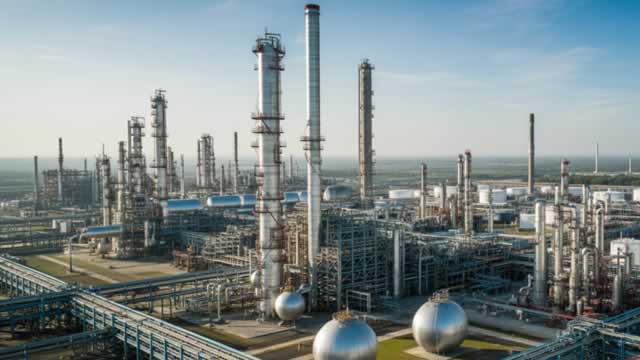
盘点!巴斯夫、林德、陶氏、先正达、万华化学、阿克苏诺贝尔等59家化学公司2025年第三季度财报业绩公布!
Xin Lang Cai Jing· 2025-12-09 12:12
European Companies - BASF Group reported Q3 2025 sales of €15.23 billion (approximately $17.7 billion), down 3.2% year-on-year from €15.739 billion. Operating profit (EBIT) increased by 11.4% to €278 million, while net profit fell by 40% to €172 million [1] - LyondellBasell's Q3 2025 sales and other revenues were $7.727 billion, down from $8.604 billion year-on-year. The company reported a net loss of $890 million compared to a net profit of $573 million in the same period last year [2] - INEOS Group Holdings reported Q3 2025 revenue of €3.418 billion (approximately $3.97 billion), down from €4.273 billion year-on-year. Operating profit decreased to €113 million from €339 million, with a net loss of €56.5 million compared to a profit of €283 million last year [3] - Evonik Group's Q3 2025 sales were €3.391 billion (approximately $3.94 billion), down from €3.832 billion year-on-year. Adjusted EBITDA fell to €448 million from €577 million, with a net loss of €106 million compared to a net profit of €223 million [4] - Covestro reported Q3 2025 sales of €3.171 billion (approximately $3.68 billion), down 12% from €3.603 billion. EBITDA decreased by 15.7% to €242 million, with a net loss of €47 million compared to a net profit of €33 million last year [5] - DSM-Firmenich's Q3 2025 sales were €3.07 billion (approximately $3.57 billion), down 5% from €3.244 billion. Adjusted EBITDA remained stable at €540 million [6] - Sika reported Q3 2025 sales of CHF 3.078 billion (approximately $3.4 billion), down 3.8% from CHF 3.915 billion. EBITDA decreased to CHF 1.645 billion from CHF 1.702 billion, with net profit falling to CHF 871 million from CHF 923 million [8] - Henkel's Q3 2025 sales fell by 6.3% to €5.147 billion, with the adhesives technology division reporting sales of approximately $3.145 billion, down 3.3% year-on-year [9] - Arkema's Q3 2025 sales were €2.187 billion (approximately $2.54 billion), down 8.6% from €2.394 billion. EBITDA fell by 23.8% to €310 million, with adjusted net profit down 53.6% to €78 million [10] - Syensqo reported Q3 2025 sales of €1.517 billion (approximately $1.76 billion), down 7.1% from €1.633 billion. EBITDA decreased by 12.8% to €326 million, with net profit down 31.8% to €110 million [11] - LANXESS reported Q3 2025 sales of €1.338 billion (approximately $1.55 billion), down 16.3% from €1.598 billion. EBITDA fell by 35.6% to €105 million, with a net loss of €77 million compared to a profit of €1 million last year [12] - Solvay's Q3 2025 sales were €1.044 billion (approximately $1.21 billion), down 9.7% from €1.156 billion. EBITDA decreased by 10.3% to €232 million, with net profit down 15% to €88 million [13] - Clariant reported Q3 2025 sales of CHF 906 million (approximately $1.03 billion), down 9% from CHF 991 million. EBITDA increased by 14% to CHF 159 million [14] Asian Companies - Rongsheng Petrochemical reported Q3 2025 revenue of ¥79.185 billion (approximately $11.2 billion), down 5.67% year-on-year. Net profit attributable to shareholders was ¥286 million, up 1427.94% [15] - SABIC's Q3 2025 revenue was SAR 34.333 billion (approximately $9.147 billion), down from SAR 36.88 billion year-on-year. Operating profit decreased to SAR 1.663 billion from SAR 2.477 billion, with net profit falling to SAR 1.135 billion from SAR 1.763 billion [16] - Hengli Petrochemical reported Q3 2025 revenue of ¥53.496 billion (approximately $7.67 billion), down 17.98% year-on-year. Net profit attributable to shareholders was ¥1.972 billion, up 81.47% [17] - Wanhua Chemical reported Q3 2025 revenue of ¥53.324 billion (approximately $7.54 billion), up 5.52% year-on-year. Net profit attributable to shareholders was ¥3.035 billion, up 3.96% [18] - Mitsubishi Chemical Group reported H1 2025 revenue of ¥1,799.124 billion (approximately $11.5 billion), down 10.5% year-on-year. Operating profit decreased by 19.6% to ¥86.489 billion, with net profit attributable to shareholders up 169% to ¥110.132 billion [19] - Taiwan Chemical announced Q3 2025 revenue of NT$69.576 billion (approximately $2.22 billion), down from NT$86.899 billion. The company reported a net profit of NT$1.78 billion, compared to a net loss of NT$1.918 billion last year [20] - Nanya Plastics reported Q3 2025 revenue of NT$64.2 billion (approximately $2.04 billion), down from NT$66.4 billion. Operating profit increased to NT$1.04 billion from NT$990 million, with net profit rising to NT$4 billion from NT$490 million [21] - Formosa Plastics reported Q3 2025 revenue of NT$41.718 billion (approximately $1.33 billion), down from NT$50.492 billion. The company reported a net loss of NT$2.685 billion, compared to a loss of NT$3.092 billion last year [22] - Asahi Kasei Corporation reported H1 2025 revenue of ¥1,486.368 billion (approximately $9.54 billion), down slightly from ¥1,490.334 billion. Operating profit increased to ¥108.915 billion from ¥107.454 billion, while net profit decreased to ¥60.248 billion from ¥66.266 billion [23] - Dongfang Shenghong reported Q3 2025 revenue of ¥31.245 billion (approximately $4.5 billion), down 11.91% year-on-year. The company reported a net loss of ¥260 million [24] - Shin-Etsu Chemical reported H1 2025 revenue of ¥1,284.522 billion (approximately $8.24 billion), up 1.4% year-on-year. Operating profit decreased by 17.7% to ¥333.935 billion, with net profit down 12.3% to ¥257.844 billion [25] - Toray reported H1 2025 revenue of ¥1,234.31 billion (approximately $7.92 billion), down 4.6% year-on-year. Operating profit decreased by 19.1% to ¥642.99 billion, with net profit down 33.5% to ¥369.35 billion [26] - Hengyi Petrochemical reported Q3 2025 revenue of ¥27.925 billion (approximately $3.95 billion), down 7.07% year-on-year. Net profit attributable to shareholders was ¥4.4079 million, up 102.21% [27] - LG Chem reported Q3 2025 sales of ₩111.962 trillion (approximately $76.24 billion), down 11.3% from ₩126.2 trillion. Operating profit increased by 38.9% to ₩6.797 trillion, while net profit fell to ₩4.470 trillion from ₩10.13 trillion [28] American Companies - Dow reported Q3 2025 net sales of $9.973 billion, down from $10.879 billion year-on-year. Net profit attributable to common shareholders was $62 million, down from $214 million [36] - Ecolab reported Q3 2025 net sales of $4.165 billion, up from $3.999 billion year-on-year. Operating profit decreased by 27% to $760 million, with net profit down 21% to $585 million [37] - DuPont reported Q3 2025 net sales of $3.072 billion, up from $2.862 billion year-on-year. The company reported a net loss of $123 million, compared to a profit of $455 million last year [39] - Westlake Corporation reported Q3 2025 net sales of $2.838 billion, down from $3.117 billion. The company reported an operating loss of $766 million, compared to a profit of $180 million last year [40] - IFF reported Q3 2025 net sales of $2.694 billion, down from $2.925 billion year-on-year. Operating profit decreased by 9% to $226 million, with net profit down to $40 million from $58 million [41] - Celanese reported Q3 2025 net sales of $2.419 billion, down from $2.648 billion. The company reported an operating loss of $1.275 billion, compared to a profit of $245 million last year [42] - Eastman Chemical Company reported Q3 2025 sales of $2.202 billion, down from $2.464 billion. Net profit attributable to the company was $47 million, down from $180 million [43] - Huntsman Corporation reported Q3 2025 revenue of $1.46 billion, down from $1.54 billion. The company reported a net loss of $25 million, compared to a loss of $33 million last year [44] Industrial Gases - Linde plc reported Q3 2025 sales of $8.615 billion, up from $8.356 billion year-on-year. Operating profit increased to $2.367 billion from $2.086 billion, with net profit rising to $1.929 billion from $1.55 billion [45] - Air Liquide reported Q3 2025 revenue of €6.599 billion (approximately $7.66 billion), down from €6.762 billion year-on-year [46] - Air Products & Chemicals reported Q4 2025 sales of $3.167 billion, down from $3.188 billion. The company reported an operating profit of $16.8 million, down from $242.4 million last year, with a net profit of $4.9 million compared to $195 million [47] Crop Science - Syngenta Group reported Q3 2025 revenue of $6.4 billion, down 6% year-on-year. EBITDA increased by 28% to $900 million [48] - Bayer Group reported Q3 2025 sales of €9.66 billion, down from €9.968 billion. EBIT loss was €543 million, compared to a loss of €382.2 million last year, with a net loss of €963 million compared to a loss of €4.183 billion last year [49] - Corteva, Inc. reported Q3 2025 net sales of $2.618 billion, up from $2.326 billion year-on-year. The company reported a net loss of $320 million, compared to a loss of $524 million last year [50] Fertilizers - Nutrien reported Q3 2025 sales of $6.007 billion, up from $5.348 billion year-on-year. Net profit increased to $469 million from $25 million [51] - Yara International ASA reported Q3 2025 revenue of $4.108 billion, up from $3.654 billion. Operating profit increased to $470 million from $309 million, with net profit rising to $320 million from $286 million [52] - The Mosaic Company reported Q3 2025 net sales of $3.452 billion, up from $2.811 billion. Operating profit increased to $340 million from $115 million, with net profit rising to $411 million from $122 million [53] - CF Industries reported Q3 2025 net sales of $1.659 billion, up from $1.37 billion. Net profit attributable to common shareholders was $353 million, compared to $276 million last year [54] Coatings - PPG Industries reported Q3 2025 net sales of $4.082 billion, up from $4.032 billion year-on-year, with net profit remaining stable at $444 million [55] - AkzoNobel reported Q3 2025 revenue of €2.547 billion (approximately $2.96 billion), down from €2.668 billion. The company reported an operating loss of €29 million, compared to a profit of €259 million last year, with a net loss of €194 million compared to a profit of €163 million last year [56] - Nippon Paint Holdings reported YTD revenue of ¥1,318.378 billion (approximately $8.467 billion), up 7.8% year-on-year. Operating profit increased by 36.4% to ¥190.579 billion, with net profit rising by 38.6% to ¥134.336 billion [57] - Sherwin-Williams reported Q3 2025 net sales of $6.358 billion, up from $6.163 billion. Net profit increased to $833 million from $806 million, with the paint retail group reporting sales of $3.837 billion, up 5.1% [58] - Axalta Coating Systems Ltd. reported Q3 2025 net sales of $1.288 billion, down from $1.32 billion. Operating profit increased to $204 million from $193 million, with net profit rising to $110 million from $101 million [59] - Three Trees reported YTD revenue of ¥9.392 billion (approximately $1.33 billion), up 2.69% year-on-year. Net profit attributable to shareholders was ¥744 million, up 81.22% [60]




CE Upsizes $1.4 Billion Notes Offering to Strengthen Liquidity
ZACKS· 2025-12-04 15:16
Core Insights - Celanese Corporation's subsidiary, Celanese US Holdings LLC, has announced a $1.4 billion registered notes offering, increased from an initial $1 billion, consisting of $600 million of 7% Senior Notes due 2031 and $800 million of 7.375% Senior Notes due 2034 [1][8] - The offering is expected to close around December 17, 2025, and the net proceeds will be used to repay outstanding borrowings under a five-year term loan due 2027 and to fund cash tender offers for certain Senior Notes due 2027 and 2028 [2][8] - The transaction aims to manage the company's debt maturity profile and strengthen liquidity, aligning debt maturities with a conservative outlook for free cash flow generation [3][8] Financial Performance - Celanese's shares have declined by 39.6% over the past year, while the industry has seen a smaller decline of 8.7% [4] - The company currently holds a Zacks Rank of 3 (Hold), indicating a neutral outlook compared to better-ranked stocks in the Basic Materials sector [5] Market Context - The move to issue new notes is part of Celanese's broader strategy to proactively manage leverage and maintain flexibility amid evolving market conditions [3][8]



Celanese Announces Cash Tender Offers for up to $1,000,000,000 Aggregate Principal Amount of 6.665% Senior Notes due 2027 and 6.850% Senior Notes due 2028
Globenewswire· 2025-12-02 13:10
Core Viewpoint - Celanese Corporation has initiated cash tender offers to purchase up to $1 billion of its outstanding senior notes, specifically targeting the 6.665% Senior Notes due 2027 and the 6.850% Senior Notes due 2028, with specific caps on the amount of each series to be purchased [1][2][4]. Group 1: Tender Offer Details - The total principal amount targeted for purchase is $1,000,000,000, with a cap of $100,000,000 for the 2028 Notes [1][4]. - The tender offers will expire at 5:00 p.m. New York City time on December 31, 2025, unless extended or terminated earlier [4][5]. - Notes purchased will be retired and cancelled following the tender offers [2][4]. Group 2: Financial Terms - The early tender payment for the 2027 Notes is set at $987.50 per $1,000 principal amount, while the total consideration including accrued interest is $1,037.50 [3]. - For the 2028 Notes, the early tender payment is $1,005.00, with a total consideration of $1,055.00 [3]. - The interest rates on the 2027 and 2028 Notes have increased to 7.165% and 7.350%, respectively, reflecting a 0.50% rise from their original rates [4]. Group 3: Conditions and Procedures - The tender offers are subject to a "Financing Condition," which requires the completion of a concurrent offering of new debt securities [6]. - Holders must validly tender their notes by December 15, 2025, to be eligible for the early tender payment [5][6]. - Notes can be withdrawn prior to the withdrawal deadline of December 15, 2025 [6][10]. Group 4: Management and Contacts - BofA Securities is the Lead Dealer Manager for the tender offers, with Citigroup, Deutsche Bank Securities, and TD Securities serving as Co-Dealer Managers [12]. - D.F. King & Co., Inc. is the Information and Tender Agent for the offers [12][13].
Evercore ISI Remains Cautious on Celanese Corporation (CE) Post-Q3 Earnings, Despite Broader Chemical Stock Rallies
Yahoo Finance· 2025-11-25 13:07
Core Insights - Celanese Corporation is currently viewed as one of the most undervalued stocks on the NYSE, with a recent price target adjustment from Evercore ISI analyst Eric Boyes, lowering it to $45 from $75 while maintaining an In Line rating [1] - The Q3 2025 earnings report revealed a significant trading shift in the chemical sector, with approximately half of the tracked chemical stocks reducing their Q4 outlook, yet two-thirds experienced an average share price increase of 6% post-results [1] Financial Performance - In Q3, Celanese reported total revenue of $2.42 billion and earnings of $1.34 per share, focusing on enhancing cash flow, cost improvements, and top-line growth [2] - The company anticipates an EPS growth of $1 to $2 in 2026, with around half of this growth expected from cost savings and the remainder from success in the Engineered Materials pipeline, alongside a projected reduction in interest expense of $30 to $40 million [2] Strategic Initiatives - Celanese completed the sale of its Micromax business in Q3, contributing to its goal of achieving $1 billion in divestitures by 2027 [3] - The company is actively pursuing additional cost savings, expecting to realize net savings of $30 to $50 million within the Engineered Materials segment after accounting for inflation [3]
卡脖子:中国哪些新材料高度依赖日本进口及国外进口?




材料汇· 2025-11-24 15:58
Core Viewpoint - The article highlights the significant dependency of China's high-end manufacturing on Japan for critical strategic new materials, particularly in the semiconductor and advanced manufacturing sectors, emphasizing the risks posed by geopolitical tensions and supply chain vulnerabilities [2][4]. Group 1: Dependency on Japanese Core New Materials - Japan holds a monopolistic position in semiconductor materials, high-end polymers, and electronic chemicals, with China's dependency exceeding 50% in several key categories, and nearly 100% in some high-end areas [4][6]. - The complexity of semiconductor manufacturing processes means that Japan dominates the supply of critical materials like photoresists and silicon wafers, with global market shares consistently above 60% [6][9]. Group 2: Semiconductor Core Materials - **Photoresists**: China has an overall import dependency of about 90%, with high-end photoresists being 100% reliant on Japan. Major suppliers include JSR, Tokyo Ohka, Shin-Etsu Chemical, and Fujifilm, which control 92% of the high-end market [7]. - **12-inch Silicon Wafers**: The import dependency is around 90%, with Japan supplying 58%. Key players like Shin-Etsu Chemical and SUMCO dominate over 60% of the market [9]. - **High-Purity Ruthenium Targets**: The import dependency is 98%, with Japan's JX Metals and TOSOH holding a significant market share. Domestic production is limited to lower purity levels [12]. Group 3: High-End Polymer Materials - Japan leads the high-end market for electronic-grade polyimide films, with an import dependency of 85% for overall polyimide materials, and 90% for high-end applications [19]. - **Optical-grade PET Films**: The import dependency is 75%, with Japan supplying 100% of high-end films used in MLCCs [23]. Group 4: Other Key Materials in Electronics - **Sputtering Targets**: The import dependency is approximately 95%, with Japan's JX Metals and Nippon Mining controlling 60% of the market [27]. - **High-Purity Electronic Gases**: The import dependency is 70%, with Japan's Taiyo Nippon Sanso holding a 40% market share [31]. Group 5: Hydrogen Energy and Fuel Cell Key Materials - **High-End Carbon Carrier Materials**: The overall import dependency is 85%, with Japan's TOSOH dominating the market [35]. - **Fuel Cell Platinum-based Catalysts**: The import dependency is 78%, with significant reliance on European suppliers [107]. Group 6: Aerospace and High-End Manufacturing Key Materials - **High-Temperature Alloys**: The import dependency is 90%, with major suppliers from the US and Europe completely dominating the market [80]. - **Carbon Fiber**: The import dependency is 85%, with Japan and the US leading the high-end market [86]. Group 7: New Energy and Electronics Key Materials - **High-End Lithium-Ion Battery Separators**: The import dependency is 70%, with Japan's Asahi Kasei and Toray leading the market [94]. - **Ultra-Thin Copper Foils**: The import dependency is 80%, with Japan's JX Copper and Mitsui Mining dominating the supply [98].

Celanese: Getting Worse, Before Getting Better (NYSE:CE)
Seeking Alpha· 2025-11-20 23:21
Core Insights - Uncertainty continues to dominate the situation for Celanese Corporation, with shares declining approximately 33% to around $36 [1] Group 1: Company Performance - Celanese Corporation's stock has experienced a significant drop, reflecting ongoing uncertainty in the market [1] Group 2: Investment Opportunities - The investment group "Value In Corporate Events" focuses on identifying actionable ideas related to major corporate events, including earnings reports and M&A activities [1]
Celanese Corporation to Participate in Fireside Chat with J.P. Morgan
Businesswire· 2025-11-14 21:50
Core Points - Celanese Corporation will participate in a fireside chat with J.P. Morgan on November 18, 2025, at 12:00 PM Eastern Time [1] - A webcast of the discussion will be available on Celanese's Investor Relations Events Calendar page, with a replay accessible for one year [2] Company Overview - Celanese Corporation is a global leader in specialty materials and chemicals, producing solutions used across major industries and consumer applications [3] - The company emphasizes sustainability by responsibly managing materials and expanding its portfolio of sustainable products to meet customer and societal demands [3] - Celanese is a Fortune 500 company with over 11,000 employees and projected net sales of $10.3 billion for 2024 [3]

S&P 500 Gains and Losses Today: Palantir Pops Amid Hopes of End to Shutdown; Health Insurer Stocks Fall
Investopedia· 2025-11-10 22:35
Core Insights - Palantir Technologies was the best-performing stock in the S&P 500, with shares surging nearly 9% due to optimism surrounding a potential end to the U.S. government shutdown, which would benefit the company as it has significant contracts with federal agencies [4][8]. Company Performance - Palantir Technologies (PLTR) shares increased close to 9%, marking the top performance in the S&P 500 on that day [4]. - Western Digital (WDC) shares rose nearly 7% following a price-target increase and positive analyst comments, anticipating growing demand for hard disk drives [5]. - Nvidia (NVDA) shares gained about 6% after Citi raised its price target from $210 to $220, citing robust demand for its AI processors [6]. Market Reactions - Major U.S. equity indexes rose, with the Dow up 0.8%, the S&P 500 up 1.5%, and the Nasdaq climbing 2.3%, driven by optimism regarding a potential government shutdown resolution [3]. - Health insurance stocks, including Centene (CE), Molina Healthcare (MOH), Humana (HUM), and Elevance Health (ELV), experienced declines due to President Trump's comments on healthcare subsidies, with Centene dropping nearly 9% [7][9]. Industry Trends - The data analytics sector, particularly companies like Palantir, is poised for growth if the government resumes normal operations, as they rely heavily on federal contracts [4][8]. - The healthcare sector is facing challenges due to potential changes in subsidy distribution, which could impact the profitability of health insurers [7][9].