
Hilton(HLT)

Search documents
A Look Into Hilton Worldwide Holdings Inc's Price Over Earnings - Hilton Worldwide Holdings (NYSE:HLT)
Benzinga· 2025-11-21 15:00
Core Viewpoint - Hilton Worldwide Holdings Inc. is currently experiencing a slight increase in share price, but its performance over the past month shows a minor decline, while the annual performance indicates a modest increase [1]. Group 1: Stock Performance - The current share price of Hilton Worldwide Holdings Inc. is $265.18, reflecting a 0.33% increase [1]. - Over the past month, the stock has decreased by 0.34%, but it has increased by 5.21% over the past year [1]. Group 2: P/E Ratio Analysis - Hilton Worldwide Holdings has a lower P/E ratio compared to the aggregate P/E of 59.7 for the Hotels, Restaurants & Leisure industry, suggesting potential undervaluation [6]. - A lower P/E ratio may indicate that shareholders do not expect the stock to perform better in the future or that the company is undervalued [5]. - While a low P/E can suggest undervaluation, it may also indicate weak growth prospects or financial instability, necessitating a comprehensive analysis of various financial metrics [10].



连希尔顿都自降门槛,酒店会员真要卷疯了
3 6 Ke· 2025-11-21 01:55
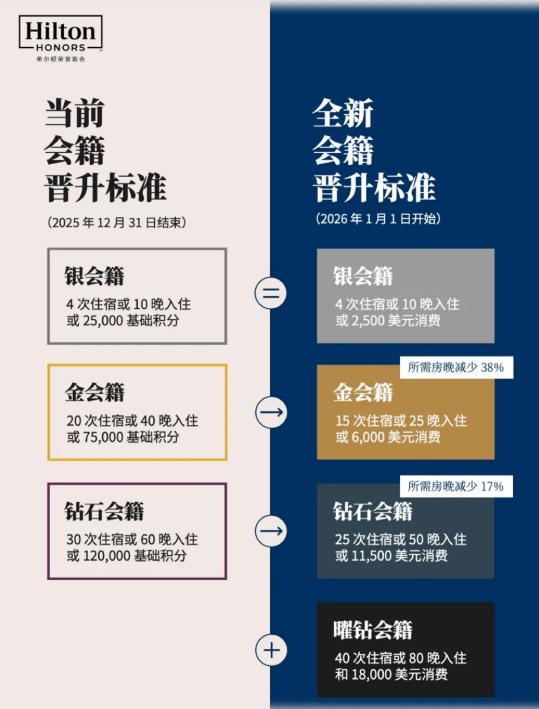
Core Insights - The domestic hotel market is increasingly competitive, leading hotel groups to focus on member acquisition and retention strategies [1][5] - Hilton has introduced a new membership tier, "Yao Diamond," marking its first change in membership structure in years, while other hotel groups have also been actively updating their membership systems [2][5] - The rapid changes in membership systems reflect both new growth opportunities and underlying challenges within the hotel industry [5][20] Membership System Adjustments - Hilton's membership adjustments include easier access to Gold and Diamond tiers, while the new Yao Diamond tier has a high spending requirement of $18,000 [2][10] - The introduction of the Yao Diamond tier aligns Hilton more closely with competitors like Marriott and Hyatt, which have similar high-tier memberships [2][10] - The overall trend shows that international hotel groups are differentiating their high-end memberships, but there is a risk of homogenization as many brands adopt similar strategies [3][10] Industry Trends and Challenges - The hotel industry is experiencing a collective push to enhance membership systems, with over ten hotel groups, including Jin Jiang and Huazhu, updating their membership offerings in 2024 alone [5][20] - The focus has shifted from merely acquiring customers through public channels to cultivating high-value members through tailored benefits [7][20] - Digital transformation is enabling hotels to better understand member preferences, allowing for more personalized and effective membership programs [8][20] Member Experience and Satisfaction - Despite the apparent enhancements in membership benefits, many members express dissatisfaction with the actual usability of these benefits, leading to a perception of "inflation" in membership tiers [10][12] - Common complaints include the difficulty in redeeming benefits and the high barriers to accessing promised perks, which diminishes trust in the membership systems [14][18] - The industry faces a challenge in ensuring that membership benefits are not only extensive but also genuinely valuable and accessible to members [19][20] Recommendations for Improvement - Future membership strategies should focus on precise targeting of different customer segments, ensuring that benefits align with specific needs [21][20] - Simplifying membership rules and making benefits more transparent can enhance member satisfaction and engagement [22][20] - Strengthening the execution of promised benefits is crucial for maintaining member trust and loyalty [23][20] - Building emotional connections through meaningful interactions and relevant partnerships can enhance the overall member experience [26][20]

Peachtree opens Tru by Hilton hotel in Huntsville, Alabama
Yahoo Finance· 2025-11-20 11:17
Core Insights - Peachtree Group is enhancing its partnership with Hilton by opening a new Tru brand hotel in Huntsville, Alabama, marking the sixth property developed by the company in 2025 [1] - The hotel is strategically located near major federal agencies and contractors, including Boeing, NASA, and the FBI, which supports ongoing demand for accommodation in the area [2] - The new property is situated in a Qualified Opportunity Zone (QOZ), contributing to Peachtree's portfolio of 12 hotels in such areas, with three more under construction and three in planning [3] Company Strategy - Peachtree Group's hospitality management division operates 113 hotels across 29 brands nationwide, focusing on developing institutional-quality properties in markets with strong demand generators [4] - The company is committed to expanding its presence in federally designated QOZs through development and capital investment strategies [5] - The partnership with Hilton is described as strong and longstanding, with both companies focused on developing high-quality hotels in economically vibrant markets [6]
Affinity Hospitality Announced Home2 Suites By Hilton® Wasilla Alaska Expected Completion Fall 2026
Businesswire· 2025-11-19 20:54
Group 1 - Affinity Hospitality announced the opening of Home2 Suites By Hilton in Wasilla, Alaska, scheduled for Fall 2026 [1] - The property will feature spacious and flexible suites equipped with full kitchens and 55-inch Smart TVs [1] - Additional amenities include multifunctional social spaces, outdoor patios, an indoor pool and hot tub, an innovative lobby space, and a retail market [1] Group 2 - The hotel will showcase the brand's latest contemporary room design [1]

Peachtree Group Announces Grand Opening of Tru by Hilton Huntsville, Alabama
Businesswire· 2025-11-19 13:55
Core Insights - Peachtree Group has announced the grand opening of the Tru by Hilton hotel in Huntsville, Alabama, marking it as the sixth property completed and opened by the firm this year [1][2]. Company Developments - The 98-room hotel is strategically located near major employers such as Boeing, NASA, and the FBI's Huntsville campus, contributing to the area's economic growth [2][3]. - Peachtree's hospitality management division will operate the new hotel, which features modern amenities and a design focused on comfort and connectivity [3][5]. Market Context - The hotel is situated in a Qualified Opportunity Zone (QOZ), a designation aimed at spurring economic development in low-income areas, and aligns with Peachtree's strategy of investing in underserved communities [4]. - Peachtree has been active in developing hotels in QOZs, having opened 12 hotels with three under construction and three more in the pipeline [4]. Strategic Partnerships - The partnership with Hilton is emphasized as a key element of Peachtree's growth strategy, with a focus on developing high-quality hotels in markets with strong demand [2][3].

观楼|邦泰·观云加推成交均价19555元/㎡,大商汇旁约50亩优质宅地上架
Xin Lang Cai Jing· 2025-11-17 09:36
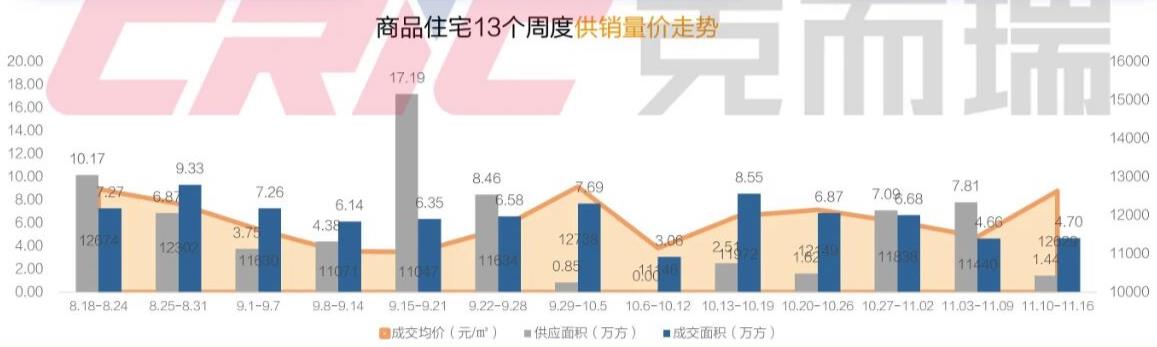
Market Overview - In the week of November 10-16, 2025, Kunming's real estate market saw stable transaction volumes and rising prices, with high-end properties gaining a larger market share. The highest transaction average price reached approximately 21,795 CNY per square meter [1][3] - The total number of tourists in Kunming for the first three quarters reached 1.14 million, marking a year-on-year increase of 41.5% [1] Sales Performance - Three projects in Kunming supplied about 14,400 square meters to the market, a decrease of 82% week-on-week, while transactions totaled approximately 47,000 square meters, a slight increase of 1%. The average transaction price was around 12,629 CNY per square meter, reflecting a 10% increase [1] - The top-selling project, Bangtai·Guanyun, achieved a sales amount of approximately 0.46 billion CNY with 14 units sold at an average price of 19,555 CNY per square meter [3] - The luxury project Yicheng·Chunqing Jiuhua recorded a sales amount of about 0.22 billion CNY with 12 units sold, achieving the highest average price of 21,795 CNY per square meter [3][5] Land Supply and Development - Three urban residential land plots were made available in Kunming's main urban area, all located in Xishan District, with no land transactions recorded [5] - The KCXS2025-3 plot, covering approximately 50 acres, has a starting auction price of 601 million CNY, with a starting floor price of 6,434 CNY per square meter. This plot previously failed to sell in 2021 at a much higher price [6][8] - The Kunming International Hospital East Campus Phase III is set to be constructed in the Liangting area, with an investment of approximately 250 million CNY and an expected completion date by the end of 2027 [10] Infrastructure Projects - The Kunming Municipal Government announced plans for the cultural and ecological new town in Guandu District, involving the renovation of 3,083 units and an investment of around 5.7 billion CNY [12] - The Dali Hilton Hotel is being auctioned starting at 787 million CNY, which is about 28% lower than its assessed value [13]



Hilton Again Named No. 1 World's Best Workplace
Businesswire· 2025-11-13 12:16
Core Insights - Hilton has been recognized as the No. 1 World's Best Workplace, highlighting its commitment to employee satisfaction and corporate culture [1] Company Summary - The recognition reinforces Hilton's position as a leader in the hospitality industry, emphasizing its focus on creating a positive work environment [1] - This accolade may enhance Hilton's brand reputation, potentially attracting top talent and increasing employee retention [1]

Do Wall Street Analysts Like Hilton Stock?
Yahoo Finance· 2025-11-12 07:52
Core Insights - Hilton Worldwide Holdings Inc. operates as a hospitality company with a market cap of $63.8 billion, focusing on hotel ownership, leasing, management, development, and franchising [1] Performance Overview - Hilton's stock has underperformed compared to the broader market, gaining 10.7% year-to-date and 9.3% over the past 52 weeks, while the S&P 500 Index returned 16.4% in 2025 and 14.1% over the past year [2] - In comparison to the Consumer Discretionary Select Sector SPDR Fund, Hilton outperformed with a 6.8% increase in 2025 and 9.2% over the past 52 weeks [3] Financial Results - Following the release of Q3 results on October 22, Hilton's stock rose 3.4%. The company's revenue per available room declined 1.1% on a currency-neutral basis year-over-year, but overall revenue increased to $3.1 billion, up 8.8% year-over-year and 3.5% above expectations [4] - Adjusted EPS for Q3 increased by 9.9% year-over-year to $2.11, surpassing consensus estimates by 3.9% [4] Future Projections - For the full fiscal year 2025, analysts project an adjusted EPS of $8.02, reflecting a 12.6% year-over-year increase. Hilton has consistently met or exceeded earnings estimates in the past four quarters [5] - The consensus rating among 23 analysts is a "Moderate Buy," with eight "Strong Buys," three "Moderate Buys," and twelve "Holds" [5] Analyst Ratings - Truist Securities analyst maintained a "Hold" rating on Hilton, raising the price target from $246 to $253. The mean price target of $287 indicates a 4.8% premium to current levels, while the highest target of $340 suggests a 24.3% upside potential [7]
Half of Americans Make Excuses to Cut Holiday Family Visits Short, According to New Hilton Survey
Businesswire· 2025-11-11 15:30
Core Insights - A recent Hilton survey reveals that over half of Americans make excuses to shorten their holiday visits with family, indicating a desire for more personal space during the holiday season [1][6] Survey Findings - The survey, conducted by Hilton in partnership with Morning Consult, involved 2,200 adults, with 15% planning to stay overnight with family during the holidays [2][11] - Key frustrations among travelers include the lack of dedicated beds, private bathrooms, and personal space [2] - 63% of holiday hosts report feeling exhausted, and 46% would prefer guests to stay elsewhere to enjoy the season more [2] Guest Experiences - 36% of holiday guests report sleeping in places other than a bed, such as couches or air mattresses [6] - 32% of guests indicate they sleep worse than usual when staying with relatives [6] - 38% express a need for alone time within 24 hours of arrival, while 25% eat breakfast options they dislike [6] Holiday Traditions - Frustrating holiday traditions include imposed bedtimes (44%), matching outfits (43%), and mandatory group activities (39%) [6] Hilton's Holiday Offerings - To address these challenges, Hilton is promoting "The Hilton Sale," offering up to 25% off stays at participating properties for bookings made by December 15, 2025, for stays between November 12, 2025, and April 6, 2026 [3][13] - Hilton resorts provide an alternative for travelers seeking relaxation, featuring properties like Zemi Miches Punta Cana and Waldorf Astoria Costa Rica, which offer luxurious amenities and unique experiences [4][5][7][8][9][10]

2025年10月亚洲(中国)酒店业发展报告
3 6 Ke· 2025-11-10 09:00
Group 1: Global Hotel Industry Trends - The tourism industry in Europe, the Middle East, and Africa is experiencing record growth, with Africa's tourism sector seeing a double-digit growth rate in the first half of the year, particularly in South Africa and Egypt [2][3] - Mino International Group plans to develop and manage 50 new hotels in Egypt in collaboration with Sunrise Resorts and Hotels, with the first phase including four flagship hotels [2] - Hilton Group announced its expansion into sub-Saharan Africa, with plans to triple its hotel count on the continent to over 160 hotels in the coming years [3] Group 2: Asia-Pacific Market Developments - The Asia-Pacific hotel industry experienced a performance surge during the "super golden week" holiday, with significant increases in occupancy rates and revenue per available room (RevPAR) in Japan [5][6] - Huazhu Group and Jinjiang Hotels reported a combined guest reception exceeding 23.5 million during the holiday, with Huazhu achieving a 36% year-on-year increase in guest numbers [6] Group 3: Hotel Group Executive Changes - Several hotel groups announced executive appointments, including Shangri-La Group appointing Xu Haochun as Chief Development Officer for China and Marriott International naming Gautam Bhandari as Chief Development Officer for the Asia-Pacific region [9][10] Group 4: Third Quarter Financial Reports - Among ten monitored hotel groups, only half reported year-on-year profit growth for Q3 2025, with Jinjiang Hotels achieving a net profit of approximately 375 million yuan, a 45.45% increase [12] - Major international hotel groups like Marriott, InterContinental, and Hyatt saw RevPAR growth of less than 1%, while Wyndham experienced a 5% decline [12][15] Group 5: Hotel Asset Transactions - In October, 46 hotel assets were listed for sale or auction, with nine hotels having auction prices exceeding 100 million yuan, but no hotels were sold during the month [16][17] Group 6: Hotel Openings and Signings in China - In October, 245 new hotels opened in China, a decrease from 293 in September, indicating a market adjustment post-holiday [18] - The luxury and high-end hotel segment saw significant new openings, including multiple projects from Hilton and Accor [19][20] Group 7: Luxury Hotel Rankings and Analysis - The luxury hotel sector is focusing on brand rejuvenation and consumer engagement, with brands like Rosewood and Shangri-La launching new initiatives to attract younger generations [24][25] - The ABN Index for luxury hotels showed a decline in most metrics except for media and new media indices, indicating a need for improved customer engagement strategies [31][32]


