Lennar(LEN)

Search documents
Lennar, Taylor Morrison Plan 1 Million 'Trump Homes' Project To Address Housing Affordability: Report - Lennar (NYSE:LEN), Opendoor Technologies (NASDAQ:OPEN)
Benzinga· 2026-02-04 11:29
Core Viewpoint - Lennar Corp. and Taylor Morrison Home Corp. are collaborating on a plan to develop one million "Trump Homes" as part of President Trump's initiative to promote affordable housing [1][2]. Group 1: Program Details - The proposed program aims to create "entry-level" homes as part of a "pathway-to-ownership" initiative, financed by private investors [2]. - Homes will initially be rented to tenants, with the option to convert monthly rents into a down payment for purchasing the home after three years [2]. - The program's scale is contingent on the participation of additional builders, with a target to deliver $250 billion worth of housing [3]. Group 2: Financial Aspects - Initial losses from the program will be absorbed by private investors [3]. - The proposal was presented to the Trump Administration in 2025, with details still being finalized [3]. - On the stock market, Lennar Corp. saw a 3.43% increase, closing at $112.53, while Taylor Morrison rose by 3.13% to close at $63.57 [3]. Group 3: Broader Context - President Trump announced that Fannie Mae and Freddie Mac currently hold approximately $200 billion in cash and plans to direct the purchase of $200 billion in mortgage bonds to reduce mortgage rates and lower monthly payments [5].





These Homebuilder Stocks Climb Following Report of Plan to Build 'Trump Homes'
Investopedia· 2026-02-03 23:41
Core Viewpoint - Homebuilder stocks experienced an increase following reports that the Trump administration is considering a program aimed at constructing more new homes [1] Group 1: Homebuilder Stocks - Several homebuilder stocks received a boost on Tuesday due to the potential new housing program [1]
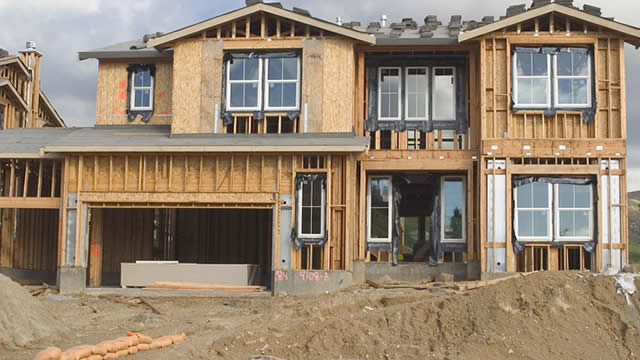
Lennar shares jump on report it's working on a ‘Trump Homes' plan
CNBC· 2026-02-03 17:20
Shares of homebuilders Lennar and Taylor Morrison Home rose on Tuesday following a Bloomberg News report that the two companies were among a cohort working on a proposed "Trump Homes" plan aimed at easing the U.S. housing affordability crunch.Builders including Lennar and Taylor Morrison Home have discussed a large-scale program that would sell entry-level homes into a pathway-to-ownership program funded by private investors, Bloomberg wrote, citing people familiar with the plan. One version of the plan see ...
Lennar(LEN) - 2025 Q4 - Annual Report
2026-01-28 21:54
Homebuilding Operations - Homebuilding operations generated $32 billion in revenues, accounting for approximately 94% of consolidated revenues in fiscal 2025[11] - New home deliveries reached 82,583 in fiscal 2025, an increase from 80,210 in fiscal 2024 and 73,087 in fiscal 2023[14] - The average sales price of a Lennar home in fiscal 2025 was $391,000, down from $423,000 in fiscal 2024 and $445,000 in fiscal 2023[15] - As of November 30, 2025, 98% of total homesites were controlled through options, up from 82% in the previous year[17] - The backlog dollar value, including unconsolidated entities, was $5.2 billion at November 30, 2025, compared to $5.4 billion at the same date in 2024[29] - The company experienced a cancellation rate of 14% in both 2025 and 2024[28] - The company operates in 1,708 communities as of November 30, 2025, up from 1,447 communities in 2024[20] Financial Services - In fiscal year 2025, the company originated approximately 55,900 residential mortgage loans totaling $20.0 billion, an increase from 54,600 loans totaling $19.8 billion in fiscal year 2024[34] - The financial services subsidiaries provided loans to 84% of homebuyers who obtained mortgage financing in areas where services were offered[33] - As of November 30, 2025, the company had a total maximum borrowing capacity of $3.3 billion under six warehouse residential facilities[35] - The company locked interest rates on approximately 56,900 residential mortgage loans totaling $19.9 billion in fiscal year 2025[34] - The company’s Financial Services operations employ mortgage-backed securities forward commitments and option contracts to protect against interest rate fluctuations[314] - Financial services fixed rate notes and other debts payable are valued at $123.1 million with an average interest rate of 3.4%[320] - Financial services variable rate debts total $1,667.2 million, with an average interest rate of 5.3%[320] Multifamily Business - The Multifamily business has capitalized and developed 128 multifamily residential communities with approximately 39,300 rental units across 20 states[42] - As of November 30, 2025, Upward America had purchased 4,697 homes in 103 communities for a total purchase price of $1.2 billion, averaging $258,000 per home[49] - The company has a pipeline of 32 potential future developments in the Multifamily segment, totaling approximately $2.8 billion in anticipated development costs[43] Technology and Innovation - The company aims to enhance efficiencies and reduce costs through technology and innovative strategies[13] - The book value of strategic technology investments was $581.8 million as of November 30, 2025[39] Land and Operating Model - In February 2025, the company completed the spin-off of Millrose Properties, contributing $5.6 billion in land assets and $1.0 billion in cash[31] - The company is focused on a land-light operating model, increasing flexibility and reducing capital intensity[13] Environmental Commitment - The company is focused on creating environmentally sustainable products, incorporating features like Low-VOC paint, WaterSense® faucets, Low-E windows, and Energy Star® appliances in new homes[67][74] - The company believes in the value of clean energy and consistently seeks opportunities to integrate solar power into its home designs[68] Workforce and Culture - The company employed 12,532 individuals as of November 30, 2025, a decrease from 13,265 individuals in the previous year, with 10,182 in Homebuilding operations[73] - The company’s overall relations with its workforce are considered healthy, despite subcontracting many phases of homebuilding operations[73] - The company is focused on attracting and retaining talent, emphasizing a culture of inclusion and providing a comprehensive benefits package[69][70] Risk Management - The company utilizes derivative financial instruments to hedge interest rate exposure, particularly for loans held-for-sale, to mitigate risks associated with fluctuations in mortgage-related interest rates[315] - The company’s primary market risk exposure relates to fluctuations in interest rates on investments, loans held-for-sale, and outstanding variable rate debt[312] - The company is subject to various local, state, and federal regulations that can increase construction costs and impact homebuilding activities, including environmental laws and zoning regulations[60][61] Health and Safety - The company is committed to health and safety, having hired a Chief Medical Officer to oversee safety protocols during the COVID-19 pandemic[71] Debt and Investments - Fixed rate investments held-to-maturity are valued at $132.9 million with an average interest rate of 3.6%[320] - Homebuilding fixed rate senior notes and other debts payable total $2,380.5 million, with an average interest rate of 5.0%[320] - Variable rate debts in homebuilding amount to $1,710.0 million, with an average interest rate of 5.2%[320]
What The Fed's Next Rate Cut Window Means For Bank Stocks And Homebuilders - Bank of America (NYSE:BAC), D.R. Horton (NYSE:DHI)
Benzinga· 2026-01-27 21:20
Core Viewpoint - Market focus is shifting towards the timing and implications of potential Federal Reserve interest rate cuts, particularly for equity sectors like banks and homebuilders, as easing may occur if inflation pressures continue to decrease [1][2]. Group 1: Impact on Banks - Banks are highly sensitive to interest rate changes, with their income largely derived from the spread between deposit rates and loan rates. Higher funding costs and cautious borrowing have limited profit growth for major US banks like JPMorgan Chase & Co. and Bank of America Corp. [5][6]. - A shift towards lower rates could stabilize net interest margins, as competition for deposits may ease, allowing banks to retain customers without further rate increases [7]. - Lower borrowing costs could enhance demand for loans, including mortgages and business loans, potentially improving bank revenues after a period of stagnation [8]. - However, if rate cuts are driven by economic stress, there could be an increase in loan defaults, making credit risk a critical variable for banks [9]. - Many bank stocks are trading below historical price-to-book averages, and if earnings expectations stabilize, there could be a re-rating of financials as confidence in balance sheet strength improves [11]. Group 2: Impact on Homebuilders - The housing sector is particularly sensitive to interest rates, with mortgage rates closely following long-term Treasury yields. Changes in rates can significantly affect buyer behavior [12]. - A rate cut cycle could improve mortgage affordability, unlocking demand from buyers who previously delayed purchases due to high monthly payments [14]. - Limited housing supply relative to historical norms could magnify price effects if demand recovers faster than supply, allowing builders to regain pricing power [15]. - Despite lower rates, construction costs remain high, and labor shortages could impact profit growth. Builders with national scale and efficient supply chains may be better positioned to protect margins [16]. - Homebuilder stocks often serve as forward indicators for broader consumer health, with strength in this sector potentially reinforcing optimism about discretionary spending [17]. Group 3: Yield Curve and Economic Indicators - The shape of the yield curve is crucial for both banks and homebuilders. A steeper curve benefits banks by widening the gap between lending rates and deposit costs, while lower long-term yields lead to cheaper mortgage rates for homebuyers [18]. - If the Fed cuts short-term rates while long-term yields remain stable, both sectors could benefit. However, if long-term yields fall sharply due to anticipated economic slowdowns, housing affordability may improve, but banks could face weaker loan demand and rising credit risk [19]. - Key indicators to watch include inflation data, labor market conditions, mortgage rate trends, and bank earnings guidance, as these will help determine whether rate cuts support or undermine the banking and housing industries [20][21][22][25]. Group 4: Investment Positioning - Bank stocks and homebuilders are often viewed as early cycle trades, typically outperforming when monetary policy shifts from restrictive to neutral and growth remains intact. Timing is critical, as entering too early may expose investors to downside risks, while waiting too long could result in missing initial phases of multiple expansions [26]. - Diversified banks with strong capital levels and stable deposit bases are better positioned than those with heavy exposure to riskier credit segments. Similarly, builders with national footprints and flexible pricing strategies may be more capable of converting improving demand into earnings growth [27]. - The Fed's next rate cut window is not just a macro headline but a potential catalyst for leadership changes across the equity market, with the performance of banks and homebuilders depending on the economic backdrop accompanying the cuts [28].



Lennar’s Quarterly Earnings Preview: What You Need to Know
Yahoo Finance· 2026-01-23 11:23
Core Viewpoint - Lennar Corporation is facing a significant decline in earnings, with analysts projecting a 55.1% drop in profit per share for the upcoming quarter compared to the previous year, indicating potential challenges in the homebuilding sector [2]. Company Overview - Lennar Corporation is one of the largest homebuilding companies in the U.S., with a market capitalization of approximately $30.1 billion, focusing on residential property development and construction across various regions [1]. Earnings Projections - For the first quarter, analysts expect Lennar to report earnings per share (EPS) of $0.96, down from $2.14 in the same quarter last year [2]. - For the current fiscal year, EPS is projected to be $6.40, a decrease of 20.6% from $8.06 in fiscal 2025, but a rebound is anticipated in fiscal 2026 with a 29.7% growth to $8.30 [3]. Stock Performance - LEN stock has declined by 15.7% over the past 52 weeks, underperforming the S&P 500 Index, which returned 13.6%, and the Consumer Discretionary Select Sector SPDR Fund, which increased by 6.6% during the same period [4]. Dividend Announcement - On January 21, Lennar announced a quarterly cash dividend of $0.50 per share for both Class A and Class B common stock, payable on February 19, 2026, resulting in a 2.5% increase in share price following the announcement [5]. Analyst Ratings - Wall Street analysts maintain a cautious stance on LEN stock, with an overall "Hold" rating. Among 19 analysts, two recommend a "Strong Buy," nine suggest a "Hold," one advises a "Moderate Sell," and seven recommend a "Strong Sell" [6]. - The stock is currently trading slightly above its mean price target of $108.23, with a potential rally of up to 34.3% indicated by the Street-high target price of $154 [6].
Higher Treasury Yields Weigh on Home Builder Stocks
Barrons· 2026-01-20 16:10
Group 1 - The increase in the 10-year Treasury yield is leading to higher mortgage rates, negatively impacting home-building related stocks [1] - The iShares U.S. Home Construction ETF experienced a 1.5% decline, marking its largest percentage drop since January 7 [1] - Major home builders such as D.R. Horton reported flat earnings, while Lennar and PulteGroup saw declines of 0.8% and 1.5% respectively [1] Group 2 - Builder stocks had previously benefited from optimism due to a decline in mortgage rates earlier in the month [2] - This decline in mortgage rates was influenced by a statement from President Donald Trump regarding Fannie Mae and Freddie Mac purchasing mortgage-backed securities [2]

Trump's $200 Billion Mortgage Package Could Trigger A Rally In These Two Stocks, Says Steve Eisman: 'Like Threading An Elephant Through A Needle' - D.R. Horton (NYSE:DHI), iShares U.S. Home Constructi
Benzinga· 2026-01-19 04:24
Core Viewpoint - Investor Steve Eisman suggests that President Trump's initiative to lower mortgage costs could lead to a short-term rally in U.S. homebuilder stocks, despite not addressing deeper market issues [1]. Group 1: Policy Impact - Trump's proposal includes purchasing $200 billion in mortgage-backed securities to reduce borrowing costs, which Eisman believes could trigger a rally in homebuilder stocks [2]. - The current mortgage rates have decreased to 6%, and if they drop to 5.5%, it is expected that both existing and new home sales will improve [3]. Group 2: Stock Performance - Two key homebuilder stocks, Lennar Corp. and D.R. Horton Inc., are highlighted as having potential for upward movement due to falling mortgage rates and their low valuations [3]. - D.R. Horton has a market capitalization of $45 billion, and Eisman anticipates that these stocks will rise more rapidly than expected [3]. Group 3: Market Context - The homebuilding sector had a challenging year in 2025, impacted by high rates, tariffs, and immigration policies, but is showing positive momentum at the start of 2026 [4]. - Year-to-date performance for Lennar Corp. is +13.79% and for D.R. Horton Inc. is +7.03%, indicating a recovery trend [5].

Why Is Lennar (LEN) Up 8.2% Since Last Earnings Report?
ZACKS· 2026-01-15 17:31
Core Viewpoint - Lennar reported mixed results for Q4 fiscal 2025, with adjusted earnings missing estimates while total revenues exceeded expectations, reflecting ongoing challenges in the housing market [3][6]. Financial Performance - Adjusted EPS for Q4 was $2.03, missing the Zacks Consensus Estimate of $2.23 by 9%, and down from $4.03 in the prior year [6]. - Total revenues reached $9.37 billion, surpassing the consensus mark of $9.13 billion by 2.7%, but declined 5.8% year-over-year from $9.95 billion [6]. - For fiscal 2025, total revenues were $34.2 billion, down from $35.4 billion in fiscal 2024, with homebuilding revenues decreasing to $32.27 billion from $33.91 billion [13]. Segment Performance - Homebuilding revenues totaled $8.89 billion, down 6.9% year-over-year, with home sales contributing $8.85 billion, also down 6.8% [7]. - Home deliveries increased by 3.7% to 23,034 units, while the average selling price (ASP) of homes delivered was $386,000, down 10.2% from the previous year [8]. - Financial Services segment revenues grew 1.4% year-over-year to $308.8 million, but operating earnings decreased to $133.8 million from $154.5 million [11]. Market Conditions - The housing market remains challenging due to affordability issues and buyer uncertainty, compounded by a six-week government shutdown [4]. - Interest rates declined modestly in Q4, which is expected to help stabilize the market as Lennar increases volumes [5]. Future Guidance - For Q1 fiscal 2026, Lennar expects home deliveries between 17,000-18,000, with an ASP of $365,000-$375, down from $408,000 a year ago [16]. - Gross margin on home sales is projected to be 15-16%, down from 18.7% reported a year ago [17]. Estimate Revisions - Since the earnings release, there has been a downward trend in estimates, with the consensus estimate shifting down by 45.47% [18]. - Lennar currently holds a Zacks Rank 5 (Strong Sell), indicating expectations of below-average returns in the coming months [21].
Trump's Housing Czar Slams Buybacks. These Home Builder Stocks Are Falling.
Barrons· 2026-01-14 12:03
Core Viewpoint - Bill Pulte criticized home builders' stock buybacks, leading to a decline in shares of D.R. Horton and Lennar [1] Company Impact - D.R. Horton and Lennar experienced a drop in their stock prices following Pulte's comments on buybacks [1]