PepsiCo(PEP)

Search documents
PepsiCo (PEP) Crossed Above the 20-Day Moving Average: What That Means for Investors
ZACKS· 2025-08-08 14:35
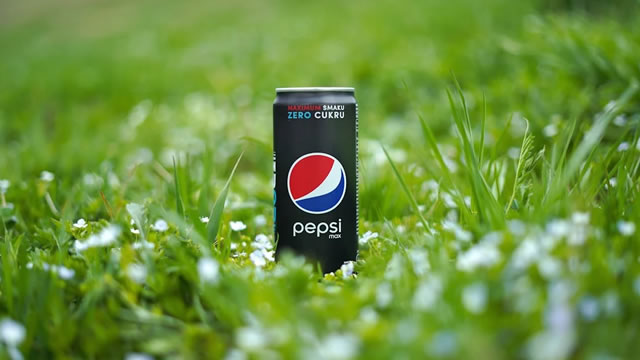
Core Viewpoint - PepsiCo (PEP) has reached a significant support level and shows potential for investors from a technical perspective, having recently broken through the 20-day moving average, indicating a short-term bullish trend [1] Technical Analysis - The 20-day simple moving average is a widely used trading tool that smooths out price fluctuations and provides more trend reversal signals than longer-term moving averages [2] - PEP's stock price has been on an upward trajectory over the past four weeks, increasing by 5.8% [4] Earnings Estimates - PEP is currently rated as a Zacks Rank 2 (Buy), suggesting the stock could continue to rise [4] - There have been 9 upward revisions for PEP's earnings estimates for the current fiscal year, with no downward revisions, indicating positive sentiment among analysts [4] Investment Outlook - The combination of positive earnings estimate revisions and the stock hitting a key technical level suggests that investors should monitor PEP for potential gains in the near future [5]


百事人形机器人家族亮相WAIC,饮料品牌正在刷新消费场景想象
36氪未来消费· 2025-08-08 11:07
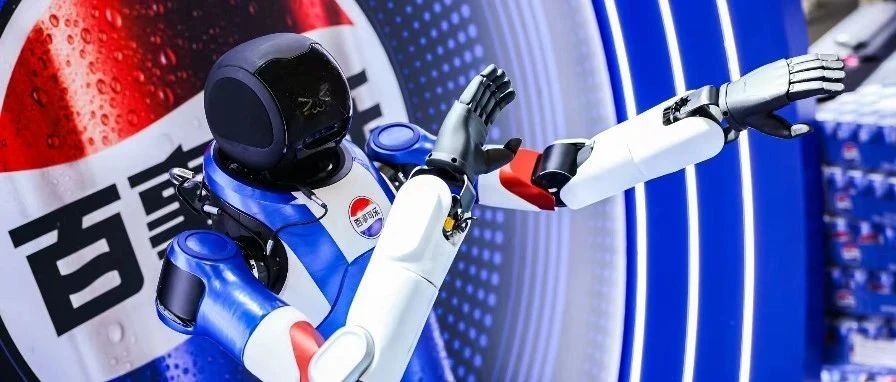
Core Viewpoint - PepsiCo is leveraging humanoid robots as a new brand interface to enhance consumer interaction and emotional connection, moving beyond traditional marketing methods to create a more engaging and relatable brand experience [3][10][21]. Group 1: Brand Innovation - The introduction of "Pepsi Cool Buddy" follows the earlier launch of "Pepsi Blue Buddy," marking a significant step in integrating humanoid robots into the brand's identity [4][10]. - These robots are not merely technological showcases but are designed to facilitate emotional engagement and interaction with consumers, thus becoming a tangible brand asset [4][11][12]. Group 2: Technology Integration - PepsiCo's deployment of humanoid robots at the WAIC (World Artificial Intelligence Conference) represents a pioneering effort to merge beverage branding with emerging technologies, particularly embodied intelligence [6][9]. - The underlying technology, based on the Zhiyuan Lingxi X2 platform, enables emotional recognition and interactive capabilities, enhancing the consumer experience [6][10]. Group 3: Consumer Engagement - The robots engage consumers through simple yet impactful actions like delivering drinks and initiating conversations, addressing the desire for a "warm technology" experience [7][21]. - This approach aims to transform the perception of humanoid robots from mere technical displays to relatable companions that enhance everyday interactions with the brand [15][23]. Group 4: Market Positioning - By positioning humanoid robots as ongoing interactive entities, PepsiCo is redefining brand communication strategies, moving from passive content delivery to active consumer engagement [12][19]. - The initiative reflects a broader industry trend where brands seek to establish personalized connections with consumers, particularly among younger demographics [18][24]. Group 5: Future Implications - The introduction of a new robot-themed can design indicates PepsiCo's intent to further embed this technological identity into everyday consumer products, enhancing brand recognition [16][20]. - This strategy not only addresses current consumer engagement challenges but also sets a precedent for how brands can utilize technology to foster deeper emotional connections with their audience [25].
Pricing Power vs. Volume Pressure: What's Driving PepsiCo Now?
ZACKS· 2025-08-06 16:11
Core Insights - PepsiCo, Inc. reported Q2 2025 earnings per share (EPS) of $2.12 and revenues of $22.73 billion, surpassing expectations despite facing volume pressures, particularly in North America [1][9] - The company is implementing strategic pricing and value-creation efforts to counter declining volumes, focusing on affordability and everyday low pricing to retain consumers [2] - PepsiCo's productivity strategy, leveraging AI and ERP upgrades, is expected to yield a 70% increase in productivity in the second half of 2025, primarily from Frito-Lay [3] Financial Performance - PepsiCo's Q2 2025 revenues of $22.73 billion were driven by pricing actions despite weaker volume trends [9] - The company trades at a forward price-to-earnings ratio of 16.88X, slightly below the industry average of 17.39X [10] - The Zacks Consensus Estimate indicates a year-over-year decline of 1.8% in 2025 earnings, with a projected growth of 5.2% in 2026 [11] Strategic Initiatives - The company is relaunching core brands like Lay's and Tostitos with cleaner labels and expanding its snacking portfolio to boost consumer engagement [4] - PepsiCo's focus on operational discipline and brand innovation aims to return to long-term growth amid a competitive landscape [4] Competitive Landscape - PepsiCo faces strong competition from Coca-Cola and Keurig Dr Pepper, both leveraging their unique strengths to capture market share [5] - Coca-Cola maintains its leadership through brand strength and global reach, while Keurig Dr Pepper benefits from a hybrid portfolio and strong at-home consumption trends [6][7]

无论业绩好坏,美国消费股都在跌!高盛看不懂:为何逢低抛售?
Hua Er Jie Jian Wen· 2025-08-03 22:28
Core Viewpoint - The current earnings season for U.S. consumer stocks has led to an unusual sell-off, despite strong earnings reports, indicating deep-seated market concerns about the sustainability of consumer strength [1][2]. Group 1: Earnings Performance - 83% of the 317 S&P 500 companies that have reported earnings exceeded expectations, yet stock prices generally fell post-announcement [1]. - Companies like Procter & Gamble (PG) and PepsiCo (PEP) experienced initial stock price increases after reporting strong earnings, but ultimately saw declines in the following days [3]. Group 2: Market Sentiment - The prevailing market environment suggests a tactical "sell-the-news" approach, with investors opting to take profits rather than establish new long positions [2]. - Negative earnings surprises have led to significant stock price drops, with companies like Philip Morris International (PM) and Chipotle Mexican Grill (CMG) facing severe sell-offs following disappointing results [4]. Group 3: Exceptions to the Trend - A few companies managed to resist the broader sell-off, including Las Vegas Sands (LVS), Wingstop (WING), and Builders FirstSource (BLDR), which showed resilience due to specific business strengths [5]. - Despite these exceptions, the overall sentiment in the consumer sector remains pessimistic, with investors wary of future economic uncertainties [5].




Should You Forget Costco? Why These Unstoppable Stocks Are Better Buys
The Motley Fool· 2025-08-03 07:14
Core Viewpoint - Costco's stock is currently overvalued despite its strong business performance, making Coca-Cola and PepsiCo more attractive investment options for income and value-focused investors [4][14]. Group 1: Costco - Costco operates on a membership model, providing a reliable revenue stream with a high member renewal rate of approximately 90% [2]. - The company is experiencing growth through new store openings and increased customer spending, but its stock valuation is high with P/S, P/E, and P/B ratios above five-year averages [4]. - The dividend yield for Costco is low at around 0.6%, which is disappointing for income-focused investors [5][4]. Group 2: Coca-Cola - Coca-Cola has shown strong performance with a 5% growth in organic revenues in the second quarter, appealing to consumers despite inflation concerns [6][7]. - The stock is reasonably priced with P/S, P/E, and P/B ratios at or slightly below five-year averages, and a dividend yield of 3% [8]. - Coca-Cola is considered a better value than Costco due to its strong business performance and reasonable stock valuation [8][14]. Group 3: PepsiCo - PepsiCo's stock is undervalued with P/S, P/E, and P/B ratios significantly below five-year averages, and a dividend yield of approximately 4% [10]. - The company reported a lower organic sales growth of 2.1% in the second quarter compared to Coca-Cola, indicating underperformance [11]. - PepsiCo is a diversified business with a history of dividend growth, and recent acquisitions may help it regain momentum [12][13].


The Motley Fool's Just-Released Report Shows U.S. Inflation Is at 2.7%. Here's How 2 Consumer Goods Staples Are Faring.
The Motley Fool· 2025-08-02 10:27
Core Viewpoint - Consumer staple companies may benefit from higher inflation due to their ability to pass on cost increases to customers, but consumer resistance to price hikes is a concern [2]. Group 1: PepsiCo - PepsiCo's second-quarter revenue increased by 2%, driven entirely by higher prices, which contributed 4 percentage points, while lower volume subtracted about 1.5 percentage points [5]. - Adjusted operating income for PepsiCo fell by 3%, indicating that price hikes were insufficient to offset rising costs [5]. - PepsiCo's share price dropped by 16.9% over the past year, contrasting with a 16.8% gain in the S&P 500 index during the same period [6]. - The price-to-earnings (P/E) ratio for PepsiCo increased from 19 to 26, which is still lower than the S&P 500's P/E of 30, suggesting potential for patient investors [7]. Group 2: Procter & Gamble - Procter & Gamble's fiscal third-quarter adjusted sales grew by only 1%, with higher prices accounting for the entire increase and volumes remaining flat [9]. - In the fourth quarter, adjusted sales increased by 2%, with higher prices and mix each contributing 1 percentage point, while volume remained constant [10]. - Procter & Gamble's stock price decreased by 7.9% over the past year, and its P/E multiple contracted from 28 to less than 25 [10].

3 Dividend Stocks to Hold for the Next 20 Years
The Motley Fool· 2025-08-02 09:25
Group 1: General Mills - General Mills produces essential food products such as cereal, snack bars, and pet food, with well-known brands like Blue Buffalo and Cheerios [3] - The company is currently facing challenges due to shifting consumer buying habits, resulting in a decline in sales and earnings in the fourth quarter of fiscal 2025 [4] - Management is adapting by reformulating products, adjusting the brand portfolio, and controlling costs, which is expected to help the company recover over time [5] - The stock offers an attractive dividend yield of 4.8%, one of the highest in its history, making it a potential buy for long-term investors [6] Group 2: PepsiCo - PepsiCo is a leading player in the beverage and snack industry, holding the position of the No. 2 beverage company and the No. 1 salty snack maker [7] - The company is experiencing challenges as consumer tastes evolve, but it is addressing these issues by acquiring businesses that align with current trends [8] - Despite recent financial struggles, PepsiCo has a strong history of resilience and offers a dividend yield of 3.9%, suggesting potential long-term gains for investors [10] Group 3: Hershey - Hershey primarily produces chocolate, which is not a necessity, making it a more challenging investment compared to other consumer staples [11] - The company is facing significant headwinds due to a sharp increase in cocoa prices, leading to a projected mid-30% drop in earnings for 2025 [12] - Despite the current challenges, there is a long-term demand for Hershey's products, indicating potential for recovery if investors can tolerate short-term uncertainty [13] Group 4: Consumer Staples Industry - Consumer staples companies provide products that are consistently in demand, such as chocolate, soda, and cereal, which are not life necessities but are still widely purchased [14] - The current headwinds faced by these companies are unlikely to change the fundamental nature of their businesses, as they have historically adapted to market trends [14] - With historically high dividend yields from General Mills, PepsiCo, and Hershey, long-term holding strategies may be beneficial for conservative dividend investors [15]


Will PepsiCo's Focus on Premium Drinks Drive the Next Leg of Growth?
ZACKS· 2025-07-31 18:31
Core Insights - PepsiCo is enhancing its competitive position in the beverage sector by focusing on premium and functional drinks to align with changing consumer preferences [1][2] - The company is shifting its beverage portfolio away from traditional colas towards health-conscious options, including no-sugar colas, functional hydration, and energy drinks [1][8] - Strategic partnerships, such as the alliance with Celsius, are being leveraged to support the premium drink strategy and enhance distribution [3] Company Strategy - PepsiCo's success with Gatorade and Propel indicates its capability to scale health-focused beverages, with premium hydration becoming a key growth area [2] - The introduction of liquid protein products is anticipated in late 2025 and early 2026, emphasizing taste and natural ingredients [2] - The company's focus on cleaner formulations and no artificial ingredients reflects a broader shift in its portfolio to meet evolving consumer expectations [2] Competitive Landscape - PepsiCo faces strong competition from Coca-Cola and Keurig Dr Pepper, both of which are investing heavily in premium and health-conscious beverages [4][5][6] - Coca-Cola is expanding its zero-sugar variants and functional beverages, while KDP is enhancing its premium beverage offerings through strategic partnerships and a balanced portfolio [5][6] Financial Performance - PepsiCo's shares have declined approximately 8.3% year to date, contrasting with the industry's growth of 4.6% [7] - The company trades at a forward price-to-earnings ratio of 17.33X, slightly below the industry average of 17.53X [9] - The Zacks Consensus Estimate indicates a projected decline of 1.9% in 2025 earnings, with a subsequent growth of 5.3% in 2026 [10]
1 Company Who Recently Cut Its Dividend By 69%, And 1 Who Could Potentially Cut In The Near Future
Seeking Alpha· 2025-07-31 11:10
Core Insights - A significant number of companies have reduced their dividends in recent years, including notable names like Walgreens and Leggett & Platt [1] Group 1 - The article highlights the trend of dividend cuts among companies, particularly those that were once considered reliable dividend payers [1] - The author expresses a personal investment philosophy focused on quality blue-chip stocks, business development companies (BDCs), and real estate investment trusts (REITs) [1] - There is an emphasis on the goal of helping lower and middle-class workers build investment portfolios centered around high-quality, dividend-paying companies [1]


2025年世界500强放榜:百事和可口可乐排名跃升,雀巢和联合利华企稳,亿滋、百威和星巴克生变,暂别的巨头仍未能上榜
3 6 Ke· 2025-07-30 00:04
Group 1 - The total revenue of the companies on the Fortune Global 500 list is approximately $41.7 trillion, which is over one-third of the global GDP, representing a growth of about 1.8% compared to last year [1] - The minimum sales revenue required to be listed increased from $32.1 billion to $32.2 billion [1] - The total net profit of the listed companies grew by approximately 0.4% year-on-year to about $2.98 trillion [1] Group 2 - In the food and beverage sector, the list of companies remains unchanged, but many did not continue the significant ranking improvements seen last year [3] - PepsiCo and Coca-Cola are exceptions, showing resilience in a challenging environment [3] Group 3 - In the "Food: Consumer Products" sub-list, the companies listed are Nestlé, PepsiCo, and Mondelez International, with PepsiCo being the only company to see an increase in ranking and growth in both revenue and profit [5] - Nestlé's revenue increased by 0.2% to $103.7495 billion, while its profit decreased by 0.9% to $12.361 billion [6] - PepsiCo's revenue grew by 0.4% to $91.854 billion, and profit increased by 5.6% to $9.578 billion [9] Group 4 - Mondelez International's ranking dropped by 14 places to 436, with revenue growth of 1.2% to $36.441 billion, but profit decreased by 7% to $4.611 billion [9] - Mars, Inc. is not listed but has a significant revenue of $54.6 billion, which would place it at 267th if it were included [11] Group 5 - In the "Beverages" sub-list, Coca-Cola had the highest revenue growth of 2.9% to $47.061 billion [13] - Anheuser-Busch InBev and Fomento Económico Mexicano maintained stable revenue and rankings, while Heineken's revenue decreased by 1.8% [15] Group 6 - In the "Food: Food Service" sub-list, Compass Group improved its ranking by 28 places to 370, with a revenue increase of 10.5% to $42.002 billion [17] - Starbucks' ranking fell by 23 places to 441, with a slight revenue increase of 0.6% to $36.176 billion [17] Group 7 - In the "Food Production" sub-list, ADM remains at the top despite a drop of 26 places to 143, with revenue of $85.530 billion [22] - JBS and Wilmar International follow, with JBS rising 9 places to 167 [23] Group 8 - China Resources ranked 67th with a revenue of $129.624 billion, up 5 places [26] - COFCO Group ranked 133rd with a revenue of $88.26 billion, down 27 places [28] Group 9 - Walmart remains the largest company globally for the twelfth consecutive year, with a revenue increase of 5.1% to $680.985 billion and a profit increase of 25.3% to $19.436 billion [30] - Saudi Aramco leads in profit with approximately $105 billion, despite a year-on-year decline of about 13% [32] Group 10 - A total of 130 Chinese companies made the list, with 49 improving their rankings and 68 declining [34] - Pinduoduo saw the most significant ranking increase among Chinese companies, rising 176 places to 266 [34]