PepsiCo(PEP)

Search documents
美国银行Q2减持苹果等 加仓Meta、亚马逊
Mei Ri Jing Ji Xin Wen· 2025-08-14 22:29
Group 1 - The core viewpoint of the article highlights the investment activities of Bank of America in the second quarter, indicating a strategic shift in its portfolio [1] - Bank of America increased its holdings in companies such as Broadcom, Meta Platforms, JPMorgan, Vanguard Growth ETF, and Amazon [1] - The bank reduced its positions in Apple and Pepsi, suggesting a potential reevaluation of these investments [1] Group 2 - The bank maintains significant positions in Microsoft, NVIDIA, Apple, Vanguard Value ETF, and Vanguard Growth ETF, indicating a focus on technology and growth sectors [1]


3 Magnificent S&P 500 Dividend Stocks Down Roughly 26% to 60% to Buy and Hold Forever
The Motley Fool· 2025-08-13 22:27
Core Insights - The article emphasizes that quality stocks, particularly dividend-paying ones, can be attractive investment opportunities when they are undervalued in the market [1][2]. Group 1: Merck - Merck's revenue is heavily reliant on its cancer drug Keytruda, which accounts for 50% of total revenue, and faces patent expirations in the U.S. by 2028 and in Europe by 2031, contributing to a 39% decline in stock price from last year's peak [3][6]. - Despite current challenges, Merck has a promising pipeline with up to 20 drugs that could collectively generate over $50 billion in annual sales by the mid-2030s [5][6]. - The stock is currently priced at less than 9 times expected earnings, with a dividend yield of 4%, indicating that challenges are already reflected in the stock price [7]. Group 2: Target - Target has struggled with a 3.8% decline in same-store sales and a 60% drop in stock price since late 2021, largely due to economic conditions and internal controversies [8][12]. - There are signs of potential economic recovery, with a slight increase in consumer confidence and GDP growth estimates, which could benefit Target's sales [9][12]. - The stock is priced at about 14 times expected earnings, with a forward-looking dividend yield of 4.3%, suggesting a reasonable risk-reward profile for investors [12]. Group 3: PepsiCo - PepsiCo has experienced a 26% decline in stock price since its 2023 high, but this downturn may have reached its limit [13]. - The company faces challenges from rising costs in its beverage and food segments, but it is adapting by introducing healthier product options and optimizing its supply chain [14][16]. - PepsiCo is well-positioned to benefit from a potential resurgence in consumer spending and the growing trend towards healthy snacks [16].



PepsiCo Stock Shows Renewed Momentum: Buy the Rally or Step Back?
ZACKS· 2025-08-12 16:01
Core Insights - PepsiCo Inc. has experienced an 11.1% share price increase over the past three months, driven by strong second-quarter 2025 results and positive guidance, with revenues and earnings per share exceeding estimates [1][9] - The company aims to maintain global momentum while enhancing performance in North America through strategic priorities such as portfolio innovation and cost optimization [2][11] Financial Performance - PepsiCo's revenue growth of 11% outperformed the broader Beverages – Soft Drinks industry and Consumer Staples sector, which grew by 1.5% each, and also surpassed the S&P 500's growth of 9.3% [3][9] - The current share price of $144.87 is 19.4% below its 52-week high of $179.73, indicating potential for upside [8] Competitive Positioning - PepsiCo's performance is stronger than competitors like Coca-Cola, Keurig Dr Pepper, and Monster Beverage, which saw share price increases of 2.6%, 4.7%, and 5.7% respectively [7] - The company is trading at a forward 12-month P/E multiple of 17.53X, lower than the industry average of 18.03X and the S&P 500's average of 22.69X, suggesting an attractive valuation relative to peers [19] Strategic Initiatives - PepsiCo is focusing on innovation, portfolio evolution, and cost optimization to thrive in both developed and emerging markets, particularly through its "One North America" strategy [11][14] - The company is addressing supply-chain pressures by adjusting sourcing, optimizing manufacturing, and employing automation and digitalization to enhance efficiency [13][14] Analyst Sentiment - Analysts have raised EPS forecasts for 2025 and 2026 by 1.78% and 1.81% respectively, indicating growing confidence in PepsiCo's growth potential [15] - The Zacks Consensus Estimate for 2025 sales suggests a year-over-year growth of 1.3%, while EPS is expected to decline by 1.8% [16] Investment Outlook - PepsiCo's recent share price rebound reflects strong operational execution and market confidence in its growth strategy, positioning it well to navigate macroeconomic challenges [21][22] - With strong fundamentals and a clear strategic roadmap, PepsiCo is seen as a compelling buy for investors seeking stability and growth potential [23]
PepsiCo's Valuation Is Looking 25% Sweeter Compared To Coca-Cola
Seeking Alpha· 2025-08-12 10:42
Core Viewpoint - PepsiCo's valuation has significantly decreased from 31.5x TTM P/E to 18.5x, making it an attractive investment opportunity [1] Financial Performance - The investment philosophy emphasizes the importance of financial performance, particularly return on invested capital (ROIC) [1] - Investments are classified based on ROIC: - Long-term/Indefinite: ROIC greater than 9% and capable of growing intrinsic value - Medium-term: ROIC between 6% and 9% and able to maintain intrinsic value - Value Traps: ROIC less than 6% and unable to meet their cost of capital [1] Valuation - The company aims to buy value opportunities at a 30% discount to intrinsic value, targeting over 9% return on equity (ROE) adjusted for the equity value per share at purchase [1] - The analysis incorporates a subjective estimation of growth based on retained earnings and return on equity over the past decade [1]

Pepsi vs. Coke: Which Soda Stock Fizzes With Value?
The Motley Fool· 2025-08-12 09:04
Core Viewpoint - The performance disparity between Coca-Cola and PepsiCo stocks highlights their fundamental differences, with Coca-Cola's stock rising 10% since mid-May 2024, while PepsiCo's stock has declined by 20% during the same period [1][2]. Company Comparison - Coca-Cola operates solely in the beverage market, with brands like Gold Peak tea, Minute Maid juices, Dasani water, and Costa coffee, while PepsiCo also includes snack products through its ownership of Frito-Lay and Quaker Oats [4]. - Coca-Cola has divested from bottling operations to focus on marketing, relying on third-party bottlers, whereas PepsiCo manages its own bottling and snack production, exposing it to higher operational costs [5][6]. Financial Performance - PepsiCo's North American food business experienced a 2% year-over-year decline in the second quarter, with a 13% drop on a constant-currency operating basis, reflecting ongoing challenges since late 2023 [7]. - PepsiCo's trailing-12-month price-to-earnings (P/E) ratio is 18, which is considered low compared to Coca-Cola's P/E ratio of over 23 for 2025, indicating potential undervaluation [9]. - PepsiCo's projected dividend yield is 4%, significantly higher than Coca-Cola's 2.9%, with a strong history of annual dividend growth [10]. Strategic Initiatives - PepsiCo is addressing its challenges by acquiring brands like Siete Foods and Sabra to enhance its product offerings and responding to consumer trends towards healthier options [13]. - The company is investing in technology to improve supply chain efficiency, including AI-powered warehouse robotics and partnerships for AI customer service solutions [14]. Market Sentiment - Despite recent struggles, PepsiCo shares have increased by 12% from their June low, indicating a potential shift in investor sentiment towards the company's turnaround efforts [17]. - The ongoing improvements in product relevance and cost management suggest that PepsiCo's stock may experience a rapid valuation increase as investor confidence grows [16][18].

Does PepsiCo Have the Edge in Functional Beverage Boom?
ZACKS· 2025-08-11 14:42
Core Insights - PepsiCo, Inc. is strategically positioned to capture a significant share in the expanding functional beverage market through health-conscious innovations, brand strength, and distribution reach [1][3] - The company is focusing on no-sugar colas, Gatorade, and functional hydration platforms like Propel, with plans to enter the liquid protein market in late 2025 and early 2026 [1][8] - PepsiCo's competitive advantage lies in integrating functionality into established beverage lines and leveraging partnerships to meet diverse consumer needs [2][6] Company Strategy - The company is investing in cleaner labels, affordability, and a broader portfolio transformation to enhance its market positioning [3] - PepsiCo's approach includes a combination of owned brands, joint ventures, and partnerships, which allows it to address various consumer demands effectively [2][6] Competitive Landscape - Competitors like Coca-Cola and Keurig Dr Pepper are also making strategic moves in the functional beverage market, with Coca-Cola focusing on energy, hydration, and wellness categories [4][5] - Keurig Dr Pepper is expanding into enhanced hydration and wellness categories, benefiting from strategic partnerships to capture growth in the energy drink market [6] Financial Performance - PepsiCo's shares have decreased by approximately 4.5% year-to-date, while the industry has grown by 6% [7] - The company trades at a forward price-to-earnings ratio of 17.57X, slightly below the industry average of 18.03X [9] - The Zacks Consensus Estimate indicates a projected decline of 1.8% in 2025 earnings, with a subsequent growth of 5.2% in 2026 [10]

PepsiCo (PEP) Crossed Above the 200-Day Moving Average: What That Means for Investors
ZACKS· 2025-08-11 14:31
Technical Analysis - PepsiCo (PEP) has recently reached a key level of support and has overtaken the 200-day moving average, indicating a long-term bullish trend [1] - The 200-day simple moving average is a widely-used indicator that helps establish market trends, and PEP has gained 7.4% over the past four weeks [2] Earnings Estimates - Positive earnings estimate revisions for PEP strengthen the bullish case, with no estimates going lower in the past two months and 9 estimates being revised higher [3] - The consensus estimate for PEP has also increased, suggesting potential for further gains in the near future [3] Market Position - PEP is currently ranked a Zacks Rank 2 (Buy), indicating strong potential for the stock to move even higher [2]
Thirsty for Passive Income? PepsiCo's Dividend Yield Continues to Deliver.
The Motley Fool· 2025-08-10 22:00
Core Viewpoint - PepsiCo presents a strong opportunity for dividend-focused investors despite current challenges, as its long-term performance and dividend history suggest potential for recovery and growth [1][9][10]. Company Overview - PepsiCo is a leading global beverage and snack company, recognized for its diversified portfolio, including its flagship beverage brand, Frito-Lay snacks, and Quaker Oats [4][5]. - The company has a robust distribution system and a strong R&D team, allowing it to compete effectively with peers and act as an industry consolidator [5]. Current Financial Performance - PepsiCo's organic sales growth of 2.1% in Q2 2025 is significantly lower than Coca-Cola's 5%, indicating current struggles relative to competitors [6]. - The stock has declined over 25% from its 2023 highs, resulting in a historically high dividend yield of approximately 4% [7][9]. Investment Opportunity - The significant drop in stock price may present a buying opportunity for long-term investors, as the company's valuation metrics are below their five-year averages [9]. - PepsiCo's status as a Dividend King, with over five decades of annual dividend increases, reflects its ability to navigate challenging periods successfully [10]. Management Confidence - Despite current headwinds, PepsiCo's board approved a 5% dividend increase in June 2025, indicating management's confidence in the company's future prospects [11]. - Recent acquisitions, including a Mexican-American food maker and a probiotic beverage company, are part of efforts to modernize the brand portfolio and address short-term challenges [12].

PepsiCo (PEP) Crossed Above the 20-Day Moving Average: What That Means for Investors
ZACKS· 2025-08-08 14:35
Core Viewpoint - PepsiCo (PEP) has reached a significant support level and shows potential for investors from a technical perspective, having recently broken through the 20-day moving average, indicating a short-term bullish trend [1] Technical Analysis - The 20-day simple moving average is a widely used trading tool that smooths out price fluctuations and provides more trend reversal signals than longer-term moving averages [2] - PEP's stock price has been on an upward trajectory over the past four weeks, increasing by 5.8% [4] Earnings Estimates - PEP is currently rated as a Zacks Rank 2 (Buy), suggesting the stock could continue to rise [4] - There have been 9 upward revisions for PEP's earnings estimates for the current fiscal year, with no downward revisions, indicating positive sentiment among analysts [4] Investment Outlook - The combination of positive earnings estimate revisions and the stock hitting a key technical level suggests that investors should monitor PEP for potential gains in the near future [5]
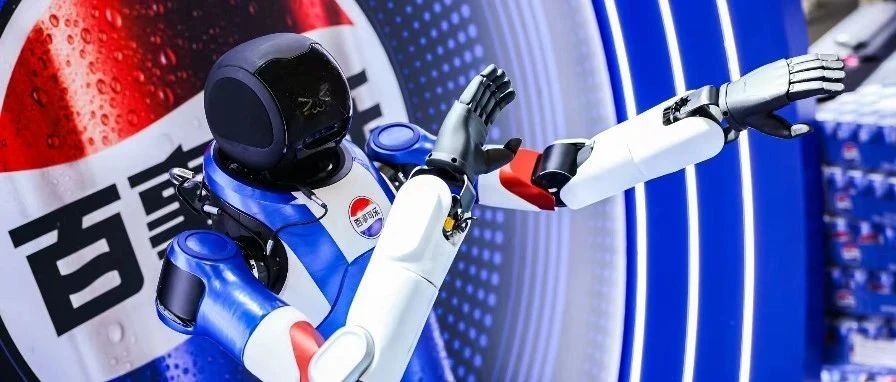
百事人形机器人家族亮相WAIC,饮料品牌正在刷新消费场景想象
36氪未来消费· 2025-08-08 11:07
Core Viewpoint - PepsiCo is leveraging humanoid robots as a new brand interface to enhance consumer interaction and emotional connection, moving beyond traditional marketing methods to create a more engaging and relatable brand experience [3][10][21]. Group 1: Brand Innovation - The introduction of "Pepsi Cool Buddy" follows the earlier launch of "Pepsi Blue Buddy," marking a significant step in integrating humanoid robots into the brand's identity [4][10]. - These robots are not merely technological showcases but are designed to facilitate emotional engagement and interaction with consumers, thus becoming a tangible brand asset [4][11][12]. Group 2: Technology Integration - PepsiCo's deployment of humanoid robots at the WAIC (World Artificial Intelligence Conference) represents a pioneering effort to merge beverage branding with emerging technologies, particularly embodied intelligence [6][9]. - The underlying technology, based on the Zhiyuan Lingxi X2 platform, enables emotional recognition and interactive capabilities, enhancing the consumer experience [6][10]. Group 3: Consumer Engagement - The robots engage consumers through simple yet impactful actions like delivering drinks and initiating conversations, addressing the desire for a "warm technology" experience [7][21]. - This approach aims to transform the perception of humanoid robots from mere technical displays to relatable companions that enhance everyday interactions with the brand [15][23]. Group 4: Market Positioning - By positioning humanoid robots as ongoing interactive entities, PepsiCo is redefining brand communication strategies, moving from passive content delivery to active consumer engagement [12][19]. - The initiative reflects a broader industry trend where brands seek to establish personalized connections with consumers, particularly among younger demographics [18][24]. Group 5: Future Implications - The introduction of a new robot-themed can design indicates PepsiCo's intent to further embed this technological identity into everyday consumer products, enhancing brand recognition [16][20]. - This strategy not only addresses current consumer engagement challenges but also sets a precedent for how brands can utilize technology to foster deeper emotional connections with their audience [25].