
SHENZHOU INTL(SHZHY)

Search documents
Schroders PLC减持申洲国际33.71万股 每股作价约59.67港元
Zhi Tong Cai Jing· 2025-08-25 11:18
香港联交所最新资料显示,8月21日,Schroders PLC减持申洲国际(02313)33.71万股,每股作价59.6654 港元,总金额约为2011.32万港元。减持后最新持股数目约为1.05亿股,最新持股比例为6.99%。 ...
Schroders PLC减持申洲国际(02313)33.71万股 每股作价约59.67港元
智通财经网· 2025-08-25 11:13
智通财经APP获悉,香港联交所最新资料显示,8月21日,Schroders PLC减持申洲国际(02313)33.71万 股,每股作价59.6654港元,总金额约为2011.32万港元。减持后最新持股数目约为1.05亿股,最新持股 比例为6.99%。 ...
申洲国际(02313) - 截至二零二五年七月三十一日止之股份发行人的证券变动月报表
2025-08-01 08:40
FF301 股份發行人及根據《上市規則》第十九B章上市的香港預託證券發行人的證券變動月報表 截至月份: 2025年7月31日 狀態: 新提交 致:香港交易及結算所有限公司 公司名稱: 申洲國際集團控股有限公司 (於開曼群島註冊成立的有限公司) 呈交日期: 2025年8月1日 I. 法定/註冊股本變動 | 1. 股份分類 | 普通股 | 股份類別 | 不適用 | | | 於香港聯交所上市 (註1) | | 是 | | | --- | --- | --- | --- | --- | --- | --- | --- | --- | --- | | 證券代號 (如上市) | 02313 | 說明 | | | | | | | | | | | 法定/註冊股份數目 | | | 面值 | | | 法定/註冊股本 | | | 上月底結存 | | | 3,000,000,000 | HKD | | 0.1 | HKD | | 300,000,000 | | 增加 / 減少 (-) | | | | | | | HKD | | | | 本月底結存 | | | 3,000,000,000 | HKD | | 0.1 | HKD | | ...
申洲国际:2024年净利润62.41亿元 同比增长36.94% 拟每股派息1.28港元
Sou Hu Cai Jing· 2025-04-24 02:59
Core Viewpoint - Shenzhou International (02313) reported a total revenue of 29.898 billion yuan for the fiscal year 2024, marking a year-on-year growth of 14.88% and a net profit attributable to shareholders of 6.241 billion yuan, which represents a year-on-year increase of 36.94% [2] Financial Performance - Total revenue for 2024 was 29.898 billion yuan, up 14.88% year-on-year [2] - Net profit attributable to shareholders reached 6.241 billion yuan, reflecting a 36.94% increase compared to the previous year [2] - Operating cash flow net amount was 5.273 billion yuan, showing a slight growth of 0.89% year-on-year [2][27] - Basic earnings per share were 4.15 yuan, with a weighted average return on equity of 17.97%, an increase of 3.74 percentage points from the previous year [2][23] Dividend Distribution - The company proposed a dividend distribution plan for 2024, with a payout of 1.28 HKD per share, equivalent to 1.19 RMB [2] Valuation Metrics - As of April 23, the price-to-earnings ratio (TTM) was approximately 11.72 times, the price-to-book ratio (TTM) was about 2.04 times, and the price-to-sales ratio (TTM) was around 2.55 times [2] Revenue Composition - The revenue composition for 2024 included: - Sports products: 19.7994 billion yuan - Leisure products: 7.2072 billion yuan - Underwear: 1.4358 billion yuan - Other knitted products: 0.2206 billion yuan [17] Cash Flow and Debt Management - Cash flow from financing activities was -2.651 billion yuan, a decrease of 2.984 billion yuan year-on-year [27] - Cash flow from investing activities was -3.469 billion yuan, compared to -1.38 billion yuan in the previous year [27] - As of the end of 2024, the company’s long-term borrowings decreased by 100%, while short-term borrowings increased by 25.62% [42] Asset and Liability Changes - As of the end of 2024, cash and cash equivalents increased by 47.65%, while fixed assets decreased by 1.53% [39] - The current ratio was 2.29, and the quick ratio was 1.88 [46]

申洲国际(02313) - 2024 - 年度财报
2025-04-23 09:20
Financial Performance - For the fiscal year ending December 31, 2024, the company reported a sales revenue of RMB 28,662,938, an increase of 14.3% from RMB 24,969,792 in 2023[8] - The company's profit before tax for 2024 was RMB 7,163,778, representing a 43.5% increase compared to RMB 4,995,501 in 2023[8] - The net profit for 2024 was RMB 6,240,581, up 37.0% from RMB 4,557,263 in 2023[8] - The gross profit margin improved to 28.1% in 2024, compared to 24.3% in 2023[8] - The group’s overall revenue and operating performance returned to growth, achieving a new high in 2024[12] - The company achieved a sales revenue of approximately RMB 28,662,938,000 for the fiscal year 2024, representing an increase of about 14.8% compared to the previous year[28] - Gross profit for the year was approximately RMB 8,054,897,000, up about 32.9% year-on-year, with a gross margin improvement of 3.8 percentage points to 28.1%[28] - Net profit attributable to the parent company was approximately RMB 6,240,581,000, reflecting a year-on-year increase of about 36.9%[28] - The company reported a total comprehensive income of RMB 6,171,766 thousand for 2024, compared to RMB 4,566,558 thousand in 2023, reflecting overall financial health[166] Market and Sales Performance - Sales from the sports category accounted for 69.1% of total sales in 2024, amounting to RMB 19,799,350[9] - Domestic sales in China reached RMB 8,061,175, representing 28.1% of total sales in 2024[10] - The group's sales in the domestic market of China increased by 13.2% year-on-year, with apparel sales amounting to approximately RMB 7,870,002,000, up from RMB 6,964,278,000, representing a growth of about RMB 905,724,000 or 13.0%[34] - Sales of sports products reached approximately RMB 19,799,350,000, an increase of about 9.8% from the previous year, driven by demand in the mainland China and U.S. markets[30] - Sales of casual products increased by approximately 27.1% to RMB 7,207,239,000, primarily due to rising demand in the Japanese market[30] - The company’s sales in the Japanese market grew by approximately 31.5% to RMB 4,834,111,000, attributed to increased demand for casual and lingerie products[33] Production and Capacity - The company produced 5.5 billion garments in 2024, maintaining its capacity to produce 250,000 tons of fabric annually[4] - The group initiated the construction of a second fabric factory in Vietnam and plans to start hiring for a new garment factory in Phnom Penh, Cambodia, to expand production capacity[11] - The company plans to start recruiting for its new garment factory in Phnom Penh, Cambodia, in March 2025, with an expected workforce of around 6,000 employees[26] Assets and Financial Health - The company’s total assets increased to RMB 53,107,848 in 2024, up from RMB 48,611,137 in 2023[8] - The current ratio improved to 2.3 in 2024, compared to 2.1 in 2023, indicating better short-term financial health[8] - As of December 31, 2024, the equity attributable to the owners of the parent company was approximately RMB 35,852,895,000, an increase from RMB 32,867,316,000 in the previous year[36] - The net cash generated from operating activities was approximately RMB 5,272,964,000, slightly up from RMB 5,226,525,000 in the previous year, with cash and cash equivalents totaling approximately RMB 10,868,830,000[37] - The net debt (bank borrowings minus cash and cash equivalents) increased to approximately RMB 1,949,734,000 from RMB 507,515,000, primarily due to an increase in time deposits over three months[38] Corporate Governance - The company has adhered to all corporate governance codes as of December 31, 2024[54] - The board consists of five executive directors and four independent non-executive directors, with independent non-executive directors accounting for approximately 44.4% of the board members[64] - The company has implemented a shareholder communication policy to ensure that shareholder views and concerns are appropriately addressed[60] - The board has a clear division of responsibilities, with the chairman managing board operations and the co-CEOs overseeing daily business operations[63] - The company provides ongoing professional development for directors to enhance their knowledge and skills in accordance with corporate governance codes[57] Sustainability and Innovation - The group is committed to promoting green and low-carbon transformation, enhancing production efficiency through digitalization and automation[12] - The company aims to enhance production efficiency through automation and AI applications, focusing on reducing training periods and improving employee comfort[51] - The company is committed to sustainable development through smart manufacturing and digital transformation to drive industry upgrades[52] Dividends and Shareholder Returns - The company reported a final dividend of HKD 1.28 per share, equivalent to approximately RMB 1.19, subject to shareholder approval[107] - The interim dividend for the six months ended June 30, 2024, was declared at HKD 1.25 per share, compared to HKD 0.95 per share for the same period last year[107] - The company will consider the group's profitability, financial condition, investment requirements, and future prospects when deciding on dividend distribution[110] Risk Management and Compliance - The company has implemented a risk management system aimed at improving operational efficiency and ensuring asset safety, while managing significant risks rather than eliminating them[75] - The internal audit department plays a key role in governance, reporting directly to the chairman and regularly reviewing business processes[75] - The company has established compliance procedures to ensure adherence to applicable laws and regulations[142] Future Outlook - The company anticipates a high capacity utilization rate in 2025, supported by the gradual release of new capacity in overseas bases[52] - The company plans to increase R&D investment in new fabrics and emphasize the application of new materials and processes to diversify product offerings[51]
申洲国际20250417
2025-04-17 15:41
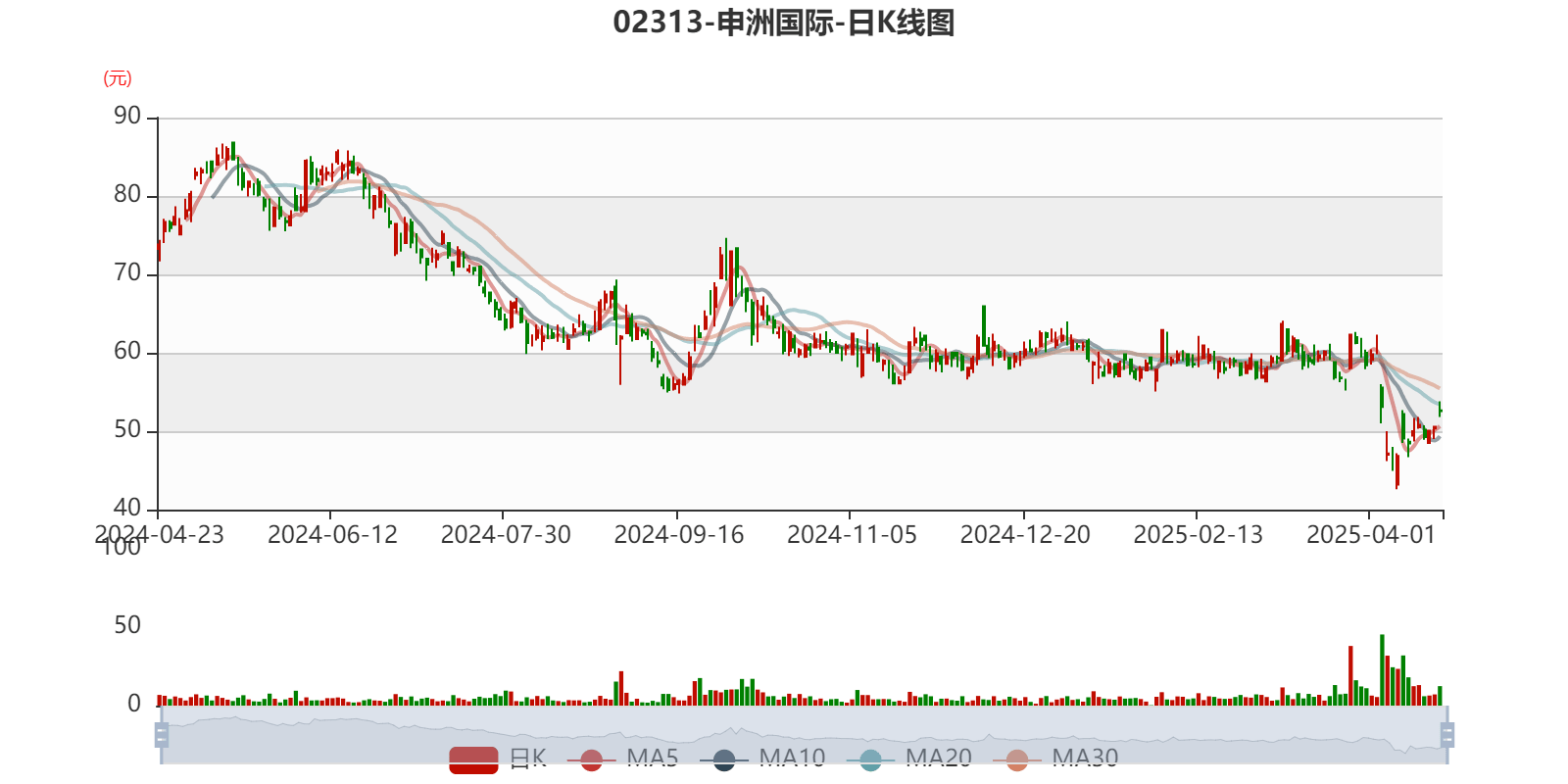
申洲国际 2025041720250416 Q&A 为什么在当前时间点发布申洲国际的报告? 申洲国际是整个上游板块中最有可能被错杀的标的。其出口美国的比例仅为 16%,即使不考虑 2025 年公司增长,美国订单波动对总订单影响不到 3%, 业绩影响在 10%以内。4 月 3 号以来市场恐慌性下跌,累计跌幅超过 25%, 目前公司 2025 年的 PE 估值仅为 10.7 倍,处于历史最低水平。申洲国际在制 造领域受关税影响最小,未来估值有望逐步回归。 申洲国际公司的基本情况和发展历程如何? 申洲国际是全球最大的针织成衣制造商,其前四大客户包括优衣库、耐克、阿 迪达斯和彪马,占比超过 80%。2024 年收入规模达到 287 亿,同比增长 • 关税对公司影响相对较小,因公司大半产能布局在越南和柬埔寨。出口美 国比例为 16%,主要由东南亚供应。即使美国消费量减少 20%,对公司 订单影响仅约 3%。东南亚所得税优惠及劳动力成本低,公司具备显著优 势。 • 未来订单市场份额主要由优衣库和阿迪达斯驱动。优衣库保持双位数增长 势头,阿迪达斯品牌力恢复,本土化经营战略助力订单增长。预计未来三 年营收增速 11%左右,归 ...

申洲国际20250325
2025-04-15 14:30
2024年的全面业绩发布会那首先为大家介绍一下深圳国际的文成代表分别是基层主席马建荣先生总裁兼首席财务官王全波先生财务总监 我们今天的总结者会议将会有我们Teddy为大家介绍一下我们2024年的产业业绩的情况包括财务表现和营运维护以及介绍一下公司未来的发展策略以及计划最后当然是有一个答问的时间让你们跟他们一起交流今天请Teddy为我们介绍一下我们产业业绩的情况谢谢大家 字幕由Amara.org社区提供 请参加 毛利这个新闻有点一个对比大家可以看 会意味着我们的毛病率在正常报告过程里面是一个线性的会一直在往下爬的其实这个是不准的为什么?因为大家可以想象一下2020年因为后续不治也好,因为疫情也好,产业没办法进入了二零二七年以后我们这段情况过程里面基本上是不用额外增加什么固定成果的,主要是法案 当这些新官进来以后 操作费用增长比较多 过去的古兰时代汇率的波动和策略率也有变化 是用翻译的 这个是因为销售增加,销售增加会带来的出货的一个效率低难度的一个银行DC收入 从这个图上看出来 从区域分布 一般的翻译 请不吝点赞 订阅 转发 打赏支持明镜与点点栏目 字幕由Amara.org社区提供 网友提问 其实你半斤的爷爷在2 ...
申洲国际(02313) - 2024 - 年度业绩
2025-03-25 08:35
Financial Performance - For the fiscal year ending December 31, 2024, total sales reached approximately RMB 28,662,938,000, representing an increase of about 14.8% compared to the previous year[3]. - The net profit after tax for the fiscal year was approximately RMB 6,240,581,000, reflecting a significant increase of about 36.9% compared to the previous year[4]. - The group's profit before tax for 2024 was RMB 7,163,778, an increase from RMB 4,995,501 in 2023, representing a growth of approximately 43.5%[29]. - The total income tax expense for 2024 was RMB 923,197, compared to RMB 438,238 in 2023, indicating a significant increase of about 110.8%[29]. - The company's gross profit margin improved by 3.8 percentage points to 28.1% compared to the previous year[51]. - Gross profit amounted to approximately RMB 8,054,897,000, representing a year-on-year increase of about 32.9%[51]. Sales Breakdown - Sales of sports products accounted for approximately 69.1% of total sales, with a year-over-year increase of about 9.8%, driven by rising demand in the mainland China and US markets[3]. - Sales of leisure products represented approximately 25.1% of total sales, showing a significant increase of about 27.1%, primarily due to increased demand in Japan and other markets[3]. - Sales of lingerie products accounted for approximately 5.0% of total sales, with a notable increase of about 34.6%, attributed to strong demand in the Japanese market[4]. - Revenue from mainland China was RMB 8,061,175 thousand in 2024, up 12.9% from RMB 7,124,052 thousand in 2023[17]. - The sales revenue from the Japanese market increased by approximately RMB 1,158,572,000 or 31.5%, reaching RMB 4,834,111,000, driven by demand for leisure and lingerie products[61]. - The sales revenue from the US market rose by approximately RMB 731,839,000 or 18.9%, totaling RMB 4,611,826,000, primarily due to increased demand for sports apparel[62]. Assets and Liabilities - Total current assets increased to RMB 38,571,785,000 from RMB 28,479,488,000 in the previous year[9]. - Total liabilities increased, with current liabilities amounting to RMB 16,826,163,000 compared to RMB 13,384,483,000 in the previous year[11]. - The company's net assets rose to RMB 35,852,895,000 from RMB 32,867,316,000 in the previous year[11]. - Accounts receivable and notes increased to RMB 6,151,331,000, up from RMB 5,023,635,000 in the previous year[41]. - The company's accounts payable increased to RMB 1,493,021,000 from RMB 1,198,212,000 in the previous year[45]. - The net borrowing amount (bank borrowings minus cash and cash equivalents) increased to approximately RMB 1,949,734,000 in 2024 from RMB 507,515,000 in 2023, reflecting an increase of about RMB 1,442,219,000[67]. Dividends - The proposed final dividend is HKD 1.28 per share, leading to a total proposed dividend of HKD 2.53 per share for the fiscal year, an increase of about 24.6% from HKD 2.03 per share in the previous year[4]. - The proposed final dividend per ordinary share for 2024 is HKD 1.28, up from HKD 1.08 in 2023, representing an increase of approximately 18.5%[32]. - The board proposed a final dividend of HKD 1.28 per share, equivalent to approximately RMB 1.19, subject to shareholder approval[87]. Operational Efficiency - The company has enhanced new product development and diversified product categories to meet market demands[52]. - The company’s production capacity utilization has returned to normal levels, with increased employee numbers and improved production efficiency[51]. - The group aims to enhance production efficiency and optimize overseas production capacity while responding to market demand changes flexibly[82]. - The group plans to focus on automation and artificial intelligence applications in production to improve efficiency and reduce costs[83]. Employee and Costs - Employee benefits expenses totaled RMB 7,921,720 in 2024, compared to RMB 6,982,131 in 2023, marking an increase of about 13.4%[24]. - The company employed approximately 102,690 employees as of December 31, 2024, compared to 92,030 in 2023, with total employee costs accounting for about 27.6% of sales[72]. - Capital expenditures for property, plant, and equipment totaled approximately RMB 1,708,473,000, with about 46% allocated for purchasing production equipment and 49% for constructing and purchasing new factory buildings[73]. Governance and Compliance - The company aims to enhance corporate governance and transparency, adopting its own corporate governance code since October 9, 2005, and has complied with all provisions of the code for the year ending December 31, 2024[91]. - The board of directors includes at least three independent non-executive directors, with one possessing appropriate professional qualifications, in compliance with listing rules[95]. - The audit committee, established on October 9, 2005, consists of four independent non-executive directors and is responsible for reviewing the group's financial practices and internal controls[106]. - The company has adopted a shareholder communication policy to ensure that shareholder views and concerns are addressed appropriately[97]. Future Outlook - The group anticipates challenges in the global economic recovery, with trade growth facing difficulties and geopolitical uncertainties affecting commodity price fluctuations[80]. - For 2025, the group expects to maintain a high overall capacity utilization rate and gradually release new capacity from overseas bases[84]. - The group emphasizes the importance of new material research and development, aiming to diversify product categories and enhance market demand[82].
申洲国际:景气回升为公司带来充沛订单,看好25年持续性
国元国际控股· 2025-01-24 14:59
Investment Rating - The report maintains a "Buy" rating for the company with a target price of 75.2 HKD, indicating a potential upside of 32.4% from the current price of 56.8 HKD [4][7][21]. Core Insights - The company benefits from a strong order flow due to the recovery in market demand, particularly in sportswear and leisure apparel, which is expected to continue into 2025 [4][5][18]. - The textile manufacturing industry is experiencing a recovery, with stable performance from downstream brands, which supports the company's growth prospects [5][18]. - The company's internationalization strategy is progressing well, with an increasing proportion of overseas production capacity, which is expected to enhance operational efficiency and profitability [6][19]. Financial Performance - For the first half of 2024, the company reported a revenue of 129.75 billion RMB, a year-on-year increase of 12.2%, with a gross profit of 37.61 billion RMB, reflecting a 45.0% increase [10][18]. - The gross margin for the first half of 2024 was 29.0%, up 6.6 percentage points year-on-year, while the net profit margin was 22.6%, an increase of 4.2 percentage points [10][18]. - Revenue by business type showed double-digit growth in leisure and underwear segments, while sportswear recorded a high single-digit growth [11]. Market Dynamics - The company is positioned to benefit from the ongoing demand for sports health and the trend of brands increasing their procurement from key suppliers due to supply chain risks [4][18]. - The recovery in the textile manufacturing sector is reflected in the performance of peer companies, indicating a positive industry trend [5][16]. - The company has a strong customer base, with major clients contributing significantly to its revenue, and it is expected to continue securing orders from high-growth brands [20]. Future Projections - The company is projected to achieve revenues of 276.1 billion RMB, 307.1 billion RMB, and 335.3 billion RMB for FY24E, FY25E, and FY26E, respectively, with year-on-year growth rates of 10.6%, 11.2%, and 9.2% [7][21]. - Net profits are expected to reach 57.6 billion RMB, 65.1 billion RMB, and 73.5 billion RMB for the same periods, with growth rates of 26.3%, 13.1%, and 12.8% [7][21].
麦格理:将申洲国际目标价下调至92.6港元
Zheng Quan Shi Bao Wang· 2025-01-09 07:56
Core Viewpoint - Macquarie's latest research report indicates that Uniqlo and adidas are expected to be the main drivers of order growth for Shenzhou International, with gross margins likely to improve further [1] Group 1: Company Performance - Shenzhou International's net profit forecasts for the fiscal years 2024 and 2025 have been downgraded due to a decline in gross margins [1] - The target price for Shenzhou International has been reduced from HKD 97.4 to HKD 92.6, while maintaining an "outperform" rating [1] Group 2: Industry Trends - Nike's revenue is expected to achieve positive growth in the second half of the year, with an increase in product average prices [1]