
SAMSONITE(SMSEY)

Search documents
中金:维持新秀丽(01910)“跑赢行业”评级 降目标价至20港元
智通财经网· 2025-05-15 02:20
Core Viewpoint - CICC has downgraded Samsonite's revenue and net profit forecasts for 2025 and 2026 due to weak consumer sentiment amid U.S. tariff uncertainties, with target price reduced by 20% to HKD 20, indicating a 30% upside potential from the current stock price [1] Group 1: Financial Performance - Samsonite's Q1 2025 net sales were USD 797 million, a 4.5% year-on-year decline at constant exchange rates; adjusted EBITDA was USD 128 million with a margin of 16.0%, down from 18.8% in the same period last year; adjusted net profit was USD 52 million, compared to USD 87 million last year [2] - Sales and profit margins fell short of expectations primarily due to underperformance in Asia and misalignment of wholesale orders in North America, although stable European performance and cautious marketing spending mitigated some impacts [2] Group 2: Management Insights - Management noted strong performance of the Tumi brand in China and indicated that sales growth in Q2 2025 so far is similar to Q1 2025 [3] - They expect stable gross margins in Q2 2025, with slight improvement in adjusted EBITDA margins; no significant pre-stocking behavior was observed in the luggage industry compared to other consumer goods [3] - As of Q1 2025, 14% of products sold in the U.S. were sourced from China, with expectations to reduce this to 1%-5% by the end of 2025 due to potential tariff increases, prompting the company to implement several measures [3] Group 3: Market Outlook and Strategy - Management believes that a projected 5% growth in global passenger numbers in 2025 could indicate growth potential for luggage demand, given the historical correlation between Samsonite's sales and global travel [3] - As of Q1 2025, the company returned USD 350 million to shareholders through dividends and buybacks, resulting in a net leverage ratio of 1.8 times [3] - The company is actively pursuing a dual listing in the U.S. and is closely monitoring market conditions [3]
净利骤降四成!新秀丽绩后大跌近10%,机构相继下调目标价
Ge Long Hui· 2025-05-14 07:14
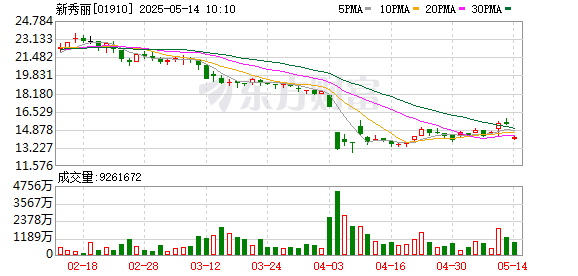
Core Viewpoint - Samsonite reported a decline in both revenue and net profit for Q1 2025, leading to a significant drop in stock price and market capitalization [1][3][11]. Financial Performance - The company's Q1 2025 sales revenue was $797 million, down 7.3% from $860 million in Q1 2024 [4][6]. - Net profit for Q1 2025 was $48.2 million, a decrease of 42.6% compared to $83.9 million in the same period last year [4][6]. - Operating profit fell to $110 million, down 26.9% year-over-year [4][6]. - Adjusted net income was $52 million, a reduction of 40.3% from $87 million in Q1 2024 [4][6]. - Gross margin decreased to 59.4%, down 1 percentage point from the previous year [4][6]. Cash Flow - Operating cash flow dropped significantly from $55 million to $8.5 million [5]. - Free cash flow turned negative at -$41.2 million [5]. Regional Sales Performance - Sales in Asia decreased by 9.7%, with a 7.0% decline when adjusted for constant currency, primarily due to macroeconomic uncertainties [6][8]. - North American sales fell by 8.3%, with a similar decline of 8.0% in constant currency, attributed to decreased consumer confidence [7][10]. - European sales remained flat, but grew by 4.4% in constant currency, driven by sales growth in the American Tourister and TUMI brands [8][10]. - Latin American sales declined by 10.3%, with constant currency sales remaining flat, influenced by reduced consumer confidence in Mexico [9][10]. Market Reaction - Following the earnings report, the company's stock price dropped nearly 10%, closing at 14 HKD, with a market capitalization of less than 20 billion HKD [1][11]. - Year-to-date, the stock has fallen over 35% [1]. Institutional Holdings - The company was previously a significant holding in the E Fund managed by Zhang Kun, but has since been reduced in the fund's top holdings [12][14]. - In the latest reports, Samsonite did not appear in the top ten holdings of the fund [11][14]. Analyst Ratings - Multiple financial institutions have downgraded their target prices for Samsonite, with estimates ranging from 16.3 HKD to 25.35 HKD [16][17]. - Goldman Sachs lowered its target price to 22 HKD and revised down its earnings forecast for the year [17].

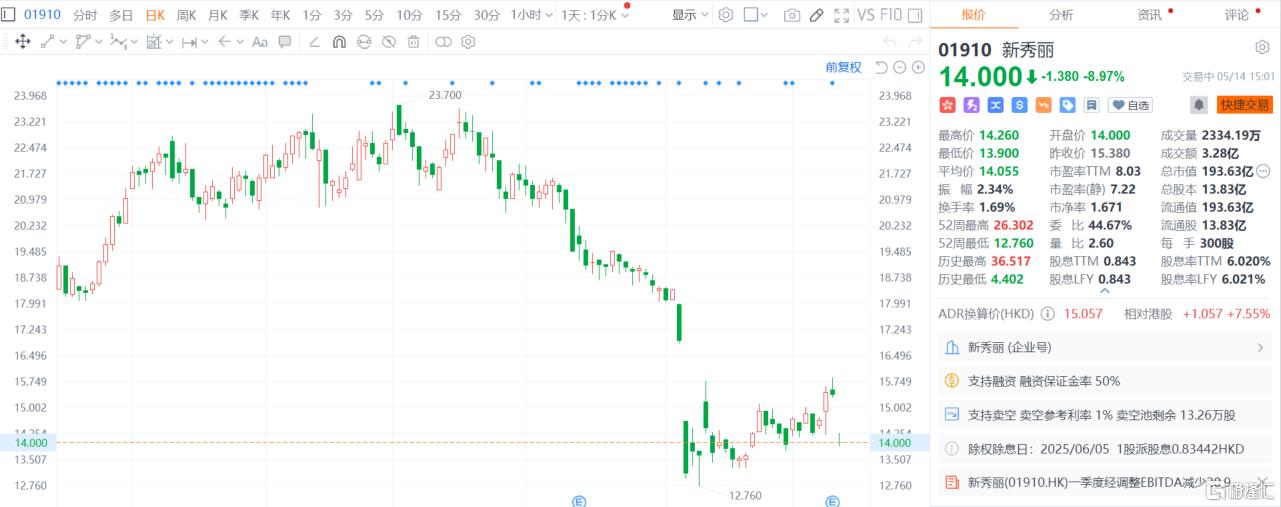
新秀丽今年前三个月销售净额同比降7.3%!公司股价跌超8%
Mei Ri Jing Ji Xin Wen· 2025-05-14 02:09
Core Viewpoint - Samsonite reported a decline in financial performance for the three months ending March 31, 2025, with net sales decreasing by 7.3% year-on-year, primarily due to a drop in sales from the Asia region [2][6]. Financial Performance Summary - Net sales for the period were $796.6 million, down from $859.6 million in the same period of 2024, representing a decrease of 7.3% (4.5% decline on a constant currency basis) [2][6]. - Gross profit was $473.1 million, with a gross margin of 59.4%, down from 60.4% year-on-year, attributed to changes in the sales mix [2][6]. - Operating profit was reported at $109.5 million, a decrease of 26.9% compared to the previous year [2][6]. - Net profit for the period was $55.2 million, down 39.7% from $91.5 million in 2024 [2][6]. - Adjusted net income was $52.0 million, reflecting a 40.3% decrease year-on-year [2][6]. - Profit attributable to equity holders was $48.2 million, a decline of 42.6% compared to the same period last year [3][6]. Sales Performance Factors - The decline in net sales was influenced by reduced sales in Asia, decreased consumer confidence in North America, and timing changes in wholesale channel sales that negatively impacted the first quarter of 2025 [2][6]. - However, this decline was partially offset by growth in sales from the American Tourister and TUMI brands in Europe [2][6]. Market Reaction - As of the report date, Samsonite's stock was trading at HKD 14.14, reflecting a decline of 8.06%, with a market capitalization of HKD 20.678 billion [7].
SAMSONITE(01910) - 2025 Q1 - Earnings Call Transcript
2025-05-13 13:32
Financial Data and Key Metrics Changes - Sales for Q1 were approximately $797 million, representing a decrease of 4.5% compared to the previous year [9][48] - Gross margin decreased slightly to 59.4% from 60.4% in the prior year [12][49] - Adjusted EBITDA was $128 million with an EBITDA margin of 16%, down from a record Q1 of the previous year [13][49] - Adjusted net income was $52 million, down from $87 million in the previous year [50] Business Line Data and Key Metrics Changes - Samsonite brand sales decreased by 2.6% when adjusted for a wholesale customer pulling orders into Q4 [11][23] - Tumi sales were down 2%, but showed growth in regions outside North America [11][23] - American Tourister sales decreased by nearly 11%, impacted by cautious buying from wholesale customers [11][23] Market Data and Key Metrics Changes - North America sales were down 8%, with a slight adjustment indicating a 5% decrease when accounting for order pull-ins [15][20] - Asia sales decreased by 7%, with a noted improvement expected in Q2 [14][17] - Europe experienced growth of 4.4% in Q1, with expectations for continued strong performance [16][22] - Latin America was flat in Q1 but is expected to return to double-digit growth in Q2 [17][22] Company Strategy and Development Direction - The company is focused on profitable, sustainable growth while maintaining cost discipline and strategic investments [8][76] - There is a strong emphasis on product innovation and development, particularly in the non-travel segment, which now accounts for 34% of sales [37][63] - The company is navigating tariff impacts by diversifying sourcing and implementing price adjustments [29][55] Management's Comments on Operating Environment and Future Outlook - Management noted a macroeconomic environment with softened consumer sentiment, particularly in North America [3][5] - Travel demand is expected to remain robust, with a projected growth of 4% to 5% for the year [6][40] - The company anticipates a similar performance in Q2 compared to Q1, with slight improvements in certain regions [70][72] Other Important Information - The company has opened 64 net new stores in the past year, maintaining flat SG&A expenses [12][56] - There is a focus on maintaining a strong balance sheet, with net debt at approximately $1.2 billion and liquidity of nearly $1.4 billion [60][66] - The company is preparing for a potential dual listing, monitoring market conditions closely [79][80] Q&A Session Summary Question: Clarification on Q2 performance expectations - Management indicated that Q2 is expected to be similar to Q1, with slight improvements in Asia and Latin America [84][86] Question: Correlation between travel trends and sales growth - Management confirmed that travel trends are expected to remain correlated with sales growth, despite current consumer sentiment challenges [87][88] Question: Pricing strategies in response to tariffs - Management stated that pricing actions are being taken to offset tariff impacts, primarily focused on the U.S. market [90][91]
SAMSONITE(01910) - 2025 Q1 - Earnings Call Transcript
2025-05-13 13:30
Financial Data and Key Metrics Changes - The company reported Q1 sales of approximately $797 million, a decrease of 4.5% compared to the previous year, which was a record Q1 for the business [9][49] - Gross margin for Q1 was 59.4%, down from 60.4% in the previous year, attributed to a geographic mix with lower sales in higher-margin regions [12][49] - Adjusted EBITDA for Q1 was $128 million, with an EBITDA margin of 16%, down from the record number in Q1 of the previous year [13][49] - Adjusted net income for Q1 was $52 million, compared to $87 million in the previous year [49] Business Line Data and Key Metrics Changes - The largest core brands, Samsonite and Tumi, experienced declines of 2.6% and 2% respectively, while American Tourister saw a decline of nearly 11% due to softer consumer sentiment [11][22] - Non-travel sales accounted for 34% of total sales, showing growth opportunities in this underpenetrated market [37] Market Data and Key Metrics Changes - North America sales were down 8% in Q1, with a slight adjustment indicating a 5% decline when accounting for a wholesale customer pulling orders [15][19] - Europe showed strong growth of 4.4% in Q1, with expectations for continued growth in Q2 [16][21] - Latin America was flat in Q1 but is expected to return to double-digit growth in Q2 [17][21] - Asia saw a decline of 7% in Q1, with some markets like India showing positive growth, while South Korea faced significant challenges [14][18] Company Strategy and Development Direction - The company is focused on profitable, sustainable growth while maintaining cost discipline and strategic investments for long-term growth [8][78] - There is a strong emphasis on product innovation and development, with new collections launching in Q2 and Q3 [41][46] - The company is taking decisive actions to mitigate the impact of tariffs, including diversifying sourcing and implementing price increases [27][29] Management's Comments on Operating Environment and Future Outlook - Management noted that while consumer sentiment is softening, travel remains a priority for consumer spending, with a projected growth of 4% to 5% in travel for the year [6][67] - The macroeconomic environment remains uncertain, but the company is confident in its ability to navigate challenges and expects to come out stronger post-tariff adjustments [4][68] - The outlook for Q2 is expected to be similar to Q1, with potential slight improvements in certain markets [70][72] Other Important Information - The company is closely monitoring the dual listing preparations amid current market uncertainties [79] - The company maintains a healthy balance sheet with net debt of approximately $1.2 billion and liquidity of nearly $1.4 billion [58][64] Q&A Session Summary Question: Clarification on Q2 trading and travel trends correlation - Management indicated that Q2 is expected to be similar to Q1, with slight improvements in Asia and Latin America returning to trend [86][87] - The correlation between travel trends and sales growth is expected to remain strong, with potential benefits in the back half of the year [88][89] Question: Pricing strategies and impacts - Management is taking actions to offset tariff impacts through pricing adjustments, primarily in the U.S., but not providing specific numbers at this time [91][92]
新秀丽(01910) - 2025 Q1 - 电话会议演示
2025-05-13 12:50
Financial Performance - Samsonite Group S A 的净销售额为 7.97 亿美元,与 2024 年第一季度相比下降 4.5%[17] - 经调整后的 EBITDA 为 1.28 亿美元,调整后的 EBITDA 利润率为 16.0%,比 2024 年第一季度下降 280 个基点[17] - 2025 年第一季度的毛利率保持在 59.4% 的强劲水平,略低于 2024 财年的 60.0%[17] - 2025 年第一季度的广告支出为 4200 万美元,占净销售额的 5.3%,比 2024 年第一季度的 6.1% 减少了 1100 万美元[71] Regional Performance - 亚洲净销售额下降 7.0%,但印度净销售额增长 2.6%[22] - 北美净销售额下降 8.0%,部分原因是批发时机变化[22] - 欧洲净销售额增长 4.4%,所有核心品牌均实现正增长[22] - 拉丁美洲净销售额与去年同期持平,墨西哥净销售额下降 18.0%[22] Brand Performance - 调整北美批发时机变化后,Samsonite 品牌净销售额下降 2.6%[25] - TUMI 品牌增长 10.9%,主要受中国市场强劲的 DTC 电子商务业绩推动[28] - American Tourister 下降,主要原因是宏观经济不确定性抑制了消费者信心[25] Financial Position - 截至 2025 年 3 月 31 日,净债务为 11.94 亿美元[71] - 截至 2025 年 3 月 31 日,流动性约为 13.46 亿美元,其中包括循环信贷工具 (RCF) 下可用的 7.44 亿美元[71]
新秀丽(01910) - 2025 Q1 - 季度业绩
2025-05-13 12:05
Financial Performance - For the three months ended March 31, 2025, net sales were $796.6 million, a decrease of 7.3% compared to $859.6 million for the same period in 2024[12]. - Gross profit for the same period was $473.1 million, down 8.9% from $519.5 million year-over-year[12]. - Operating profit decreased by 26.9% to $109.5 million from $149.8 million in the previous year[12]. - Net profit for the period was $55.2 million, reflecting a 39.7% decline from $91.5 million in the prior year[12]. - Earnings attributable to equity holders decreased by 42.6% to $48.2 million from $83.9 million year-over-year[12]. - Adjusted net income was $52.0 million, down 40.3% from $87.1 million in the same quarter last year[12]. - Adjusted EBITDA was $127.6 million, a decrease of 20.9% compared to $161.2 million in the previous year[12]. - The adjusted EBITDA margin was 16.0%, down from 18.8% year-over-year[12]. - Basic earnings per share decreased by 40.2% to $0.035 from $0.058 in the prior year[12]. - Diluted earnings per share fell by 40.0% to $0.034 compared to $0.057 in the same quarter last year[12]. Sales and Market Trends - The company's travel products accounted for 64.0% of net sales, while non-travel products made up 36.0%[25]. - Direct-to-consumer (DTC) sales represented 38.2% of net sales, with 1,128 self-operated retail stores and a strong e-commerce presence[26]. - The wholesale business contributed 61.8% of net sales, including partnerships with major physical and digital retailers[26]. - Net sales in Asia were $307.0 million, representing 38.5% of total net sales, a decrease of 9.7% compared to $340.1 million in the previous year[37]. - North America net sales were $261.5 million, accounting for 32.8% of total net sales, down 8.3% from $285.3 million in the prior year[37]. - Europe net sales remained unchanged at $175.5 million, representing 22.1% of total net sales, with a 4.4% increase when adjusted for constant currency[37]. - Latin America net sales were $52.5 million, accounting for 6.6% of total net sales, down 10.3% from $58.5 million in the previous year[37]. Operational Strategy - The company aims to expand its product portfolio and market coverage, including non-travel product categories[6]. - Samsonite Group is focusing on enhancing its direct-to-consumer (DTC) channels, including optimizing its retail store network and e-commerce platforms[6]. - The company is committed to upgrading and expanding its retail store network in the coming year[6]. - The company plans to continue investing in brand marketing to enhance product attractiveness and maintain competitive advantage[28]. - The company invested significantly in R&D for lighter, more durable materials and innovative designs to enhance product appeal[28]. Financial Health and Cash Flow - As of March 31, 2025, the company's cash and cash equivalents were $601.7 million, with total financial debt of $1,796.1 million, leading to a net debt of $1,194.3 million[16]. - Operating cash flow for the three months ended March 31, 2025, was $69.6 million, with net cash from operating activities at $8.5 million[22]. - The company experienced a decrease in cash and cash equivalents by $85.2 million, ending the period with $601.7 million[22]. - The adjusted free cash flow for the three months ended March 31, 2025, was $(41.2) million, compared to $6.5 million in the same period of 2024, indicating a significant negative shift[39]. - The company believes its existing cash and estimated cash flows will be sufficient to meet its operational and capital needs for the foreseeable future[99]. Compliance and Regulatory Environment - The company is focused on maintaining compliance with complex and evolving global regulations, including those related to sustainability and data protection[7]. - Samsonite Group is assessing the impact of geopolitical events on its business operations and global trade relationships[6]. Future Outlook - Future outlook includes potential risks and uncertainties that may significantly affect actual performance compared to forward-looking statements[5]. - The company anticipates that improving macroeconomic conditions could positively impact net sales, including an increase in orders from wholesale customers[31]. - The company has reduced the proportion of products sourced from China for the U.S. market from approximately 85% in 2018 to about 15% in 2024[32]. - Global air passenger volume is projected to grow to approximately 9.9 billion by 2025, with a compound annual growth rate of about 4%[33].
Samsonite Group: Negatives Are In The Price
Seeking Alpha· 2025-05-05 16:35
Core Insights - The article focuses on investment opportunities in Asia-listed stocks, particularly in the Hong Kong market, emphasizing deep value balance sheet bargains and wide moat stocks [1]. Group 1: Investment Strategy - The research service targets value investors looking for stocks with significant discrepancies between market price and intrinsic value [1]. - It emphasizes two main categories: deep value balance sheet bargains, which include net cash stocks and low price-to-book (P/B) stocks, and wide moat stocks, which are high-quality businesses with strong earnings potential [1]. Group 2: Research and Updates - The author provides a range of watch lists with monthly updates to assist investors in identifying potential investment opportunities [1].


新秀丽(01910) - 2024 - 年度财报
2025-04-29 23:09
Financial Performance - The Company reported solid performance in 2024, highlighting a resilient business model and improved margin profile[2]. - Net sales for the year ended December 31, 2024, were $3,588.6 million, a decrease of 2.5% compared to $3,682.4 million for 2023[46]. - Gross profit for 2024 was $2,152.2 million, reflecting a decrease of 1.4% from $2,182.8 million in 2023[46]. - Operating profit decreased by 15.4% to $629.3 million in 2024 from $743.7 million in 2023[46]. - Profit for the year attributable to equity holders was $345.6 million, down 12.9% from $396.9 million in 2023[46]. - Adjusted net income for 2024 was $369.8 million, a decrease of 5.8% compared to $392.4 million in 2023[46]. - Adjusted EBITDA for 2024 was $683.0 million, down 3.7% from $709.3 million in 2023[46]. - Basic earnings per share decreased by 13.0% to $0.239 in 2024 from $0.275 in 2023[46]. - Diluted earnings per share decreased by 13.1% to $0.237 in 2024 from $0.273 in 2023[46]. - The Company recorded net sales of US$3,588.6 million for the year ended December 31, 2024, a decrease of only 0.2% year-over-year[61]. - The Company's profit margin for 2024 was 10.4%, down from 11.7% in 2023[190]. Sales and Market Trends - Year-over-year constant currency net sales performance improved sequentially across regions in Q4 2024 compared to Q3 2024, despite an uncertain macroeconomic environment affecting consumer sentiment[18]. - Net sales for Q1 2025 are expected to decline low to mid-single digits on a constant currency basis compared to Q1 2024, with growth trends anticipated to improve throughout 2025[18]. - Sales in mature markets are expected to increase, while penetration in emerging high-growth regions will deepen[19]. - The Company recognizes the impact of trends in the travel industry, particularly air travel, on its business[30]. - The Company believes that strong travel trends in the coming years will support long-term business growth[19]. - The Company anticipates low to mid-single digits decline in net sales for Q1 2025 compared to Q1 2024, but expects growth trends to improve over the course of 2025[122]. - The global bags and luggage industry had approximately $87 billion in retail sales during 2024, with the company's travel products comprising 65.7% of its net sales[147][150]. Strategic Initiatives - The Company aims to increase shareholder value through sustainable revenue and earnings growth, focusing on brand elevation and innovation[16]. - The Company plans to expand its brand portfolio through accretive M&A and deepen penetration in emerging, high-growth regions[18]. - The Company is focused on expanding its travel and non-travel product offerings through innovation and sustainability improvements[18]. - The Company is preparing for a potential dual listing of its securities in the United States to enhance value creation for shareholders[22]. - The Company aims to expand its product offerings and market reach, particularly in the non-travel category[30]. - The Company plans to deepen penetration in emerging markets with higher growth potential while increasing sales in established markets[30]. - The Company is excited about new products and marketing programs surrounding the TUMI brand, which is celebrating its 50th anniversary in 2025[123]. - The Company believes it has significant opportunities to grow net sales by expanding into adjacent product categories and leveraging brand recognition[168]. Cost Management and Profitability - The Company is confident in maintaining a robust margin profile and delivering positive operating leverage through disciplined expense management[18]. - The Company aims to generate strong adjusted free cash flow, providing flexibility for future investments and shareholder returns[19]. - Adjusted free cash flow increased by US$26.5 million to US$311.0 million for the year ended December 31, 2024, compared to US$284.5 million for 2023[53]. - The Company maintains substantial liquidity of $1.4 billion as of December 31, 2024[77][79]. - The Company expects its strategy to broaden its product offering within the non-travel category will help mitigate the impact of global travel trends over time[174]. - The Company anticipates that the growth rate of its sales costs will be lower than the growth rate of its net sales in the long term due to strict cost management and a shift towards higher-margin brands, product lines, and channels[198]. Sustainability and Innovation - The Company is committed to sustainability and addressing climate change-related matters[31]. - The Company continues to focus on sustainability and innovation in its product offerings, aligning with evolving consumer demands[143]. - The share of the Company's net sales from products incorporating recycled materials increased to approximately 40% in 2024, up from about 34% in 2023[117]. - The Company invested significantly in research and development for new materials and innovative designs to enhance product desirability and sustainability[155][158]. Operational Highlights - The Company emphasizes a decentralized management structure to foster innovation and efficient decision-making[15]. - The performance of the Company's direct-to-consumer (DTC) channel, including the expansion of retail stores and e-commerce platforms, is a key focus[30]. - Direct-to-consumer (DTC) net sales increased by 2.7%, with DTC e-commerce net sales rising by 5.8% year-over-year, contributing 39.8% of total net sales[64]. - The Company operates robust DTC e-commerce platforms worldwide, contributing to significant growth across its brands and regions[162]. - The Company has streamlined its retail store fleet to focus on driving profitable growth and employs a targeted approach to new store openings[162]. Economic Outlook - The macroeconomic outlook remains uncertain, but global travel and tourism is expected to see steady growth in 2025, supporting consumer demand for the Company's products[83]. - International tourist arrivals are expected to grow by 3% to 5% in 2025 compared to 2024, according to the United Nations World Tourism Organization[9]. - The Company is aware of the risks related to consumer spending and general economic conditions affecting its operations[32]. - Macroeconomic factors have led to consumers becoming more selective with their spending, adversely affecting the Company's net sales during the year ended December 31, 2024[169].
SAMSONITE(SMSEY) - 2024 Q4 - Earnings Call Transcript
2025-03-14 21:10
Financial Data and Key Metrics Changes - The company reported Q4 net sales of $942 million, a 1% increase in constant currency compared to Q4 last year, which was up 21% versus 2019 [4] - Gross margin improved to 60.2%, up 30 basis points from the prior year, driven by disciplined promotion and discount strategies [5] - Adjusted EBITDA for Q4 was $195 million, with a record EBITDA margin of 20.7%, up 160 basis points year-over-year [6] - Free cash flow generation for Q4 was $135 million, an increase of $3 million from Q4 2023 [7] - For the full year, adjusted net income was $370 million, compared to $392 million in the prior year [94] Business Line Data and Key Metrics Changes - The Samsonite brand saw a 4.6% increase in Q4, while Tumi was up 4.4% in the same period [12][13] - American Tourister experienced a decline of 6.9% in Q4, but was up 1.3% when excluding India [14][15] - Non-travel product categories continued to grow, with a 2% increase overall across all brands [100] Market Data and Key Metrics Changes - Asia showed a sequential improvement, with a decline of 6% in Q4 compared to a 11.5% decline in Q3, largely influenced by India [8][10] - North America experienced a growth of 3.9% in Q4, recovering from an 8% decline in Q3 [10] - Europe delivered a solid performance with a 5.6% growth in Q4, while Latin America continued its strong trend with a 14% growth [11] Company Strategy and Development Direction - The company is focused on maintaining strong gross margins while investing in brand elevation and direct-to-consumer (DTC) channels [33][35] - There is a strategic emphasis on expanding the non-travel segment, which has shown growth potential [100] - The company plans to continue opening new stores, particularly in Asia and Europe, to enhance brand presence and consumer experience [62] Management's Comments on Operating Environment and Future Outlook - Management expressed optimism about travel trends remaining robust over the next several years, which is expected to drive long-term growth [111] - The company is seeing positive early signs in India and anticipates a recovery in the market [39][99] - Management acknowledged challenges in the premium luxury sector, particularly for Tumi, but noted a recovery in Q4 [100] Other Important Information - The company reduced inventory by $44 million compared to 2023, indicating effective inventory management [36] - The company has made significant progress in sustainability, with 40% of products incorporating recycled materials [75][80] Q&A Session Summary Question: What are the trends in the travel market? - Management noted that travel trends are expected to remain robust, which will support long-term growth [111] Question: How is the company managing its inventory levels? - The company successfully reduced inventory by $44 million, indicating effective management strategies [36] Question: What is the outlook for the Indian market? - Management indicated that there are signs of stabilization in India, with hopes for positive contributions in the future [99]