Trinity Capital (TRIN)

Search documents
Trinity Capital Reports Fourth Quarter and Full Year 2025 Financial Results
Prnewswire· 2026-02-25 13:05
Core Insights - Trinity Capital reported record financial results for Q4 and full year 2025, with a net investment income of $39.9 million for Q4 and $144.1 million for the full year, reflecting year-over-year growth of 15.4% and 23.5% respectively [1][2] Financial Performance - Q4 2025 net investment income was $39.9 million, or $0.52 per share, compared to $34.6 million, or $0.58 per share in Q4 2024 [1][4] - Full year 2025 total investment income reached $293.7 million, an increase of 23.5% year-over-year [1][2] - The company achieved a return on average equity (ROAE) of 15.3% and a return on average assets (ROAA) of 6.7% for Q4 2025 [1][2] Investment Activity - Total gross investments funded in Q4 2025 amounted to $434.8 million, with $170.7 million allocated to 5 new portfolio companies and $264.0 million to 25 existing portfolio companies [1][2] - The investment portfolio's fair value was approximately $2.4 billion as of December 31, 2025, with $1.9 billion in secured loans [2][3] Asset Management - Total platform assets under management increased to $2.8 billion, a 38.2% rise year-over-year [1][2] - The net asset value (NAV) at the end of Q4 2025 was $1.1 billion, or $13.42 per share, reflecting a 32.9% increase year-over-year [1][2] Dividend Policy - The company declared a regular dividend of $0.51 per share for Q4 2025 and announced a transition to monthly distributions starting January 2026 [1][2] Liquidity and Capital Resources - As of December 31, 2025, the company had approximately $335.2 million in available liquidity, including $19.1 million in unrestricted cash [2][3] - The debt-to-equity ratio was approximately 119%, consistent with the previous quarter [2][3]



Trinity Capital (TRIN) - 2025 Q4 - Annual Report
2026-02-25 13:02
Market Opportunities - The annual venture debt market in the U.S. surpassed $25 billion for more than five consecutive years in 2025, indicating significant growth opportunities for the company in the venture debt market [43]. - The company believes many growth-oriented companies are underserved by traditional lenders, creating an attractive market opportunity for debt and equipment financings [41]. - Demand for loans and equipment financings for growth-oriented companies is estimated to be 20% to 30% of annual venture equity investment activity [45]. - The company has observed a significant increase in potential investment opportunities over the last 15 years, indicating a growing market [46]. - A significant portion of the company's competitive advantage comes from the underserved market for investments in small, fast-growing private companies [122]. Investment Strategy - The company targets investments in growth-oriented companies with expected annual revenues of up to $100 million, which typically have limited financing options [24]. - The company’s investment objective is to generate current income and, to a lesser extent, capital appreciation through investments across five distinct vertical markets [23]. - The company targets growth-oriented companies that have completed product development and require capital for revenue growth, often due to limited access to traditional bank financing [49]. - The company aims to diversify its investments across various industries and geographic regions, avoiding concentration in any single sector [51]. - The company primarily invests in secured loans and select equity in small, fast-growing private companies, which are generally considered high risk and speculative [184]. Financial Management - The annual distribution requirement for the company as a regulated investment company (RIC) is at least 90% of its investment company taxable income [16]. - The company must distribute at least 90% of its investment company taxable income to qualify as a RIC for U.S. federal income tax purposes [94]. - The company is permitted to borrow $2 for investment purposes for every $1 of investor equity, maintaining a 150% asset coverage ratio [86]. - The company must invest at least 70% of its total assets in qualifying assets to maintain its status as a Business Development Company (BDC), and failure to do so could have significant adverse effects [143]. - The company may face adverse tax implications due to complex U.S. federal income tax provisions, which could limit the allowance of certain losses or deductions [101]. Risk Factors - The company’s investment strategy focuses on growth-oriented companies, which are subject to various risks including capital dependency and market volatility [113]. - Portfolio companies may experience significant fluctuations in revenues and financial performance, making them more vulnerable to economic downturns compared to mature companies [160]. - The company faces competitive pressures that may adversely affect its financial condition and cash flows, as competitors may offer loans with comparable or lower rates [121]. - The company may experience challenges in paying required distributions if it recognizes income without corresponding cash receipts [117]. - The company is exposed to risks associated with changes in interest rates, which could materially affect net investment income due to the difference between borrowing and investment rates [141]. Regulatory Compliance - The company is regulated as a Business Development Company (BDC) under the 1940 Act, which imposes certain restrictions and governance requirements [78]. - A BDC must ensure that qualifying assets represent at least 70% of its total assets at the time of acquisition [80]. - The company is required to designate a chief compliance officer and implement written policies to prevent violations of federal securities laws [89]. - The company must derive at least 90% of gross income from specific sources to meet the 90% Income Test for RIC qualification [97]. - The company is prohibited from making distributions to stockholders while debt obligations are outstanding unless certain asset coverage tests are met [100]. Operational Challenges - The company relies heavily on its senior management and investment professionals for success, and any loss of key personnel could adversely affect its investment objectives [114]. - Strong referral relationships with venture capital sponsors are critical for the company’s deal flow; failure to maintain these relationships could hinder portfolio growth [115]. - The company operates in a highly competitive market for investment opportunities, facing competition from larger funds and financial institutions with greater resources [120]. - The company may face limitations on how borrowed funds can be used, including restrictions on geographic and industry concentrations, which could impact its ability to grow [139]. - The company may need to raise additional capital to fund new investments and grow its portfolio, as it is required to distribute at least 90% of its taxable income to stockholders [123]. Investment Risks - Investing in leveraged companies involves significant risks, including limited financial resources and potential loss of investment due to insolvency [181]. - The company faces risks associated with collateral securing its loans, including potential decreases in value and difficulties in liquidation [192]. - Investments in covenant-lite loans may increase exposure to losses due to fewer maintenance covenants, potentially impacting revenues and net income [190]. - The company may make unsecured loans, which do not benefit from collateral, increasing the risk of loss in case of borrower default [198]. - Subordinated investments are more volatile and subject to greater default risk, particularly if the portfolio company is highly leveraged [199]. Market Conditions - Economic conditions and market factors could threaten the ability to operate profitably, impacting financing rates and resale prices in the equipment financing sector [166]. - Demand for equipment is subject to fluctuations, with weak demand adversely affecting financing rates and resale prices, while high demand could increase acquisition costs [167]. - Portfolio companies in the life science industry face extensive government regulation, which could lead to significant penalties if compliance is not met [171]. - The success of new product offerings in the life science sector depends on timely regulatory approvals and the ability to meet customer needs, with significant R&D investments at risk [173]. - Economic downturns may lead to increased non-performing assets and decreased portfolio value, negatively impacting revenues and net income [177].
Seeking High-Income Dividend Stocks? Analysts Suggest 2 Names Yielding at Least 9%
Yahoo Finance· 2026-02-11 10:58
Company Overview - Trinity Capital is a business development company (BDC) based in Arizona, focused on providing capital to small- and mid-sized businesses in various sectors including tech, life sciences, and asset-based lending [2][10] - Since its founding in 2008, Trinity has originated $5.1 billion in total fundings across 449 investment targets and currently manages $2.6 billion in assets [1][2] Financial Performance - For the third quarter of 2025, Trinity reported total investment income of $75.6 million, a 22% increase year-over-year, exceeding forecasts by $1.17 million [9] - The net investment income (NII) for the same period was $37 million, or 52 cents per share, which slightly missed estimates but was sufficient to cover the quarterly dividend [9] Dividend Information - Trinity has paid out $411 million in cumulative distributions to shareholders since its IPO in 2021, maintaining 23 consecutive quarters of dividend payments [7] - The most recent dividend payment was declared at a rate of 51 cents per share, transitioning to a monthly payout structure, which annualizes to $2.04 per share, yielding 12.6% [8] Analyst Insights - Analysts view Trinity Capital as an attractive investment opportunity, highlighting its robust portfolio yields and good dividend coverage [10] - The stock is currently trading at $16.16, with a price target of $18, suggesting an upside potential of 11% over the next year, leading to a total expected return of 23.6% when including dividends [11]
Trinity Capital (TRIN) - 2025 Q4 - Annual Results
2026-02-25 13:00
Financial Performance - Trinity Capital Inc. announced preliminary estimates for its fiscal quarter and year ended December 31, 2025[7]. - The company is expected to report total revenue of approximately $XX million for Q4 2025, representing a YY% increase year-over-year[7]. - Net income for the fiscal year 2025 is projected to be around $ZZ million, reflecting a growth of AA% compared to 2024[7]. - Future guidance suggests a revenue growth target of CC% for the next fiscal year, driven by strategic initiatives and market expansion[7]. Strategic Initiatives - The company plans to expand its market presence by targeting new sectors and increasing its investment in technology[7]. - Trinity Capital Inc. is focusing on developing new products to enhance its service offerings and meet customer demands[7]. - The company has outlined a strategic plan for potential acquisitions to bolster its growth trajectory in the upcoming fiscal year[7]. Customer Engagement - User data indicates a significant increase in customer engagement, with a BB% rise in active users compared to the previous year[7]. Commitment to Innovation - The company is committed to maintaining a strong balance sheet while pursuing growth opportunities in the financial sector[7]. - Trinity Capital Inc. emphasizes its focus on innovation and technology to stay competitive in the evolving market landscape[7].
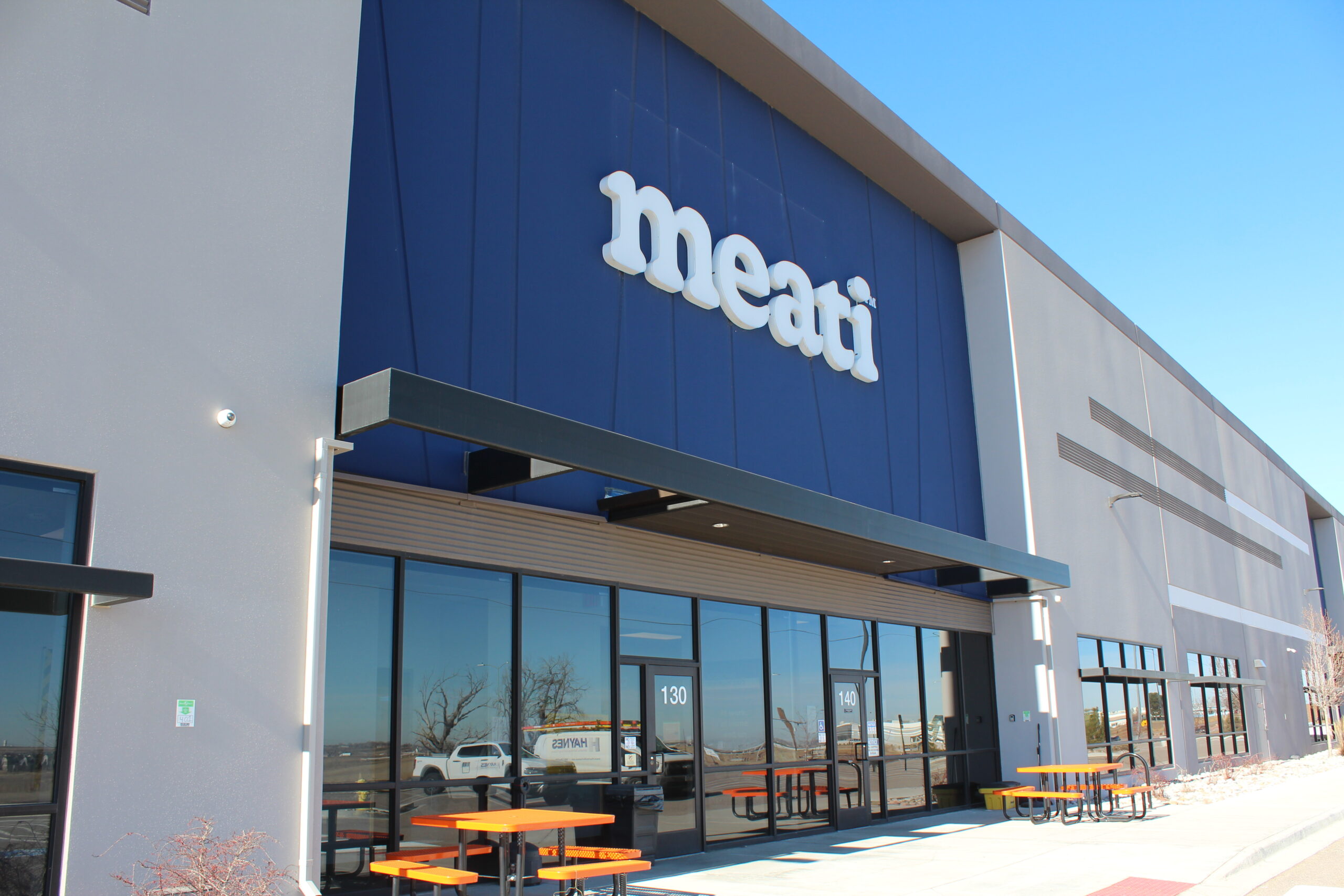
Mushroom meat startup evicted from plant; assets seized over taxes
BusinessDen· 2026-02-03 02:06
Core Insights - Meati, a mushroom meat alternative company, has faced significant financial difficulties, culminating in eviction from its manufacturing facility due to unpaid taxes totaling $16 million [3][4][10] - The company was sold for a fraction of its previous valuation, with new ownership under Yasir Abdul, who has implemented drastic changes to stabilize operations [4][5][16] Financial Situation - Meati owes $9.2 million in sales and use taxes to Thornton and $6.7 million in property taxes to Adams County [3] - The company raised $450 million in venture capital before its valuation plummeted, leading to a sale for approximately $10,000 plus existing debts [4][5] - As of April 29, Meati had $150 million in fixed assets, which include manufacturing equipment and furniture [11][12] Operational Challenges - The company has been unable to meet its rent obligations, with arrears growing from $52,689 in April 2024 to $232,738 by March 2025 [9] - Meati's manufacturing facility, leased in 2021 and opened in 2023, is now being marketed for lease following the eviction [11] Management Changes - Yasir Abdul has taken over day-to-day operations since mid-May and has laid off production team members due to financial constraints [5][13] - Abdul has invested $14.2 million into the company since assuming control and plans to extend the product line and rebrand Meati [16]
2 Big Fat Yields I Think You'll Like
Seeking Alpha· 2026-01-31 12:30
Group 1 - The article discusses the value in Business Development Companies (BDCs) despite a general skepticism towards the credit industry [1] - Leo Nelissen is highlighted as a long-term investor and macro-focused strategist, emphasizing dividend growth and high-quality compounders [1] - The research includes a focus on identifying durable businesses with strong cash-flow potential through a combination of macro analysis and bottom-up stock research [1]

Trinity Capital: Buying The Yield, Watching The Price (NASDAQ:TRIN)
Seeking Alpha· 2026-01-23 23:25
Core Viewpoint - Trinity Capital (TRIN) is recognized as a well-managed, income-generating Business Development Company (BDC) with a track record of consistent income generation, averaging in the early teens percentage range. However, the stock has experienced a significant rerating in recent quarters [1]. Group 1 - Trinity Capital has demonstrated reliable income-generating capabilities over several quarters, maintaining an average income in the early teens percentage range [1]. - The stock has undergone a meaningful rerating in recent quarters, indicating a shift in market perception or valuation [1]. Group 2 - The analysis is conducted by a stock analyst with over 20 years of experience in quantitative research, financial modeling, and risk management, focusing on equity valuation and market trends [1]. - The analyst has a background as a former Vice President at Barclays, leading teams in model validation and stress testing, which contributes to a deep expertise in both fundamental and technical analysis [1]. - The research approach combines rigorous risk management with a long-term perspective on value creation, emphasizing macroeconomic trends and corporate earnings [1].

Why a 15% Dividend Wasn’t Enough to Keep This $3.3 Million Position
Yahoo Finance· 2026-01-23 15:50
Company Overview - Trinity Capital provides venture debt and equipment financing solutions to growth-stage companies, primarily in the technology and innovation sectors [8] - The company operates as a business development company, generating revenue through interest income, fees, and equity-related gains from its lending portfolio [8] - Trinity Capital focuses on providing flexible debt capital to emerging growth companies, supporting innovative businesses that require alternative financing beyond traditional equity [9] Recent Developments - GraniteShares Advisors LLC fully exited its position in Trinity Capital, selling 212,465 shares worth an estimated $3.29 million in the fourth quarter [2][3][6] - The fund's holdings in Trinity Capital decreased from 1.9% of its assets under management (AUM) to zero following the sale [6] Financial Performance - Trinity Capital reported total investment income of $75.6 million for the most recent quarter, reflecting a year-over-year increase of over 22% [11] - Net investment income rose nearly 26% to $37.0 million, indicating strong demand across the firm's credit strategies [11] - The company has a dividend yield of approximately 15%, which has attracted income-focused investors despite lagging price performance compared to the broader market [10][12] Market Position - As of the latest filing, shares of Trinity Capital were priced at $16.10, showing a 13% increase over the past year, compared to a 14% gain for the S&P 500 [4] - The venture debt market is cyclical, and the exit by GraniteShares suggests that the dividend yield may have already fulfilled its purpose for investors [12]
Trinity Capital: 6 Factors Positioning This 13% Yielding BDC As A Prime Buy For 2026
Seeking Alpha· 2026-01-22 17:30
Core Viewpoint - The Business Development Companies (BDC) sector is facing additional pressure due to the Federal Reserve's rate cut cycle, yet Trinity Capital is highlighted as a recommended "Buy" asset within this sector [1]. Group 1: Company Analysis - Trinity Capital is identified as a strong investment opportunity despite the challenges in the BDC sector [1]. - The recommendation is based on a combination of macro-economic analysis and real-world trading experience [1]. Group 2: Investment Strategy - The analysis aims to provide clear, actionable investment ideas to build a balanced portfolio of U.S. securities [1]. - The focus is on identifying profitable and undervalued investment opportunities primarily in the U.S. market [1].

Trinity Capital Achieves Record $2.1 Billion of New Commitments and $1.5 Billion in Funded Investments in 2025
Prnewswire· 2026-01-13 13:00
Core Insights - Trinity Capital Inc. announced a record total investment of $1.5 billion for the year 2025, with $435 million funded in the fourth quarter alone [1][6] - The company originated $2.1 billion in new commitments for the full year, including $543 million in the fourth quarter [1][6] Investment Highlights - In Q4 2025, Trinity Capital funded $435 million, which included $305 million in secured loans, $106 million in equipment financings, and $24 million in warrant and equity investments [6] - For the full year 2025, total investments funded reached approximately $1.5 billion, comprising $1.1 billion in secured loans, $303 million in equipment financings, and $59 million in warrant and equity investments [6] New Commitments - In Q4 2025, the company originated $543 million in new commitments, which included $329 million in secured loans, $190 million in equipment financings, and $24 million in equity investments [6] - Total new commitments for 2025 amounted to approximately $2.1 billion, with $1.6 billion in secured loans, $429 million in equipment financings, and $60 million in equity investments [6] Portfolio Activity - In Q4 2025, Trinity Capital funded approximately $171 million to 5 new portfolio companies and $264 million to 25 existing portfolio companies [6] - For the full year, the company funded about $968 million to 43 new portfolio companies and $500 million to 34 existing portfolio companies [6] Repayments and Exits - Proceeds from repayments and exits in Q4 2025 totaled approximately $218 million, including $94 million from early debt repayments and $66 million from scheduled debt payments [6] - For the full year, proceeds from repayments and exits reached approximately $826 million, with $318 million from early debt repayments and $259 million from scheduled debt payments [6]