
UnitedHealth(UNH)

Search documents
X @Investopedia
Investopedia· 2025-07-28 22:30
Earnings Report Announcement - UnitedHealth Group is set to release its second-quarter results before the market opens on Tuesday [1] - The market anticipates a significant stock movement for the health insurance company by the week's end [1]

重磅财报来袭!市值蒸发近2700亿美元后 联合健康(UNH.US)能否重振市场信心
Zhi Tong Cai Jing· 2025-07-28 22:26
Group 1 - UnitedHealth Group (UNH.US) is set to release its quarterly earnings report, which is considered a key indicator of the current state and future direction of the U.S. healthcare system [1] - Over the past 12 months, UnitedHealth's stock price has dropped more than 50%, resulting in a market capitalization loss of nearly $270 billion [1] - The company has faced significant challenges, including disappointing earnings reports, ongoing issues with its Medicare Advantage business, and various internal and external pressures [1] Group 2 - Following a major management shakeup, with Stephen Hemsley taking over as CEO, the company withdrew its previous earnings guidance for 2025 [1][2] - UnitedHealth is currently under investigation by the U.S. Department of Justice regarding potential fraud in its Medicare Advantage program [1][2] - The company has denied any wrongdoing and is cooperating with the investigation [2] Group 3 - Despite its market value decline, UnitedHealth remains one of the top six healthcare companies globally, covering 50 million Americans and employing around 90,000 doctors [2] - Investors are particularly focused on how Hemsley will set the 2025 earnings expectations, which were previously estimated to be between $26 and $26.5 per share [2] - Current market consensus for 2025 adjusted earnings per share has been significantly lowered to $20.64, with some analysts predicting as low as $18.5 [2][3] Group 4 - The market is also closely watching for any directional growth guidance for 2026, with consensus estimates for adjusted earnings per share at $24.01 [3] - UnitedHealth's stock price is currently around $280 per share, significantly below its historical peak, and its future performance will largely depend on rebuilding market trust through the upcoming earnings report [3]
UNITEDHEALTH CLASS ACTION ALERT: Bragar Eagel & Squire, P.C. Announces that a Class Action Lawsuit Has Been Filed Against UnitedHealth Group Incorporated and Encourages Investors to Contact the Firm
GlobeNewswire News Room· 2025-07-28 22:19
Core Viewpoint - A class action lawsuit has been filed against UnitedHealth Group Incorporated for allegedly making false and misleading statements regarding its corporate strategy and practices, which led to investor losses during the specified class period [1][3]. Summary by Relevant Sections Lawsuit Details - The lawsuit was filed in the United States District Court for the Southern District of New York on behalf of individuals and entities that purchased UnitedHealth securities between December 3, 2024, and April 16, 2025 [1]. - Investors have until July 7, 2025, to apply to be appointed as lead plaintiff in the lawsuit [1]. Allegations Against UnitedHealth - The lawsuit claims that UnitedHealth engaged in a corporate strategy of denying health coverage to increase profits and share price [3]. - This strategy allegedly led to regulatory scrutiny and public backlash, culminating in the murder of an individual named Brian Thompson [3]. - Following Thompson's murder, there was significant public animosity towards UnitedHealth, with some individuals celebrating the event and demanding changes in the company's practices [3]. - Despite the backlash, UnitedHealth reportedly maintained unrealistic guidance that did not reflect its changing corporate strategies [3]. - The lawsuit asserts that the public statements made by the defendants were materially false and misleading throughout the relevant period, resulting in investor damages when the truth was revealed [3].


Mizuho's Jared Holtz: UnitedHealth's trough earnings number is what we're all trying to see
CNBC Television· 2025-07-28 19:16
UnitedHealth Group Outlook - Street is trying to understand the next 6-18 months, with less focus on 2025 [2] - Expectation of reintroduced guidance from UnitedHealth with a new CEO [2] - Potential earnings range of $18-$20 for the balance of the year or fiscal year 2025 may be sufficient [3] - Previous expectations for UnitedHealth were closer to the high $20s, now trying to determine the trough earnings number [4] - Focus is on price discovery and investor multiple on future earnings (2026, 2027, etc) [4] Pharmaceutical Tariff Implications - Potential tariff angle on big pharma is being considered [1][5] - Street is bracing for a potential 15%-25% tariff rate across the board for large-cap pharma [7] - Sector-wide tariff has been rumored for 6-8 weeks with no concrete action [7] - Clarity on tariffs could lead to a rally in pharma stocks [8] - Uncertainty remains regarding the administration's actions and clarity on pharmaceutical policies [9] Pharmaceutical Industry Challenges - Focus on bringing pharmaceuticals back to America [6] - Potential impact of most favored nations status [9] - Losses of exclusivity are well-documented challenges [10]
Can Optum Support UnitedHealth's Profit Amid Industry Headwinds?
ZACKS· 2025-07-28 14:51
Core Insights - UnitedHealth Group (UNH) is expected to report its second-quarter earnings on July 29, with a focus on its Optum platform, which may provide stability amid regulatory challenges and margin pressures in the health insurance sector [1][8] Optum Performance - Optum's diverse business model, encompassing pharmacy services, data analytics, and value-based care, positions UNH advantageously. In Q2 2025, Optum's revenues are projected to increase by 7.3% year-over-year, building on a 12% growth in 2024 and a 4.6% growth in Q1 2025 [2][8] - OptumHealth is enhancing its value-based care model, which aims to improve health outcomes while controlling costs, thereby mitigating the impact of rising claims in the sector [3] - OptumInsight is leveraging technology and data-driven services to enhance operational efficiencies for both external clients and UNH itself [3] Competitive Landscape - Elevance Health Inc (ELV) reported a 36.1% year-over-year increase in operating revenues for its Carelon services brand in Q2 2025, while overall operating revenues rose by 14.3% [5] - Cigna's health services division, Evernorth, saw adjusted revenues climb by 16% year-over-year in Q1 2025, with its second-quarter results expected on July 31 [6] Valuation and Earnings Estimates - UNH shares have declined by 44.5% year-to-date, compared to a 36.7% decline in the industry [7] - The forward price-to-earnings ratio for UNH is 12.2, above the industry average of 11.2, with a Value Score of A [9] - The Zacks Consensus Estimate for UNH's 2025 earnings is $21.15 per share, indicating a 23.5% decrease from the previous year [10]

Class Action Accuses UnitedHealthcare of Misleading Seniors Into Giving Up Medicare Benefits
GlobeNewswire News Room· 2025-07-28 13:00
Core Points - The article discusses a class action lawsuit against UnitedHealthcare, alleging predatory practices and Medicare Advantage fraud, highlighting the serious implications for vulnerable populations' access to healthcare [1][4] - The lawsuit claims that UnitedHealthcare misled seniors into abandoning their Original Medicare benefits for profit-driven Medicare Advantage plans, which the company refers to as "Medicare-Disadvantage" plans [1][4] - The case emphasizes the need for accountability and protection for seniors from deceptive marketing practices that could lead to loss of Medicare benefits [2][3] Summary by Sections Allegations and Legal Proceedings - The lawsuit, titled The Estate of Bibi Ahmad v. UnitedHealth Group Inc., was filed in the U.S. District Court for the Central District of California, alleging systemic and predatory advertising practices by UnitedHealthcare [1] - The court dismissed the case on "preemption" grounds but acknowledged the seriousness of the allegations regarding access to healthcare for vulnerable populations [1][4] - The anticipated appeal to the Ninth Circuit aims to reinstate the case for further proceedings, focusing on whether federal CMS regulations exceeded congressional authorization post-Chevron [6] Impact on Seniors - The article highlights the case of a 96-year-old cancer patient, D.D., who was misled into giving up her Medicare benefits, resulting in delayed treatment and unpaid medical bills [5] - The lawsuit claims that UnitedHealthcare's misleading advertising affected hundreds of thousands of seniors nationwide, particularly in California [6] Corporate Practices and Financial Performance - UnitedHealthcare reported over $22.3 billion in profits in 2023, raising concerns about corporate greed and the impact of denied medical claims on seniors [3] - The lawsuit alleges that UnitedHealthcare's advertising misrepresented its Medicare Advantage plans as supplements to Original Medicare, which was not the case [4]

Stakes high for UnitedHealth Group’s Q2 earnings
CNBC Television· 2025-07-28 12:12
Medicare Advantage Program Challenges - UnitedHealth is facing significant challenges due to collapsing profits in its Medicare Advantage program [1] - Tighter V28 billing codes are reducing extra margins for insurers and doctors, impacting UnitedHealth's Optimum Health and its 90,000 doctors [2] - The company's doctor unit, Optim Health, which was previously a strength, is now a significant drag on performance in Medicare Advantage [5] - UnitedHealth inherited many patients by offering more generous benefits while competitors cut back, leading to current problems [6] Financial Outlook and Guidance - Analyst estimates for 2025 earnings per share range from $18 to $26, with a consensus of nearly $21; anything less than $18 would be a significant concern [3] - Investors are focused on how UnitedHealth plans to stem losses and improve its financial situation [2] Regulatory and Legal Issues - The Department of Justice (DOJ) is investigating UnitedHealth's billing practices [3] Market Impact - UnitedHealth's struggles are weighing on the Dow Jones Industrial Average, dragging it down by 1400 points this year [7]
Buy or Sell UNH Stock Ahead of Its Upcoming Earnings?
Forbes· 2025-07-28 09:50
Core Insights - UnitedHealth (NYSE: UNH) is scheduled to release its earnings on July 29, 2025, with analysts expecting earnings of $4.94 per share on revenue of $111.6 billion, compared to last year's earnings of $6.80 per share on revenues of $98.86 billion, indicating a contraction in profit margins due to rising medical costs [2][3] Group 1: Earnings Performance - Over the past five years, UNH stock has shown positive one-day returns after earnings announcements in 53% of cases, with a median one-day gain of 4.0% and a maximum increase of 7.2% [2][7] - In the last three years, the percentage of positive one-day returns drops to 45%, with a median of 4.0% for positive returns and -2.9% for negative returns [7] Group 2: Financial Metrics - UnitedHealth has a current market capitalization of approximately $267 billion, generating $410 billion in revenue over the past twelve months, with operating profits of $33 billion and a net income of $22 billion, reflecting strong operational profitability [3] Group 3: Trading Strategies - Traders can utilize historical data to position themselves ahead of earnings releases or analyze post-earnings returns to guide their trading strategies [5][9] - Understanding the correlation between short-term (1D) and medium-term (5D, 21D) returns can help traders make informed decisions based on historical performance [9]
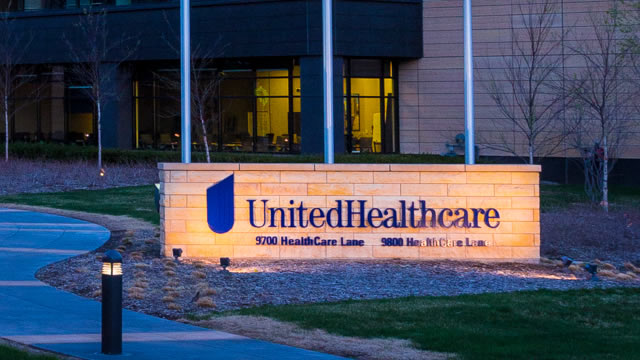
UnitedHealth aims to reassure investors as profits plunge, DOJ investigates its Medicare business
CNBC· 2025-07-28 09:30
Core Viewpoint - UnitedHealth Group is facing significant challenges, including a sharp decline in share price and ongoing investigations, as it prepares to report earnings, with investors keenly awaiting guidance on future performance and strategies to regain confidence [2][3][15]. Financial Performance - The company's share price has nearly halved since mid-May, marking its worst year in over a decade, primarily due to plummeting earnings in its Medicare program and Optum Health [2]. - Analysts expect UnitedHealth to report adjusted full-year earnings of $21.26 per share, with estimates ranging from $18 to $26.44 per share, indicating that anything below $18 would be viewed negatively by investors [4][5]. Medicare Advantage and Optum Health Outlook - Investors are particularly focused on how UnitedHealth plans to stabilize its Optum Health unit, which has historically contributed to its success in the Medicare Advantage program [7][8]. - A significant decline in profits for Optum Health in the first quarter is attributed to changes in Medicare reimbursement standards (V28), which have made billing for additional services more challenging [9][10][12]. Legal and Regulatory Issues - UnitedHealth is currently under criminal and civil investigations by the Department of Justice regarding its Medicare billing practices, which the company is cooperating with [15]. - Despite concerns over these investigations, some analysts believe the market's reaction is exaggerated, suggesting that the outcome may involve financial penalties rather than severe operational consequences [16][17]. Industry Context - Increased regulatory scrutiny from Congress is noted, with bipartisan interest in addressing high health and drug costs, which may impact large insurers like UnitedHealth [17][18]. - The company has initiated a review of its practices through third-party auditors to enhance transparency and confidence among stakeholders, although details from this audit will not be available until later in the year [19][20].

苹果、亚马逊、微软、Meta等将于本周发布业绩报告


news flash· 2025-07-27 17:11
Group 1 - Multiple companies are scheduled to release their earnings reports throughout the week, indicating a busy earnings season [1] - On Monday, companies like 铿腾电子 are set to report their performance [1] - On Tuesday, Stellantis and AstraZeneca will release their earnings before the European market opens [1] Group 2 - Major U.S. companies such as Boeing, UnitedHealth, and Procter & Gamble are expected to report earnings before the U.S. market opens on Tuesday [1] - Following that, Visa, Booking, and Starbucks will report their earnings after the U.S. market closes on Tuesday [1] - On Wednesday, significant tech companies including Microsoft, Meta Platforms, Qualcomm, and Arm Holdings are scheduled to release their earnings after the U.S. market closes [1] Group 3 - Mastercard is set to report its earnings before the U.S. market opens on Thursday [1] - Apple, Amazon, MicroStrategy, Coinbase, and Coherent will report their earnings after the U.S. market closes on Thursday [1] - On Friday, ExxonMobil, Chevron, and Regeneron Pharmaceuticals are expected to release their earnings before the U.S. market opens [1]