UnitedHealth(UNH)

Search documents
Luigi Mangione admits to killing CEO
NBC News· 2026-08-15 01:07
Market Dynamics and Industry Impact - The incident triggered widespread public anger directed at the health insurance industry, with some public factions even expressing support for the crime[6] - Police and industry stakeholders emphasize that violence and murder cannot be justified as a message or a cause, rejecting the idolization of the perpetrator[6] - The accused perpetrator posed as an investor representing a firm managing over 50 billion (500亿) dollars in assets to extract conference location details from United Healthcare leadership[2] Corporate Risk and Legal Proceedings - United Healthcare CEO Brian Thompson was fatally shot in Manhattan by the confessed killer Luigi Manion, who utilized a 3D printer to manufacture components of the weapon[1][2] - The federal judge accepted the 28-year-old defendant's guilty plea on stalking charges, while federal prosecutors are actively seeking a life sentence[4] - The defense team argues that the state-level case constitutes double jeopardy and should therefore be dismissed, though a state judge must make the final determination[7] - The defense contends that the perpetrator suffered from severe back pain and grievances against the healthcare system, believing the system had failed and destroyed his life[5]


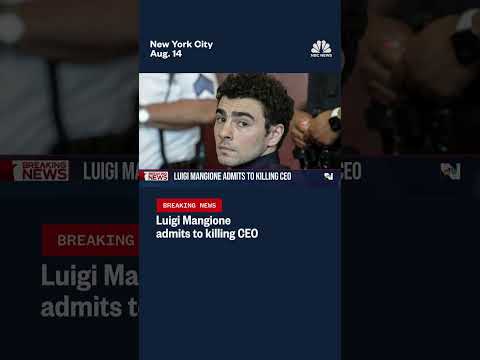
Top Story with Tom Llamas - Aug. 14 | NBC News NOW
NBC News· 2026-08-15 01:03
Legal and Judicial Updates - The defendant pleaded guilty in a federal court to two counts of stalking resulting in the death of UnitedHealthcare CEO Brian Thompson, while federal prosecutors are seeking a life sentence [5][8][10][14] - The defense team argues that the state case should be dismissed under the double jeopardy principle, resulting in the postponement of the state trial originally scheduled for September [13][15][16] Macroeconomic and Industry Trends - A Groupon mystery travel package partnering with Mystery Vacations has sold close to $2 million worth of vouchers in the past month as consumers seek budget-friendly deals amid airfares rising roughly 25% compared to the previous year [86] - FBI crime statistics show a significant decline in violent crime from 2024 to 2025, with murder and manslaughter dropping by more than 18%, rape offenses falling by an estimated 7.6%, and robberies down 18.5% [62] Natural Disasters and Infrastructure Risks - An earthquake with a magnitude of 7.7 struck off the coast of Indonesia at a shallow depth of 6 miles, potentially affecting roughly 200,000 people experiencing extreme shaking [30][32][33] - A formidable tropical storm threatening Hawaii brings concerns of catastrophic rainfall up to 25 inches, following previous Kona storms that caused an estimated $100 million worth of damage in Maui [40][46]

Hallie Jackson NOW - Aug. 14 | NBC News NOW
NBC News· 2026-08-15 00:59
Legal Proceedings and Case Developments - Luigi Mangione pleaded guilty in federal court to two federal stalking charges and admitted to shooting UnitedHealthcare CEO Brian Thompson in Manhattan, facing sentencing on December 18th [6][7][10] - Prosecutors are seeking a maximum sentence for Luigi Mangione, while the open plea proposes 25 to 30 years, though the judge retains final discretion [14][22] - The Manhattan District Attorney plans to contest the defense's double jeopardy motion to dismiss the state second-degree murder trial scheduled for September 8th [10][13] - Alex Murdaugh's murder conviction was thrown out, and a judge ruled that the defense can test DNA found under the victim's fingernails belonging to an unknown male, with a retrial scheduled following a change of venue [80][81][82] Financial and Commercial Disclosures - A museum theft in northern Italy involving Auguste Renoir, Paul Cézanne, and Henri Matisse paintings resulted in the recovery of artworks valued at a combined 10.5 million dollars [84][86] - French crown jewels valued at more than 100 million dollars were stolen from the Louvre in October [85] - Investors filed a fraud lawsuit against Selena Gomez, her mother, and co-founder Daniella Pierson over their mental health company Wonder Mind after investing over 1 million dollars [121][122] Macroeconomic and Industry Trends - The FBI released 2025 crime statistics showing violent crime dropped nearly 10% last year, marking the largest year-over-year decline ever recorded with over 400,000 arrests [91][92] - Robbery and murder rates dropped the most, both down nearly 20% [92] - Construction workers in Belgium accidentally uncovered gold worth approximately 10.5 million dollars while renovating a building [96]


Mangione Admits to Killing Brian Thompson; How Afghan Women Are Bypassing Taliban Rule - Aug. 14
NBC News· 2026-08-14 23:38
Legal & Judicial Proceedings - Defendant Luigi Manion pleaded guilty to federal stalking and weapons charges related to the fatal shooting of a healthcare executive, facing potential life imprisonment [3][4][5][15][22] - Federal prosecutors and defense counsel discussed a potential sentencing calculation targeting an offense range of 25 to 30 years [16][17] - Defense legal teams filed a 30-plus-page motion in state court invoking New York's double jeopardy protections to dismiss state murder charges based on identical underlying facts [4][21][22][24] Humanitarian & Social Impact - Five years following the Taliban's resurgence, the majority of women in Afghanistan remain restricted from formal employment, public education, and unchaperoned healthcare access [3][28][29] - Civic technology startups utilize covert methods and masking applications to coordinate underground healthcare networks and educational resources for women [32][37][39][40] - Afghan women hold approximately 10,000 formal business licenses, representing a tenfold increase compared to pre-collapse figures, alongside an estimated 120,000 women engaging in informal trade [44] Sports Industry & Market Trends - The North American broadcast of the soccer World Cup final attracted an audience of 60 million viewers within the United States [67] - Major English football clubs such as Liverpool benefit from historic international brand equity and substantial fan engagement, drawing matchday attendance figures of nearly 50,000 people [1][64][65]

Luigi Mangione admits to killing CEO
NBC News· 2026-08-14 23:37
Case Background and Incident Details - Luigi Manion confessed in federal court to shooting United Healthcare CEO Brian Thompson in Manhattan [1][2] - The perpetrator used a 3D printer to manufacture a part of the firearm used in the premeditated attack [2][3] - The 28-year-old defendant pleaded guilty to stalking charges, and federal prosecutors are seeking a life sentence [4] Industry Impact and Security Risks - The high-profile crime exposed widespread public anger toward the health insurance industry and triggered intense national media attention [4][6] - The perpetrator managed to obtain the conference location by posing as an investor representing a firm managing over 50 billion (500 亿) dollars in assets [2] - The defense argued that the defendant suffered from severe back pain and a perceived failure of the healthcare system, though prosecutors firmly emphasized the rule of law [5][6] Legal Proceedings and Defense Strategy - The defense team entered a guilty plea as part of a strategy to argue double jeopardy and push for the dismissal of the state case [7] - The final decision regarding the dismissal of the state case remains pending and rests upon the state judge [7]

Meet the Press NOW — August 14
NBC News· 2026-08-14 22:13
Military & Geopolitical Situation - The U.S. military lost 45 Reaper drones, accounting for about 25% of its fleet, during the conflict with Iran [5] - The cost of gas remains above $4 per gallon and oil prices remain above $80 per barrel due to economic impacts from the war [5] - Vice President JD Vance stated that keeping oil and gas cheap for Americans is goal number one, while ensuring Iran never gets a nuclear weapon is goal number two [6] - Iran is experiencing an inflation rate of 90% as the conflict continues to severely impact its economy [29] - The 7.4 magnitude earthquake in Colombia resulted in at least 287 deaths and nearly 4,000 injuries [122] Legal & Political Developments - Luigi Mangione pleaded guilty to two federal stalking charges related to the 2024 killing of United Healthcare CEO Brian Thompson [42] - Mangione posed as a potential investor from a health care insurance company with $50 billion in assets under management to confirm the location of the investor conference [50] - The federal stalking charge alone could carry a maximum sentence of life in prison without parole, with sentencing scheduled for December 18 [59][60] - House Democrats have identified 58 Republican districts to target as they work to take back control of the House of Representatives [70] - Nigel Farage won a UK special election with 63% of the vote, while fringe candidate Count Binface finished second with 27% of the vote [134]

X @None
Bloomberg· 2026-08-14 18:40
Legal and Regulatory - Luigi Mangione will plead guilty to resolve federal charges related to the fatal shooting of a UnitedHealth executive [1] Industry Impact - The healthcare sector faces heightened security and reputational concerns following the fatal shooting of UnitedHealth executive Brian Thompson [1]
Luigi Mangione Pleads Guilty to Federal Charges in UnitedHealth Killing
WSJ News· 2026-08-14 18:25
Legal and Judicial Proceedings - Defendant Mr. Manion entered a guilty plea accepting full responsibility for the death of Brian Thompson outside of the United Healthcare Investor Conference in Midtown Manhattan on December 4th, 2024 [1] - Defense counsel filed a motion in state court seeking the dismissal of state charges based on New York's double jeopardy protections and statutory rules against successive prosecutions [4][5] - The defense successfully contested and warded off terrorism charges and the potential death penalty amidst simultaneous prosecutions across two jurisdictions [3] Healthcare System and Industry Impact - The incident stemmed from the defendant's years of severe and debilitating pain following a broken back while navigating healthcare and health insurance systems [2] - Thousands of individuals reached out following the tragedy to share their own experiences and express grievances regarding failures within the healthcare and insurance systems [3]
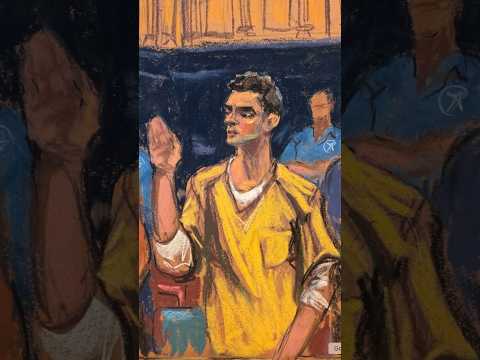
Current with Christine Romans – Aug. 14 | NBC News NOW
NBC News· 2026-08-14 18:02
Legal Proceedings and Plea Agreements - Defendant Luigi Mangione pleaded guilty in a Manhattan federal court to two counts of federal stalking resulting in death, with sentencing scheduled for December 18[180][181][257] - Federal prosecutors recommended a sentencing range between 292 to 365 months of imprisonment (approximately 24 to 30 years), while the charges carry a maximum penalty of life in prison[184][239][243] - The defense's strategy aims to leverage the federal guilty plea to invoke New York State's robust double jeopardy laws to potentially dismiss the upcoming state murder trial[18][127][219] Case Details and Premeditation - Courtroom disclosures revealed that the defendant used a 3D printer to manufacture a ghost gun with a silencer and posed as an investor with millions in assets via email to contact UnitedHealthCare leadership prior to the December 4 shooting[241][255] - The federal guilty plea proceeding marked the first time the family of victim Brian Thompson, along with UnitedHealthCare executives, came face-to-face with the accused in the courtroom[121][168] - Public and financial support for the defendant included a legal defense fund that raised approximately 1.5 million dollars (1,500,000 dollars) prior to the proceedings[9][148]

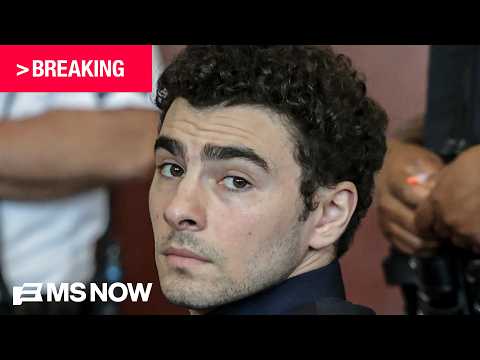
BREAKING: Luigi Mangione has pleaded GUILTY to federal stalking charges
MSNBC· 2026-08-14 17:48
Legal Proceedings & Court Outcomes - Luigi Mangione pleaded guilty in federal court to two counts of stalking resulting in death or severe bodily injury regarding the killing of UnitedHealthcare CEO Brian Thompson [3][13] - The federal sentencing is scheduled for December 18th, with prosecutors seeking the maximum penalty of life imprisonment without a plea agreement [1][18][22] - The defense team filed a motion in state court to dismiss separate state murder charges based on New York's double jeopardy protections [8] Criminal Investigation & Law Enforcement - The Federal Bureau of Investigation, the New York City Police Department, and the U.S. Attorney's Office for the Southern District of New York collaborated extensively, reviewing thousands of hours of surveillance video and utilizing sophisticated technology [19][23][25] - Local police took the suspect into custody 5 days after the murder following public distribution of the suspect's image [25][26]