SPDR

Search documents
S&P 500 Snapshot: 50-Day MA Becomes a Pivot Point Amid February Volatility
Etftrends· 2026-02-27 23:51
Core Viewpoint - The S&P 500 index has shown volatility in February, slipping below its 50-day moving average and ending the week with a loss of -0.4%, now 1.43% off its all-time high from January 27, 2026 [1] Group 1: S&P 500 Performance - The S&P 500 experienced its seventh cross of the 50-day moving average in February [1] - The index closed at a loss of -0.4% for the week, indicating a downward trend [1] - Historical context shows that the S&P 500 reached an all-time high of 1565.15 on October 9, 2007, before experiencing a significant drop of approximately 57% during the Global Financial Crisis [1] Group 2: Volatility Insights - The S&P 500 has been below the 50-day moving average since February 27, while remaining above the 200-day moving average since May 12 [1] - The index experienced its largest intraday price volatility of 10.77% on April 9, 2025, since December 24, 2018 [1] - The average percent change from intraday low to high over the past 20 days is 1.22%, indicating ongoing volatility [1] Group 3: Index Comparisons - The S&P 500 is up 0.49% year to date, while the S&P Equal Weight Index has outperformed with a gain of 6.78% year to date [1] - The S&P 500 is a market cap-weighted index, while the S&P Equal Weight Index gives equal weight to each constituent [1]

How a top wealth manager is telling rich clients to navigate AI chaos
Markets Insider· 2026-02-26 15:42
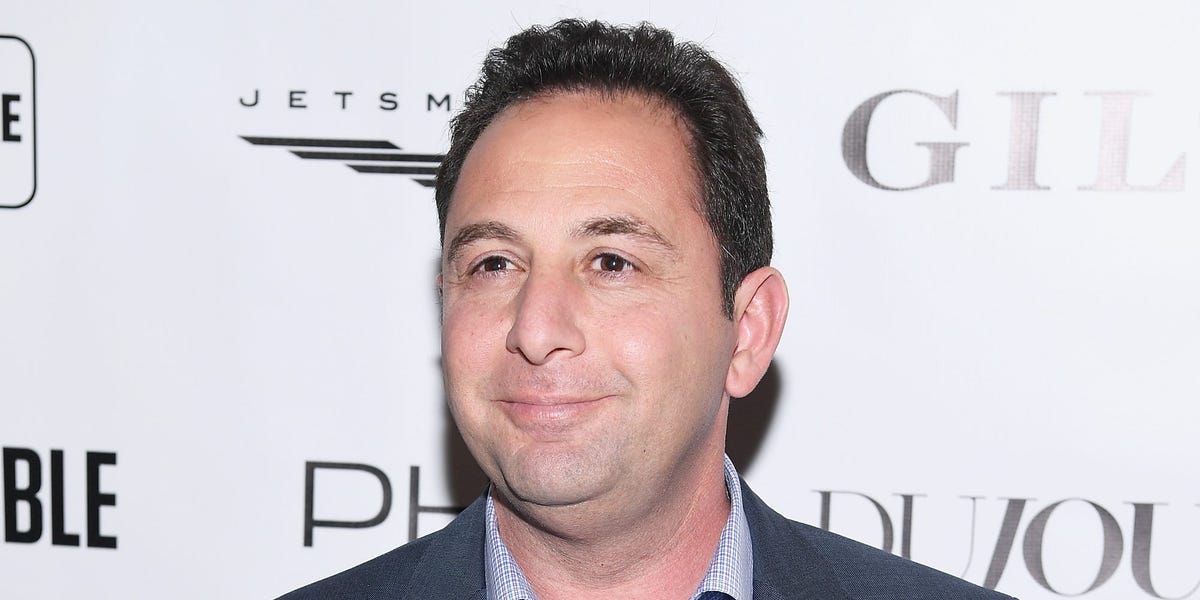
Peter Mallouk, the billionaire CEO of wealth management firm Creative Planning, says AI isn't like any past technology cycle — it's far more transformational, and that calls for investors to take action in their portfolios. Mallouk told Business Insider that he's convinced AI is more impactful than other technological advancements by a long-shot, and the change it creates will likely be permanent. "I think it's more than the internet, where the internet made everybody more efficient, or Microsoft with all t ...
What Investors Should Understand About Mid-Cap Exposure Through VO (or MDY)
Yahoo Finance· 2026-02-25 18:05
Is your gut telling you there's just something not quite right about the market at this time? If so, you're not imagining things: Too many stocks are overvalued as well as technically overbought. It also feels like a few too many companies are vulnerable to some sort of economic turbulence ahead, even if we don't know what turbulence might be brewing. Be wary of coming to sweeping generalizations about "the market," though. It's not every stock. Indeed, you may already realize that most mid-caps don't br ...
You Could Have Captured Gold's 73% Surge For Only 0.18%
247Wallst· 2026-02-24 14:07
You Could Have Captured Gold's 73% Surge For Only 0.18% - 24/7 Wall St.[S&P 5006,845.00 -0.04%][Dow Jones48,874.20 +0.05%][Nasdaq 10024,803.70 +0.24%][Russell 20002,624.57 -0.15%][FTSE 10010,696.80 +0.13%][Nikkei 22557,675.30 +1.54%][Stock Market Live February 24, 2026: S&P 500 (SPY) Rebounding from Monday Disaster][Investing]# You Could Have Captured Gold's 73% Surge For Only 0.18%### Quick ReadGoldman Sachs Physical Gold ETF (AAAU) returned 73.1% over the past year with a 0.18% expense ratio.Goldman Sachs ...

VEA vs. SPDW: Which International ETF Is the Best Choice for Investors?
Yahoo Finance· 2026-02-23 15:54
The Vanguard FTSE Developed Markets ETF (NYSEMKT:VEA) and the SPDR Portfolio Developed World ex-US ETF (NYSEMKT:SPDW) both aim to track the performance of developed markets outside the United States, providing diversified exposure across Europe, Asia, and Canada. This comparison looks at how the two funds stack up on cost, yield, risk, holdings, and portfolio quirks to help investors decide which may appeal more for international equity allocation. Snapshot (cost & size) Metric VEA SPDW Issuer ...
How SPDR's XLK Tech ETF Beat the S&P 500 by 35 Points
247Wallst· 2026-02-18 13:19
Core Insights - The Technology Select Sector SPDR Fund (XLK) has outperformed the SPDR S&P 500 ETF Trust (SPY) by 35 percentage points over five years, primarily due to concentrated exposure in major tech stocks like NVIDIA, Apple, and Microsoft [1] - XLK's five-year return stands at 109.39%, compared to SPY's 73.63%, highlighting the benefits of concentrated sector exposure during periods of digital transformation [1] - The fund's strategy involves a significant concentration of 39% of its assets in just three stocks, which amplifies both potential returns and risks [1] Performance Metrics - XLK has a low expense ratio of 0.08% and a 5% annual turnover, making it tax-efficient for long-term investors [1] - The fund's recent performance shows a decline of 3.06% through mid-February 2026, while SPY remained flat, indicating volatility associated with sector concentration [1] - The semiconductor sector, which comprises approximately 45% of XLK's holdings, has driven a return of 17.43% over the past year due to increased demand [1] Investment Strategy - XLK is positioned as a core growth holding for investors willing to accept concentration risk, focusing on established mega-cap technology companies [1] - The fund's design allows for direct exposure to the technology sector without the complexity of building a diversified portfolio [1] - Investors in XLK should be aware that individual company performance significantly impacts returns due to the fund's concentrated holdings [1]



S&P 500 Snapshot: Second Straight Loss
Etftrends· 2026-02-17 16:37
Core Viewpoint - The S&P 500 index experienced a loss of -1.4% for the week, marking its second consecutive weekly decline, primarily due to a selloff driven by concerns related to AI [1] Group 1: S&P 500 Performance - The S&P 500 is currently 2.04% below its all-time high reached on January 27, 2026 [1] - The index has been below the 50-day moving average since February 12 and above the 200-day moving average since May 12 [1] - The 50-day moving average has been above the 200-day moving average since July 1 [1] Group 2: Historical Context - The S&P 500 reached an all-time high of 1565.15 on October 9, 2007, before experiencing a ~57% drop by March 9, 2009, during the Global Financial Crisis [1] - It took over 5 years for the index to reach a new all-time high on March 28, 2013, closing at 1569.19 [1] - Recent selloffs in 2022 are noted when excluding the Global Financial Crisis from the analysis [1] Group 3: Volatility Insights - The largest intraday price volatility of the S&P 500 since December 24, 2018, occurred on April 9, 2025, with a volatility of 10.77% [1] - The average percent change from the intraday low to the intraday high over the past 20 days is 1.17% [1] Group 4: Index Comparison - The S&P 500 is down -0.14% year to date, while the S&P Equal Weight Index is up 5.77% year to date [1] - The S&P 500 is a market cap-weighted index, while the S&P Equal Weight Index gives equal weight to each constituent [1]

Is Vanguard's VB or SPDR's SPSM the Better Small-Cap ETF Buy? Here's What Investors Need to Know.
Yahoo Finance· 2026-02-12 21:36
Core Insights - The Vanguard Small-Cap ETF (VB) and the State Street SPDR Portfolio S&P 600 Small Cap ETF (SPSM) are both low-cost options for investors interested in U.S. small-cap stocks, but they differ in portfolio composition and performance nuances [1] Cost & Size - Both VB and SPSM have an expense ratio of 0.03% [2][3] - As of February 12, 2026, VB has a 1-year return of 10.65% compared to SPSM's 10.28% [2] - SPSM offers a higher dividend yield of 1.53% versus VB's 1.27% [2] - VB has significantly larger assets under management (AUM) at $169 billion compared to SPSM's $14 billion [2] Performance & Risk Comparison - Over the past five years, VB experienced a maximum drawdown of -28.16%, while SPSM had a slightly lower drawdown of -27.95% [4] - An investment of $1,000 in VB would have grown to $1,260 over five years, while the same investment in SPSM would have grown to $1,216 [4] Portfolio Composition - SPSM tracks the S&P SmallCap 600 Index and includes 607 stocks, with top sectors being financial services (17%), industrials (16%), and consumer cyclical (15%) [5] - VB holds a broader portfolio of 1,324 stocks, with a focus on industrials (19%), technology (17%), and financial services (13%) [6] Investment Implications - VB's greater diversification, with more than twice the number of stocks as SPSM, may help limit risk associated with small-cap stocks [7] - VB's heavier allocation to technology (17% vs. 13% for SPSM) may lead to higher volatility but also greater long-term returns [8] - Both funds have shown similar total returns over 12 months and five years, but VB has slightly outperformed SPSM in both periods [9]
3 Leveraged Gold Picks That Can Turn Small Moves Into Big Ones
Yahoo Finance· 2026-02-08 15:14
Core Insights - A recent reversal in the precious metals rally has prompted investors to reassess gold's role in their portfolios, despite the price per ounce dropping significantly from an all-time high of approximately $5,600. Gold remains up 68% over the past year, with a moderate recovery noted in early February [4][7]. Gold Price Volatility - Investors should anticipate high volatility in gold prices moving forward, which may present opportunities for outsized returns through targeted investments in exchange-traded funds (ETFs) or similar leveraged products [4]. Leveraged Investment Products - The MicroSectors Gold 3X Leveraged ETNs (NYSEARCA: SHNY) is highlighted as a notable leveraged product, aiming to triple daily returns of gold prices, but also amplifying potential losses [5][6]. - SHNY does not invest directly in physical gold but provides leveraged exposure to the SPDR Gold Shares ETF (NYSEARCA: GLD), which holds gold bullion [6]. - For investors seeking a less aggressive risk profile, the DB Gold Double Long ETN (NYSEARCA: DGP) offers 2x leveraged exposure to gold futures [6]. Investment Considerations - Investors willing to accept high risk for the potential of magnified single-day gains in gold or gold mining stocks may consider leveraged ETFs or ETNs, such as SHNY, GDXU, and JNUG, which are designed for experienced investors and are highly speculative [7].
S&P 500 Snapshot: Best Day Since May
Etftrends· 2026-02-06 23:18
Market Performance - The S&P 500 experienced a mid-week slump but rebounded on Friday with its strongest single-day gain since May, ending the week down -0.1% and remaining 0.66% off its all-time high from January 27, 2026 [1] - The index has reached multiple record highs in recent years, with a summary table provided for record highs dating back to 2013 [1] Historical Context - On October 9, 2007, the S&P 500 reached an all-time high of 1565.15, followed by a drop of approximately 57% to 676.53 on March 9, 2009, marking the Global Financial Crisis [2] - It took over 5 years for the index to reach a new all-time high on March 28, 2013, closing at 1569.19 [2] Volatility Analysis - The S&P 500 has shown significant intraday volatility, with the largest intraday price volatility recorded at 10.77% on April 9, 2023, the highest since December 24, 2018 [4] - The average percent change from the intraday low to high over the past 20 days is 1.01% [4] Index Comparison - The S&P 500 is up 1.27% year to date, while the S&P Equal Weight Index, which equally weights the same constituents, is up 5.47% year to date [5] ETFs Associated - Notable ETFs associated with the S&P 500 include iShares Core S&P 500 ETF (IVV), SPDR S&P 500 ETF Trust (SPY), Vanguard S&P 500 ETF (VOO), SPDR Portfolio S&P 500 ETF (SPYM), and Invesco S&P 500® Equal Weight ETF (RSP) [6]