GM

Search documents
中国汽车行业 “走出去”:对欧洲供应商意味着什么China Going Global_ What It Implies for European Suppliers
2026-01-26 02:50
Summary of Conference Call Notes on European Automotive Industry Industry Overview - The focus is on the European automotive industry, particularly in the context of competition from Chinese suppliers and the implications of local content rules [1][14][16]. Key Points and Arguments Competitive Pressure from Chinese Suppliers - Chinese suppliers are increasingly shifting their competitive pressure onshore in Europe, becoming the marginal price setters in various component categories [1][2]. - The expectation is that Chinese auto parts suppliers will capture a US$240 billion opportunity and secure a 10% overseas market share by 2030, with a compound annual growth rate (CAGR) of 12% from 2025 to 2030 [2][15]. Local Content Rules - Minimum local content policies may provide short-term relief for European suppliers but do not address the structural cost disadvantages of 15-35% that Europe faces compared to other regions [3][16]. - Local content requirements could buy time for restructuring but are unlikely to reset competitiveness, as Chinese suppliers are already establishing manufacturing footprints in Europe [3][16][64]. Earnings and Margin Outlook - Near-term earnings for European suppliers are insulated due to programs awarded several years ago, but longer-term margins are at risk as Chinese pricing pressure will gradually emerge [4][19]. - The structural risk remains unchanged, with Chinese suppliers progressing rapidly in establishing local manufacturing capabilities [64]. Pricing Power Dynamics - Pricing power among European suppliers is expected to weaken over time, with significant dispersion based on product complexity and localization intensity [5][20][65]. - Autoliv is noted for having the most protected pricing power due to high regulatory barriers, while Valeo faces increasing pressure in advanced driver-assistance systems (ADAS) and thermal management [24][67]. Structural Cost Disadvantages - Europe faces a 15-35% structural cost disadvantage across key auto component categories, driven by higher material, energy, and labor costs, as well as stricter regulations [7][22]. - The value capture per vehicle in the EU is projected to erode by 20-25% by 2030 due to electrification and competitive pressures [11][33]. Adaptation Strategies - European suppliers are adapting by collaborating with Chinese OEMs and establishing R&D facilities in China to tailor products for local markets [17][64]. - The introduction of binding local content rules could provide upside risks for European suppliers, but the overall competitive landscape remains challenging [21][63]. Geopolitical Pressures - Geopolitical dynamics, including requests from US OEMs to eliminate China-origin components, add complexity to the supply chain landscape [62]. Other Important Insights - The transition from exports to offshore plants by Chinese suppliers is expected to continue, with key locations being Mexico, Eastern Europe, and Southeast Asia [42][59]. - The competitive impact of Chinese suppliers extends beyond awarded volumes to influence the broader margin structure of incumbent Tier-1 suppliers in Europe [27][64]. This summary encapsulates the critical insights from the conference call regarding the European automotive industry's current state and future outlook amidst rising competition from Chinese suppliers and evolving regulatory frameworks.
GM’s Durability Discount: The Margin Proof The Market Needs (NYSE:GM) (Rating Upgrade)
Seeking Alpha· 2026-01-24 16:09
Group 1 - General Motors (GM) stock is perceived to have a durability discount compared to Toyota (TM), which is viewed as a more stable cash flow generator [1] - GM's management believes the company has improved its durability compared to the past [1] Group 2 - The article does not provide any specific financial data or performance metrics related to GM or Toyota [2][3]



Buy General Motors or Tesla Stock as Q4 Results Approach?
ZACKS· 2026-01-24 01:25
Core Viewpoint - Anticipation is building for Q4 earnings reports from General Motors (GM) and Tesla (TSLA), with concerns over a decline in EV sales due to the expiration of the $7,500 federal tax credit [1][2] General Motors (GM) - GM sold 25,219 EVs in Q4 2025, down from 43,982 in Q4 2024, but achieved a record total of 169,887 EVs sold in 2025, marking a 48% increase from 2024 [3] - GM's total vehicle sales increased by 5.5% in 2025 to 2.8 million [3] - Q4 sales are expected to be $44.68 billion, a 6% decrease from $47.71 billion in the prior year, but Q4 EPS is projected to rise 15% to $2.21 from $1.92 [5] - The Zacks ESP indicates GM could exceed earnings expectations, with the most accurate estimate for Q4 EPS at $2.37, 7% above the Zacks Consensus [6][7] - Full-year EPS for FY25 is expected to dip 2% to $10.33, but FY26 EPS is forecasted to rise 16% to $12.00 [12][14] - GM stock has a Zacks Rank 1 (Strong Buy) and is considered undervalued at 6X forward earnings [15] Tesla (TSLA) - Tesla sold 418,227 EVs in Q4 2025, down from 495,570 in Q4 2024, with total vehicle sales dropping 8% to 1.63 million from 1.78 million [4] - Q4 sales are expected to fall 2% to $25.11 billion compared to $25.71 billion in the prior year, with EPS projected to drop 40% to $0.44 from $0.73 [10] - The Zacks ESP suggests Tesla could also surpass earnings expectations, with the most accurate estimate for Q4 EPS at $0.46, 3% above the Zacks Consensus [10][11] - FY25 EPS estimates have fallen 33% to $1.61, while FY26 EPS is projected to stabilize and rise 37% to $2.20 [12] - Tesla shares have a Zacks Rank 4 (Sell) due to a concerning EPS revision trend and a high P/E valuation of 200X [15] Investment Outlook - Despite Tesla's advancements in energy and autonomous vehicle production, GM is viewed as the safer investment option at this time, with both companies expected to beat Q4 earnings expectations [16]


General Motors (NYSE:GM) Maintains Strong Position Amid Strategic Shifts
Financial Modeling Prep· 2026-01-23 17:00
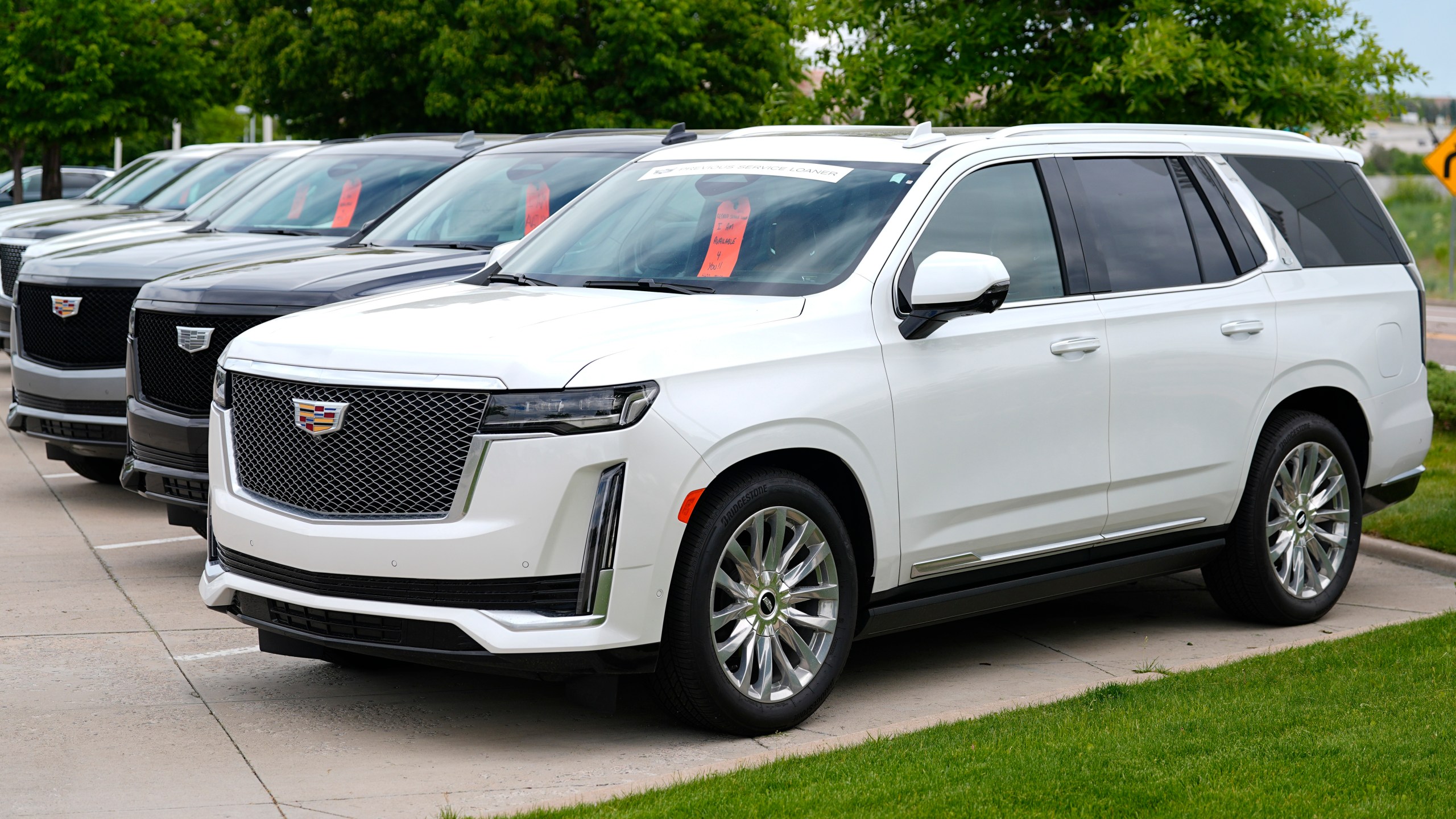
Core Viewpoint - General Motors (GM) is undergoing strategic changes in its production and has received a positive outlook from Barclays, which maintains an "Overweight" rating and raises the price target for GM stock. Group 1: Company Performance and Stock Information - GM's stock is currently priced at $81.14, reflecting a slight increase of 0.26% from the previous session, with a trading range today between $80.76 and $82.28 [4] - Over the past year, GM's stock has fluctuated between a high of $85.18 and a low of $41.60, with a market capitalization of approximately $75.69 billion [4] - Barclays has raised its price target for GM from $85 to $100, indicating confidence in the company's future performance [1][5] Group 2: Strategic Changes in Production - GM is shifting vehicle production from China and Mexico to its Kansas factory, which will result in the end of Chevrolet Bolt EV production at the Fairfax Assembly Plant [2][5] - The decision to relocate production is influenced by economic and political factors, including tariff policies and the conclusion of the federal EV tax credit, which have increased production costs in China and Mexico [2] - The 2027 Chevy Bolt EV, priced at $29,990, is one of the most affordable electric vehicles in the U.S., but its production is expected to cease in about 18 months [3][5] Group 3: Future Manufacturing Plans - GM plans to produce the next-generation Buick Envision at the Kansas facility, indicating a shift in its manufacturing strategy to adapt to market conditions and consumer preferences [3]
GM To End Production Of Its Most Affordable EV, Move Buick From China To US: Report - General Motors (NYSE:GM)
Benzinga· 2026-01-23 05:29
Group 1 - General Motors Co. will end production of the Chevrolet Bolt EV, its most affordable electric vehicle, and shift Buick production from China to Kansas [1][3] - The production of the gas-powered Chevrolet Equinox will also be moved from Mexico to Fairfax, Kansas, with plans for the Equinox to be produced there by mid-2027 [2][3] - The company has recently relocated to a new headquarters in Detroit, which is expected to enhance collaboration among teams [4] Group 2 - CEO Mary Barra reaffirmed GM's commitment to electric vehicles despite laying off over 3,400 workers and incurring a $6 billion charge related to EVs, in addition to a previously reported $1.6 billion charge [5] - GM's stock price increased by 0.26% to $81.14 at market close and saw a slight rise to $81.15 in after-hours trading [6]
GM to end Chevy Bolt EV production next year, move China-made Buick to U.S. factory
TechCrunch· 2026-01-22 23:55
Core Insights - General Motors is shifting vehicle production from China and Mexico to a factory in Kansas, ending the production of the Chevrolet Bolt EV at the Fairfax Assembly Plant [1][4] - The economic and political landscape, influenced by the Trump administration's tariff policies and the cessation of the federal EV tax credit, has increased production costs for vehicles made in China and Mexico [2] - The production of the 2027 Chevy Bolt EV is expected to conclude in approximately 18 months, with its price set at $29,990, making it one of the most affordable EVs in the U.S. market [3] Production Changes - The next-generation Buick Envision will be produced at the Kansas facility starting in 2028, while the gas-powered Chevrolet Equinox will transition from Mexico to Kansas by mid-2027 [4] - GM has indicated that the Bolt will have a limited production run, with plans already in place for the Equinox to replace it at the Fairfax plant [5] Future Investments - GM has committed to future investments in the Fairfax Assembly Plant for the development of new affordable EVs, although the timeline for these investments remains uncertain [5]

General Motors Looks Fully Valued as Aerospace Growth Meets Tight Return Math
Investing· 2026-01-22 18:58
Group 1: Market Overview - The analysis covers the performance of the S&P 500 index, indicating its current trends and potential future movements [1] - The report highlights the competitive landscape among major aerospace companies, including Rolls-Royce Holdings PLC, Safran SA, and GE Aerospace, focusing on their market positions and strategic initiatives [1] Group 2: Company-Specific Insights - Rolls-Royce Holdings PLC is noted for its advancements in technology and operational efficiency, which may enhance its market share in the aerospace sector [1] - Safran SA's recent financial performance shows a strong recovery post-pandemic, with significant growth in its aerospace division [1] - GE Aerospace is recognized for its innovative product offerings and strong order backlog, positioning it well for future growth [1]

Is GM Set for 14th Straight EPS Beat in Q4? How to Play the Stock Now
ZACKS· 2026-01-22 17:56
Core Insights - General Motors (GM) is expected to report its fourth-quarter 2025 results on January 27, with an EPS estimate of $2.19 and revenues of $45 billion, reflecting a 6% decline from the previous year [1][2] - The full-year 2025 revenue estimate is $185 billion, indicating a 1% year-over-year decline, while the EPS is projected at $10.31, a 2.7% contraction from the previous year [2] - GM has consistently surpassed earnings estimates for the past 13 quarters, with a positive Earnings ESP of +16.01% and a Zacks Rank of 1, indicating strong buy potential [3] Sales Performance - In Q4 2025, GM delivered 703,001 vehicles in the U.S., a 7% decline year-over-year, mirroring industry trends, with electric vehicle (EV) sales dropping 43% to 25,219 units [5][6] - Despite the decline in Q4, GM was the top-selling automaker in the U.S. for 2025, with full-year deliveries increasing by 5.5% to 2.85 million units [9] - In China, GM's Q4 deliveries were approximately 541,000 units, down from 600,000 units in Q4 2024, but full-year deliveries rose 2.3% to 1.9 million vehicles, driven by a 22% increase in new energy vehicle demand [10] Financial Outlook - The GM North America (GMNA) unit's revenue estimate for Q4 is around $37 billion, a 7% decrease year-over-year, while EBIT is expected to rise to $2.3 billion from $2.2 billion in Q4 2024 [8] - GM anticipates recording about $6 billion in special charges in Q4 2025 due to its EV rollback, which will impact net income but not adjusted earnings [11] - GM's stock has gained over 50% in the past six months, outperforming industry peers, and is currently trading at a forward earnings multiple of 6.77, indicating it may be undervalued [12][15] Strategic Adjustments - GM is adjusting its strategy by scaling back EV capacity to align with demand, focusing on higher-margin vehicles and proven revenue drivers [17] - The company is experiencing growth in its software and services business, with strong revenues from products like Super Cruise and OnStar [18] - GM's automotive liquidity stands at approximately $36 billion, with ongoing buybacks, enhancing its financial position [18]

GM to move production of China-built Buick SUV to U.S. plant
CNBC· 2026-01-22 14:41
Core Viewpoint - General Motors is relocating the production of a Buick compact SUV from China to the U.S. to enhance domestic manufacturing and support U.S. jobs, with production set to begin in 2028 at the Fairfax Assembly plant in Kansas City, Kansas [1][4]. Group 1: Production Shift - The next-generation Buick compact SUV will be manufactured in the U.S. for domestic sales, while production in China may continue for international markets [2][3]. - This decision aligns with the increasing pressure from the U.S. government to onshore production amid rising tensions between the U.S. and China, including tariffs on vehicles [3]. Group 2: Investment and Job Support - GM's move to onshore production is part of a broader strategy to strengthen its domestic manufacturing footprint, building on $5.5 billion in new investments announced for U.S. manufacturing sites over the past year [4]. - The compact Buick SUV will be produced alongside the gas-powered Chevrolet Equinox at the Kansas facility, with Equinox production scheduled to start in 2027 [5].
GM to bring China-built Buick to U.S.
Reuters· 2026-01-22 14:03
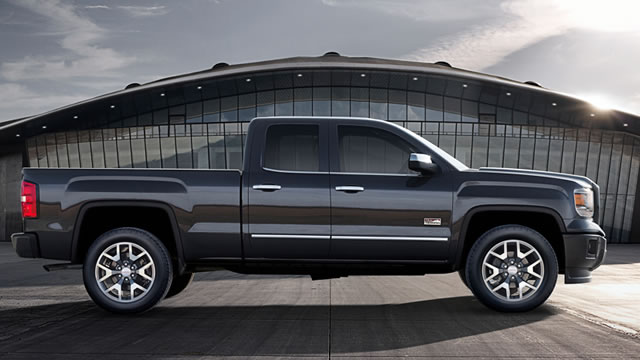
Core Viewpoint - General Motors is relocating the production of a Buick SUV from China to the U.S. as part of its strategy to increase domestic manufacturing in response to tariffs imposed during the Trump administration [1] Group 1 - The move signifies General Motors' commitment to expanding U.S. factory work [1] - This decision reflects the broader trend of companies reassessing their supply chains in light of trade policies [1]