Bridgewater Associates

Search documents
Billionaires Warren Buffett and Ray Dalio Are Completely Split on Gold. Who's Right?
The Motley Fool· 2025-11-02 09:07
Core Viewpoint - Gold has significantly outperformed the S&P 500 in 2025, rising by 48% compared to the S&P 500's 17% increase, leading to contrasting opinions from prominent investors Warren Buffett and Ray Dalio regarding its value as an investment asset [2][15]. Investment Perspectives - Warren Buffett views gold as an "unproductive" asset, emphasizing its lack of utility and inability to generate revenue or earnings over time [2][4][5]. - Buffett argues that the total value of all above-ground gold is approximately $28 trillion, which could alternatively purchase the world's three largest companies (Nvidia, Microsoft, and Apple) multiple times [3][4]. - Ray Dalio, in contrast, advocates for gold as a crucial asset for investors, particularly in light of rising national debt and inflation concerns, suggesting that investors should consider allocating up to 15% of their portfolios to gold [7][12]. Economic Context - The U.S. national debt has surpassed $38 trillion, with a budget deficit of $1.8 trillion for fiscal 2025, raising concerns about the sustainability of current fiscal policies [8][10]. - Dalio draws parallels between the current economic climate and the 1970s, when inflation and government spending led to a loss of confidence in paper currency, thus increasing the appeal of gold as a store of value [9][10]. Investment Strategy - While gold's recent performance is exceptional, its long-term compound annual return of 7.96% over the past 30 years is lower than the S&P 500's 10.6% return, suggesting that gold may not be the superior investment in a stable economic environment [15]. - In the event of a fiscal crisis, gold may attract significant investment inflows, making it a potentially valuable asset for risk management [16][17].


DBMF: A Portfolio Idea To Boost Risk-Adjusted Performance
Seeking Alpha· 2025-10-31 19:08
Core Insights - 2025 has been a significant year for AI stocks, with thematic funds investing in AI up more than 50% in the last six months [1] Group 1: Company Overview - Daniel Martins is the founder of DM Martins Research, focusing on building efficient, replicable portfolios that balance growth with reduced downside risk [1] - DM Martins Capital Management LLC, founded by Daniel Martins, employs a macro strategy hedge fund approach using leveraged risk-parity and return stacking for long-term capital appreciation [1] Group 2: Professional Background - Daniel Martins has a background in equity research at FBR Capital Markets and Telsey Advisory, and as a finance analyst at Bridgewater Associates, where he honed his investment management skills [1] - He also serves as an instructor for Wall Street Prep, developing content and training analysts at major investment banks and sovereign funds [1]

The next ‘golden age’ of AI investment
Fortune· 2025-10-30 10:48
Core Insights - The recent Fortune Global Forum in Riyadh highlighted discussions on the transformative impact of artificial intelligence across various industries, featuring prominent speakers from major companies [1] - Anjney Midha from Andreessen Horowitz identified a new "golden age" of investment opportunities in AI, driven by the emergence of innovative frontier teams [2] - Midha emphasized the significance of reasoning models in AI, which enhance problem-solving capabilities by mimicking logical reasoning and reflection [3] - The potential of reinforcement learning in creating multibillion-dollar companies was discussed, particularly when startups deeply understand industry-specific challenges [4] - Despite concerns about a potential AI bubble, investment in the sector continues to surge, with significant funding levels reported [5] Investment Trends - Venture capital investment in generative AI is projected to exceed $73.6 billion in 2025, more than doubling from the previous year, with total investment in the AI ecosystem reaching $110.17 billion, an eightfold increase since 2019 [6] - Major foundation model providers like OpenAI, Anthropic, and Mistral AI are attracting substantial funding, with OpenAI securing $40 billion, Anthropic $13 billion, and Mistral €1.7 billion [7] Industry Developments - The Cyber 60 list, ranking promising cybersecurity startups, showcases new entrants developing tools to combat AI threats, alongside established companies expanding their customer bases [8]

Inside Ray Dalio's OceanX Research Vessel
Bloomberg Television· 2025-10-29 07:00
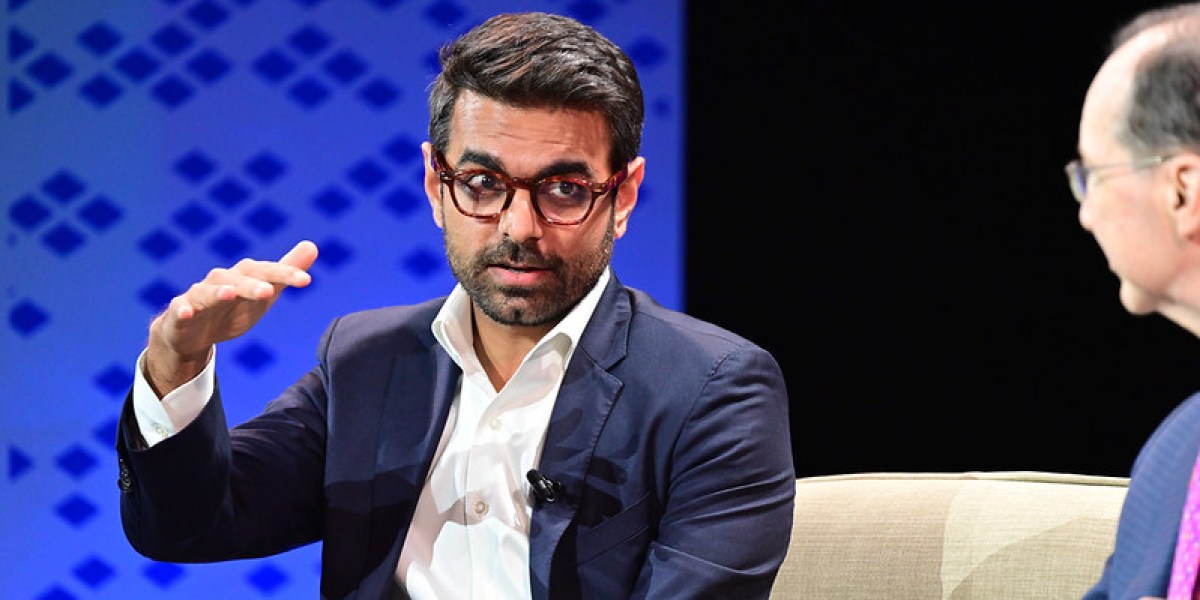
Overview of OceanX Initiative - OceanX 是一个由亿万富翁投资者 Ray Dalio(Bridgewater Associates 的创始人)及其子 Mark Dalio 于 2016 年创立的非营利性海洋探索倡议 [1] - OceanX 的目标是释放海洋的可持续潜力,将人类与海洋的关系从剥削转变为互惠互利 [2][4] Technological Capabilities - OceanX 的研究船结合了尖端的科学设备和好莱坞级别的制作能力 [2] - OceanX 的载人潜水器可以下潜 1000 米(3300 英尺),探索深海世界 [2] Key Personnel and Encounters - Ray Dalio 带领参观了 OceanX 的研究船,展示了其技术和目标 [2] - Mark Benioff 也参与了 OceanX 的活动 [3] Scale and Scope - 探索的区域面积是地球陆地面积的两倍 [1]

Ray Dalio says a risky AI market bubble is forming, but may not pop until the Fed tightens
CNBC· 2025-10-28 15:54
Core Viewpoint - Ray Dalio warns of a potential bubble forming around megacap technology stocks in the U.S. due to the artificial intelligence boom, suggesting that it may persist until the Federal Reserve changes its current easy monetary policies [1][2]. Group 1: Bubble Concerns - Dalio indicates that there is significant "bubble stuff" occurring in the market, but bubbles typically do not burst until monetary policy tightens [2]. - He employs a personal "bubble indicator" that is currently at a relatively high level, aligning with concerns from other market participants regarding a potential AI-related bubble [2]. Group 2: Federal Reserve Actions - The Federal Reserve is anticipated to cut interest rates for the second time this year, with expectations for another cut in December [3]. Group 3: Market Performance - Outside of AI-related companies, the overall market has performed "relatively poorly," with a concentrated environment where 80% of gains are attributed to Big Tech [4]. - Major indexes reached all-time closing highs, primarily driven by technology stocks, with positive AI news expected from upcoming Big Tech earnings [4].

Time to Buy the Dip in Gold ETFs?
ZACKS· 2025-10-28 11:40
Core Insights - The SPDR Gold Trust (GLD) experienced a 5% decline over the past week due to easing U.S.-China trade tensions, a stronger U.S. dollar, and technical indicators suggesting overbought conditions [1] - The U.S. dollar ETF Invesco DB US Dollar Index Bullish Fund (UUP) gained 0.5% over the past week and 1.3% over the past month, while lower-than-expected September inflation negatively impacted gold prices [2] - A potential U.S.-China trade agreement could significantly reduce geopolitical tensions that have been supporting gold prices [3] Gold Market Performance - The gold bullion ETF GLD has surged approximately 53.8% year-to-date and 7.1% over the past month, while the S&P 500 has increased by 15.8% this year and 2% in the past month [5] - Investors are increasingly turning to gold as a safe-haven asset amid global instability, geopolitical tensions, and the likelihood of Federal Reserve rate cuts [6] Central Bank Demand - Central bank demand, particularly from BRICS nations and emerging economies, is driving the gold rally as these countries seek to diversify away from the U.S. dollar [7] Investment Recommendations - Ray Dalio of Bridgewater Associates recommends a 15% portfolio allocation to gold, citing its role as a hedge against monetary debasement and geopolitical uncertainty [8] - Dalio compares the current market environment to the early 1970s, highlighting gold as a credible safe-haven asset amid high inflation and government debt [9] Future Projections - Market expert Ed Yardeni predicts gold could reach $10,000 per ounce by 2030, driven by factors such as tariffs, pressure on the Fed to lower interest rates, and issues in China's real estate market [11] - For investors looking to capitalize on the bullish trend, gold ETFs like SPDR Gold Trust (GLD), iShares Gold Trust (IAU), and SPDR Gold MiniShares Trust (IAUM) are recommended [12]

Economist fumes at major US bank’s ‘apocalyptic predictions’ about Trump tariffs — here’s why and what it means for you
Yahoo Finance· 2025-10-27 12:33
Core Viewpoint - The recent increase in the U.S. Consumer Price Index (CPI) is primarily attributed to poor monetary policy rather than tariffs, according to EJ Antoni, chief economist at The Heritage Foundation [1][2]. Group 1: Economic Analysis - The U.S. CPI showed a 3.0% increase over the previous 12 months as of August [1]. - Research from institutions like the Peterson Institute for International Economics and the Federal Reserve Bank of St. Louis indicates that U.S. businesses have absorbed a significant share of the costs from new tariffs, with limited pass-through to consumers so far [2]. - Goldman Sachs predicts that U.S. consumers will eventually absorb 55% of tariff costs if the impact mirrors earlier tariffs [3]. Group 2: Tariff Impact - Critics argue that the implementation of tariffs has led to concerns about their impact on U.S. consumers, with many banks misjudging the real effects [2][3]. - Antoni contends that predictions of consumers bearing the full burden of tariffs have consistently been incorrect [2]. Group 3: Inflation and Purchasing Power - Inflation has been eroding Americans' purchasing power for decades, with $100 in 2025 equating to $12.05 in 1970 [4]. - The article emphasizes the importance of looking at the broader economic picture rather than attributing inflation to a single policy [4]. Group 4: Investment Strategies - Gold has surged over 45% in the past 12 months, highlighting its role as a safe haven during economic uncertainty [6]. - Real estate is also noted as a powerful hedge against inflation, with the S&P CoreLogic Case-Shiller U.S. National Home Price NSA Index increasing by 49% over the past five years [10]. - Crowdfunding platforms like Arrived allow investors to participate in real estate with minimal investment and without the responsibilities of traditional property ownership [11].
Gold ETFs Suffer a Rout Over Past Two Days: Buy the Dip
ZACKS· 2025-10-23 16:40
Core Viewpoint - Gold prices experienced a significant decline on October 21, 2025, marking the largest daily drop in years, attributed to easing U.S.-China trade tensions, a stronger U.S. dollar, and technical indicators suggesting overbought conditions [1][2]. Group 1: Market Performance - The SPDR Gold Trust (GLD) lost approximately 6.9% over two days as of October 22, 2025 [1]. - The gold bullion ETF GLD has surged about 53.7% year-to-date as of October 22, 2025, with a 9% increase over the past month [5]. - In comparison, the S&P 500 has rallied 14.2% this year and 0.6% in the past month [5]. Group 2: Analyst Perspectives - Analysts view the recent drop in gold prices as a temporary setback, with ongoing high inflation, low real interest rates, and geopolitical uncertainties supporting a bullish outlook for gold [3]. - Bank of America maintains a "long gold" stance, predicting prices could reach $6,000 per ounce by mid-2026, while Goldman Sachs has raised its forecast to $4,900 per ounce by the end of next year [4]. Group 3: Investment Trends - There is a notable increase in central bank demand for gold, particularly from BRICS nations and emerging economies, as they seek to diversify away from the U.S. dollar [7]. - Ray Dalio recommends that investors allocate up to 15% of their portfolios to gold, emphasizing its role as a hedge against monetary debasement and geopolitical uncertainty [8]. - Market expert Ed Yardeni predicts gold could reach $10,000 an ounce by 2030, driven by various economic factors [11]. Group 4: ETF Opportunities - For investors looking to capitalize on the bullish trend in gold, ETFs such as SPDR Gold Trust (GLD), iShares Gold Trust (IAU), and SPDR Gold MiniShares Trust (IAUM) are highlighted as potential investment options [12].
Budget watchdog on $38 trillion national debt: ‘It’s tough to decide what the most appalling part is of today’s announcement’
Yahoo Finance· 2025-10-23 10:49
Core Viewpoint - The escalating U.S. national debt, which has surpassed $38 trillion, poses significant concerns for the economy, particularly regarding the increasing interest payments and the debt-to-GDP ratio, which is projected to reach 156% by 2055 [2][4][6]. Group 1: Current Debt Situation - The U.S. national debt has reached $38 trillion, with projections indicating it could hit $39 trillion within months due to accelerated borrowing [5][6]. - As of September, the U.S. spent $1.21 trillion on interest payments, accounting for 17% of total federal spending for fiscal year 2025 [2]. - The average interest rate for U.S. government debt has increased from 1.61% in 2021 to 3.36% currently [2]. Group 2: Economic Implications - Economists express concern over the debt-to-GDP ratio, currently around 125%, which is expected to rise significantly, indicating that spending is outpacing economic growth [4][6]. - The Committee for a Responsible Federal Budget highlights that gross national debt is now 123% of GDP, a level not seen outside of wartime [7]. Group 3: Political Response and Proposals - There is criticism of Washington's approach to managing national debt, with calls for more responsible budgeting and spending cuts [3][10]. - President Trump has proposed unconventional methods to address the debt, including a "Gold Card" plan for wealthy immigrants, which he claims could generate significant revenue [14][15]. - The Congressional Budget Office estimates that Trump's tariff policies could reduce deficits by $4 trillion over the next decade, although the effectiveness of these measures remains debated [12][13].
Buy The Biggest One-Day Drop in Gold in Years: ETFs to Play
ZACKS· 2025-10-22 16:00
Core Viewpoint - Gold prices experienced a significant decline on October 21, 2025, marking the largest daily drop in 12 years, with spot gold falling over 6% and SPDR Gold Shares (GLD) losing approximately 6.4% on the same day [1][2]. Market Dynamics - The selloff was attributed to easing U.S.-China trade tensions, a stronger U.S. dollar, and technical indicators suggesting that gold had entered overbought territory [2]. - Despite the drop, some analysts, including Tom Essaye from Sevens Report Research, view this as a temporary setback, citing ongoing high inflation, low real interest rates, geopolitical uncertainty, and the U.S. government shutdown as factors supporting a bullish outlook for gold [3][6]. Investment Outlook - Investment firms maintain a bullish stance on gold, with Bank of America predicting prices could reach $6,000 per ounce by mid-2026, while Goldman Sachs raised its forecast to $4,900 per ounce by the end of next year [4]. - The SPDR Gold Trust (GLD) has surged approximately 54% in 2025, with a monthly gain of over 9%, contrasting with the S&P 500's 15% increase year-to-date [5]. Safe-Haven Demand - The current global instability and geopolitical tensions have driven investors towards gold as a safe-haven asset, further fueled by the U.S. government shutdown [6]. - Central bank demand, particularly from BRICS nations and emerging economies seeking to diversify from the U.S. dollar, has led to record levels of sovereign gold purchases [7]. Strategic Recommendations - Ray Dalio, founder of Bridgewater Associates, recommends that investors allocate up to 15% of their portfolios to gold, emphasizing its role as a hedge against monetary debasement and geopolitical risks [8]. - Dalio draws parallels between the current market environment and the early 1970s, highlighting the appeal of gold amidst high inflation and government spending [9]. Future Projections - Market expert Ed Yardeni suggests that gold could reach $10,000 per ounce by 2030, driven by factors such as tariffs, pressure on the Fed to lower interest rates, and issues in China's real estate market [10]. Investment Vehicles - For investors looking to capitalize on the bullish trend in gold, ETFs such as SPDR Gold Trust (GLD), iShares Gold Trust (IAU), and SPDR Gold Minishares Trust (IAUM) are highlighted as potential investment options [11].