Phillips 66

Search documents
Will the Refining Business Continue to be Favorable for Phillips 66?
ZACKS· 2026-01-14 13:30
Core Insights - Current West Texas Intermediate (WTI) oil prices are around $60 per barrel, significantly lower than a year ago, creating uncertainty in the energy sector. However, Phillips 66 (PSX) is expected to benefit from this crude pricing environment due to its position as a leading refining company [1][2]. Group 1: Phillips 66's Position and Market Outlook - Phillips 66 can purchase oil at lower costs, allowing for the production of end products, which is advantageous in the current market [2]. - The U.S. Energy Information Administration (EIA) anticipates that global oil inventories will continue to rise, contributing to soft crude prices in the near future [2]. - EIA projects the average WTI price for 2026 to be $52.21 per barrel, down from $65.40 per barrel in 2025, which is likely to enhance Phillips 66's refining margins [3]. Group 2: Competitors and Industry Dynamics - Valero Energy Corporation (VLO) and Par Pacific Holdings Inc. (PARR) are also positioned to benefit from the low oil price environment, with VLO operating 15 refineries and a throughput capacity of 3.2 million barrels per day [4]. - Par Pacific has a refining capacity of 219,000 barrels per day and benefits from processing cheaper Canadian heavy oil, providing a cost advantage [5]. Group 3: Financial Performance and Valuation - Phillips 66 shares have increased by 20.1% over the past year, outperforming the composite stocks in the industry, which rose by 14.8% [6]. - The company trades at a trailing 12-month enterprise value to EBITDA (EV/EBITDA) of 14.23X, significantly higher than the broader industry average of 4.47X [9]. - Recent downward revisions in the Zacks Consensus Estimate for PSX's 2025 earnings indicate a current estimate of $6.16 per share, down from $6.23 a month ago [11][12].



美国原油供需数据摘要-Oil Data Digest-US Oil Supply and Demand
2026-01-14 05:05
Summary of Key Points from the Conference Call Industry Overview - The conference call focuses on the **US Oil Industry**, specifically discussing crude oil production, supply, demand, and refinery operations. Core Insights and Arguments 1. **Record Crude Production**: US crude production reached a record of **13.87 million barrels per day (mb/d)** in October, primarily driven by gains in the US Gulf region, despite a stall in shale production growth [2][3][4]. 2. **Shale Production Trends**: Shale production saw a slight decline of **10 kb/d month-over-month (MoM)** in October, with New Mexico's output increasing by approximately **30 kb/d**, while Texas experienced a decline of **45 kb/d** [5][6]. 3. **Rig Count Decline**: The US oil rig count decreased by **6 rigs** in October, with significant losses in the Eagle Ford basin [8][12]. 4. **Fracking Activity Increase**: Frac activity rose sharply in October, with **1,261 frac jobs** initiated, marking a **21% increase** from September [13]. 5. **Gulf of Mexico Production Growth**: Offshore production in the Gulf of Mexico increased by **45 kb/d** MoM, reaching **2.0 mb/d**, supported by new projects like the Leon-Castille field [14][17]. 6. **Crude Imports and Exports**: Crude imports fell sharply by **500 kb/d** MoM to **5.9 mb/d**, while exports decreased by **140 kb/d** but were still up **9% year-over-year (YoY)** [24][26][29]. 7. **Refinery Runs Decline**: US refinery runs dropped by **940 kb/d** MoM to **15.53 mb/d**, attributed to seasonal maintenance and unplanned outages [35][40]. 8. **Oil Demand Contraction**: Total US oil demand contracted by **2% YoY** in October, ending four months of growth, with notable declines in gasoline and jet fuel consumption [48][49]. 9. **Finished Products Output**: Refinery output of finished products fell by **3% MoM**, with gasoline being the only product to see an increase in output [91][94]. 10. **Crude Inventory Build**: US crude inventories rose by **15.8 million barrels** in October due to reduced refinery demand, with significant builds in PADD 3, PADD 2, and PADD 5 [136][141]. Additional Important Insights - **Transfers to Crude Oil Supply**: In October, **860 kb/d** of transfers to crude oil supply were recorded, indicating an increase in blending materials used for refinery feedstock [22][23]. - **Impact of Seasonal Factors**: The decline in refinery runs and oil demand was influenced by seasonal factors, including maintenance schedules and the end of the harvest season affecting diesel demand [71][74]. - **Future Outlook**: Weekly EIA data suggests a recovery in refinery runs in November as maintenance concludes, with crude imports also expected to rise [138]. This summary encapsulates the critical developments and trends in the US oil industry as discussed in the conference call, highlighting production, demand, and operational challenges faced by the sector.
Venezuelan Oil and the Limits of U.S. Refining Capacity
Yahoo Finance· 2026-01-14 01:00
Core Insights - U.S. President Trump's efforts to attract investment in Venezuela's oil sector were largely unsuccessful, with major oil executives deeming the country "uninvestable" under current conditions [1][2] Group 1: Investment Climate - Exxon Mobil's CEO described Venezuela as "uninvestable" due to its commercial frameworks and hydrocarbon laws [1] - ConocoPhillips' CEO highlighted the financial losses incurred when exiting Venezuela under the Chavez regime, emphasizing the risks involved [1][2] Group 2: Current Production and Infrastructure - Venezuela's oil production has plummeted to approximately 1 million barrels per day, significantly lower than its peak of 3.5 million barrels per day in the 1970s [4] - Chevron indicated it could immediately ramp up production to 240,000 barrels per day, showcasing some potential for recovery [3] Group 3: Refining Capacity and Demand - U.S. refiners favor Venezuelan crude for its competitive advantage, particularly for complex refiners capable of processing heavy oil into high-value products [4] - Less than half of U.S. refineries are equipped with coking units, which are essential for processing Venezuelan crude, indicating a limitation in refining capacity [5] Group 4: Refining Processes - Coking and hydrocracking are key processes in refining heavy crude oil into lighter products, with coking being a thermal process and hydrocracking involving high-pressure hydrogen [6] - Highly complex refineries can achieve higher distillate yields compared to medium-complexity plants, highlighting the importance of refining technology in maximizing output [6]

Phillips 66 (PSX) Agrees to Acquire Lindsey Oil Refinery in England
Yahoo Finance· 2026-01-13 20:54
Core Viewpoint - Phillips 66 is expanding its operations by acquiring the Lindsey Oil Refinery in England, which will enhance its presence in the UK energy market and improve its capacity to process heavy sour crude oil, particularly from Venezuela [3][4]. Group 1: Acquisition Details - Phillips 66 has agreed to acquire the assets and infrastructure of the Lindsey Oil Refinery in northern England, although the financial terms of the deal were not disclosed [3]. - The company does not plan to restart standalone operations at the Lindsey refinery but will integrate its assets into the Humber Refinery complex in North Lincolnshire [3]. Group 2: Strategic Positioning - The acquisition is seen as a significant step for Phillips 66 in investing in the UK's energy security [4]. - The company is well-positioned to benefit from the current situation in Venezuela, as its refineries are designed to process heavy sour crude oil, with the capacity to handle a couple of hundred thousand barrels per day from Venezuela at its Sweeny and Lake Charles refineries [4]. Group 3: Financial Performance - Phillips 66 has a robust annual dividend yield of 3.46%, making it an attractive option for investors looking for energy stocks [5].
Is Phillips 66 Poised to Gain From a Favorable Refining Backdrop?
ZACKS· 2026-01-13 19:41
Core Insights - Phillips 66 (PSX) is a diversified energy company with operations in refining, midstream, chemicals, renewable fuels, and marketing, experiencing significant gains in its refining segment due to strong refining margins in 2025 [1][7] - The company’s refining business is expected to benefit further in Q4 2025 from widening light-heavy crude spreads and increased Canadian crude production [1][2] Refining Segment Performance - PSX operates a complex refinery network capable of processing various feedstocks, including heavy sour crude like Western Canadian Select (WCS), which is anticipated to become cheaper in upcoming quarters [2][7] - Additional WCS production and winter diluent blending are expected to enhance Canadian production in Q4 2025 and Q1 2026, leading to a decline in heavy crude prices, which will benefit PSX's refining operations [2][3] Market Dynamics - The potential reopening of Venezuelan oil and gas reserves for U.S. refiners may introduce Venezuelan heavy sour crude to the market, further exerting downward pressure on heavy crude prices, thus supporting strong refining margins for PSX [3] Competitor Overview - Valero Energy Corporation (VLO) operates 15 refineries with a combined throughput capacity of 3.2 million barrels per day, allowing it to serve diverse markets [4] - Par Pacific Holdings (PARR) has a refining capacity of 219,000 barrels per day and operates in Hawaii and the Pacific Northwest, along with a logistics segment [5] Financial Performance - PSX shares have increased by 19.7% over the past year, outperforming the industry composite stocks, which rose by 12.7% [6] - The company’s current enterprise-value-to-EBITDA (EV/EBITDA) ratio stands at 14.32X, significantly above the industry average of 4.47X [9] Earnings Estimates - The Zacks Consensus Estimate for PSX's 2025 earnings has seen downward revisions recently, with current estimates at $6.16 for the year and $11.98 for 2026 [10][11]

Can VLO Continue to Earn From Ongoing Softness in Oil Price?
ZACKS· 2026-01-13 19:31
Core Insights - Valero Energy Corporation (VLO) is a prominent oil and gas refiner that processes both heavy and light crude into refined products, benefiting from the current low crude prices [1][8] - The ongoing decline in crude prices is advantageous for the downstream sector, allowing refiners like VLO to purchase raw materials at lower costs and enhance profit margins [2][8] Group 1: Business Model and Profitability - VLO's business model is strengthened by lower crude prices, with forecasts indicating crude prices will drop to $51.42 per barrel in 2026 from $65.32 in 2025, leading to an expected sharp increase in profit margins [2][8] - The company has maintained a strong track record of returning cash to shareholders, with an average payout ratio of 58% from 2014 to March 2025, excluding 2020, and currently offers a dividend yield of 2.52% [3][8] Group 2: Market Performance and Valuation - Valero's shares have appreciated by 34.2% over the past year, significantly outperforming the industry average of 12% [5] - The company trades at a trailing 12-month enterprise-value-to-EBITDA (EV/EBITDA) ratio of 8.64X, which is higher than the industry average of 4.48X [7] Group 3: Earnings Estimates - The Zacks Consensus Estimate for VLO's 2025 earnings has been revised downward over the past week, with current estimates showing earnings of $9.83 per share for the current year [9][10]


Phillips 66 (NYSE:PSX) Sees Positive Outlook from Mizuho Securities with a Price Target of $152
Financial Modeling Prep· 2026-01-12 21:03
Company Overview - Phillips 66 is a diversified energy manufacturing and logistics company operating in four segments: Midstream, Chemicals, Refining, and Marketing and Specialties. It is recognized for its refining capabilities and has a significant presence in the United States [1] Stock Performance - As of the latest update, Phillips 66's stock price is $138.38, reflecting a decrease of 2.66% or $3.78. The stock has traded between $138.33 and $141.85 today, with a market capitalization of approximately $55.76 billion [4][6] - Over the past year, the stock reached a high of $145.68 and a low of $91.01 [4] Analyst Ratings and Price Target - Mizuho Securities has set a price target of $152 for Phillips 66, indicating a potential increase of about 9.51% from its current trading price of approximately $138.80 [2][6] - Recent upgrades to a "buy" rating are attributed to the company's strategic positioning for a resurgence in Venezuelan crude imports, enhancing operational leverage and earnings quality [3] Market Activity - The trading volume for Phillips 66 today is 580,659 shares, reflecting investor interest and market dynamics [5] - The company's strategic acquisitions and operational improvements position it for potential outperformance amid industry volatility [6]

Chevron Bets on Venezuela Oil to Unlock Up to $700M in Cash Flow
ZACKS· 2026-01-12 17:15
Core Insights - Chevron Corporation (CVX) could potentially unlock up to $700 million in annual cash flow from increased crude exports in Venezuela due to easing logistical constraints and a more permissive U.S. sanctions environment [1][10] - The company has a competitive advantage among U.S. oil majors, with estimates suggesting an additional $400 million to $700 million per year, representing approximately 1%-2% of its operating cash flow [2] Strategic Positioning - Chevron is the only major U.S. oil company actively operating in Venezuela, with joint ventures producing around 240,000 barrels per day, shared equally with state-owned PDVSA [3] - The company is expected to focus on optimizing existing assets rather than making large new capital investments until there is greater political stability in Venezuela [4] Export Dynamics - The surge in Chevron's exports is driven by logistical factors, as Venezuelan crude storage facilities are nearing capacity, necessitating quick movement of barrels [5] - This logistical challenge has transformed Venezuela into one of Chevron's busiest export hubs, showcasing how physical constraints can alter trade flows [6] Operational Strategy - Chevron has rebuilt a high-throughput export operation, leveraging its global trading and logistics network to ship larger and more frequent cargoes to refiners capable of processing Venezuela's heavy, sour crude [7] - Key destinations for these exports include the U.S. Gulf Coast, where refiners like Phillips 66 and Valero Energy are well-equipped to handle Venezuelan crude [8][9] Financial Implications - Sustained Venezuelan exports are expected to materially enhance Chevron's cash generation, supporting dividends, share buybacks, or reinvestment [10][11] - The operational push is underpinned by clear financial incentives, with every additional cargo moved strengthening the company's near-term cash flow outlook [11] Geopolitical Considerations - Venezuelan oil exports remain closely tied to U.S. sanctions policy, with the potential for quick shifts in export approvals and waivers [12] - Chevron's strategy of rapid loading aims to capitalize on current regulatory conditions while mitigating political risks [12] Competitive Landscape - Chevron's position is facing increased competition from trading giants like Vitol and Trafigura, which are seeking access to Venezuelan exports [13] - This growing competition could tighten margins and complicate scheduling, although it reflects a broader belief in the ongoing relevance of Venezuelan crude in global oil flows [14] Strategic Outlook - Chevron's approach in Venezuela combines caution with opportunism, aiming to maximize near-term cash flow without overcommitting capital in a politically unstable environment [15] - As long as exports continue and storage pressures remain, Venezuela could serve as a significant, albeit risky, contributor to Chevron's global portfolio [15]
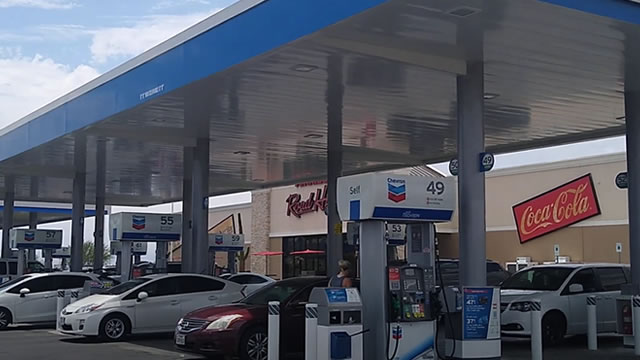
Phillips 66: A Winner In The Venezuela Sweepstakes (Rating Upgrade) (NYSE:PSX)
Seeking Alpha· 2026-01-12 13:59
Core Insights - Phillips 66 (PSX) has shown significant appreciation since the last review, indicating positive market performance and investor interest [1] - The focus is on identifying undervalued companies with strong fundamentals and cash flows, particularly in the Oil & Gas and consumer goods sectors [1] - Energy Transfer is highlighted as a previously overlooked company that has now gained attention, suggesting potential for long-term value [1] Investment Strategy - The investment approach emphasizes long-term value investing while also exploring deal arbitrage opportunities in various sectors [1] - There is a preference for companies with understandable business models, avoiding high-tech and certain consumer goods sectors like fashion [1] - The article aims to foster a community of investors seeking superior returns and informed decision-making through shared insights [1]

Phillips 66: A Winner In The Venezuela Sweepstakes (Rating Upgrade)
Seeking Alpha· 2026-01-12 13:59
Core Insights - Phillips 66 (PSX) has shown significant appreciation since the last review, which was rated as a hold in early June [1] - The focus is on undervalued companies with strong fundamentals and cash flows, particularly in the Oil & Gas and consumer goods sectors [1] - Energy Transfer is highlighted as a previously overlooked company that has become a valuable investment opportunity [1] Company Analysis - The investment strategy emphasizes long-term value investing while also exploring potential deal arbitrage opportunities [1] - The analyst expresses a preference for companies with understandable business models, avoiding high-tech and certain consumer goods sectors [1] - There is skepticism towards investments in cryptocurrencies, indicating a preference for traditional sectors [1]