Rivian Automotive

Search documents
Rivian Unveils Custom Silicon, Next-Gen Autonomy Platform, and Deep AI Integration at Inaugural Autonomy & AI Day
Businesswire· 2025-12-11 17:20
Core Insights - Rivian announced significant advancements in automotive technology during its first Autonomy & AI Day, focusing on proprietary silicon, next-generation vehicle autonomy, and AI-driven software architecture [1][2][3] Technology Developments - The company introduced its in-house 1600 sparse TOPS inference chip, which is expected to enhance self-driving capabilities and aims for Level 4 (L4) autonomy, significantly improving the ownership experience [2][3] - Rivian's technology roadmap includes the Rivian Autonomy Processor (RAP1), a custom 5nm processor that integrates processing and memory, ensuring high efficiency and compliance with automotive safety standards [3][4] - The third-generation Autonomy computer, Autonomy Compute Module 3 (ACM3), will be integrated with LiDAR in future R2 models to enhance real-time detection and spatial data processing [4][5] Software Innovations - Rivian's software-first approach is exemplified by the Rivian Autonomy Platform, which utilizes a Large Driving Model (LDM) trained on extensive datasets to optimize driving strategies [6][8] - Upcoming software enhancements for the second-generation R1 vehicles include Universal Hands-Free (UHF) capabilities, allowing for extended hands-free driving [7] Subscription and Business Model - The company plans to launch an autonomy subscription service, Autonomy+, in early 2026, priced at $2,500 for a one-time fee or $49.99 per month, aimed at improving road safety and meeting customer demand [8] AI Integration - Rivian is leveraging AI through the Rivian Unified Intelligence (RUI), which enhances diagnostics and service infrastructure, and will soon power the Rivian Assistant, a voice interface for vehicles [9][11][12] - The RUI will facilitate predictive maintenance and improve self-service diagnostics for customers [12] Strategic Vision - Rivian's vertically integrated strategy allows for rapid evolution of the vehicle experience, combining user-facing features with foundational technology to drive growth [13][14]



Rivian goes big on autonomy, with custom silicon, lidar, and a hint at robotaxis
TechCrunch· 2025-12-11 17:20
Core Insights - Rivian is advancing its electric vehicles towards greater autonomy, incorporating new hardware such as lidar and custom silicon, with aspirations to enter the self-driving ride-hail market [1][2] Technology Development - The company's first "Autonomy & AI Day" event revealed its technology advancements, aiming to produce the more affordable R2 SUV by the first half of 2026 [2] - Rivian plans to expand its hands-free driver-assistance software to over 3.5 million miles of roads in the USA and Canada, with a feature called "Universal Hands-Free" launching in early 2026 [3] Driver Assistance Features - The point-to-point navigation feature allows users to input a destination, enabling the vehicle to drive autonomously [4] - Future enhancements will allow drivers to take their eyes off the road, with plans to achieve "personal L4" autonomy, meaning no human intervention is required in specific areas [4] Market Competition - Rivian aims to compete with companies like Waymo, initially focusing on personally owned vehicles while also exploring opportunities in the rideshare market [5] Hardware Innovations - The company is developing a "large driving model" and a custom 5nm processor in collaboration with Arm and TSMC, moving away from Tesla's rules-based framework for autonomous vehicle development [7] - The new "autonomy computer" (ACM3) can process 5 billion pixels per second and will be featured in the upcoming R2 SUV [8][9] - The ACM3 will be paired with a lidar sensor to enhance real-time detection and spatial data processing, contributing to the vehicle's autonomy capabilities [9]
Rivian Automotive (NasdaqGS:RIVN) Earnings Call Presentation
2025-12-11 17:00
Rivian Autonomy & AI Day Overview - Rivian held its Autonomy & AI Day in 2025 to discuss their next-generation vehicle autonomy systems, hardware, and software architecture[2] - The presentation included forward-looking statements subject to risks and uncertainties[2, 3] Autonomy System Components - Rivian is developing a Large Driving Model (LDM) and Autonomy Data Recorder[9, 10] - The company is working on Universal Hands-Free driving capabilities, aiming for point-to-point functionality[21, 23, 25, 26] - Rivian is creating Rivian Unified Intelligence, integrating various AI agents[29, 222, 224, 228] Hardware and Software - The Gen 3 Autonomy Computer has a neural engine capable of 800 TOPS (Sparse, INT8) and can process 5 billion pixels per second[15] - The Gen 3 Autonomy Computer has 4x peak performance of Gen 2 computer with 2.5x improvement in power efficiency[61] - The Rivian Autonomy Processor (RAP1) is a multi-chip module using TSMC 5nm Automotive node, with 800 TOPS neural compute[64, 65, 72, 74, 77, 81] - Integrated Memory Technology provides 205 GB/sec bandwidth[68] Data and Learning - Rivian uses a data flywheel approach, incorporating onboard data recording, cloud processing, and software updates[8, 106, 215] - The Autonomy Data Recorder captures and collates data, which is then anonymized and auto-labeled[10, 138, 164] - Rivian leverages over 3.5 million miles of driving data for training[211] Sensors - R2 vehicles will feature 11 cameras (65MP), 5 radars, and 1 LiDAR[51]
Where Will Rivian Automotive Stock Be in 1 Year?
The Motley Fool· 2025-12-11 17:00
Core Insights - Rivian, once a leading electric vehicle (EV) IPO in 2021, has seen its stock price decline significantly from a peak market capitalization of $153.3 billion to approximately $21.5 billion today, reflecting a drastic reduction in valuation from 92 times its 2022 revenue to just three times its expected 2026 revenue [2][6] Production and Deliveries - Rivian produces three types of EVs: the R1T pickup truck, the R1S SUV, and custom electric delivery vans (EDVs) for Amazon and other companies [4] - In 2022, Rivian produced only 24,337 vehicles due to supply chain issues and competition, falling short of its initial goal of 50,000 vehicles [6] - In 2023, production increased to 57,232 vehicles, but the company faced another slowdown in 2024 and 2025, with expected production of 49,476 and 31,310 vehicles respectively [7] Financial Performance - Rivian's revenue grew from $1.66 billion in 2022 to $4.43 billion in 2023, with projections of $4.97 billion in 2024 and $4.10 billion in the first nine months of 2025 [7] - The company is expected to narrow its net loss from $6.75 billion in 2024 to $3.82 billion in 2025, driven by increased sales and regulatory credits [8] Future Projections - Analysts predict Rivian's revenue will rise to $6.87 billion in 2026, with a net loss of $3.66 billion, contingent on the successful launch of the R2 SUV [9] - By 2027, revenue could surge to $11.37 billion, assuming successful scaling of R2 production and increased EDV deliveries [9] Stock Outlook - Rivian has approximately $7.7 billion in liquidity, which it believes is sufficient to support the R2 production ramp-up [10] - If the R2 launch is successful and meets revenue targets, Rivian's stock could potentially rise by over 160% in the next 12 months [10]
Rivian turns to AI, autonomy to woo investors as EV sales stall
CNBC· 2025-12-10 14:28
Core Viewpoint - Rivian Automotive is leveraging artificial intelligence to enhance investor confidence in its future profitability, as its electric vehicle (EV) business has not met expectations since its IPO in 2021 [2][3]. Company Performance - Rivian's shares have declined over 80% since its IPO, with ongoing challenges leading to slower sales and production [3]. - The company continues to incur significant annual losses despite efforts to reduce costs and increase software revenue through a $5.8 billion joint venture with Volkswagen [3][4]. - Rivian's sales decreased by 14% through the third quarter, yet its shares have risen over 30% this year due to operational profit gains and investor optimism surrounding new technologies and the upcoming "R2" vehicle launch [26][28]. AI and Autonomy Strategy - Rivian is hosting its first "Autonomy and AI Day" to showcase its AI-centric approach and future vehicle capabilities [2][8]. - CEO RJ Scaringe emphasizes an end-to-end AI-centric approach to differentiate Rivian's autonomous capabilities [5][19]. - The company aims to broaden the use cases for its hands-free systems and is exploring lidar technology for better environmental detection [19][20]. Market Position and Competition - Rivian is compared to Tesla and other EV manufacturers, with analysts noting it lags behind in advanced driver assistance systems (ADAS) [11][12]. - Wall Street analysts express skepticism about Rivian's ability to compete with established players like Tesla and Waymo in the autonomous vehicle space [17][27]. - Rivian's AI Day is expected to focus on vehicle capabilities and software initiatives rather than diversifying into non-core businesses [12]. Analyst Sentiment - Morgan Stanley downgraded Rivian to underweight, citing concerns over the company's scale and financial capacity to support investments in the current AV and AI hype cycle [7][8]. - Analysts expect Rivian to provide updated timelines and resource requirements for its next-generation features during the AI Day [14].

Tesla's stock has an AI halo. Can Rivian's get the same treatment?
MarketWatch· 2025-12-10 13:35
Core Insights - Rivian is expected to showcase new self-driving technology at its upcoming Autonomy and AI Day event on Thursday [1] Company Developments - The event will focus on advancements in autonomous driving and artificial intelligence [1]
Rivian Automotive (NASDAQ: RIVN) Stock Price Prediction for 2025: Where Will It Be in 1 Year (Dec 10)
247Wallst· 2025-12-10 13:15
Shares of Rivian Automotive Inc. (NASDAQ: RIVN) popped nearly 6% but gave back most of that gain this past week. ...
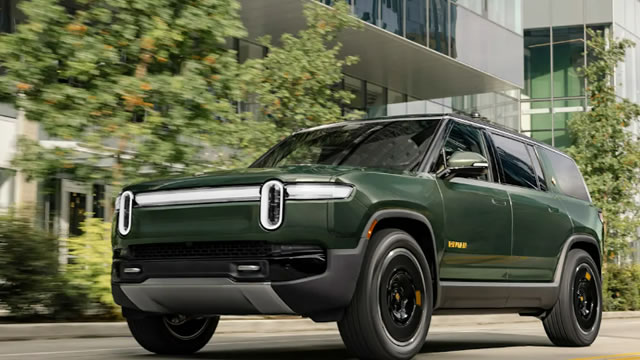
Rivian is building its own AI assistant
TechCrunch· 2025-12-09 20:11
Core Insights - Rivian is developing its own AI assistant, which is separate from its multi-billion dollar technology joint venture with Volkswagen [1][12] - The company aims to launch the AI assistant by the end of the year, with more details expected during its AI and Autonomy day on December 11 [2] - Rivian's approach to AI development reflects the rapid advancements in foundational AI technologies by major tech companies and startups [3] Development and Integration - The AI assistant is not a simple chatbot; it is designed to integrate with all vehicle controls and has undergone significant development [4] - Rivian's AI architecture is model and platform agnostic, focusing on software layers that coordinate workflows and control logic [5][6] - The in-house AI assistant program aligns with Rivian's strategy to enhance vertical integration, as seen in the overhaul of its R1T truck and R1S SUV [6] Technical Specifications - The AI assistant will utilize a hybrid software stack that combines edge AI for on-device tasks and cloud AI for more complex computations [10] - Rivian has developed much of the AI software stack internally, including custom models and an orchestration layer to ensure seamless operation of various AI models [11] - The current focus of the joint venture with Volkswagen is on electrical architecture and infotainment, not on AI or automated driving [12][13]
Rivian Automotive (RIVN) Upgraded to Buy: Here's Why
ZACKS· 2025-12-09 18:01
Core Viewpoint - Rivian Automotive (RIVN) has been upgraded to a Zacks Rank 2 (Buy), indicating a positive outlook driven by rising earnings estimates, which significantly influence stock prices [1][3]. Earnings Estimates and Stock Price Movement - The Zacks rating system is based on changes in earnings estimates, which are strongly correlated with near-term stock price movements [4][6]. - Institutional investors often adjust their valuations based on earnings estimates, leading to significant buying or selling activity that impacts stock prices [4]. Rivian Automotive's Earnings Outlook - For the fiscal year ending December 2025, Rivian is expected to earn -$2.60 per share, unchanged from the previous year, but the Zacks Consensus Estimate has increased by 5.4% over the past three months [8]. - The upgrade reflects an improvement in Rivian's underlying business, which is likely to attract investor interest and push the stock price higher [5][10]. Zacks Rank System - The Zacks Rank system classifies stocks into five groups based on earnings estimates, with a strong historical performance, particularly for Zacks Rank 1 stocks, which have averaged a +25% annual return since 1988 [7]. - Rivian's upgrade to Zacks Rank 2 places it in the top 20% of Zacks-covered stocks, indicating a strong potential for market-beating returns in the near term [9][10].

How Will Rivian Compete While Avoiding Hybrid or EREV Models?
ZACKS· 2025-12-09 17:25
Core Insights - Rivian's long-term strategy focuses solely on battery-electric vehicles, explicitly ruling out hybrid or extended-range electric vehicle options, aligning with its vision for a fully electric future [1][5] - The company believes that the automotive industry's evolution will lead to a future dominated by electric, software-defined vehicles capable of high autonomy, with various manufacturers taking different paths towards this goal [2] Product Strategy - Rivian is committed to pure electrification, particularly in the midsize SUV segment, with upcoming models R2 and R3 seen as ideal for all-electric design, offering strong performance and competitive pricing [3][5] - The company emphasizes that its all-electric architecture can compete effectively with internal combustion and hybrid alternatives [3] Market Performance - Rivian has outperformed the Zacks Automotive-Domestic industry and its peers, with shares increasing by 32.4% year-to-date, compared to the industry's 16.2% growth [4] - In contrast, Lucid Group's shares have decreased by 57.7%, while Tesla's shares have risen by 8.9% during the same period [4] Valuation Metrics - Rivian's valuation appears overvalued relative to the industry, with a forward price/sales ratio of 3.25, compared to the industry's 3.42 [7] - For context, Lucid's forward P/S ratio is 1.72, while Tesla's is significantly higher at 13.8 [7] Earnings Estimates - The Zacks Consensus Estimate for Rivian's loss per share for 2025 and 2026 has narrowed by 2 cents and 5 cents, respectively, over the past 30 days [8]