Shell

Search documents
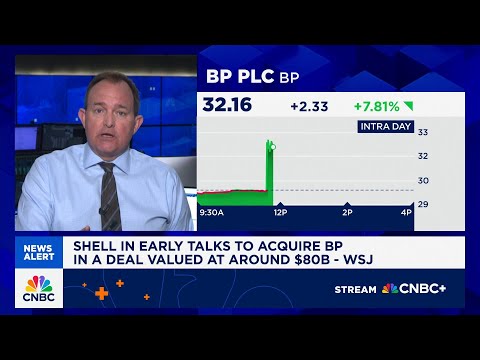
Shell in early talks to acquire BP in deal valued near $80 billion, reports say
CNBC Television· 2025-06-25 16:26
CNBC's Brian Sullivan joins 'Money Movers' to discuss reports of early talks for Shell to acquire BP. ...

If Only We Still Had Faith in Combustion Engines | Rayan Mian & Faris Foroutani | TEDxYouth@DAA
TEDx Talks· 2025-06-25 15:54
Fetis and I are car enthusiasts. Seriously obsessed. We spend most of our free time either looking at cars or talking about them. At our age, we have plenty of time to dedicate to what we're passionate about, combustion engines and electric vehicles.But why us. What makes us qualified to tackle such a big topic. Well, we spent many years learning and developing our knowledge on combustion engines and electric vehicles.It's not just a hobby. It's our passion. Today, we're here to discuss a crucial question.S ...

高盛:石油巨头-2025 年展望_在不确定的宏观环境中寻求差异化增长、现金回报与韧性
Goldman Sachs· 2025-06-23 02:09
Investment Rating - The report maintains a cautious view on the European Oils sector despite raising the Brent oil price assumption due to higher geopolitical risk premium [1][2]. Core Insights - The report highlights differentiated growth stories, resilient cash returns, and asset monetization optionality as key themes for the sector [1]. - It emphasizes the importance of strong balance sheets and value crystallization through disposals, with specific companies like Saudi Aramco, Equinor, Shell, and Galp noted for their financial strength [3][6]. - The report identifies potential divestment opportunities among EU Big Oils, particularly for Repsol, BP, and ENI, which could significantly impact their equity value [69][70]. Summary by Sections Commodity Price Outlook - Brent oil prices dipped to the low $60s/bbl but recovered to approximately $75/bbl, while EU gas prices saw a significant drop quarter-over-quarter [2][30]. - The report adjusts the Brent price assumption for 2H25 to $65/bbl and maintains a negative outlook on oil despite a higher long-term price forecast [31][39]. Financial Performance and Cash Returns - The sector is expected to see a 20% quarter-over-quarter decrease in operating cash flow (OCF) due to higher seasonal tax payments, with average gearing projected to increase modestly [3][64]. - EU Big Oils are projected to offer a total cash return to shareholders of 11.7% in 2025, combining a 5.4% dividend yield and 6.3% from buybacks [6][26]. Growth and Capital Expenditure - Companies like Galp and Shell are highlighted for their differentiated cash flow growth and capital expenditure flexibility, with Galp expected to see over 20% production growth from the Bacalhau start-up in 2025 [7][48]. - TotalEnergies is forecasted to have the strongest production growth among the Big Oils, exceeding 3% in 2025, while Repsol and Shell also show promising growth profiles [49][55]. Divestment Strategies - Major EU Big Oils are adopting diverse divestment strategies to streamline portfolios, focusing on high-return projects [69]. - BP is noted for its significant divestment pipeline, targeting $20 billion in disposals by 2027, while Repsol has already announced substantial asset rotations in renewables [73][76].
Shell ‘Being Very Careful’ With Shipping Around Iran, CEO Says
Bloomberg Television· 2025-06-19 03:03
[CC may contain inaccuracies] How important is the Strait of Hormuz right now. And even if we don't necessarily see a closure or just disruptions in that region. I mean, massively important, 20% of the world's oil is flowing there and the roughly equivalent amount of the world's gas.What is particularly challenging right now is some of the jamming that's happening on GPS devices and the like, which which is a concern. The Strait of Hormuz is, at the end of the day, the artery through which the world's energ ...

瑞银:全球石油和天然气_ 2025 年 6 月 13 日全球油气估值
瑞银· 2025-06-18 00:54
Investment Rating - The report provides a "Buy" rating for Chevron, ExxonMobil, Shell, TotalEnergies, GALP, OMV, and Cenovus Energy, while BP and Eni are rated as "Neutral" [10]. Core Insights - The report highlights a positive outlook for major oil companies, driven by expected increases in free cash flow and production growth rates. The average expected production growth for 2025-2027 is projected at 7% for the global sector [10]. - The report emphasizes the importance of refining margins, with European composite margins expected to stabilize around 5.00 in 2025, while US composite margins are projected to be around 15.67 [7][10]. - The macroeconomic assumptions indicate a gradual recovery in commodity prices, with Brent crude oil expected to average $65.99 per barrel in 2025, reflecting a slight increase from previous years [7]. Summary by Relevant Sections Company Ratings - BP: Current price at 380.7, target price 400, with a 5% upside, rated as Neutral (CBE) [10]. - Chevron: Current price at 144.97, target price 177, with a 22% upside, rated as Buy (CBE) [10]. - ExxonMobil: Current price at 109.73, target price 130, with an 18% upside, rated as Buy (CBE) [10]. - Shell: Current price at 2,615, target price 2,900, with an 11% upside, rated as Buy (CBE) [10]. - TotalEnergies: Current price at 54.74, target price 60, with a 10% upside, rated as Buy (CBE) [10]. - Eni: Current price at 13.86, target price 13.0, with a -6% downside, rated as Neutral (CBE) [10]. - Cenovus Energy: Current price at 14.42, target price 25, with a 73% upside, rated as Buy [10]. Financial Metrics - The report provides various financial metrics for the companies, including EV/DACF, FCF Yield, and P/E ratios, indicating strong financial health and potential for growth in the coming years [10]. - The average expected free cash flow yield for the sector is projected at 7.4% for 2025, reflecting robust cash generation capabilities [10]. Market Trends - The report notes a trend towards increased investment in renewable energy sources among major oil companies, which may impact their long-term strategies and market positioning [10]. - The refining sector is expected to see improvements in margins, particularly in the US and Europe, as demand recovers post-pandemic [7][10].





Better Artificial Intelligence Stock: C3.ai vs. SoundHound AI
The Motley Fool· 2025-06-17 17:00
Core Insights - AI stocks are considered attractive investments despite macroeconomic challenges, with a significant focus on the AI revolution as a major theme in technology [1] - C3.ai and SoundHound AI are two emerging companies in the AI sector, each with distinct business models and growth trajectories [2] SoundHound AI - SoundHound has developed a robust AI technology for understanding human speech, utilized by various industries including automotive and food service [4] - The company activated over 1,000 new restaurant locations in Q1, achieving record sales of $29.1 million, a 151% year-over-year increase [5] - SoundHound projects revenue between $157 million and $177 million for the current year, significantly up from $84.7 million in 2024, indicating strong confidence in its AI platform [6] C3.ai - C3.ai focuses on providing AI solutions for organizational needs, including maintenance identification for military aircraft, with significant contracts from the U.S. government [7][8] - The company reported record revenue of $108.7 million in fiscal Q4, a 26% year-over-year increase, and anticipates Q1 revenue for FY 2026 to exceed $100 million [10] - C3.ai's partnerships, particularly with Baker Hughes, have been crucial for its growth, contributing to 73% of agreements closed in fiscal 2025 [9] Investment Comparison - Both companies are expanding their AI businesses, but C3.ai is viewed as a better long-term investment due to its lower price-to-sales ratio and strong government contracts [11][13] - The AI market is projected to grow from $184 billion in 2024 to $826 billion by 2030, suggesting a favorable environment for C3.ai's government business [14]



Here's Why Hold Strategy Is Apt for Transocean Stock Now
ZACKS· 2025-06-16 14:31
Core Viewpoint - Transocean Ltd. (RIG) is a prominent player in offshore drilling, known for its mobile rigs that explore oil and gas beneath the ocean floor, with a strong reputation in complex drilling jobs, particularly in deepwater and remote locations [1][2] Group 1: Company Strengths - Transocean has a robust backlog of $7.9 billion, providing significant revenue visibility and insulating the company from short-term market volatility [7][9] - The offshore drilling sector is recovering, with deepwater investments projected to increase by 40% by 2030, positioning Transocean to benefit from this trend [10] - Management expects $100 million in cost savings in both 2025 and 2026, highlighting operational efficiency with a revenue efficiency of 95.5% in Q1 2025 [11] - The company ended Q1 2025 with $1.3 billion in liquidity and has demonstrated a commitment to deleveraging by repaying $210 million in debt during the quarter [12] - Transocean operates globally, with upcoming opportunities in Brazil, West Africa, and Norway, showcasing geographic diversification [13] Group 2: Company Challenges - Transocean reported a net loss of $79 million in Q1 2025, raising concerns about profitability amid higher operating costs [14] - The company carries a significant long-term debt of $5.9 billion, with $712 million due within a year, which poses a risk if market conditions worsen [15] - Management acknowledged macroeconomic and commodity price risks, including trade tensions and OPEC volatility, which could impact drilling demand [16] - The company has idle rigs that incur sustaining costs, and if demand weakens, these assets could become liabilities [17] - Competitive pressure on day rates for high-spec rigs may limit Transocean's near-term contract wins, as competitors secure contracts at potentially lower rates [18] Group 3: Investment Outlook - Despite the positives such as a solid backlog and growing demand for deepwater drilling, persistent net losses and a heavy debt burden warrant caution for investors [19][20]


Oil prices see biggest jump in 3 years on Israel-Iran escalations. Analyst talks risk for producers.
Yahoo Finance· 2025-06-13 14:54
Oil futures spiking, seeing their biggest gain in three years. And as we're monitoring the violence that's breaking out between Iran and Israel, this is prompting concerns around the outlook for supply in the region. Joining us now on the outlook for energy sector here.We've got Fernando Valet who is the hedgei risk management energy analyst. Good to have you here. Taking some time this morning.just walk us through where this immediately kind of initiates some of your attention to flow into especially when ...
Eni Taps Argentina's Vaca Muerta Potential With Strategic MoU
ZACKS· 2025-06-09 13:41
Core Insights - Eni S.p.A. has signed a memorandum of understanding with YPF for a $50 billion LNG project in Argentina, highlighting its potential involvement in one of South America's most ambitious energy initiatives [1][10] - The project aims to leverage Argentina's Vaca Muerta shale formation, which contains an estimated 308 trillion cubic feet of recoverable gas reserves, positioning Argentina as a key player in the global LNG market [6] Group 1: Project Overview - The MoU focuses on the initial development stage of the Argentina LNG project, which includes upstream, transportation, and gas liquefaction infrastructure, specifically covering two floating LNG units with a combined capacity of 12 million tons per annum [2][10] - Argentina LNG is structured in three phases, with the first phase involving the two FLNG units, the second phase including a 10 million tpa onshore liquefaction plant, and the third phase expanding that facility to increase output by another 10 million tpa, aiming for a total capacity of 30 million tpa by the end of the decade [5] Group 2: Strategic Importance - YPF's CEO expressed that the partnership with Eni is intended to accelerate the project's timeline, reflecting growing global interest in gas from the Vaca Muerta region [4] - Eni's CEO emphasized the company's unique expertise in FLNG, citing successful projects in Congo and Mozambique as reasons for YPF's selection of Eni [3] Group 3: Future Developments - YPF and Shell, the current developers of the Argentina LNG project, are expected to issue the front-end engineering and design tender for the first onshore liquefaction unit by August, with the FEED process anticipated to last for 10 months, leading to a final investment decision by mid-2026 [7]

Petrobras Targets Africa as Key Region for International Growth
ZACKS· 2025-06-09 12:31
Core Insights - Petrobras is shifting its strategic focus towards Africa, particularly targeting countries like Ivory Coast, Angola, Nigeria, and Namibia, to leverage geological similarities with Brazil's offshore basins [1][15][17] - The company has submitted an interest for nine offshore oil blocks in Ivory Coast, indicating a strong commitment to establishing a presence in West Africa [2][9] - A partnership with Angola's Sonangol aims to enhance Petrobras' regional positioning and facilitate knowledge transfer in offshore exploration and sustainable energy technologies [4][5][16] Expansion Strategy - The geographic location of Ivory Coast is seen as advantageous due to Petrobras' existing experience in similar geological settings, which could lead to successful outcomes in Africa [3][10] - Nigeria is identified as a key area for investment due to its untapped deepwater blocks and favorable reforms in the petroleum sector [6][15] - Namibia is emerging as a promising frontier for exploration, with Petrobras aiming to capitalize on first-mover advantages in this region [7][15] Geological Synergy - The geological similarities between Brazil and Africa, stemming from their historical connection as part of the supercontinent Gondwana, provide Petrobras with a competitive edge in exploration [8][10] - The company’s success in Brazil's offshore pre-salt layers is expected to be replicable in Africa's basins, enhancing its exploration capabilities [8][10] Production and Reserves - Petrobras' crude oil production was stable at 2.77 million barrels per day in Q1 2025, reflecting a slight decline of 0.2% year-over-year, while proven oil and gas reserves increased by 500 million barrels to 11.4 billion barrels [11][12] - The company is actively seeking to acquire new overseas reserves to ensure long-term growth as domestic fields mature [12][14] Acquisition Plans - Petrobras is in negotiations with global supermajors like ExxonMobil, Shell, and TotalEnergies for potential acquisitions of stakes in existing oil fields in Africa, which would provide immediate access to production assets [13][14] - This dual strategy of inorganic reserve replacement and organic exploration aligns with Petrobras' ambitions to enhance its global reserve metrics [14] Long-term Vision - The expansion into Africa is framed as a long-term strategy for Petrobras, positioning the company as a significant player in the Atlantic petroleum frontier [15][17] - The partnership with Sonangol includes provisions for cleaner production technologies, aligning with Petrobras' commitment to sustainable growth [16]