
Liberty Energy Inc.

Search documents
Suncor Energy Q4 Earnings & Revenues Beat Estimates, Both Down Y/Y
ZACKS· 2026-02-04 17:55
Core Insights - Suncor Energy Inc. reported fourth-quarter 2025 adjusted operating earnings of 79 cents per share, surpassing the Zacks Consensus Estimate of 77 cents, driven by strong production growth in its upstream segment, although it declined from 89 cents in the previous year due to lower upstream price realizations [1][11] Financial Performance - Operating revenues reached $8.8 billion, exceeding the Zacks Consensus Estimate by 4%, primarily due to increased sales volumes in both upstream and downstream segments, despite a year-over-year decrease of approximately 1.3% [2][11] - The company distributed a total of C$1.5 billion to shareholders, including C$775 million in share repurchases and C$719 million in dividends [3] - Adjusted funds from operations were C$3.2 billion, with free cash flow amounting to C$1.7 billion [3] Production and Operational Highlights - Suncor achieved record upstream production of 909,000 barrels per day (bbls/d), a 3.9% increase from 875,000 bbls/d in the previous year, exceeding the consensus estimate of 894,000 bbls/d [4][5] - Total oil sands bitumen production increased to 992,700 bbls/d from 951,500 bbls/d year-over-year, driven by strong mining performance and record production at Fort Hills [6] - The company’s E&P volume increased by 10.6% to 63,600 bbls/d, although it slightly missed the consensus estimate of 64,000 bbls/d [7] Cost and Efficiency Metrics - Operating costs from Oil Sands operations decreased to C$25.90 per barrel from C$26.55 in the previous year, supported by increased power sales volumes [9] - Fort Hills reported an average fourth-quarter volume of 178,200 bpd, although it missed the consensus estimate of 189,000 bpd, with cash operating costs per barrel decreasing to C$31.60 [12] - Syncrude's cash operating costs per barrel also decreased to C$31.05 from C$32.80 year-over-year [13] Downstream Performance - Adjusted operating earnings for Refining and Marketing were C$893 million, significantly up from C$410 million in the same quarter last year, driven by higher benchmark crack spreads and increased refinery production [15] - Refined product sales totaled 640,400 bpd, an increase from 613,300 bpd in the prior year, supported by higher refinery production and strategic investments [16] - Refinery utilization was at 108%, up from 104% a year ago, reflecting strong operational performance [17] Financial Position and Guidance - Total expenses decreased by 9.8% to C$10.3 billion, while cash flow from operating activities was C$3.9 billion, down from C$5.1 billion in the prior year [18] - As of December 31, 2025, the company had cash and cash equivalents of C$3.65 billion and long-term debt of C$9 billion, with a debt-to-capitalization ratio of 16.7% [19] - For 2026, Suncor expects upstream production of 840,000-870,000 bbls/d and capital spending projected at $5.7 billion, with a commitment to return 100% of excess funds to shareholders [20]


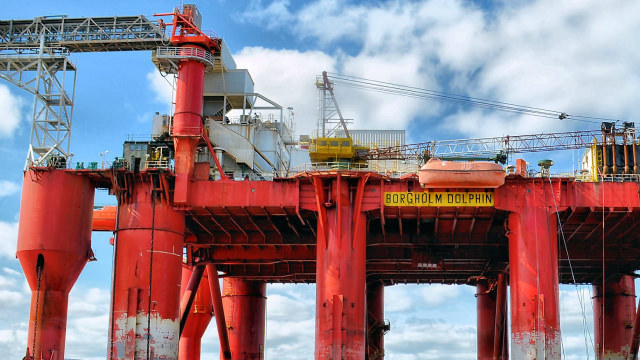
Imperial Oil Q4 Earnings Surpass Estimates, Revenues Miss
ZACKS· 2026-02-02 17:50
Core Insights - Imperial Oil Limited (IMO) reported fourth-quarter 2025 adjusted earnings per share of $1.41, exceeding the Zacks Consensus Estimate of $1.36, but down from $1.69 in the same quarter last year due to lower upstream price realizations [1] - Revenues for the quarter were $8.1 billion, missing the Zacks Consensus Estimate of $10.4 billion and decreasing from $9 billion in the prior year, attributed to weak performance in both Upstream and Downstream segments [1] Financial Performance - The company returned C$361 million to shareholders through dividend payments, increasing the quarterly dividend by 20% from 72 Canadian cents to 87 Canadian cents per share, payable on April 1, 2026 [2] - Total expenses for the quarter were C$10.7 billion, down from C$11 billion in the previous year, while capital and exploration expenditures rose to C$651 million from C$423 million [11] - Cash flow from operating activities was C$1.9 billion, slightly up from C$1.8 billion in the year-ago quarter, with cash and cash equivalents at C$1.1 billion and total debt at C$4 billion, resulting in a debt-to-capitalization ratio of 15.2% [12] Segment Performance - Upstream segment revenues were C$3.6 billion, down from C$4.7 billion year-over-year, with a net loss of C$2 million compared to a profit of C$878 million in the prior year [4] - Average upstream production was 444,000 gross oil-equivalent barrels per day (boe/d), down from 460,000 boe/d in the previous year and below the expectation of 466,000 boe/d [4] - Downstream segment revenues decreased to C$12.4 billion from C$14.1 billion year-over-year, with net income rising to C$519 million from C$356 million [8] Production and Pricing - Bitumen price realizations were C$59 per barrel, down from C$71.58 in the prior year, while synthetic oil averaged C$80.07 per barrel compared to C$99.10 previously [7] - Total gross bitumen production at Kearl averaged 274,000 barrels per day, down from 299,000 barrels per day in the fourth quarter of 2024, primarily due to wet weather [5] - The Cold Lake Leming SAGD project has reached first oil and is ramping up towards a peak production level of about 9,000 barrels per day [6] Outlook - For 2026, Imperial Oil has set a capital and exploration spending budget between C$2 billion and C$2.2 billion, with upstream production expected to range from 441,000 to 460,000 gross oil-equivalent barrels per day [13]


Liberty Energy (LBRT) Climbs 18.3% on Upbeat Outlook Despite Dismal 2025
Yahoo Finance· 2026-01-31 21:15
Group 1 - Liberty Energy Inc. (NYSE: LBRT) experienced an 18.28% week-on-week gain, reaching an all-time high due to a positive business outlook and expectations of stronger power demand [1][2] - The stock peaked at $27.21 before closing at $24.65 after a 2.68% decline due to profit-taking [2] - CEO Ron Gusek projected that power demand would increase more than threefold over the next four years, and announced plans to deploy 3 gigawatts of power by 2029 to meet this demand [2] Group 2 - Despite the optimistic outlook, Liberty Energy reported a 53% decline in net income for 2025, falling to $147.87 million from $316 million in 2024, and a 7.2% drop in revenues to $4 billion from $4.3 billion year-on-year [3] - In Q4, net income plummeted by 74% to $13.69 million from $51.89 million, even though revenues exceeded $1 billion, reaching $1.04 billion, which is a 10% increase from $943 million in the same period last year [3]

Liberty Energy (LBRT) Beats Forecasts in Q4 Results
Yahoo Finance· 2026-01-31 17:38
Group 1 - Liberty Energy Inc. (NYSE:LBRT) experienced a significant share price increase of 17.81% from January 22 to January 29, 2026, making it one of the top-performing energy stocks for that week [1] - The company reported better-than-expected Q4 2025 results, surpassing estimates in both earnings and revenue, with a total revenue of $4 billion for the full year and an adjusted EBITDA of $634 million [3] - Liberty Energy returned $77 million to shareholders through quarterly cash dividends and share repurchases during the year, and declared a cash dividend of $0.09 per share for holders of record as of March 4, 2026 [3] Group 2 - The company has a positive outlook on increasing power demand, announcing plans to deploy 3 GW of power by 2029, building on previous plans for over 1 GW capacity by the end of 2027 [4]
Liberty Energy (LBRT) Climbs to All-Time High on Upbeat Outlook
Yahoo Finance· 2026-01-30 04:44
Core Viewpoint - Liberty Energy Inc. (NYSE:LBRT) experienced a significant stock price increase, reaching an all-time high, driven by optimistic industry outlook despite disappointing earnings results for the previous year [1][2]. Group 1: Company Performance - Liberty Energy reported a 53% decline in net income for full-year 2025, amounting to $147.87 million compared to $316 million in 2024 [3]. - Revenues for the same period decreased by 7.2%, falling to $4 billion from $4.3 billion year-on-year [3]. - In Q4, net income dropped by 74% to $13.69 million from $51.89 million, while revenues increased to $1.04 billion, a 10% rise from $943 million in the same quarter the previous year [3]. Group 2: Industry Outlook - CEO Ron Gusek highlighted expectations for power demand to increase more than threefold over the next four years, positioning the company to support this growth [2]. - The company plans to deploy 3 gigawatts of power by 2029 to capture and support the anticipated demand [2].
为 AI 供能:燃气轮机或成 AI 发展野心的关键变量-Powering AI_ Gas Turbines Could Make or Break AI Ambitions
2026-01-26 02:49
Summary of Gas Turbine Industry Conference Call Industry Overview - The gas turbine industry is critical for meeting growing power needs, particularly in the context of AI and data centers, but demand extends beyond just these sectors [1][2] - The U.S. gas-fired power additions are projected to hit their lowest level in 2024, with only approximately 2.6 GW added, the lowest since the late 1990s [2][13] Key Insights on Demand and Capacity - Approximately 40 GW of gas turbine capacity additions are tracked by 2030, with expectations of increasing to around 90 GW [3] - Demand for gas turbines is not solely driven by data centers; there is significant international demand, coal retirements, and aftermarket needs [2][46] - Major projects include Crusoe's 2.7 GW gas-powered data center in Wyoming and xAI's expansion to 2 GW in the Midwest [2][21][23] OEM Capacity and Strategy - Legacy turbine OEMs are adopting a conservative approach to capacity additions, with some companies requiring 25% deposits for slot reservations, indicating a cautious market outlook [4] - Companies like Mitsubishi and CAT are signaling more measured growth plans, with Mitsubishi planning a 30% increase by FY2026 and CAT targeting a 50 GW capacity by 2030 [4] - New entrants like Boom Supersonic and Doosan Enerbility are attempting to enter the market, but face significant development challenges [8] Supply Chain and Operational Challenges - The gas turbine supply chain is complex, with components requiring rare earths and specialized materials, compounded by overlaps with aerospace jet engines [10] - Lead times for large frame turbines are extending into 2028+, with operational timelines stretching 18-24 months post-shipment [33][39] - There are significant labor constraints and permitting challenges affecting the commissioning of new large gas plants [30][31] Technological Trends and Preferences - There is a shift towards behind-the-meter power solutions due to the urgency of AI workloads, with smaller aeroderivative and industrial turbines gaining preference [9][30] - Gas turbines are still favored for baseload power, but there is increasing interest in gas engines and fuel cells for flexibility and rapid response to load changes [42][44] Market Dynamics and Future Outlook - The market is seeing a mix of technologies deployed to handle AI workload power fluctuations, including gas turbines, gas engines, and energy storage solutions [44] - International demand is strong, particularly in Asia and the Middle East, with significant orders coming from regions focused on local content [46] - The industry is also addressing coal capacity retirements and the need for peaking capacity to balance intermittent renewables [51] Conclusion - The gas turbine industry is at a pivotal point, balancing between traditional power generation needs and the emerging demands of AI and data centers. The cautious approach of OEMs, coupled with complex supply chain dynamics and evolving technological preferences, will shape the future landscape of the industry.
Liberty Partners With Vantage to Deliver 1GW of Power for Data Centers
ZACKS· 2026-01-06 15:06
Core Insights - Liberty Energy Inc. (LBRT) has formed a transformative partnership with Vantage Data Centers to meet the increasing demand for digital infrastructure through utility-scale, high-efficiency power solutions [1][12] - The collaboration aims to deliver up to 1 gigawatt (GW) of power agreements within five years, including a reservation of 400 megawatts (MW) by 2027, with potential for future expansion [2][8] Partnership Objectives - The partnership focuses on developing and deploying power solutions to support Vantage's expanding data center portfolio in North America, ensuring reliable and sustainable energy for major tech companies [1][12] - Liberty Power Innovations (LPI), a subsidiary of Liberty Energy, will manage these power solutions, leveraging over a decade of experience in advanced distributed power systems [4][12] Technological Innovations - LPI's platform includes advanced technologies such as Forte power generation and Tempo intelligent load management, which are crucial for providing reliable primary power to Vantage's facilities [5][9] - The integrated power solutions will enable data centers to operate independently from the grid or optimize their operations using grid attributes, enhancing reliability and efficiency [7][10] Market Demand and Future Outlook - The growing demand for AI technologies and cloud computing is driving the need for energy-efficient and scalable power solutions, which the LBRT and Vantage partnership aims to address [3][6] - This collaboration sets a new standard for power infrastructure in the digital age, supporting the development of next-generation data centers that can meet evolving AI and cloud computing needs [11][13] Economic and Environmental Impact - The partnership enhances local energy resilience and offers flexibility to support the local grid, addressing rising energy costs and supply constraints [9][10] - By securing long-term, reliable power sources, Vantage can maintain control over energy costs, aligning with broader goals of reducing carbon footprints and promoting sustainable energy practices [10][12]

Is State Street SPDR S&P Oil & Gas Equipment & Services ETF (XES) a Strong ETF Right Now?
ZACKS· 2025-12-26 12:22
Core Insights - The State Street SPDR S&P Oil & Gas Equipment & Services ETF (XES) debuted on June 19, 2006, and provides broad exposure to the Energy ETFs category [1] Fund Overview - XES has accumulated over $253.47 million in assets, making it an average-sized ETF in the Energy sector [5] - The fund is managed by State Street Investment Management and aims to match the performance of the S&P Oil & Gas Equipment & Services Select Industry Index [5] - The S&P Oil & Gas Equipment & Services Select Industry Index is a modified equal weight index representing the oil and gas equipment and services sub-industry [6] Cost and Expenses - The annual operating expenses for XES are 0.35%, positioning it as one of the least expensive products in the sector [7] - The fund has a 12-month trailing dividend yield of 1.70% [7] Sector Exposure and Holdings - XES has a 100% allocation in the Energy sector [8] - Liberty Energy Inc (LBRT) constitutes approximately 6.79% of the fund's total assets, with the top 10 holdings accounting for about 49.89% of total assets under management [9] Performance Metrics - Year-to-date, XES has increased by about 4.69%, and it is up approximately 8.74% over the last 12 months as of December 26, 2025 [10] - The fund has traded between $52.84 and $87.75 in the past 52 weeks [10] - XES has a beta of 0.96 and a standard deviation of 34.29% for the trailing three-year period, indicating a higher risk profile [10] Alternatives - XES may not be suitable for investors looking to outperform the Energy ETFs segment, with alternatives such as iShares U.S. Oil Equipment & Services ETF (IEZ) and VanEck Oil Services ETF (OIH) available [11][12] - IEZ has $133.58 million in assets and an expense ratio of 0.38%, while OIH has $1.33 billion in assets with an expense ratio of 0.35% [12]

Should You Invest in the State Street SPDR S&P Oil & Gas Equipment & Services ETF (XES)?
ZACKS· 2025-12-22 12:21
Core Insights - The State Street SPDR S&P Oil & Gas Equipment & Services ETF (XES) is designed to provide broad exposure to the Energy - Equipment and services segment of the equity market, launched on June 19, 2006 [1] - The ETF is passively managed, appealing to both institutional and retail investors due to its low costs, transparency, flexibility, and tax efficiency [1] Fund Overview - The fund is sponsored by State Street Investment Management and has assets exceeding $258.92 million, categorizing it as an average-sized ETF in its sector [3] - XES aims to match the performance of the S&P Oil & Gas Equipment & Services Select Industry Index [3][4] Cost Structure - The ETF has an annual operating expense ratio of 0.35%, making it one of the least expensive options in the market [5] - It offers a 12-month trailing dividend yield of 1.69% [5] Sector Exposure and Holdings - The ETF is fully allocated to the Energy sector, with approximately 100% of its portfolio dedicated to this segment [6] - Liberty Energy Inc (LBRT) constitutes about 6.79% of total assets, with the top 10 holdings representing approximately 49.89% of total assets under management [7] Performance Metrics - Year-to-date, XES has gained about 3.3%, and it has increased approximately 9.4% over the past year [8] - The fund has traded between $52.84 and $87.75 in the last 52 weeks, with a beta of 0.96 and a standard deviation of 34.48% over the trailing three-year period, indicating a higher risk profile [8] Alternatives - The ETF has a Zacks ETF Rank of 4 (Sell), suggesting it may not be the best option for investors seeking exposure to the Energy ETFs segment [10] - Alternatives include iShares U.S. Oil Equipment & Services ETF (IEZ) with $132.55 million in assets and VanEck Oil Services ETF (OIH) with $1.30 billion in assets [11]

Should You Invest $1,000 in Oklo Right Now?
Yahoo Finance· 2025-12-21 17:43
Core Viewpoint - Oklo has experienced significant volatility in its stock price, with a remarkable rise of over 700% in 2025 after a poor performance in 2024, but has since fallen to $83 from a peak of $193 due to concerns over an AI bubble affecting nuclear stocks [1]. Investment Opportunity - An investment of $1,000 in Oklo stock may appear attractive, but it is essential to evaluate both the bullish and bearish perspectives before proceeding [2]. Bull Case for Oklo - The demand for continuous power from AI applications positions nuclear energy as a viable solution, particularly through Oklo's microreactor design, the Aurora powerhouse, which can deliver up to 75 megawatts of continuous power and is cheaper and quicker to build than traditional plants [4]. - Oklo is targeting off-grid power clients, including AI data center operators, and has formed partnerships with notable companies such as Equinix, Vertiv, and Liberty Energy [5]. Bear Case for Oklo - Oklo currently has no revenue and lacks regulatory approval for commercial operation of its powerhouses, making its $12 billion market valuation seem excessive [6]. - Future cash flow is uncertain, with no revenue expected next year and only about $16 million projected for 2027, indicating a potential need for additional funding before generating significant revenue [7]. - The company is classified as a large-cap stock despite being pre-revenue, making an investment a high-risk, high-reward proposition [8]. Investment Consideration - A $1,000 investment in Oklo is recommended only for funds that can be risked, as the stock is considered speculative [9]. - Analysts from The Motley Fool Stock Advisor have identified ten other stocks as better investment opportunities than Oklo at this time [10].