
Singtel

Search documents
亚太2026 年一季度亚太十大核心观点-Top 10 Asia Pac Ideas Quarterly_ Introducing the Top 10 Asia Pac Ideas for Q1 2026
2026-01-13 11:56
Summary of Key Points from the Conference Call Industry Overview - The report presents the **Top 10 Asia Pac Ideas for Q1 2026**, focusing on stock recommendations for companies in the Asia Pacific region that are expected to have significant market and business-related catalysts in the upcoming quarter [1][2][10]. Company Recommendations - The **10 Buy-rated stocks** identified for Q1 2026 are: - **ASX Ltd**: Target Price (TP) of AUD 64.10, representing a 27% upside [3][5]. - **Chroma ATE**: TP of TWD 1,180, with a 38% upside [3][5]. - **Damai Entertainment**: TP of HKD 1.10, indicating a 22% upside [3][5]. - **H World Group**: TP of USD 62.00, with a 28% upside [3][5]. - **LG Electronics India**: TP of INR 1,840, representing a 23% upside [3][5]. - **Mitsubishi Heavy Industries**: TP of JPY 4,900, indicating a 15% upside [3][5]. - **Montage**: TP of CNY 155.00, with a 16% upside [3][5]. - **Ping An Insurance**: TP of HKD 74.00, representing a 3% upside [3][5]. - **Singtel**: TP of SGD 5.50, indicating a 21% upside [3][5]. - **Tencent Holdings**: TP of HKD 780.00, with a 23% upside [3][5]. Investment Rationale - The selection process involved consultations with BofA Fundamental Equity Research analysts and sector heads to ensure a diversified list of stocks with strong potential for outperforming or underperforming peers [2][11]. - The report emphasizes that the stocks are chosen based on their **Buy** or **Underperform** ratings, ensuring that only high-conviction ideas are included [2][14]. Performance and Updates - The list will be published at the beginning of each quarter and will remain unchanged unless there are significant developments affecting the stocks [4][15]. - Stocks may be re-evaluated for subsequent quarters based on ongoing catalysts and market conditions [16]. Additional Insights - **ASX Ltd**: The company has seen a share price decline of over 28% since mid-June, trading more than one standard deviation below historic levels, indicating potential for recovery [34]. - **Chroma ATE**: The company is positioned well in the semiconductor capital equipment industry, with expected growth driven by demand for AI server infrastructure and system-level testing [41][56]. - **Damai Entertainment**: As a subsidiary of Alibaba, it operates in various entertainment sectors, including live performance ticketing and content production, indicating a diversified revenue stream [64]. Risks and Considerations - Potential risks include regulatory interventions, market conditions affecting revenue growth, and competition within the semiconductor equipment sector [37][60]. - The report highlights the importance of monitoring macroeconomic factors and sector-specific developments that could impact the performance of the recommended stocks [7][60]. This summary encapsulates the key points from the conference call, focusing on the companies and industry dynamics relevant to the investment recommendations for Q1 2026.


Why Blue-Chip Stocks Remain the Core of Every Smart Portfolio
The Smart Investor· 2026-01-13 09:30
Core Insights - Blue-chip stocks are essential for long-term investors, providing stability and steady dividends in a well-structured portfolio [1][2] Established Businesses - Blue-chip stocks represent established companies with dominant market positions, such as DBS Group Holdings, United Overseas Bank, Singtel, ST Engineering, and Seatrium, which are integral to Singapore's economy [3][4] Dependable Income - Blue-chip companies have a strong history of paying and increasing dividends, exemplified by Singapore Exchange Limited, which has raised its annual dividend from S$0.28 to S$0.375 per share over the past decade [5][6] Liquidity and Accessibility - Blue-chip stocks on the Singapore Exchange feature high trading volumes and lower bid-ask spreads, facilitating easy buying and selling, and providing liquidity for investors [8] Risk Management - Blue-chip stocks reduce overall portfolio volatility and act as a buffer during market downturns, making them a foundational element for a balanced investment strategy [9] Building a Core Blue-Chip Portfolio - A recommended investment strategy involves an 80/20 portfolio allocation, with 80% in blue-chip stocks and 20% in growth stocks, ensuring steady income and reduced volatility [10][11] Strong Foundation for Investing - A successful investment strategy focuses on building a strong foundation with blue-chip stocks, complemented by selective growth stocks to achieve long-term wealth compounding [12]

How to Choose Your First Stock in Singapore
The Smart Investor· 2026-01-01 03:30
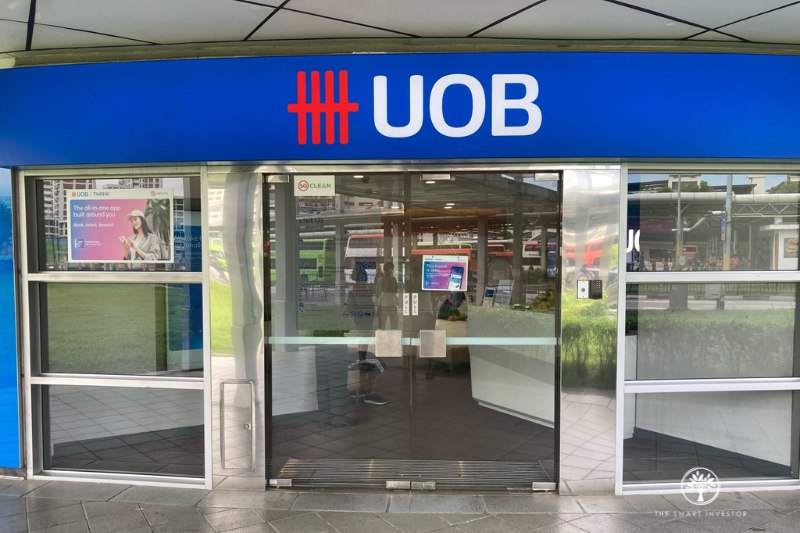
Group 1 - The article emphasizes the importance of starting with companies that investors understand, such as DBS Group Holdings, United Overseas Bank, Sheng Siong Group, SBS Transit, and ComfortDelGro [2][4] - It suggests focusing on stable, established companies, particularly blue-chip stocks, to minimize risk for rookie investors [4] - Dividend-paying stocks are highlighted as a good choice for beginners, providing regular income and the potential for compounding growth [5] Group 2 - The article advises new investors to start small and choose affordable stocks, noting that one lot of DBS shares costs around S$5,650, while other blue chips like Singtel and ST Engineering are more budget-friendly at approximately S$458 and S$840 respectively [6][7] - It warns against chasing "hot tips" or fast gains, advocating for a slow and steady investment approach instead [9] - Long-term investment strategies are recommended, emphasizing the importance of patience and focusing on solid companies with strong balance sheets [10][11]

Network API Market to Surpass USD 27.01 Billion by 2033, Driven by 5G Expansion and Demand for Real-Time Connectivity | Report by SNS Insider
Globenewswire· 2025-12-20 08:00
Core Insights - The Network API Market is projected to grow from USD 2.15 billion in 2025 to USD 27.01 billion by 2033, with a CAGR of 37.32% from 2026 to 2033 [1][2] Market Drivers - The demand for seamless integration, real-time data exchange, and enhanced connectivity across cloud services, corporate applications, and IoT ecosystems is driving the growth of the Network API market [2] - The adoption of digital transformation projects, 5G networks, and AI-based services is increasing the need for reliable, scalable, and secure APIs [2] Regional Insights - North America holds a dominant share of 42.00% in the Network API Market in 2025, attributed to advanced digital infrastructure and strong enterprise integration of API-driven solutions [10] - The Asia Pacific region is expected to experience the fastest growth with a CAGR of approximately 40.25% from 2026 to 2033, driven by rapid digital transformation and increasing smartphone penetration [10] Market Segmentation By Type - Communication & Messaging APIs lead with a 29.4% market share, essential for real-time interactions and enterprise messaging workflows [5] - Device & IoT Connectivity APIs are the fastest-growing segment, with a CAGR of 28.6%, driven by the rapid expansion of IoT across various industries [5] By Network Type - 3G/4G/LTE Networks account for 41.7% of the market share, serving as the foundation for API-driven telecom services [6] - 5G Networks are the fastest-growing segment, with a CAGR of 30.3%, due to their ultra-low latency and high bandwidth capabilities [6] By Application - IT & Telecom sectors lead with a 33.8% share, relying heavily on APIs for network optimization and operational automation [8] - BFSI is the fastest-growing segment, with a CAGR of 27.4%, driven by the demand for secure financial APIs [8] By End-User - Enterprises hold a 36.2% share, integrating APIs to streamline workflows and enhance connectivity [9] - Developers represent the fastest-growing segment, with a CAGR of 26.1%, due to the increasing availability of open APIs [9] Recent Developments - In 2024, Ericsson launched its Network API Platform, providing enterprises and developers access to real-time 5G network capabilities [14] - In 2025, Nokia introduced Network as Code (NaC), a cloud-native platform offering self-service access to 5G and fixed network APIs [14] Key Players - Major companies in the Network API market include Ericsson, Nokia, Cisco, Microsoft, AT&T, and others [13]





The SGX Has Hit New Highs This Year. Is This the Start of 2026’s Dividend Boom?
The Smart Investor· 2025-12-18 03:30
Core Insights - Singapore's stock market, particularly the Straits Times Index (STI), is experiencing significant growth, reaching new all-time highs after a prolonged period of slow trading [1][3] - Major blue-chip companies like DBS, Singtel, and Keppel are gaining strength, while several REITs, including Mapletree Logistics Trust and CapitaLand Ascendas REIT, are showing signs of stabilization after challenging years [1][3] Market Dynamics - The market is benefiting from several tailwinds, including peaking interest rates and easing financing costs for REITs, which could lead to a recovery in DPU growth [3] - Stronger blue-chip companies, such as DBS and OCBC, are well-capitalized and demonstrating resilient earnings, indicating a robust market foundation [3][4] Strategic Initiatives - The Monetary Authority of Singapore (MAS) has launched a S$5 billion Equity Market Development Program aimed at revitalizing the Singapore Exchange (SGX), attracting more listings, and enhancing liquidity [4] - This initiative represents a structural push rather than a temporary measure, signaling long-term growth potential for the market [4] Investment Outlook - Analysts suggest that 2026 could be a pivotal year for dividend investing, as improving market fundamentals and returning confidence create favorable conditions for dividend investors [5][8] - The current market environment presents a crucial opportunity for income investors to prepare for potential growth before 2026 [8] Stock Selection Criteria - Not all stocks will benefit equally from the market recovery; some may offer high yields without solid earnings backing, while others may appear cheap but carry long-term risks [6][7] - The strongest dividend opportunities are characterized by reliable free cash flow, prudent gearing, sensible payout ratios, a durable competitive moat, and clear visibility into earnings or DPU growth [11]

KKR出资11亿新元收购新加坡电信数据中心部门20%股权
Xin Lang Ke Ji· 2025-11-26 08:44
Core Viewpoint - Singapore Telecommunications Limited (Singtel) announced that a fund managed by private equity firm KKR will invest SGD 1.1 billion in cash to acquire a 20% stake in Singtel's regional data center business, with the transaction expected to close in Q4 of this year [1] Group 1 - KKR has the option to increase its stake to 25% by 2027 based on a pre-agreed valuation [1] - This investment raises the enterprise value of Singtel's regional data center business to SGD 5.5 billion [1] - The transaction is not expected to have a material impact on Singtel for the fiscal year ending March 31, 2024 [1] Group 2 - The funds will be used to accelerate the expansion of regional data center operations in ASEAN markets such as Singapore, Indonesia, and Thailand, while also exploring opportunities in other markets like Malaysia [1]


Data Intelligence Platform for Nation Scale AI Factories (Presented by DDN)
DDN· 2025-11-25 20:54
As you probably know, AI is already redefining the world economy from financial services to healthcare to automotive, energy, manufacturing, public sector. We are really starting to see great new AI applications come and this is all in partnerships with Nvidia, our great partner who has been pushing us on the envelope of innovation. So what we are talking about here is yes we've been here for many years 27 years in fact but the last 10 years has been amazing in 2015 almost 10 years ago we were supercharging ...

Singapore Telecommunications Limited 2026 Q2 - Results - Earnings Call Presentation (OTCMKTS:SGAPY) 2025-11-19
Seeking Alpha· 2025-11-19 23:18
Group 1 - The article does not provide any relevant content regarding company or industry insights [1]

Singtel Unlocks SGD 1.5B in Airtel Stake Sale: A Strategic Move Towards Portfolio Optimization
Retail News Asia· 2025-11-11 07:59
Core Insights - Singapore Telecommunications Limited (Singtel) has divested approximately 0.8% of its direct investment in Airtel, generating SGD 1.5 billion, which is part of its asset recycling strategy [1] - The sale is expected to yield profits of around SGD 1.1 billion, contributing to Singtel's mid-term asset recycling target of SGD 9 billion [7] Singtel's Strategy and Financial Management - Singtel is collaborating with Bharti Enterprises to balance its effective stake in Airtel while unlocking value and retaining a significant investment in the company [2] - The capital management program has amassed SGD 5.6 billion, exceeding half of the revised asset recycling target of SGD 9 billion [3] Progress and Future Plans - As of May 2025, Singtel has exceeded half of its original SGD 6 billion mid-term asset recycling target, which was later revised to SGD 9 billion [4] - The raised capital will support growth and provide capital returns through a value realization dividend and share buyback program [4] Investment in Airtel - Following the recent transaction, Singtel will retain a 27.5% stake in Airtel, valued at approximately SGD 51 billion, indicating continued commitment to India's digital economy [5][8]
X @Bloomberg
Bloomberg· 2025-11-11 01:46
A consortium comprising of KKR and Singtel is in talks with banks for a loan of around $3.8 billion to support its proposed purchase of ST Telemedia Global Data Centres, according to sources https://t.co/xIW90Y8NKE ...