
私募股权投资

Search documents
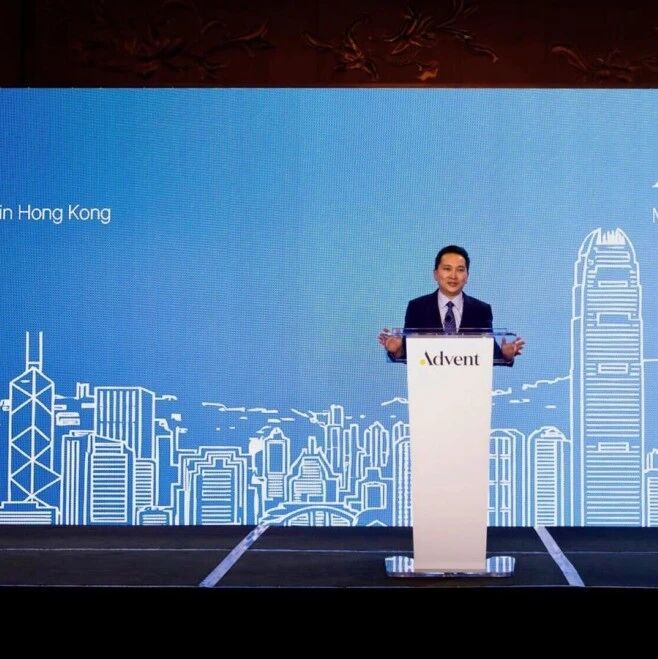
安宏资本加强在香港的布局,亚太地区投资总额已超78亿美元
IPO早知道· 2026-03-18 01:57
Core Viewpoint - The article highlights the strategic commitment of the private equity firm, Anhong Capital, to strengthen its business presence in Hong Kong as a regional hub to serve clients in the Asia-Pacific region, reflecting a long-term investment strategy in the area [3][4]. Group 1 - Anhong Capital has cumulatively invested over $1.8 billion in the Greater China region to date [2][3]. - The firm has a total investment exceeding $7.8 billion in the Asia-Pacific region, including flagship and follow-on funds [3]. - The Hong Kong office has officially become a licensed direct institution, indicating a significant milestone in the firm's regional operations [3][5]. Group 2 - The Asia-Pacific region remains a strategic focus for Anhong Capital, with offices in Hong Kong, Shanghai, Mumbai, Tokyo, and Sydney, employing nearly 40 investment professionals [4]. - The establishment of new offices in Tokyo by January 2026 and in Sydney by September 2024 further demonstrates the firm's commitment to the Asia-Pacific market [4]. - The firm aims to leverage local expertise in Hong Kong to provide high-level services to investors, enhancing its operational flexibility [5].

信托,正在扎堆做LP
母基金研究中心· 2026-03-12 09:04
Core Viewpoint - Trust companies are increasing their investment in venture capital (VC) by acting as limited partners (LPs) in various funds, focusing on hard technology, biomedicine, and strategic emerging industries [2][4]. Group 1: Trust Companies' Investment Activities - In 2023, several trust companies, including Minmetals Trust and CITIC Trust, have invested in multiple venture capital funds, indicating a trend towards early-stage and small-scale investments in hard technology [2]. - Trust companies are exploring new business models in private equity (PE) and venture capital (VC) due to market saturation and increasing risks in traditional real estate investments [3][4]. - The establishment of mother funds by trust companies, such as the 4 billion yuan industry guidance mother fund initiated by Guotai Junan and Haitong Securities, highlights their growing involvement in the VC/PE sector [4][5]. Group 2: Investment Strategies and Preferences - Trust companies prefer to invest in strategic emerging industries, including semiconductors, biomedicine, and intelligent manufacturing, as they seek to support the real economy [5][6]. - The shift towards investment-type business models is driven by the need to diversify risks and enhance asset transparency, with many trust companies increasingly adopting specialized funds [6]. - Trust companies are favoring general partners (GPs) with strong industry backgrounds and advantages in niche markets, indicating a preference for established and reputable GPs [5]. Group 3: Challenges and Opportunities - Trust companies face challenges in the private equity investment space, including regulatory restrictions and a lack of professional management teams, which may hinder their ability to scale quickly [7]. - Despite the potential for growth in equity investment trusts, the long investment cycles and uncertain returns may not meet investors' short-term return expectations [6][7]. - The current environment presents both opportunities and challenges for trust companies to establish equity investment trusts as new profit growth points, contingent on their ability to navigate regulatory and operational hurdles [7].


兆易创新科技集团股份有限公司关于参与投资私募股权投资基金的公告
Shang Hai Zheng Quan Bao· 2026-03-04 03:11
Core Viewpoint - The company, Zhaoyi Innovation Technology Group Co., Ltd., plans to invest RMB 400 million as a limited partner in a private equity fund, acquiring approximately 25.87% of the fund's shares, which is still in the fundraising stage [2][4]. Group 1: Investment Details - The company will invest RMB 400 million in the Shanghai Shixi Zhaoyi Zhixin Venture Capital Partnership (Limited Partnership), which has a total subscription amount of RMB 1,546 million [4][19]. - The investment has been approved by the company's board of directors and does not require shareholder meeting approval as it falls within the board's decision-making authority [5][19]. - The investment does not constitute a related party transaction or a major asset restructuring [5]. Group 2: Fund Management and Structure - The fund will be managed by Beijing Shixi Qingliu Private Fund Management Co., Ltd., which will assume unlimited joint liability for the fund's debts [11]. - The fund's management fee is set at 2% of the actual paid-in capital during the investment period and 1.9% during the exit period [11]. - The fund will primarily invest in unlisted companies in the integrated circuit industry, with at least 70% of the total subscription amount allocated to this sector [14]. Group 3: Profit Distribution and Exit Strategy - Profit distribution will follow a specific order: return of paid-in capital, priority return for limited partners at an 8% simple interest rate, followed by distributions to the general partner, and finally, excess returns shared [12]. - Exit strategies for the fund include selling shares after an IPO, direct transfer of equity, or non-cash distributions [17]. Group 4: Impact on the Company - This investment allows the company to leverage the expertise and resources of professional investment institutions, enhancing its industry layout and promoting the development of its main business [22]. - The investment will be funded by the company's own capital and will not significantly impact its financial or operational status [22].

多元金融行业:私募股权专题研究三:投资项目复盘
GF SECURITIES· 2026-03-02 14:46
Investment Rating - The report provides a "Buy" rating for stocks such as Tonghuashun and Zhongxin Holdings, and a "Hold" rating for stocks like Jiangsu Jinzheng and Hong Kong Exchanges [5]. Core Insights - The report emphasizes the clear classification of quasi-financial holding companies, focusing on industrial and financial synergy as the core logic. Leading institutions like Huajin Capital and CITIC Limited exemplify this trend through diversified project layouts [4]. - A-share quasi-financial holding companies show significant investment differentiation, with clear exit paths and controllable cycles. Investment directions are primarily divided into two main lines: one focusing on strategic emerging industries, while the other relies on industrial resources for supply chain layout [4]. - Hong Kong quasi-financial holding companies exhibit significant differences in tiered layouts, with investments leaning towards certainty and longer exit cycles. The report notes a shift in investment strategies towards mature and collaborative projects [4]. - The overarching trend across markets is the integration of industry and finance, with a focus on head effects and industrial empowerment. Hard technology and healthcare are identified as long-term core allocation tracks [4]. Summary by Sections A-share Quasi-Financial Holding Companies Investment and Exit Projects - Investment industry distribution shows a clear focus on strategic emerging industries and industrial-financial synergy. Companies like Huajin Capital and Aijian Group have significant early investments in emerging industries [15][18]. - Investment rounds are concentrated in later stages, primarily Pre-IPO, reflecting the need for predictable returns and compliance with state-owned asset assessments [37]. - Investment amounts are polarized, with Huajin Capital favoring small investments under 1 million CNY, while companies like Zhongyou Capital prefer large investments over 50 million CNY [60][64]. Hong Kong Quasi-Financial Holding Companies Investment and Exit Projects - Investment distribution shows a tiered characteristic, with leading institutions achieving balanced layouts across multiple tracks, while smaller institutions focus on specific sectors [4]. - The report highlights a trend towards investments in healthcare, enterprise services, and information technology, with emerging sectors like ESG-related investments beginning to gain traction [4]. - Exit cycles are lengthening, with IPOs remaining the core exit channel, but the report notes an increase in mergers and post-listing reductions as alternative exit strategies [4]. Investment Recommendations - For A-shares, Tonghuashun is recommended as a leading financial information service provider benefiting from market activity and AI empowerment. Nanhua Futures is also highlighted for its advantages in the expanding derivatives market [4]. - In the Hong Kong market, the Hong Kong Stock Exchange is noted for its unique position benefiting from interconnectivity and interest rate cuts, while comprehensive groups like CITIC Limited show strong anti-cyclical capabilities [4].




【行业深度】一文洞察2026年中国私募股权投资行业发展前景及投资趋势研究报告
Sou Hu Cai Jing· 2026-02-27 02:46
Group 1: Overview of Private Equity and Venture Capital - Private equity (PE) and venture capital (VC) investments are divided into four stages: fundraising, project investment, post-investment management, and exit [2][7] - PE funds primarily invest in private equity of non-listed companies, while VC funds focus on equity investments in early-stage companies with growth potential [4][5] Group 2: Fundraising Stage - Since 2022, the number of registered private equity and venture capital fund managers in China has decreased, with a total of 11,567 managers as of November 2025, down by 516 from the end of 2024 [2][7] - The number of fund registrations has shown a recovery in 2025, with 1,456 private equity funds registered, totaling 135.25 billion yuan, and 2,780 venture capital funds registered, totaling 124.81 billion yuan [2][8] Group 3: Project Investment Stage - In 2025, the number of investment cases in China's VC/PE market reached 11,015, a year-on-year increase of 30.6%, with an investment scale of 1,339.68 billion yuan, up 23.43% [2] - The average investment amount was 12.2 million yuan, driven by improved macroeconomic expectations and supportive government policies in technology innovation and industrial upgrades [2] Group 4: Exit Stage - From 2022 to 2024, the number of exit cases in the equity investment market decreased, with 2,029 exits recorded in the first three quarters of 2025, a year-on-year decline of 29.2% [2] - IPOs remain the primary exit method, accounting for 49.4% of exits, while mergers and acquisitions have seen a significant increase of 84.3% year-on-year, indicating a growing importance as an exit strategy [2]



7家险企抱团参与股权投资,新公司注册资本86.01亿元
Mei Ri Jing Ji Xin Wen· 2026-02-26 12:06
Group 1 - The core viewpoint of the articles highlights the increasing involvement of insurance companies in private equity funds, driven by long-term capital investment policies and the need for asset allocation [1][4] - Tianjin Lanqin, a newly established private equity partnership, has a registered capital of 8.601 billion yuan and includes several major insurance firms as partners, indicating a strong collaborative effort in the private equity space [2][3] - The trend of insurance capital participating in private equity is not new, with previous collaborations such as the establishment of Beijing Baoshichengyuan Equity Investment Partnership, which raised 13 billion yuan, showcasing the benefits of risk sharing and increased investment capacity [3] Group 2 - The push for insurance capital to engage in private equity is supported by recent policy changes that encourage investment in equity assets, aiming to enhance the role of insurance funds in supporting the real economy [4] - Insurance funds are characterized as long-term institutional investors, and their collaboration with private equity funds can leverage professional investment capabilities while enhancing returns on insurance capital [4][5] - Future strategies for insurance capital in private equity will evolve to include secondary market transactions, cross-border investments, and ESG integration, aiming for a balance between high returns, risk diversification, and liquidity [5]



深圳科士达科技股份有限公司关于与专业投资机构共同投资的基金备案完成的公告
Shang Hai Zheng Quan Bao· 2026-02-24 17:10
Investment Overview - Shenzhen Keda Technology Co., Ltd. has partnered with professional investment institutions to invest in Jiaxing Mutong Equity Investment Partnership (Limited Partnership), contributing 50 million RMB as a limited partner, which does not have a significant impact on the company [2]. Progress Update - The total scale of the fund has increased from 200.1 million RMB to 250.1 million RMB, with the addition of a new limited partner, Shuangdeng Group Co., Ltd., which is unrelated to the company. The company's investment amount remains unchanged at 50 million RMB, and its shareholding ratio will adjust according to the fund's total scale changes [3]. Filing Status - The Jiaxing Mutong Equity Investment Partnership has completed its filing with the Asset Management Association of China, obtaining the Private Investment Fund Filing Certificate and completing the first phase of capital contribution [4][5].


险资抱团布局股权投资再落子 注册资本达86亿元 泰康人寿、长城人寿等7家险企参与
Mei Ri Jing Ji Xin Wen· 2026-02-24 15:11
Core Viewpoint - Insurance companies are increasingly participating in private equity funds as a strategy to invest in emerging industries and align with their core business, driven by supportive policies for long-term investments [1][4]. Group 1: Company Formation and Structure - Tianjin Lanqin Equity Investment Partnership (Limited Partnership) has been established with a registered capital of 8.601 billion yuan, involving seven insurance companies including Taikang Life and others [2]. - The partnership's operations will focus on private equity investments, asset management, and investment management, pending registration with the China Securities Investment Fund Industry Association [2]. Group 2: Investment Strategy and Trends - Insurance capital is increasingly collaborating in private equity investments to mitigate risks and enhance overall investment returns, as seen in previous joint ventures like the establishment of Beijing Baoshichengyuan Equity Investment Partnership with a total investment of 13 billion yuan [3]. - The strategy of investing in private equity funds is supported by recent policy changes that encourage insurance capital to engage in equity investments, aiming to boost direct financing for the real economy [4]. Group 3: Future Directions and Innovations - The insurance sector is expected to optimize its private equity investment strategies by incorporating secondary market transactions and enhancing liquidity, while also exploring cross-border investment opportunities [5]. - Future strategies may include a combination of primary investments, secondary market funds, and ESG considerations to achieve a balance between excess returns, risk diversification, and liquidity [5].
险资抱团布局股权投资再落子,注册资本达86亿元,泰康人寿、长城人寿等7家险企参与
Mei Ri Jing Ji Xin Wen· 2026-02-24 15:05
Core Viewpoint - Insurance companies are increasingly participating in private equity funds as a strategy to invest in emerging industries and align with their core business, driven by supportive policies for long-term investments [1][4]. Group 1: Formation and Structure of Private Equity Funds - Tianjin Lanqin Equity Investment Partnership has been established with a registered capital of 8.601 billion yuan, involving several major insurance companies as partners, including Taikang Life and others [1][2]. - The partnership's investment focus will be on pre-IPO equity and the primary market, which aligns with the long-term capital characteristics of insurance funds, particularly life insurance funds [2][4]. Group 2: Industry Trends and Policy Support - The increase in insurance capital's involvement in private equity is supported by recent policy changes that encourage equity investments by insurance funds, such as the notifications issued in 2025 [4]. - Local governments are also facilitating this trend by introducing government-guided funds to attract long-term capital for equity investments in key industries like integrated circuits and biomedicine [4]. Group 3: Investment Strategy and Future Directions - Insurance funds are expected to evolve their investment strategies by incorporating secondary market transactions and optimizing liquidity while seeking discounted investment opportunities [5][6]. - The future of insurance private equity is likely to involve a combination of primary investments, secondary market funds, cross-border allocations, and ESG integration to balance returns, risk diversification, and liquidity [6].
四大证券报精华摘要:2月11日
Xin Hua Cai Jing· 2026-02-11 00:55
Group 1: Insurance and Investment - Insurance capital is increasingly participating in private equity funds, with companies like Tianjin Lanqin Equity Investment Partnership being established and major insurers like Taikang Life involved as partners [1] - Since 2026, leading insurers such as China Life and Xinhua Insurance have launched new projects in private equity, driven by a policy environment encouraging long-term investments [1] - The need for asset-liability matching in a low-interest-rate environment is pushing insurers to seek private equity investments to enhance long-term returns [1] Group 2: Market Trends and Investor Sentiment - Over 60% of private equity firms plan to heavily invest in A-shares as the Spring Festival approaches, with an average estimated position of 75.68% during the holiday [2] - Public funds are increasingly accumulating positions in the consumer sector, with notable fund managers investing significantly in leading pet companies, indicating a rebound in consumer stocks [3] Group 3: Bond Market Developments - The yield on 10-year government bonds has fallen below 1.8%, indicating a return of the bond market's safe-haven attributes amid improved liquidity and insurance capital allocation [4] - The bond market is experiencing a structural recovery, with differing opinions on the potential for further interest rate declines [4] Group 4: Private Equity Growth - The number of private equity firms managing over 10 billion yuan has reached a record high of 122, with 10 new firms entering this category since December 2025 [5] Group 5: Monetary Policy and Financing - The People's Bank of China emphasizes the continued implementation of a moderately loose monetary policy, utilizing various tools to maintain liquidity and favorable financing conditions [6] Group 6: Corporate Financing and Regulations - New refinancing regulations have been introduced to support quality listed companies and enhance the flexibility of financing for technology innovation enterprises [7] - Many listed companies are actively exploring refinancing opportunities to strengthen their core competitiveness [7] Group 7: Local Government Debt Management - Local governments are making significant progress in clearing hidden debts, with at least 34 cities reporting advancements in their debt clearance tasks since 2026 [8] Group 8: IPO Market Improvements - The quality of IPO applications in the A-share market has improved significantly, with stricter regulations leading to better compliance and transparency among applicants [9] Group 9: Robotics Industry Developments - The humanoid robotics sector is accelerating its capital market activities, with several companies initiating IPO processes as the industry transitions from technology validation to commercialization [10] Group 10: Housing Market Policies - Various cities, including Chongqing, are implementing policies to stimulate housing consumption, such as providing subsidies and enhancing loan support for homebuyers [11] Group 11: Telecommunications Infrastructure - The Ministry of Industry and Information Technology has set a timeline for enhancing low-altitude communication networks, with major telecom companies actively preparing for this development [12][13]