
Berkshire Hathaway

Search documents
1 Reason Now is a Great Time to Buy Berkshire Hathaway [BRK.B] Stock
The Motley Fool· 2026-02-01 10:41
Core Viewpoint - Berkshire Hathaway remains a strong investment option despite concerns over leadership changes, primarily due to its substantial cash reserves and flexibility in capital deployment [1][2]. Group 1: Financial Position - As of the end of Q3 2025, Berkshire's cash position reached an all-time high of nearly $382 billion, with expectations for further increases in Q4 [4]. - The company has a market capitalization of $1.0 trillion, with shares currently priced at $480.62, reflecting a decline of over 10% from its peak in early 2025 [8][14]. Group 2: Leadership Transition - Warren Buffett has stepped down as CEO, passing leadership to Greg Abel, who is expected to manage the company's capital similarly to Buffett but may also pursue more international and tech investments [9][10]. - Buffett expressed confidence in Abel's leadership, stating that Berkshire's prospects would improve under Abel's management [9]. Group 3: Investment Strategy - Berkshire's cash reserves serve as a significant insurance policy, allowing the company to capitalize on market downturns by acquiring stocks or businesses [7]. - The company is viewed as a diversified conglomerate, akin to an ETF, with operations across various sectors, reducing dependency on any single individual [13].

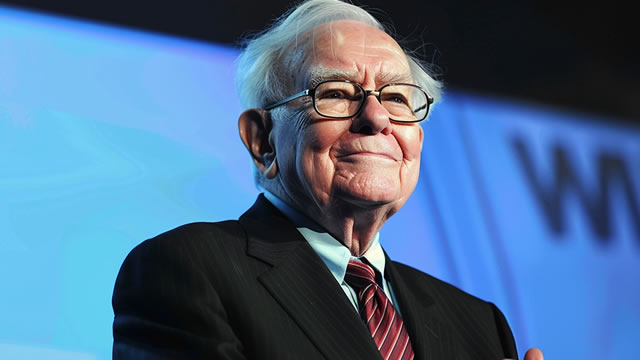
‘Mr. Buffett, how can I make $30 billion?’: Warren Buffett’s answer reveals his 3 simple investing rules
Yahoo Finance· 2026-01-31 14:00
Core Insights - Warren Buffett emphasizes the importance of investing in small businesses, suggesting that they present overlooked opportunities for growth [7][9] - The majority of Buffett's wealth was accumulated after age 65, highlighting the benefits of long-term investing and the power of compound interest [4][5] - Small-cap stocks are currently valued approximately 30% lower than large-cap stocks, indicating potential for outperformance as market conditions evolve [9] Investment Strategies - Buffett advises starting investments early to leverage compound interest, likening it to a snowball effect [5] - The investment landscape has shifted, with platforms like Acorns making it easier for individuals to invest small amounts of money into diversified portfolios [2] - Identifying small-cap stocks can be challenging, but platforms like Moby provide expert research to assist investors in making informed decisions [10][11] Market Trends - The valuation gap between small-cap and large-cap stocks is at a 25-year low, suggesting a favorable environment for small-cap investments [9] - Fundrise has disrupted traditional venture capital by allowing retail investors to access portfolios of private tech companies with investments starting as low as $10 [13] Risk Management - Buffett's investment strategy focuses on industries he understands, primarily consumer goods and financial services, to mitigate risk [16] - Investors are encouraged to stick to their circle of competency to reduce risk and avoid speculation [15][16]
GameStop CEO Ryan Cohen Targets $100 Billion Valuation With 'Big' Acquisition Plan: 'Genius Or...Totally Foolish'
Yahoo Finance· 2026-01-31 13:31
Core Viewpoint - GameStop Corp. aims to transform from an $11 billion company into a $100 billion-plus business, expanding beyond video games and collectibles [1]. Group 1: Acquisition Strategy - CEO Ryan Cohen is considering a significant acquisition of a publicly traded company, likely in the consumer or retail sector [2]. - The potential acquisition targets are described as "big," with Cohen acknowledging the high stakes involved, which could either be "genius or totally, totally foolish" [3]. Group 2: Investor Insights - Renowned investor Michael Burry has recently disclosed a stake in GameStop, suggesting that the company should follow Warren Buffett's strategy by using its cash reserves for significant acquisitions [4]. - Burry believes that if Cohen invests $10 billion or more in a strong business, such as an insurer, the stock could rise [5].

Warren Buffett's surprising investing preference: silver, not gold
Yahoo Finance· 2026-01-31 03:03
Group 1 - Warren Buffett views gold as a hedge against fear rather than a productive investment, stating that it does not generate cash flow or have practical utility [1][2] - Buffett has historically preferred silver over gold, with Berkshire Hathaway acquiring 129.7 million ounces of silver between 1997 and 1998, which represented less than 2% of its investment portfolio at that time [3][4] - The silver holdings amounted to approximately 25% of the world's annual production when built, and Buffett later expressed regret for selling too soon, indicating a strong belief in silver's potential [5] Group 2 - The current silver market is experiencing a structural deficit for the fifth consecutive year, with cumulative shortfalls since 2021 nearing a full year of global mine output [7] - Industrial demand for silver reached about 680 million ounces in 2024 and is projected to remain high through 2026, driven by sectors such as solar energy, electric vehicles, grid upgrades, and data center expansions [8]
A Legendary Stock Picker is Retiring This Year. Here's What He's Looking For in 2026.
Investopedia· 2026-01-30 17:00
His ability to consistently beat the market has drawn big money, with the Contrafund's assets under management recently above $176 billion. Danoff, however, plans to step away from the fund: He is set to retire at year's end, though he will stay with Fidelity in an advisory capacity, per documents filed this week. What makes Danoff a remarkable portfolio manager is that "his success wasn't narrowly confined to one part of his career," Morningstar analyst Robby Greengold told Investopedia. Some portfolio man ...

Warren Buffett Broke One of His Most Important Investing Rules, and It's Cost Berkshire Hathaway $16 Billion (and Counting)
The Motley Fool· 2026-01-30 09:06
Core Insights - Berkshire Hathaway, under Warren Buffett's leadership, has reached a market cap of $1 trillion, marking a significant milestone for the company [1] - Buffett's investment philosophy has historically yielded an aggregate return of nearly 6,100,000% for Berkshire Hathaway's Class A shares [2] - A recent investment misstep has cost Berkshire Hathaway approximately $16 billion, highlighting a rare deviation from Buffett's investment principles [3][10] Investment Philosophy - Buffett's long-term investment mindset emphasizes holding stakes in businesses for years or decades, recognizing that economic cycles favor high-quality companies over time [5] - Value investing is central to Buffett's approach, prioritizing good deals on excellent businesses rather than low prices on mediocre companies [7] - Competitive advantages and sustainable moats are key traits in Buffett's investment choices, focusing on industry leaders [8] - Trust in corporate management and a robust capital-return program are also critical components of Buffett's investment strategy [9] Recent Investment Activity - In Q3 2022, Berkshire Hathaway purchased 60,060,880 shares of Taiwan Semiconductor Manufacturing (TSMC) for $4.12 billion, capitalizing on its unique position in the semiconductor industry [11] - TSMC's technology is pivotal in the AI revolution, making it a strategic investment during a bear market [12] - However, Buffett sold 86% of the TSMC stake in Q4 2022 and completely exited the position in Q1 2023, a decision that deviated from his long-term investment strategy [13] Market Impact - Buffett's exit from TSMC was influenced by concerns over its location and potential export restrictions following the CHIPS and Science Act [15] - The timing of the exit proved detrimental, as TSMC's growth accelerated due to high demand for Nvidia's GPUs, leading to significant appreciation in its stock price [16] - Had Berkshire Hathaway retained its initial stake in TSMC, it would be valued at nearly $20 billion as of January 2023, resulting in a loss of approximately $16 billion due to the premature sale [17] Future Outlook - The new CEO, Greg Abel, is expected to adhere to Buffett's investment principles, maintaining a long-term investment mindset as a cornerstone of Berkshire Hathaway's strategy moving forward [18]

3 Reasons Why Warren Buffett Would've Loved Chipotle Stock
Yahoo Finance· 2026-01-29 17:25
During his time as CEO of Berkshire Hathaway, Warren Buffett directed capital allocation moves that propelled a 20% compound annual return. The Oracle of Omaha's success at managing the public equities portfolio was a big factor. Average investors should be looking at these holdings to find new ideas. Buffett is familiar with the restaurant sector, as Berkshire previously owned Restaurant Brands International. However, he never took a stake in Chipotle Mexican Grill (NYSE: CMG), a booming chain within the ...

$16 Million Small-Cap Signal: Why a 113,000-Share ETF Buy Matters After a Volatile Year
Yahoo Finance· 2026-01-29 16:01
Core Viewpoint - TBH Global Asset Management has increased its investment in the iShares S&P Small-Cap 600 Growth ETF (NASDAQ: IJT) by purchasing 113,339 shares, valued at approximately $16.04 million, indicating a strategic shift towards small-cap growth exposure in its portfolio [2][3]. Group 1: Transaction Details - TBH Global Asset Management's purchase of 113,339 shares of IJT reflects a significant increase in its position, with a net position change of $10.62 million, which includes both trading activity and price movement [2]. - The fund's quarter-end stake in IJT was valued at $11.18 million prior to this transaction [2]. Group 2: ETF Overview - The iShares S&P Small-Cap 600 Growth ETF has an asset under management (AUM) of $6.29 billion and was priced at $148.74 as of January 28 [4][6]. - The ETF offers a dividend yield of 0.9% and has achieved a 1-year total return of 7.01% [4]. Group 3: Investment Strategy - IJT aims to track the performance of the S&P SmallCap 600 Growth Index, providing diversified exposure to U.S. small-cap growth equities through a rules-based, passively managed strategy [8]. - The fund maintains at least 80% of its assets in index constituents, with the remainder in cash equivalents or derivatives for efficient portfolio management [8]. Group 4: Portfolio Implications - The addition of small-cap growth exposure through IJT alters the risk profile of TBH Global's portfolio, which is primarily focused on large-cap and mega-cap stocks [9]. - This strategic move is seen as a way to fill a structural gap in the portfolio, complementing existing holdings in major companies like Apple and Alphabet [11]. Group 5: Market Context - Small-cap growth stocks typically perform well when rate volatility stabilizes, suggesting a favorable environment for this investment strategy [11]. - The ETF provides access to nearly 350 U.S. small-cap growth companies across various sectors, which is particularly relevant as small caps have lagged behind larger companies in recent cycles [10].
Berkshire Hathaway: Greg Abel May Create Generational Wealth - My Strategy (NYSE:BRK.A)
Seeking Alpha· 2026-01-28 19:36
I wrote a bearish article Berkshire Hathaway Inc. ( BRK.A , BRK.B ) in July 2025, as I believed the stock would not perform well after the company announced Warren Buffett would retire. I saw this asLong-time stock market investor focused on strategic buying opportunities with dividend and value stocks. This investment strategy has resulted in a near 5 star rating on Tipranks.com and over 9,000 followers on Seeking Alpha. Follow me on Twitter for my latest trading ideas: @Hawkinvest1Analyst’s Disclosure: I/ ...
As Berkshire Exits Its Kraft Heinz Position, Is the Stock a Sell?
Investing· 2026-01-28 12:29
Core Viewpoint - Berkshire Hathaway's new CEO Greg Abel has initiated the sale of its nearly 28% stake in Kraft Heinz, which amounts to approximately 325 million shares, following a poor performance of KHC shares in 2025 and a decline of over 3% at the start of the year [1] Company Performance - Kraft Heinz has consistently met earnings expectations since Q4 2018, but profitability remains a concern as evidenced by a significant loss of over $7.8 billion in Q2 2025, primarily due to a $9.3 billion non-cash impairment charge and declining sales driven by inflation [2][3] - The company is burdened with over $19 billion in long-term debt as of Q3 2025, which is significantly higher than its cash position of $2.1 billion, indicating financial strain [4] Market Conditions - A weak labor market and shifting consumer preferences have led consumers to favor private-label products over brand names, impacting Kraft Heinz's sales [5] Strategic Changes - Kraft Heinz plans to split into two independent companies by the second half of 2026, focusing on different product lines: Global Taste Elevation Co. for sauces and condiments, and North American Grocery Co. for meals and snacks [6] - The split has faced criticism, including from Warren Buffett, due to the lack of a shareholder vote on the decision [7] Financial Health - Kraft Heinz is expected to report revenue contraction for the ninth consecutive quarter, contributing to a negative net margin of 17.35%, indicating that expenses exceed earnings [8] - The company's dividend payout ratio is nearly -43%, suggesting insufficient earnings to cover dividend payments, which may lead to future cuts despite an attractive yield of 6.59% [9] Analyst Sentiment - Analyst sentiment towards Kraft Heinz is generally negative, with only one out of 23 analysts rating it a Buy, while 17 rate it a Hold and five rate it a Sell, resulting in a consensus Reduce rating [10] - The average 12-month price target for Kraft Heinz shares is $26.16, indicating a potential upside of just over 11% from current levels, with the company ranking 73rd out of 149 in the consumer staples sector [11] Ownership and Short Interest - Institutional ownership remains strong at over 78%, but this is expected to decline following Berkshire Hathaway's sale of its shares [12] - Current short interest stands at 4.37%, indicating that bearish sentiment exists among investors anticipating further downside [12]

