Chevron

Search documents
Chevron to join Nigeria oil licence auction, plans rig deployment in 2026
Reuters· 2025-12-05 15:53
Core Viewpoint - Chevron is set to participate in Nigeria's upcoming oil licensing round and plans to deploy a drilling rig by late 2026 to expand its operations in Africa's leading energy producer [1] Company Actions - Chevron will engage in Nigeria's next oil licensing round [1] - The company intends to deploy a drilling rig in late 2026 [1] Industry Context - Nigeria is recognized as Africa's top energy producer [1]


Chevron Approves $2B Gorgon Stage 3 To Boost Australian Gas Supply
Benzinga· 2025-12-05 15:30
Core Viewpoint - Chevron Corporation has approved the Final Investment Decision for the Gorgon Stage 3 project, which is expected to enhance gas supply and support LNG exports from Western Australia [1][5]. Project Details - The Gorgon Stage 3 project has a budget of AU$3 billion (approximately $2 billion) and will connect the Geryon and Eurytion gas fields to existing subsea infrastructure and Barrow Island processing facilities [2][3]. - This project will include the addition of three subsea manifolds, a 35-kilometre production flowline, and the drilling of six wells in waters approximately 1,300 meters deep [3]. Production Capacity - The Gorgon facility can supply up to 300 terajoules of gas per day and produce 15.6 million tonnes of LNG annually, contributing significantly to the Western Australian market [4]. Management Insights - Chevron Australia President Balaji Krishnamurthy emphasized that the project will sustain output at Gorgon, ensuring long-term domestic gas supply and supporting LNG exports to Asia [5]. - The development of the Geryon and Eurytion fields will enhance gas supply reliability and maintain thousands of skilled jobs in Australia [6]. Financial Outlook - Chevron expects an organic capital expenditure range of $18–$19 billion for consolidated subsidiaries in 2026, with upstream investments around $17 billion [6]. - Nearly $6 billion of the upstream investment will be allocated to U.S. shale and tight plays in the Permian, DJ, and Bakken basins, supporting U.S. production of over two million barrels of oil equivalent per day [7].

Chevron Greenlights Major Investment for Gorgon Stage 3 LNG Expansion
ZACKS· 2025-12-05 15:21
Core Insights - Chevron Corporation and its partners have sanctioned the $2 billion Gorgon Stage 3 development, crucial for extending the life and output of one of Australia's largest LNG projects [1][8] - The Gorgon Stage 3 project aims to sustain LNG exports and enhance domestic energy security for decades [1] LNG Supply Development - Gorgon Stage 3 will connect the offshore Geryon and Eurytion gas fields to Gorgon's existing facilities on Barrow Island, involving the installation of three subsea manifolds and a 35-kilometre production flowline [2] - The project includes drilling six wells across two offshore fields located approximately 100 kilometers northwest of Barrow Island, in water depths of around 1,300 meters [2] Strategic Importance - Gorgon is one of the world's largest LNG ventures, with a three-train LNG facility capable of producing 15.6 million tons annually and a domestic gas plant supplying 300 terajoules per day [4] - The project is expected to have a lifespan of over 40 years, contributing significantly to Australia's economy by providing reliable energy [4] - The Stage 3 project will ensure continued supply to existing LNG trains and the domestic gas plant through the addition of new wells and subsea infrastructure [4] Regulatory and Ownership Structure - The Stage 3 project received regulatory acceptance in November 2024 after public consultation [5] - Gorgon is operated by Chevron (47.3%) and jointly owned by ExxonMobil (25%) and Shell (25%), with Osaka Gas, JERA, and MidOcean holding the remaining stake [5]
Chevron-operated Gorgon project secures $2 billion investment nod
Reuters· 2025-12-05 01:02
Core Viewpoint - The Australian unit of Chevron Corp has announced a final investment decision on the A$3 billion ($1.98 billion) Gorgon Stage 3 project, indicating a significant commitment to expanding its operations in Australia [1]. Group 1: Investment Decision - The Gorgon Joint Venture partners have finalized their investment decision, which is a crucial step for the Gorgon Stage 3 project [1]. - The total investment for the Gorgon Stage 3 project is A$3 billion, equivalent to approximately $1.98 billion [1].
Chevron Announces a Disciplined $18-$19B Capex Plan for 2026
ZACKS· 2025-12-04 15:56
Key Takeaways Chevron sets a disciplined 2026 capex plan of $18-$19B, prioritizing high-return projects and efficiency.More than half of CVX's 2026 spending targets U.S. operations, with a major focus on shale and offshore.CVX allocates about $1B to lower-carbon efforts, while affiliate capex supports large petrochemical projects.Chevron Corporation (CVX) has outlined its capital expenditure program for 2026, setting an organic budget range of $18-$19 billion. The plan sits at the lower end of the company’s ...
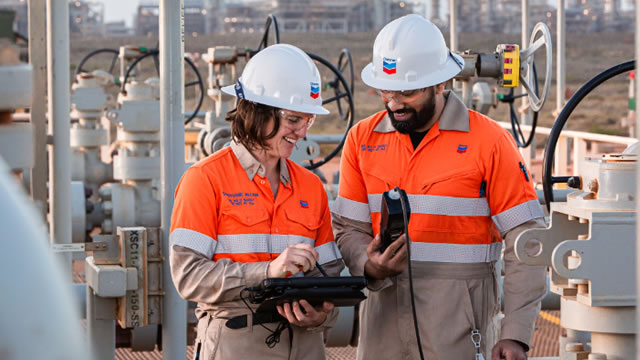
Chevron to spend up to $19 billion next year in focus on US, Guyana oil production
Reuters· 2025-12-03 23:03
Chevron said on Wednesday that capital expenditure for 2026 will be between $18 billion and $19 billion as the oil major focuses on production in the U.S. and investments connected to a recently-acqui... ...

Chevron Announces 2026 Capex Budget of $18 to $19 Billion
Businesswire· 2025-12-03 23:00
Core Viewpoint - Chevron Corporation announced an organic capital expenditure range of $18 to $19 billion for consolidated subsidiaries for 2026, which is at the low end of the long-term guidance range of $18 to $21 billion [1] Capital Expenditure - The expected affiliate capital expenditure for 2026 is projected to be between $1.3 billion and $1.7 billion [1] - The 2026 capital program is designed to focus on the highest-return opportunities while maintaining discipline and improving efficiency [1]

Chevron Initiates Discussions With Syria Over Oil and Gas Exploration
ZACKS· 2025-12-03 18:50
Group 1 - Chevron Corporation (CVX) and the Syrian Petroleum Company are exploring collaboration on offshore oil and gas fields in Syria [1][9] - Qatar's UCC Holding is involved in discussions, having previously led a consortium that signed a $7 billion Memorandum of Understanding for power generation projects in Syria [2] - The Syrian civil war has severely damaged the country's energy infrastructure, with natural gas production dropping from 8.7 billion cubic meters in 2011 to 3 billion cubic meters in 2023 [3][4] Group 2 - Recent improvements in gas supply from Azerbaijan and Qatar are aiding Syria's energy recovery efforts [3] - The discussions with Chevron indicate Syria's commitment to rebuilding its energy sector with international partnerships [4] - The capital city, Damascus, has expressed intentions to increase its limited power supply [3]
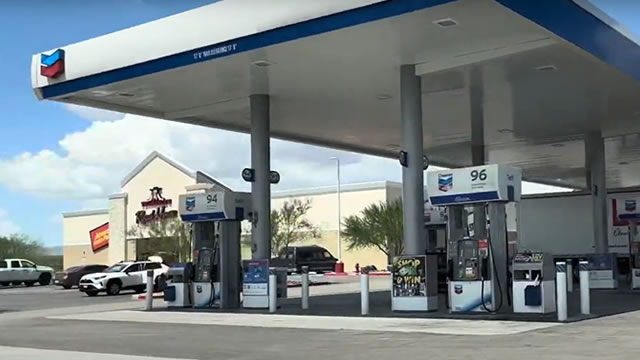
3 Top Dividend Stocks to Buy in December to Boost Your Passive Income in 2026
The Motley Fool· 2025-12-03 18:28
Core Viewpoint - Investing in dividend stocks like Chevron, NNN REIT, and Verizon is a strategic way to generate passive income, especially as these companies have a history of high and steadily rising dividends, making them attractive options for investors looking to boost their income in 2026 [1][13]. Chevron - Chevron pays a quarterly dividend of $1.71 per share, which annualizes to $6.84, resulting in a yield of 4.6%, significantly higher than the S&P 500's yield of 1.2% [2][5]. - The company has increased its dividend for 38 consecutive years, marking the second-longest streak in the oil sector [2]. - Chevron's breakeven level is low, requiring oil prices to average around $50 per barrel to sustain its dividend and capital spending, allowing it to generate substantial free cash flow even when crude prices are lower [3]. - The recent acquisition of Hess and ongoing capital investments are expected to drive over 10% compound annual free cash flow growth through 2030, supporting continued dividend increases [5]. NNN REIT - NNN REIT offers a quarterly dividend of $0.60 per share, equating to an annualized dividend of $2.40 and a yield of 5.9% [6][7]. - The REIT has a 36-year history of increasing its dividend, the third-longest streak in its sector [6]. - NNN REIT's business model focuses on freestanding retail properties with long-term, triple net leases, providing stable rental income as tenants cover all operating costs [8]. - The REIT conservatively pays out about 70% of its adjusted funds from operations (FFO) in dividends, allowing for reinvestment in new properties and maintaining a conservative balance sheet for financial flexibility [9]. Verizon - Verizon recently raised its quarterly dividend to $0.69 per share, resulting in an annualized dividend of $2.68 and a yield of 6.8% [10]. - The company has a 19-year streak of increasing its dividend payments [10]. - Verizon generates over $7 billion in excess free cash flow after covering capital expenses and dividends, contributing to a strong balance sheet [11]. - The anticipated $20 billion acquisition of Frontier Communications is expected to enhance Verizon's fiber network and customer service capabilities, further supporting dividend growth [12].

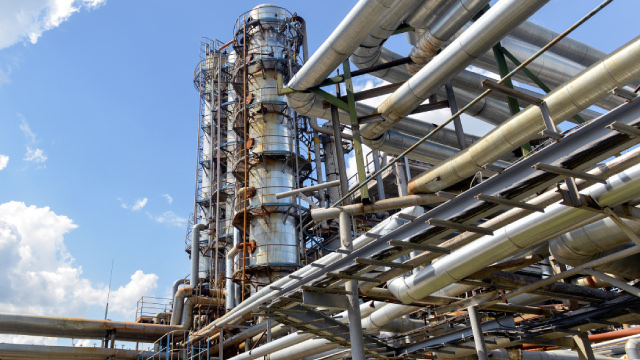
The 2 Best High-Yield Energy Stocks in Vanguard High Dividend Yield ETF
The Motley Fool· 2025-12-03 17:30
Core Insights - The Vanguard High Dividend Yield ETF offers a diversified portfolio of U.S. stocks that pay dividends, focusing on the highest yielding 50% of the index, resulting in a yield of 2.5%, which is approximately double that of the S&P 500 [3][4]. Group 1: ETF Overview - The Vanguard High Dividend Yield ETF selects U.S. stocks based on dividend yield and weights them by market capitalization, providing a straightforward approach to investing in high-yield stocks [3][4]. - The ETF includes over 560 holdings, offering significant diversification for investors seeking dividend-focused alternatives to S&P 500 index funds [4]. Group 2: Energy Sector Investments - Two prominent holdings in the ETF are ExxonMobil and Chevron, both of which are integrated energy companies with substantial market capitalizations of $487 billion and $303 billion, respectively [8][10]. - ExxonMobil has a dividend yield of 3.47% and has increased its dividend for 43 consecutive years, while Chevron offers a higher yield of 4.55% and has maintained its dividend for 38 years, making both companies strong candidates for long-term dividend investors [9][10]. Group 3: Financial Strength - ExxonMobil and Chevron possess strong balance sheets, with low debt-to-equity ratios of 0.16x and 0.22x, respectively, allowing them to manage debt effectively during industry downturns [9][10]. - The ability to add debt during downturns and reduce it when oil prices recover provides a financial cushion for both companies, enhancing their stability in a volatile sector [9].