
Federal Reserve

Search documents
Fed eyes 30% cut in supervision, regulation unit
Yahoo Finance· 2025-11-03 11:44
Core Points - The Federal Reserve plans to reduce its supervision and regulation division's headcount by 30% by the end of 2026, aiming to decrease from 500 to approximately 350 employees [1][3] - The reduction will primarily occur through natural attrition, retirements, and voluntary separation incentives for employees [2] - This initiative is part of a broader strategy to cut the Fed's overall workforce by 10% by 2027 [3] Organizational Changes - The supervision and regulation division will adopt a flatter organizational structure with fewer management layers [3] - The operations unit will be renamed the "business enablement group," which will include a new position focused on industry engagement [7] Focus Shift - The division will concentrate on material risks to banks rather than minor process-related errors that do not impact safety and soundness [5] - This approach aligns with a recent proposal from the Federal Deposit Insurance Corp. to limit penalties to issues that materially affect a bank's risk of failure [6] Criticism - The headcount reduction has faced criticism from Senator Elizabeth Warren, who expressed concerns about the potential undermining of financial stability [7]
X @CoinDesk
CoinDesk· 2025-11-03 05:59
💡 FED: The Fed injected $29.4B into the banking system to ease liquidity concerns, supporting BTC. It's the largest move since 2020, but not QE. What does this mean for crypto? 📈 Find out from the analysis by @godbole17 ...
Bitcoin Eyes Liquidity Race As Fed Injects $29 Billion While China Floods Markets
Yahoo Finance· 2025-11-02 20:21
Core Insights - The Federal Reserve injected $29.4 billion into the US banking system through overnight repo operations, marking the largest single-day move since the dot-com era [1] - China's central bank also executed a record cash infusion to support its domestic banking sector, indicating a global trend towards increased liquidity [1][6] Group 1: Federal Reserve Actions - The Fed's large overnight repo operation reflects growing stress in short-term credit markets, following sharp Treasury sell-offs [2] - This intervention is seen as a response to rising bond yields and expensive funding, aimed at limiting systemic risks [3] - Fed Governor Christopher Waller's call for a potential interest rate cut in December suggests a shift towards a more accommodative monetary policy [3] Group 2: Market Reactions and Expectations - Market expectations for a third rate cut in 2025 have decreased from 90% to 65%, indicating shifting sentiments regarding future monetary policy [4][5] - If the Fed does not meet these expectations, there could be a sharp downturn in markets, as investors have already priced in easier policies [5] Group 3: China's Economic Measures - The People's Bank of China increased liquidity to support economic growth amid softening demand, addressing issues like deflation and a weakened property sector [6]
Bessent Says Some ‘Sectors' Of Economy Are In Recession
Forbes· 2025-11-02 15:35
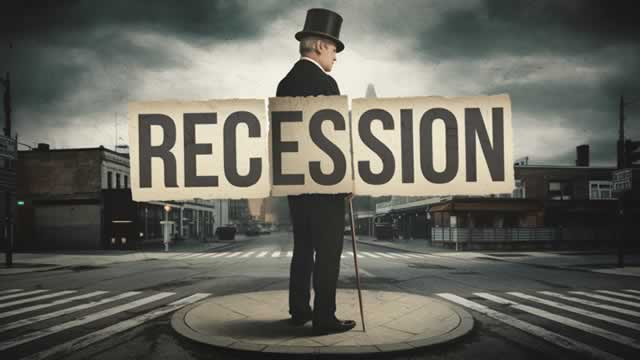
ToplineTreasury Secretary Scott Bessent said Sunday he believes some sectors of the economy are in a recession or at risk of one, blaming the Federal Reserve for not cutting interest rates fast, just one day after newly appointed Federal Reserve Governor Stephen Miran warned of high interest rates triggering a recession in an interview with The New York Times.Bessent blamed the Federal Reserve for not cutting interest rates fast enough.AFP via Getty Images ...

X @Chainlink
Chainlink· 2025-11-01 22:07
At the @federalreserve, @SergeyNazarov outlines the fragmentation issues institutions face as more private and public chains are deployed:More chains → Siloed capital → Increased market risk → Restricted market growthHow Chainlink is solving this issue for the world's largest financial organizations ↓ ...
Larry Summers on the Fed’s Cut and a Tariff Truce with China
Bloomberg Television· 2025-11-01 12:00
Federal Reserve Policy - The Federal Reserve's decision to cut rates for the second time was viewed as the right move, prioritizing inflation control over unemployment concerns [1][2] - The Fed signaled a return to data dependence, avoiding commitment to further rate cuts [2] - Losing credibility around inflation, especially with massive deficits and political pressure, poses a greater risk than a potential slowdown [3] - Disagreements within the Fed, reflected in dissents, highlight the confusion in the economic picture [9][10] - The Fed will stop the roll off of the balance sheet as of December 1st [11] Inflation and Tariffs - Arguments suggesting that inflation is near the 2% target if tariffs are excluded are viewed skeptically, reminiscent of the "transitory inflation" idea [6][7][8] - Cherry-picking components that have risen is not considered a sound method for analyzing inflation [9] US-China Relations - Avoiding a spiral into massive confrontation and economic conflict with China is a positive outcome [16] - The impact of US-China relations on the US economy will not be determined by soybean sales [17] - Technology, particularly competition in artificial intelligence, remains a key issue in US-China relations [17] - Export controls on advanced microchips between the US and China present a difficult set of issues, balancing national defense with technological development [19][20]
Banks tap Fed Standing Repo Facility in record numbers amid month-end pressures
Reuters· 2025-10-31 20:24
Core Insights - Federal Reserve liquidity facilities experienced a significant increase in usage, reaching a record level due to month-end pressures [1] Group 1 - The key lending tool utilized by the Federal Reserve saw unprecedented demand, indicating heightened liquidity needs in the market [1]
10-year Treasury yield holds above 4%
CNBC Television· 2025-10-31 19:02
Rick Santelli joining us now from Chicago with the bond report. Rick, I went on like a it was like a 10-second mini rant yesterday, but the the gist was basically this. The Federal Reserve can say and do what it wants. The bond market is the boss and the bond market is going to do what it wants and it wanted and wants clearly to take interest rates if not higher, not lower.Yeah, it's a very interesting dynamic, especially for those that are in the current administration or those that are looking towards hou ...
Fed's Schmid Voted Against Rate Cut Because of Rising Inflation Concerns
Bloomberg Television· 2025-10-31 15:29
10 YEAR YIELDS JUST FLAT HERE, AROUND 4.1%. TURNING TO THE FED, KANSAS CITY PRESIDENT GIVING HIS REASON FOR THE REASON WHY HE DESCENTED. MICHAEL MCKEE IS WITH US NOW.MICHAEL: THE FED'S BLACKOUT PERIOD ENDING LAST NIGHT AND SCHMIDT DISAGREES WITH THE FED LUGS AT THE BALANCE OF RISK. HE SAID I DO NOT THINK THE POLICY RATE WILL NOT MUCH STRESS NECESSARY LABOR MARKET THAT ARISES FROM STRUCTURAL CHANGES. HOWEVER, A CUT COULD HAVE LONGER LASTING INFLATION IF THE FED'S COMMITMENT TO ITS 2.% OBJECTIVE COMES INTO QU ...

Jerome Powell's Wednesday Press Conference Shows Why He Must Step Down
Forbes· 2025-10-31 13:25
Core Viewpoint - The Federal Reserve's current operational flaws necessitate a significant overhaul and new leadership, as highlighted by Jerome Powell's recent press conference following the central bank's policymaking meeting [1]. Group 1: Interest Rate Decisions - The Fed's decision to cut interest rates by 0.25% was anticipated, but Powell's indication that another cut next month is uncertain surprised many, citing economic uncertainty exacerbated by a government shutdown [2]. - Powell emphasized the mixed signals in the economy, with strong consumer spending but unstable labor markets, likening the situation to "driving in the fog" [2]. Group 2: Economic Understanding - The Fed's belief that prosperity leads to inflation is fundamentally flawed, as it creates a bias against a robust economy, which distorts market signals and hinders proper economic functioning [3]. - The central bank's attempts to suppress prices disrupt the natural supply and demand dynamics essential for a healthy economy [3]. Group 3: Monetary Policy and Dollar Stability - The Fed's primary responsibility should be to maintain a stable dollar, which is currently weak, yet Powell did not address this issue during his remarks [4]. - The Fed's balance sheet has ballooned to 21% of GDP, significantly higher than the pre-2008 level of 6%, indicating an excessive accumulation of securities [5]. Group 4: Balance Sheet Management - Powell announced that the Fed will cease reducing its balance sheet size without providing a credible rationale, suggesting that the institution values its power over sound monetary policy [6]. - The Fed's holdings of $6.6 trillion in securities grant it substantial influence over the financial marketplace, affecting credit availability across sectors [6]. Group 5: Foreign Reserves and Inflation Target - Approximately 40% of the reserves on which the Fed pays interest are from foreign banks, implying that American taxpayers are subsidizing these institutions [7]. - The 2% inflation target set by the Fed lacks a solid foundation, as it appears to have been arbitrarily determined [7].
