
Whole Foods

Search documents
Wall Street giants like Blackstone are betting big on the US rental housing market as demand skyrockets
Yahoo Finance· 2025-11-13 10:05
Core Insights - The real estate investment platform Mogul offers fractional ownership in high-quality rental properties, providing investors with monthly rental income, appreciation, and tax benefits without the burdens of traditional property management [2][7] - The build-to-rent model is gaining traction, with the U.S. Census Bureau reporting that the share of build-to-rent homes has doubled since 2021, now accounting for 10% of all new homes [4][5] - Major institutional investors like Blackstone, Invitation Homes, and Pretium Partners are actively investing in the build-to-rent market, indicating a growing interest in this investment class [4][5] Investment Opportunities - Mogul's platform features an average annual Internal Rate of Return (IRR) of 18.8%, with cash-on-cash yields averaging between 10% and 12% annually [1] - Investments on the platform typically range from $15,000 to $40,000 per property, with offerings often selling out in under three hours [1] - Arrived, another investment platform, allows retail investors to buy shares in existing rental and vacation homes, starting with as little as $100, thus lowering the barrier to entry for real estate investment [9][11] Market Trends - The affordability crisis in housing is exacerbated by rising prices and supply shortages, with the median sales price for an American home reaching $410,800 as of July 2025, while median household income has only just recovered to 2019 levels [6][16] - Elevated mortgage rates, currently around 6.22%, further challenge homeownership, making rental investments more appealing [16] - The trend of purpose-built rental construction is also observed in Canada, where developers are focusing on rental properties over new residential condominiums [13]


Amazon plans to absorb Whole Foods' entire workforce as part of 'Project Cremini'
Business Insider· 2025-11-12 20:10
Core Insights - Amazon is integrating Whole Foods' workforce into its own systems as part of Project Cremini, aiming to unify over 100,000 employees by next year [1][3][12] - This integration will standardize performance reviews, workplace tools, and payroll for all Whole Foods employees, aligning them more closely with Amazon's operations [2][3] - The initiative is part of a broader strategy to enhance growth at Whole Foods, which has faced challenges since its $13.7 billion acquisition in 2017 [3][10] Company Strategy - Whole Foods CEO Jason Buechel is leading the integration efforts, promoting a "One Grocery" mindset to streamline operations and reduce internal bureaucracy [4][6] - Amazon's grocery business now serves over 150 million customers and has seen significant growth in everyday essentials, which grew nearly twice as fast as other categories in the U.S. in the first half of 2025 [5][13] - The consolidation of vendor-management teams aims to create a single, efficient grocery business, projected to generate at least $94 million in additional profit [7][8] Operational Changes - Amazon has launched an internal project called "Fusion" to deliver grocery products from both Fresh and Whole Foods stores, enhancing operational efficiency [8] - A new Whole Foods store concept has been introduced, featuring everyday items alongside organic goods, further aligning the two businesses [9] - Employees are encouraged to adopt a "one grocery mindset," with Buechel using a "flying formation" metaphor to emphasize the importance of interconnectedness within the grocery business [11][12] Financial Performance - Amazon's grocery and everyday goods business generated over $100 billion in gross merchandise sales in the past year, with a notable portion from nonperishable items [13] - Online grocery customers exhibit higher shopping frequency and return rates compared to those purchasing nonperishable goods, indicating a shift in consumer behavior [13]


X @The Wall Street Journal
The Wall Street Journal· 2025-11-12 11:38
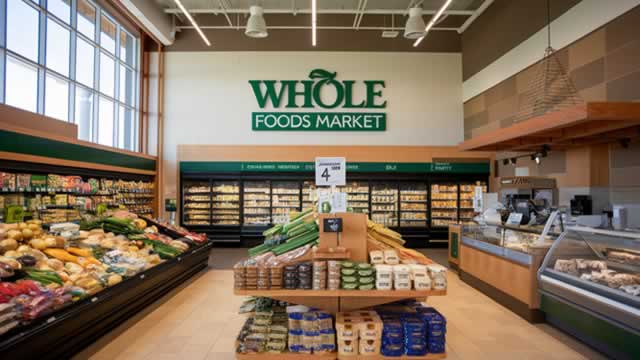
Retail Industry Trend - The "Amazonification" of Whole Foods is accelerating [1] - Expect to see items like Red Bull and Spicy Sweet Chili Doritos near the exits [1]
X @The Wall Street Journal
The Wall Street Journal· 2025-11-09 10:26
The Amazonification of Whole Foods is ramping up. Cue the Red Bull and Spicy Sweet Chili Doritos by the exit. https://t.co/72Kczh7JLP ...
Tiny 384-square-foot Silicon Valley home sold for a staggering $2 million — 3 alternative ways to invest in real estate
Yahoo Finance· 2025-11-06 10:17
Core Insights - The real estate market in Silicon Valley is characterized by high property values, exemplified by a one-bedroom home in Cupertino listed at $1.7 million and sold for $2 million, highlighting the significance of land value in the area [2][3] Real Estate Market Trends - The property in question is located in a top-tier school district and is surrounded by homes valued between $4 million and $5 million, indicating strong investment potential due to its location [3] Investment Strategies - Real estate investment does not always necessitate purchasing a home; alternative strategies such as crowdfunding platforms are available, allowing investors to participate in real estate projects with lower upfront costs [4][5] - Crowdfunding platforms enable investors to own a percentage of various real estate types, including rental properties and commercial buildings, broadening access to real estate investments [5] - Some crowdfunding platforms, like First National Realty Partners (FNRP), require accredited investors and have a minimum investment threshold of $50,000, focusing on necessity-based commercial real estate [6][7]
X @The Wall Street Journal
The Wall Street Journal· 2025-11-06 07:16
Retail Industry Trend - The "Amazonification" of Whole Foods is accelerating [1] - Expect to see items like Red Bull and Spicy Sweet Chili Doritos near the exits [1]
X @The Wall Street Journal
The Wall Street Journal· 2025-11-04 23:43
Retail Industry Trend - The "Amazonification" of Whole Foods is accelerating [1] - Suggests integration of Amazon's strategies into Whole Foods' operations [1] Product Placement Strategy - Red Bull and Spicy Sweet Chili Doritos are being placed near exits [1] - Implies a focus on impulse purchases and convenience for customers [1]
Jeff Bezos Was Once Told By A Harvard Student To Sell Amazon To Barnes & Noble And 'Get Out': The Entrepreneur Did This Instead
Yahoo Finance· 2025-11-03 18:01
Core Insights - Amazon.com Inc. has evolved from a young e-commerce startup in 1997 to a global retail powerhouse, significantly expanding into various sectors including cloud computing, advertising, logistics, entertainment, and devices, while Barnes & Noble has focused on reviving its brick-and-mortar presence [2][3][5] Company Evolution - In 1997, skepticism surrounded Amazon's potential, with advice suggesting it should sell to Barnes & Noble, which was a dominant player at the time [2][3] - Amazon chose to invest in technology and infrastructure, launching key services like Amazon Prime in 2005 and Amazon Web Services in 2006, which transformed enterprise computing [5][6] - The acquisition of Whole Foods in 2017 and the MGM deal in 2022 further diversified Amazon's offerings, particularly in groceries and streaming content [5] Market Position - Amazon has established itself as a major operator across multiple industries, while Barnes & Noble is exploring an IPO after a decade of declining sales, indicating a shift in market dynamics [3][4]
X @The Wall Street Journal
The Wall Street Journal· 2025-11-02 16:36
Retail Industry Trend - The "Amazonification" of Whole Foods is accelerating [1] - Expect changes such as the introduction of products like Red Bull and Spicy Sweet Chili Doritos near the exits [1]
X @The Wall Street Journal
The Wall Street Journal· 2025-11-02 01:52
The Amazonification of Whole Foods is ramping up. Cue the Red Bull and Spicy Sweet Chili Doritos by the exit https://t.co/Py60iP6pde ...