Rivian Automotive

Search documents
Rivian's Q2 Earnings Miss Expectations, Revenues Rise Y/Y
ZACKS· 2025-08-15 14:30
Core Insights - Rivian Automotive (RIVN) reported a second-quarter 2025 loss of 80 cents per share, missing the Zacks Consensus Estimate of a loss of 65 cents per share but showing improvement from a loss of $1.21 in the same period last year. Revenues reached $1.3 billion, exceeding the Zacks Consensus Estimate of $1.26 billion and reflecting a year-over-year increase of 12.5% driven by growth in software and services revenues [1][9]. Q2 Highlights - Total production for Rivian in the reported quarter was 5,979 units, a decrease from 9,612 units in the year-ago quarter. The company delivered 10,661 units, down from 13,790 units a year ago [2]. Financial Performance - The total gross loss for the quarter was $206 million, an improvement from a gross loss of $451 million in the prior-year quarter. The gross margin for the reported quarter was negative 16%. Adjusted operating expenses totaled $681 million, slightly up from $676 million in the prior-year quarter. Adjusted loss before interest, taxes, depreciation, and amortization was $667 million, significantly better than the $857 million loss in Q2 2024 [3]. Cash Flow and Expenditures - Net cash provided by operating activities for the quarter was $64 million, compared to $754 million used in the prior-year quarter. Capital expenditures for Q2 were $462 million, up from $283 million in the same period last year. Free cash outflow for the quarter was $398 million [4]. Segment Performance - The Automotive segment generated revenues of $927 million, down 13.7% year over year, primarily due to lower sales of first-generation R1 vehicles and vans. The total cost of revenues for this segment was $1,262 million, down 16.7% year over year, resulting in a gross loss of $335 million compared to a gross loss of $441 million in the prior-year quarter [5]. - The Software and Services segment recorded revenues of $376 million, more than tripling year over year, driven by new vehicle electrical architecture, software development services, and increased repair and maintenance services. The total cost of revenues for this segment was $247 million, more than doubling year over year, leading to a gross profit of $129 million compared to a loss of $10 million in the same quarter of 2024 [6]. Financial Position - As of June 30, 2025, Rivian had $4.81 billion in cash and cash equivalents, down from $5.29 billion as of December 31, 2024. Long-term debt stood at $4,436 million, slightly down from $4,441 million at the end of 2024 [7]. 2025 Guidance - Rivian updated its guidance for the full year 2025, expecting to deliver between 40,000 to 46,000 vehicles. The adjusted EBITDA loss is projected to be between $2 billion and $2.25 billion, wider than the previous guidance of a loss of $1.7 billion to $1.9 billion. Capital expenditure expectations remain between $1.8 billion and $1.9 billion [8].


Rivian: The Path To R2 Is Secure
Seeking Alpha· 2025-08-14 15:31
Market Sentiment - Investors are showing signs of nervousness during the Q2 earnings season despite the rising S&P 500 index [1] - The market appears to be converging towards safer investments, indicating a cautious sentiment among investors [1] Analyst Background - Gary Alexander has extensive experience in covering technology companies and has worked in Silicon Valley, providing insights into current industry themes [1] - He has been a contributor to Seeking Alpha since 2017 and has been quoted in various web publications, indicating his influence in the investment community [1]
Rivian Faces a Dreaded Triple Whammy. Can the Stock Recover?
The Motley Fool· 2025-08-10 22:14
Core Viewpoint - Rivian is facing significant challenges in 2025 due to the removal of regulatory credits, tariffs impacting costs, and the elimination of the federal EV tax credit, which collectively threaten its revenue and delivery targets [1][15]. Financial Performance - Rivian reported a 13% increase in revenue to $1.3 billion and a narrowing net loss of $1.1 billion compared to $1.5 billion the previous year [2]. - The company reaffirmed its delivery guidance of 40,000 to 46,000 vehicles for the year [2]. - Full-year adjusted EBITDA loss is now expected to be between $2 billion and $2.25 billion, worse than the prior forecast of $1.7 billion to $1.9 billion [2]. Regulatory Changes - The Trump administration's removal of penalties for not meeting emissions standards has eliminated the incentive for other automakers to purchase regulatory credits from Rivian, leading to a projected revenue drop from $300 million to $160 million in 2025 [4]. - The removal of the $7,500 federal EV tax credit is expected to negatively impact long-term demand for Rivian's vehicles, making them more expensive [10]. Tariffs and Trade Regulations - Current tariffs on imported auto parts are raising costs and eroding margins for Rivian, contributing to supply chain disruptions [6]. - Rivian produced under 6,000 vehicles in the last quarter, a significant drop from nearly 14,000 in the prior year [6]. - Management anticipates that tariffs will negatively impact cash flow and increase vehicle costs by a couple thousand dollars per unit for the remainder of 2025 [7]. Market Demand Dynamics - The anticipation of the tax credit's removal created a pull-forward effect, leading to increased EV purchases before the deadline, but this may result in a demand lull in the fourth quarter [12]. - Rivian needs a strong second half of the year to meet its delivery targets, with the third quarter expected to be crucial for demand and deliveries [13]. Long-term Outlook - The combination of lost revenue from regulatory credits, tariffs, and the removal of the federal tax credit presents a challenging environment for Rivian [15]. - The company's future heavily relies on the successful launch of new models, particularly the R2, which is critical for recovery [15].
Rivian Investors Face a Real Setback
The Motley Fool· 2025-08-10 01:05
Core Viewpoint - Rivian faces significant challenges in its second quarter, including sluggish sales and the impact of tariffs on imported auto parts, alongside a critical setback related to the loss of revenue from zero-emission credits [1][10]. Q2 Financial Performance - Rivian's second-quarter revenue increased by 13% year-over-year to $1.3 billion, with a net loss of $1.1 billion, an improvement from the previous year's loss of $1.5 billion [2]. - The adjusted earnings per share were reported at a loss of $0.97, which was worse than analysts' expectations of a loss of $0.80 per share [2]. - The company reaffirmed its delivery guidance for 2025, expecting to deliver between 40,000 to 46,000 vehicles, although a strong performance in the second half of the year is necessary to meet this target [2]. Gross Loss and EBITDA Forecast - Rivian's gross loss for the second quarter was $206 million, an improvement from the prior year's loss of $451 million, but still disappointing as investors hoped for gross-profit positivity for the full year [3]. - The adjusted EBITDA loss forecast for the full year was lowered to between $2 billion and $2.5 billion, compared to the previous forecast of $1.7 billion to $1.9 billion [3]. Zero-Emission Credits Revenue - Rivian generates a significant portion of its revenue from selling zero-emission credits, which are crucial for young electric vehicle manufacturers [5][10]. - The removal of the emissions penalty by the administration has eliminated the incentive for automakers to purchase these credits, leading to a projected revenue drop from $300 million to approximately $160 million for 2025 [9][10]. - This loss of revenue from zero-emission credits is a major setback for Rivian, potentially impacting its ability to achieve gross profits in 2025 [10]. Future Outlook - Despite the setback from lost revenue, Rivian's future largely depends on the success of its upcoming R2 electric SUV, with production expected to begin in the first half of 2026 [11]. - If the R2 is successful, it may mitigate concerns over lost revenue and profits from zero-emission credits [11].
Rivian Q2: Another Quarter Of Disappointment
Seeking Alpha· 2025-08-07 13:00
Core Insights - JR Research is recognized as a top analyst in technology, software, and internet sectors, focusing on growth and GARP strategies [1] - The investment approach emphasizes identifying attractive risk/reward opportunities with strong price action to generate alpha above the S&P 500 [1][2] - The investment group Ultimate Growth Investing specializes in high-potential opportunities across various sectors with a focus on robust fundamentals and turnaround plays [3] Investment Strategy - The strategy combines price action analysis with fundamental investing to identify growth opportunities with significant upside potential [2] - The focus is on avoiding overhyped stocks while targeting battered stocks that have recovery potential [2] - The investment outlook typically spans 18 to 24 months for the thesis to materialize [3] Target Audience - The group is designed for investors looking to capitalize on growth stocks with strong fundamentals and attractive valuations [3]
Rivian Takes Earnings Hit—R2 Could Be the Stock's 2026 Lifeline
MarketBeat· 2025-08-06 18:18
Core Viewpoint - Rivian Automotive's recent financial results indicate challenges in profitability and production, with a focus on the upcoming R2 vehicle launch in 2026 as a potential turning point for the company [4][10][14]. Financial Performance - In Q2, Rivian reported revenues of $1.30 billion, a 12% increase year-over-year, slightly exceeding Wall Street's projection of $1.27 billion [4]. - The diluted loss per share was 97 cents, which is a 33% improvement from the same period last year but significantly worse than the expected loss of 65 cents per share [4]. - Rivian's gross margin was -16%, a decline from a positive gross margin of 10% in Q4 2024 and 17% in Q1 2025, with vehicle production falling approximately 57% from Q1 due to supply chain issues [5]. Future Outlook - Rivian updated its adjusted 2025 EBITDA guidance, now expecting a loss between $2 billion and $2.25 billion, which is about $325 million more than the previous estimate [6]. - The company is optimistic about the R2 vehicle, set to launch in the first half of 2026, which is crucial for its long-term success [8][10]. - Rivian has locked in materials costs for the R2, which are 50% lower than those for the R1, potentially aiding in achieving a sustainably positive gross margin [9]. Market Position - Rivian's stock has seen a significant decline, down around 88% since going public, contrasting with the performance of market leaders like Tesla and BYD, which have achieved substantial returns [13][14]. - Analysts view Rivian as significantly undervalued, with price targets reaching as high as $18, despite the current hold rating [2][8].
Rivian's Path To Profitability Gets Longer As Regulatory Changes Squeeze Margins
Benzinga· 2025-08-06 17:49
Core Viewpoint - Rivian Automotive's shares declined following mixed second-quarter results and a downbeat outlook, leading to price target cuts from analysts [1][3][8] Financial Performance - Second-quarter revenue was reported at $1.303 billion, a 5.1% year-over-year increase, slightly exceeding the consensus estimate of $1.29 billion [1] - The adjusted loss was 97 cents per share, wider than the expected 76 cents per share loss, indicating ongoing profitability challenges [2] - Adjusted EBITDA loss was $667 million, significantly worse than the anticipated loss of $492.7 million, attributed to increased investments in the R2 product line and service infrastructure [5][11] Revenue Breakdown - Software and services revenue rose to $376 million from $318 million in the prior quarter, with approximately $182 million from a joint venture with Volkswagen [4] - Regulatory credit revenue was only $3 million, far below the forecast of $107 million, due to legislative changes affecting demand for EPA and CAFE credits [9] Profitability Metrics - Adjusted gross margin fell sharply to 4.9%, down from 26.5% in the previous quarter, primarily due to lower production volumes and fixed cost impacts of approximately $137 million [4] - Core automotive gross margin excluding credits dropped to -36%, compared to an estimated -11%, resulting in a combined gross profit loss of $335 million [10] Guidance and Outlook - Rivian reaffirmed its full-year delivery guidance of 40,000 to 46,000 vehicles but downgraded its profitability outlook, now expecting gross profit to be roughly breakeven, down from a prior forecast of $300 million [5][6] - Adjusted EBITDA guidance was revised to a range of negative $2.25 billion to $2.0 billion, below the consensus estimate of negative $1.88 billion [6][12] Analyst Ratings and Reactions - Wedbush analyst maintained an Outperform rating but lowered the price forecast from $18 to $16, citing regulatory uncertainty and macro headwinds as challenges [3][7] - JP Morgan analyst reaffirmed an Underweight rating and cut the price forecast from $10 to $9, reflecting a more pessimistic view following the wider-than-expected EBITDA loss [8][12] Cash Position - The company maintains sufficient liquidity with $7.5 billion in cash and expected inflows from Volkswagen and DOE loans [13]
Rivian (RIVN) Q2 Revenue Rises 12%
The Motley Fool· 2025-08-06 02:14
Core Insights - Rivian Automotive reported a return to negative gross profit in Q2 2025 after two consecutive positive quarters, despite exceeding revenue expectations [1][6] - The company faced challenges including delivery delays, high operating costs, and supply chain disruptions, leading to a widened forecast for adjusted EBITDA losses [1][12] Financial Performance - Q2 2025 GAAP revenue was $1,303 million, surpassing the consensus estimate of $1,285.89 million by $17.11 million, or 1.33% [1][2] - GAAP gross profit was $(206) million, an improvement of $245 million year-over-year but a decline from the previous quarter's positive gross profit [6] - Adjusted EBITDA loss narrowed to $(667) million from $(857) million year-over-year, while free cash flow improved to $(398) million, a 61.6% reduction in negative outflow compared to Q2 2024 [2][6] Production and Deliveries - Production in Q2 2025 was 5,979 vehicles, a 37.8% decrease from Q2 2024, attributed to supply chain complexities [5] - Deliveries totaled 10,661, reflecting a 22.7% decline from the same period in 2024 [5] - Automotive segment revenue (GAAP) was $927 million, down 13.7% year-over-year, while software and services revenue surged by 347.6% to $376 million [5] Strategic Developments - Rivian's recent strategy focuses on integrating advanced technology, expanding manufacturing, and deepening partnerships, with the R2 platform launch expected in 2026 [4] - A significant $1 billion equity investment from Volkswagen Group aims to enhance Rivian's technology and production capabilities [8][9] - Management emphasized the importance of regulatory compliance, raw material sourcing, and supply chain resilience as operational priorities [4][10] Inventory and Cash Position - Finished goods inventory increased by $563 million, while raw materials inventory decreased by approximately $220 million, reflecting lean manufacturing initiatives [11] - Cash and equivalents stood at $7.5 billion, bolstered by the Volkswagen investment [11] Future Outlook - Rivian reaffirmed its full-year 2025 vehicle delivery target of 40,000 to 46,000 units, despite reduced production rates [12] - Capital expenditure guidance was raised to $1.8 billion–$1.9 billion, closely linked to the R2 launch and manufacturing expansions [12] - Adjusted EBITDA loss guidance widened to $(2.0)–$(2.25) billion, reflecting increased regulatory and operational costs [12]
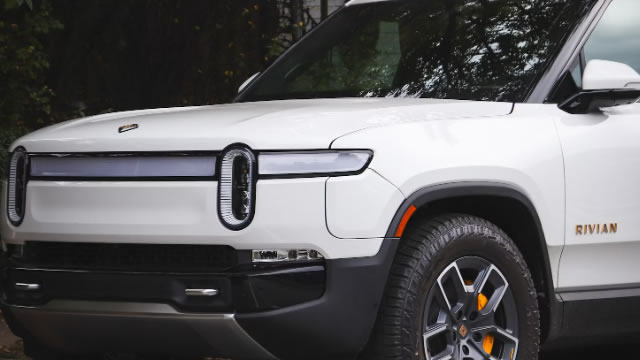
Rivian expects tariffs to increase car production costs by 'a couple thousand dollars per unit'
Business Insider· 2025-08-06 01:38
Core Insights - Rivian is facing challenges due to evolving policies affecting EV production in the US, which are expected to impact results and cash flow [1][2] - The company has revised its anticipated EBITDA losses for the 2025 fiscal year to a range of $2 billion to $2.5 billion, up from a previous estimate of $1.7 billion to $1.9 billion [1] - Rivian's CFO indicated that total sales in regulatory credits are expected to be around $160 million, nearly half of the prior outlook of $300 million [2] Financial Performance - Rivian reported second-quarter revenue of $1.3 billion, slightly exceeding Wall Street estimates of $1.28 billion, but operating losses were higher than anticipated with total operating expenses of $908 million [12] - The stock fell about 5% after trading hours following the earnings report [13] Production and Cost Outlook - Production costs are expected to increase due to recent policy changes, with tariffs anticipated to have a net impact of a couple thousand dollars per unit for the remainder of 2025 [3] - Rivian is on track to deliver its R2 model, a midsize SUV priced between $45,000 and $50,000, expected next year [10] - The company has secured contracts with suppliers to ensure that the cost of making the R2 will be about half that of the R1 model [11]

Rivian Automotive (RIVN) Reports Q2 Loss, Beats Revenue Estimates
ZACKS· 2025-08-05 23:26
Company Performance - Rivian Automotive reported a quarterly loss of $0.8 per share, which was worse than the Zacks Consensus Estimate of a loss of $0.65, but an improvement from a loss of $1.21 per share a year ago, indicating a year-over-year improvement in loss figures [1] - The company posted revenues of $1.3 billion for the quarter ended June 2025, surpassing the Zacks Consensus Estimate by 3.19% and showing an increase from $1.16 billion in the same quarter last year [2] - Over the last four quarters, Rivian has surpassed consensus EPS estimates two times and topped consensus revenue estimates three times [2] Stock Performance - Rivian shares have declined approximately 6.7% since the beginning of the year, contrasting with the S&P 500's gain of 7.6% [3] - The current consensus EPS estimate for the upcoming quarter is -$0.71 on projected revenues of $1.39 billion, and for the current fiscal year, it is -$2.45 on revenues of $5.23 billion [7] Industry Outlook - The Automotive - Domestic industry, to which Rivian belongs, is currently ranked in the bottom 29% of over 250 Zacks industries, suggesting a challenging environment for stocks in this sector [8] - Empirical research indicates a strong correlation between near-term stock movements and trends in earnings estimate revisions, which could impact Rivian's stock performance [5]