
Ford Motor

Search documents
Ford CEO says taking apart Tesla, Chinese EVs was ‘shocking' — forcing him to overhaul company
New York Post· 2025-11-12 15:23
Core Insights - Ford CEO Jim Farley acknowledged the need for a significant overhaul of the company after realizing the competitive edge of rivals, particularly Tesla and Chinese EV manufacturers [1][4][10] Company Analysis - The comparison between Ford's Mustang Mach-E and Tesla's Model 3 revealed substantial differences, particularly in the wiring loom, which was 1.6 kilometers longer in the Mach-E, adding 70 pounds of weight and costing Ford an additional $200 per battery [3][4] - The revelations from dismantling competitor vehicles prompted Ford to split its operations into two divisions: Model E for electric vehicles and Blue and Pro for traditional vehicles, indicating a strategic shift to address the unique challenges of the EV market [4][5] - The Model E division has incurred losses exceeding $5 billion in 2024, with similar projections for the current year, but the leadership believes this restructuring is essential for long-term accountability and competitiveness in the EV sector [5][8] Industry Context - Ford ranks third in U.S. EV sales as of the third quarter of 2025, trailing behind Tesla and Chevrolet, but the competitive landscape is intensifying, with a widening gap [8] - Chinese EV manufacturers have gained significant market share globally, accounting for over half of all electric vehicles sold, with brands like Xiaomi, BYD, and XPeng rapidly advancing due to lower prices and substantial government subsidies [10][13] - In China, Xiaomi recently delivered nearly 49,000 EVs, surpassing Tesla's 26,000 deliveries, highlighting the competitive pressure on American automakers [11][15]


Baytex to Divest of U.S. Eagle Ford Assets to Advance Higher-Return Canadian Core Portfolio
Newsfile· 2025-11-12 13:46
Core Viewpoint - Baytex Energy Corp. has announced the sale of its U.S. Eagle Ford assets for US$2.305 billion to focus on its higher-return Canadian operations, enhancing its financial position and shareholder returns [1][2][5]. Transaction Details - The transaction is valued at approximately $3.25 billion in cash and is expected to close in late 2025 or early 2026, pending regulatory approvals [1][5]. - A US$200 million deposit will be made by the buyer, which may be forfeited under certain conditions [5]. Strategic Focus - The divestiture allows Baytex to concentrate on its Canadian assets, particularly in heavy oil development and the Pembina Duvernay, which are expected to drive long-term value creation [6][8]. - The company aims to maintain a disciplined growth strategy with an annual production growth target of 3-5% at WTI prices of US$60-65 per barrel [11]. Financial Position - Post-transaction, Baytex will have a net cash position and plans to repay outstanding credit facilities and senior notes, resulting in an industry-leading financial position [6][8]. - The company intends to return a significant portion of the proceeds to shareholders, potentially through share buybacks and maintaining its current dividend of $0.09 per share [6][8]. Production and Reserves - The Canadian portfolio produced 65,000 boe/d in the first nine months of 2025, reflecting a 5% growth compared to 2024 [9]. - The Eagle Ford assets being sold had proved plus probable reserves of 401 million boe as of December 31, 2024, with Q3 2025 production averaging 82,765 boe/d [13]. Future Outlook - Baytex plans to provide detailed guidance for 2026 and a three-year outlook following the transaction's completion, highlighting its streamlined Canadian asset base [12]. - The company has identified approximately 212 drilling locations in the Pembina Duvernay and expects to transition to a one-rig drilling program targeting production of 20,000-25,000 boe/d by 2029-2030 [10].


Ford CEO says taking apart Tesla and Chinese EVs was 'shocking' and pushed him to shake up the automaker
Business Insider· 2025-11-11 12:01
Core Insights - Ford's CEO Jim Farley experienced a significant realization regarding the competitive landscape of electric vehicles (EVs) after analyzing Tesla and Chinese automakers, leading to a strategic overhaul of the company [1][3]. Group 1: Competitive Analysis - Farley noted that Ford's Mustang Mach-E has approximately 1.6 km more electrical wiring than Tesla's vehicles, resulting in added weight and the need for larger, more expensive batteries [2]. - The CEO emphasized that the teardowns of rival vehicles revealed the necessity for Ford to adapt to the advancements made by competitors [3]. Group 2: Strategic Changes - In 2022, Ford established a new division called Model E for its EV operations, which incurred losses exceeding $5 billion in 2024, with similar projections for the current year [3]. - Farley expressed that despite the financial challenges, he does not regret the decision to create a dedicated EV division [3][4]. Group 3: Market Dynamics - Farley has consistently warned that Chinese EV manufacturers pose a significant threat to Ford and other Western automakers, describing them as "far superior" and noting that they dominate the global EV market [5][10]. - In China, around 50% of new car sales are electric, compared to approximately 10% in the US, highlighting the disparity in EV adoption rates [5]. Group 4: Consumer Preferences - Farley indicated that the US EV market is evolving differently than previously anticipated, with consumers showing a preference for more affordable electric models rather than high-priced options [13][14]. - To address this shift, Ford is adjusting its EV strategy and plans to launch a $30,000 midsize truck by 2027 as part of its new production line [14][15].

Used Auto & EV Space Accelerates Amid Pricing Pressures to Industry
Youtube· 2025-11-10 19:51
Core Insights - The expiration of EV tax credits at the end of September has had a short-term impact on the auto industry, particularly affecting the used vehicle market [1][2] - The auto industry is experiencing a trend towards affordability, especially in the used vehicle segment, with significant growth in vehicles priced under $30,000 and those aged 7 years or more [3][5] Used Vehicle Market Trends - The used vehicle market is on track for its best year since 2021, driven by affordability trends [3] - The average age of the US vehicle fleet is increasing, leading to longer-lasting vehicles that help consumers meet affordability targets [5][16] - There is a notable shift in market share, with companies like CarMax losing ground to competitors like Carvana [4] Electric Vehicle (EV) Segment Insights - The used EV segment is growing, but there has been a sharper contraction in used EVs priced under $25,000, which previously qualified for tax credits [7][8] - Used EVs priced over $25,000 have seen less contraction, indicating stronger confidence among premium buyers [7][8] Economic Trends and Consumer Behavior - The auto industry is reflecting a K-shaped economy, where luxury vehicle sales are increasing while affordability remains a concern for average consumers [9][10] - New vehicle inventory has risen by about 7% in October, but average list prices have only slightly increased, indicating a complex pricing environment [11][12] Strategic Considerations for Dealers - Dealers should focus on affordability and a wider range of price points to remain competitive, especially as more consumers may shift from new to used vehicles [16][17] - The current market shows that some of the most affordable used vehicles are actually used EVs, which presents a unique opportunity for dealers [18][19]

Cancellation Of Ford's F-150 Electric Pickup Illustrates Electrification's Delay (NYSE:F)
Seeking Alpha· 2025-11-10 18:22
Core Insights - The unconfirmed report from the Wall Street Journal indicates that Ford Motor Co. executives are considering the cancellation of the F-150 Lightning battery-electric pickup truck, highlighting a shift in the demand landscape for electric vehicles [1] Group 1: Company Developments - Ford Motor Co. is reportedly discussing the potential cancellation of its F-150 Lightning BEV, which reflects a significant change in strategy regarding electric vehicle offerings [1] Group 2: Industry Trends - The news serves as an anti-climax to the evolving reality of electric vehicle demand, suggesting that the market dynamics may not be as favorable as previously anticipated [1]
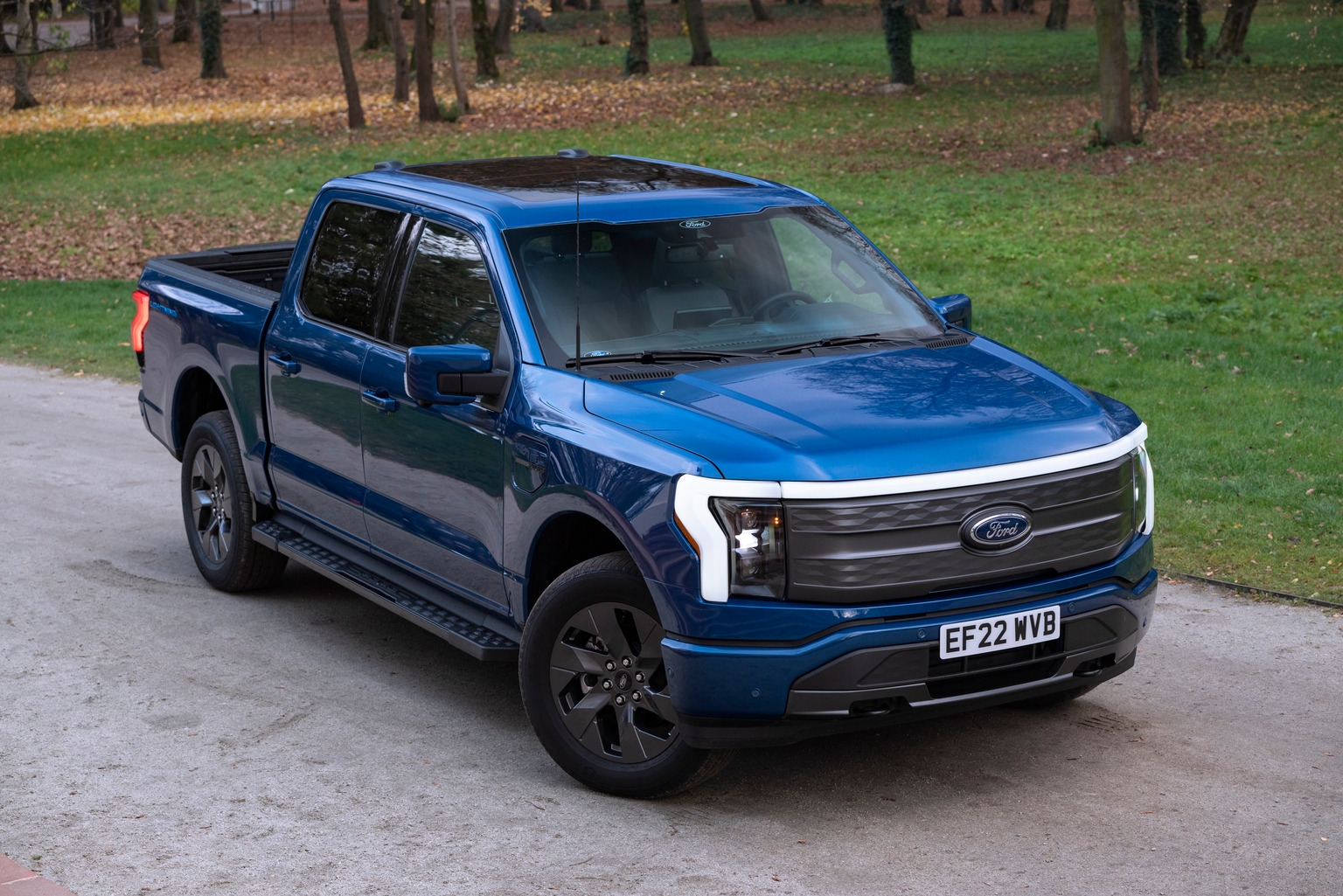
Possible Cancellation Of Ford's F-150 Battery Electric Pickup Illustrates Electrification's Delay
Seeking Alpha· 2025-11-10 18:22
Core Viewpoint - The unconfirmed report from the Wall Street Journal indicates that Ford Motor Co. executives are considering the cancellation of the F-150 Lightning battery-electric pickup truck, highlighting a shift in the demand landscape for electric vehicles [1] Group 1: Company Insights - Ford Motor Co. is facing discussions regarding the potential cancellation of its F-150 Lightning BEV, which reflects challenges in the electric vehicle market [1] Group 2: Industry Trends - The report serves as an anti-climax to the evolving reality of electric vehicle demand, suggesting that the market dynamics may not be as favorable as previously anticipated [1]
Opinion | Ford's Electric Pickup Is an EV Casualty
WSJ· 2025-11-07 22:18
Core Viewpoint - The article suggests that Donald Trump's influence has prompted a necessary reevaluation of previously illogical policies [1] Group 1 - The need for policy rethinking is highlighted as a response to past decisions that lacked rationale [1]
Free-Spending Big Tech Dominates Earnings. As for the Rest: Don’t Miss.
Barrons· 2025-11-07 20:22
Core Insights - The earnings season has exceeded expectations, with S&P 500 companies tracking toward 13% earnings growth despite initial forecasts being lowered to 8% [3] - Big Tech companies are significantly increasing capital expenditures, with a projected total of $356 billion for Microsoft, Amazon, Alphabet, and Meta Platforms, representing a 56% increase [5] - Earnings growth for Big Tech was 29% in the third quarter, compared to just 5% for the rest of the S&P 500 [5] Company Performance - Winnebago Industries saw a 29% stock increase after successfully using price hikes to counteract weak demand in the recreational vehicle market [2][9] - Amazon's stock rose 10% following strong growth in web services, indicating positive returns from its investments in AI [6] - Meta Platforms experienced an 11% drop in stock value after CEO's comments on future AI capabilities did not meet investor expectations [6] - J.B. Hunt Transport Services and C.H. Robinson Worldwide saw stock increases of 22% and 20%, respectively, due to solid earnings and cost-cutting measures [10] Market Trends - The impact of tariffs has been less severe than anticipated, with companies having stocked up during a tariff pause, which may affect fourth-quarter profit margins [4] - The S&P 500 is currently trading at a high valuation of 25 times earnings, leading to significant market reactions to earnings reports [7] - Companies that reported earnings with double-digit percentage gains or losses have shown varied performance, with Trex losing 31% due to competitive pressures and Newell Brands dropping 28% after a sales decline [8][9]



Will U.S. Tariffs and Emission Policies Boost Ford's Edge?
ZACKS· 2025-11-07 16:51
Core Insights - Ford views recent U.S. tariff and emissions policy changes as beneficial for its American operations and profitability [1] Tariff Impact - CEO Jim Farley indicated that the tariff rules under Trump's presidency favor automakers with significant domestic production, providing Ford a competitive advantage [2] - Ford expects its tariff impact for 2025 to be $1 billion, reduced from a previous estimate of $2 billion, which will help mitigate the effects of the Novelis aluminum supply disruption [2] - The new tariffs on imported medium and heavy-duty trucks allow Ford to compete more effectively, as all its Super Duty models are manufactured in the U.S., enhancing its position in the pickup truck market [3] Emission Regulations - Ford anticipates relief from stringent tailpipe emissions standards by year-end, with potential easing of federal targets next year, reducing the need for costly compliance credits [4] - CFO Sherry House noted that Ford's $2.5 billion in credit purchase obligations could largely disappear, alleviating a significant expense [4] - The company is adjusting its product mix in response to relaxed emission regulations, focusing more on profitable gas and hybrid models [4] Competitive Landscape - General Motors expects a smaller financial impact from U.S. tariffs, now projecting costs between $3.5 billion and $4.5 billion, down from $4 billion to $5 billion [6] - Stellantis has also revised its outlook, estimating U.S. tariffs to cost around €1 billion in 2025, down from €1-€1.5 billion [6] - These adjustments indicate that easing trade policies are benefiting major automakers in the U.S. market [7] Stock Performance - Ford's shares have increased by 33% year to date, outperforming General Motors, which rose by 29%, while Stellantis has declined by approximately 23% [8] Valuation Metrics - Ford trades at a forward price-to-sales ratio of 0.32, below the industry average, and carries a Value Score of A [11] - In comparison, General Motors and Stellantis have forward price-to-sales ratios of 0.35 and 0.17, respectively [11]
Ford May Dump F-150 Lightning
247Wallst· 2025-11-07 14:10
Core Insights - Ford Motor Co. sold only 1,542 F-150 Lightning electric vehicles (EVs) in October, indicating a significant challenge in the electric vehicle market for the company [1] Sales Performance - The sales figure of 1,542 units for the F-150 Lightning in October highlights a potential slowdown in demand or production issues within the electric vehicle segment [1]
