
Federal Reserve

Search documents
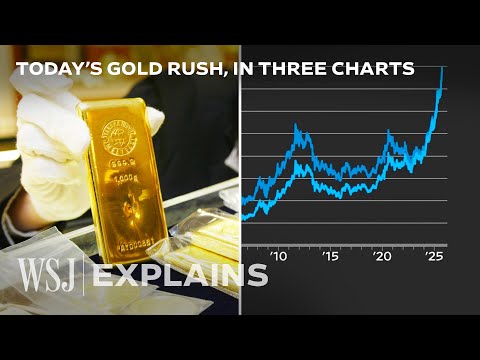
Why Gold Is at Its Highest Price Ever Right Now | WSJ
The Wall Street Journal· 2025-10-09 14:51
Gold Price Surge & Drivers - Gold price closed above $4,000 per troy ounce, reaching an all-time high, marking an unusual rally since 1979 [1] - Gold futures prices have risen approximately 50% this year, outpacing many major crises in American history, as investors seek to retain value during times of inflation and economic uncertainty [2][3] - Central banks have been accumulating gold bullion since the great financial crisis due to doubts about the global financial system intertwined with the US economy, US banks, and the US Federal Reserve [6] Factors Influencing Gold Prices - Policy dysfunction in Washington, including runaway deficits, government shutdowns, and a perceived lack of concern for higher inflation in the US economy, are contributing to gold's appeal [4] - Federal Reserve Chair Jerome Powell's signaling of potential interest rate cuts despite above-target inflation has driven gold prices upward [5] - A weaker US dollar, partly desired by the Trump administration to aid US exporters, coupled with a lack of confidence in the US economic outlook and concerns about long-term deficits, further supports gold prices [8][9] Potential Risks & Future Outlook - Historical trends suggest that rapid price gains in gold can evaporate within a few years, indicating potential for a future correction [10] - The strength of US institutions, the Federal Reserve's independence, a decrease in inflation, and continued US economic growth could exert downward pressure on gold prices [10] - Major Wall Street banks anticipate continued gold purchases by central banks in the coming year, which is expected to sustain gold prices [7]

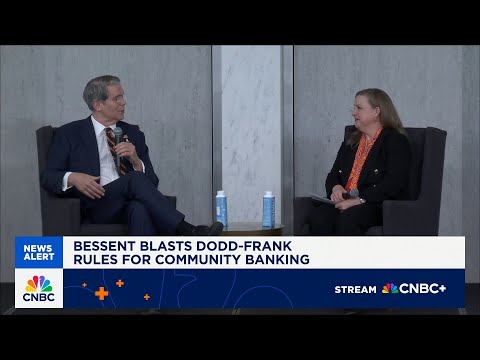
Treasury Secretary Scott Bessent blasts Dodd-Frank rules for community banking
CNBC Television· 2025-10-09 14:09
Treasury Secretary making some headlines in DC. For that, we'll get to Steve Leeman. Morning, Steve. >> Good morning, Carl.Uh, Treasury Secretary Scott Besson at the Federal Reserve here in Washington sitting down with Fed Vice Chair for supervision, uh, Michelle Bowman, and he's making some sharply critical remarks about the DoddFrank legislation, the banking legislation from 2010, and the effect on community banking. Uh, let's just give a listen to what he said. The postcrisis framework has left a tail tr ...
The Federal Reserve should not have two mandates, says Komal Sri-Kumar
Youtube· 2025-10-09 11:06
Federal Reserve's Interest Rate Decisions - The Federal Reserve is strongly inclined to lower interest rates, with discussions indicating two to three potential cuts this year, following a 25 basis point cut on September 17th [1] - There is a debate among officials regarding the necessity and timing of interest rate cuts, with some arguing against any cuts and suggesting caution in rate hikes [2][3] Economic Concerns and Dual Mandate - The Federal Reserve faces challenges in balancing its dual mandate of controlling inflation and promoting employment, leading to inconsistencies in its policy decisions [5][6] - The current administration is focused on economic growth and preventing unemployment from rising, but there are concerns about the potential weakening of the economy [7][8] AI's Impact on the Economy - The AI sector is seen as a significant driver of economic growth, but there are concerns about its sustainability and the potential for failures among companies in this space [10][12] - The disparity between the performance of the AI-related economy and the non-AI economy raises questions about inflationary pressures and employment [13] Inflation and Consumer Expectations - Current inflation is running above the Federal Reserve's 2% target, with consumer inflation expectations increasing from 3.2% to 3.4% [13] - The Fed's struggle with stagflation is highlighted, indicating a weak economy coupled with rising inflation [13]
X @Bitcoin
Bitcoin· 2025-10-09 00:38
Core Functions of the Federal Reserve - The Federal Reserve System performs five key functions [1] - These functions serve all Americans [1] - The functions promote the health and stability of the U S economy and financial system [1] Financial System Stability - The Federal Reserve promotes financial system stability [1] - More information is available at the provided link [1]
Fed Is Flying Blind Due to Shutdown, Slok Says
Bloomberg Television· 2025-10-08 21:39
I do want to get the government shutdown into this conversation because markets so far don't look that concerned. We're not getting the economic data that we love to dig into. But I am curious what this means for the Federal Reserve.We have a policy meeting coming up on the 29th. It looks like we're not going to get the CPI release that we were or the inflation release we're expecting next week. We know the jobs market has been delayed when it comes to that official NFP release.When it comes to making polic ...
Fed minutes show policymakers remain concerned about inflation as they weigh rate cuts
Fox Business· 2025-10-08 20:35
Core Viewpoint - The Federal Reserve is committed to reducing inflation to its 2% target while anticipating further interest rate cuts due to concerns about the labor market and inflationary pressures from tariffs [1][8]. Monetary Policy Actions - The Federal Open Market Committee (FOMC) voted to lower the benchmark federal funds rate by 25 basis points to a range of 4% to 4.25%, marking the first rate cut in 2025 [2]. - The FOMC minutes indicate that most participants believe further easing of monetary policy will be appropriate over the remainder of the year, with expectations for additional 25-basis-point cuts in upcoming meetings [12]. Inflation Metrics - The consumer price index (CPI) rose by 2.9% year-over-year in August, while the personal consumption expenditure (PCE) index increased by 2.7% from the previous year, both higher than earlier in the year [3]. - A majority of FOMC participants expressed concerns about upside risks to inflation, citing potential persistence of inflation beyond current expectations due to tariffs and other factors [5][6]. Labor Market Concerns - Policymakers noted signs of a weakening labor market, including low hiring and firing rates, concentrated job gains in a few sectors, and rising unemployment among vulnerable groups [9]. - The FOMC acknowledged that concerns about the labor market contributed to the decision to cut interest rates despite inflationary pressures [8]. Future Outlook - Fed Governor Stephen Miran was the only dissenting vote for a 50-basis-point cut, indicating a range of views among policymakers regarding future rate cuts [11]. - Market expectations suggest that the Fed may implement two more rate cuts this year, with a potential pause in January 2026 [13].
A divided Fed sees more rate cuts ahead this year: FOMC minutes
Yahoo Finance· 2025-10-08 19:01
Core Viewpoint - The Federal Reserve is divided on interest rate cuts, with a consensus leaning towards further reductions in 2025, despite ongoing concerns about inflation [1][2][5]. Group 1: Interest Rate Decisions - The Federal Reserve decided to cut rates by a quarter point during its last meeting, marking the first reduction of 2025 [1]. - A median of two more cuts is anticipated this year, although some members suggest fewer cuts may occur, while at least one member sees the possibility of more than two cuts [7]. Group 2: Inflation Concerns - Most officials expressed concerns about inflation, indicating that risks remain regarding its persistence and the impact of tariffs [5]. - Some officials noted a decrease in perceived upside risks to inflation compared to earlier in the year, but there is still anxiety about long-term inflation expectations if the 2% target is not met [3][6]. Group 3: Labor Market Assessment - Officials did not observe a sharp deterioration in labor market conditions, attributing lower job gains to a decline in both supply and demand for workers [6]. - The Fed justified the rate cut by citing increased risks to the job market, although there remains a significant focus on inflation [5]. Group 4: Balance Sheet Management - Policymakers emphasized the importance of monitoring money market conditions closely as reserves are expected to decline further [7]. - Fed Chair Jerome Powell stated that the Fed is comfortable with the current pace of bond roll-off from its portfolio, suggesting no immediate changes in this strategy [8].
Be ready with these portfolio changes if the shutdown damages the Fed's credibility
MarketWatch· 2025-10-08 17:09
Core Viewpoint - The Federal Reserve is making monetary policy decisions without relying on actual economic data, yet investors are still anticipating interest rate cuts [1] Group 1: Federal Reserve Actions - The Fed's current decision-making process is characterized by a lack of concrete data, raising concerns about the reliability of their policies [1] - Despite the absence of data, market participants are optimistic about potential rate cuts in the near future [1] Group 2: Investor Sentiment - Investors are banking on the expectation of rate cuts, which may influence market dynamics and investment strategies [1] - The reliance on anticipated rate cuts reflects a broader trend of investor behavior in response to central bank signals rather than actual economic indicators [1]
Miran Optimistic About U.S. Economy, but Sees Risks If Rates Not Cut
Barrons· 2025-10-07 15:07
Core Viewpoint - The Federal Reserve is expected to ease monetary policy, although this may not be a comfortable decision for some central bank colleagues [1] Group 1 - The need for easing monetary policy indicates a shift in the Fed's approach to managing economic conditions [1] - Potential discomfort among central bank colleagues suggests internal divisions regarding monetary policy strategies [1]
Best money market account rates today, October 7, 2025 (Earn up to 4.4% APY)
Yahoo Finance· 2025-10-07 10:00
Core Insights - Money market accounts (MMAs) offer higher interest rates compared to traditional savings accounts, providing liquidity and flexibility for long-term savings [1][3] - The national average interest rate for MMAs is currently 0.59%, while the best rates exceed 4% APY, with some accounts offering rates above 5% APY [3][7][13] Interest Rate Trends - Historical fluctuations in MMA rates are largely influenced by changes in the Federal Reserve's target interest rate [4] - Following the 2008 financial crisis, MMA rates were low, typically between 0.10% and 0.50% due to the Fed's near-zero federal funds rate [5] - The COVID-19 pandemic caused another decline in MMA rates as the Fed cut rates to combat economic fallout [6] - Starting in 2022, aggressive interest rate hikes by the Fed led to historically high MMA rates, with many accounts offering 4.00% or higher by late 2023 [7] - Rates have begun to decline following the Fed's cuts in late 2024, but remain high by historical standards [8] Considerations for Choosing MMAs - When selecting a money market account, factors beyond interest rates, such as minimum balance requirements, fees, and withdrawal limits, should be considered [9][10] - Some MMAs may require a minimum balance of $5,000 or more to earn the highest rates, and monthly maintenance fees can reduce interest earnings [10] - There are competitive MMAs available without balance requirements or fees, emphasizing the importance of comparing options [10] - Ensuring the account is insured by the FDIC or NCUA is crucial, as it guarantees deposits up to $250,000 per institution, per depositor [11]