Uber

Search documents
Palantir Drops on AI Valuation Concerns; Hertz Soars on Profit Beat | Stock Movers

Bloomberg Television· 2025-11-04 21:51
Company Performance - Palantir's revenue has exceeded analysts' estimates for 21 consecutive quarters [1] - Hertz swung to a third-quarter profit, aided by lower depreciation, with net income of $184 million, or $0.42 per share, compared to a loss of $1.33 billion, or $4.34 per share, the year prior [4][5] - Uber's total bookings grew 21% to $49.7 billion for the quarter, topping estimates [8] Market Trends and Analysis - Palantir's valuation is under scrutiny, with investors questioning the sustainability of the AI rally [1] - Palantir's stock has soared more than 170% this year, with a price-to-sales ratio of 85 as of Friday, the highest in the S&P 500 index [2] - Investors desired more guidance from Palantir regarding the following year and a clearer sense of the outlook for 2026 [3] - Uber's stock declined despite crushing earnings estimates due to a miss on third-quarter operating income and an adjusted earnings forecast for the current period falling short of estimates, partially attributed to undisclosed legal and regulatory matters [7] Strategic Initiatives - Hertz is swapping out older cars for newer fleet and selling used cars on Amazon to offload vehicles to retail buyers for higher profits [4][5] - Netflix is in talks to license video podcasts distributed by iHeartMedia, potentially competing with YouTube [9]

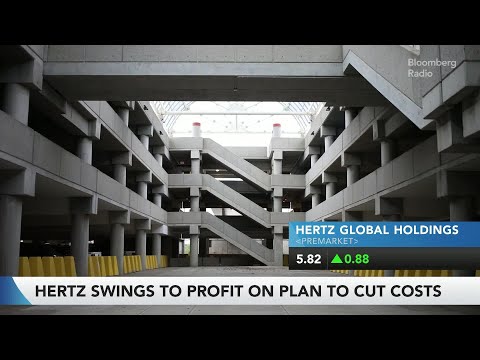
Palantir Drops on AI Valuation Concerns; Hertz Soars on Profit Beat | Stock Movers
Youtube· 2025-11-04 21:51
Palantir - Palantir's shares have decreased by as much as 8% despite topping analysts' estimates for third-quarter sales and raising its annual revenue outlook, marking 21 consecutive quarters of revenue above estimates [1][2] - The company's stock has surged over 170% this year, closing at a record high, but its price-to-sales ratio stands at 85, the highest in the S&P 500 index, raising concerns about valuation sustainability [2] - Investors are seeking more guidance for the upcoming year, particularly for 2026, indicating a desire for clearer future expectations [3] Hertz - Hertz's stock has increased by 25% after swinging to a third-quarter profit, aided by lower depreciation costs and a strategy of replacing older cars with newer models [4] - The company reported a net income of $184 million, or $0.42 per share, compared to a loss of $1.33 billion, or $4.34 per share, in the previous year [5] Uber - Uber's earnings exceeded estimates, but the stock faced a decline due to a miss on third-quarter operating income and an adjusted earnings forecast that fell short of expectations [7] - The company experienced its strongest quarterly growth since late 2023, with total bookings growing by 21% to $49.7 billion for the quarter, surpassing estimates [8] iHeartMedia - iHeartMedia's shares rose by as much as 30% following reports that Netflix is in talks to license video podcasts distributed by iHeartMedia, positioning it in competition with YouTube [9]


Uber(UBER) - 2025 Q3 - Quarterly Report
2025-11-04 21:04
Financial Performance - Monthly Active Platform Consumers (MAPCs) increased to 189 million, a growth of 17% year-over-year[167] - Gross Bookings reached $49.7 billion, up 21% on a constant currency basis compared to the same period in 2024[168] - Revenue was $13.5 billion, reflecting a 20% year-over-year increase, primarily driven by a 21% rise in Gross Bookings[169] - Net income attributable to Uber Technologies, Inc. was $6.6 billion, including a $4.9 billion benefit from the release of deferred tax assets valuation allowance[170] - Adjusted EBITDA was $2.3 billion, an increase of 33% compared to the same period in 2024[171] - Free cash flow for the nine months ended September 30 was $6.96 billion, a 34% increase year-over-year[166] - Revenue for the three months ended September 30, 2025, was $13,467 million, a 20% increase from $11,188 million in the same period of 2024, primarily driven by a 21% increase in Gross Bookings[202][203] - Revenue for the nine months ended September 30, 2025, was $37,651 million, an 18% increase from $32,019 million in the same period of 2024, also attributed to a 17% increase in Gross Bookings[202][204] - Net income attributable to Uber Technologies, Inc. for the three months ended September 30, 2025, was $6,626 million, compared to $2,612 million in the same period of 2024[200] - Income from operations for the nine months ended September 30, 2025, was $3,791 million, compared to $2,029 million in the same period of 2024[200] Cost and Expenses - Cost of revenue, exclusive of depreciation and amortization, for the three months ended September 30, 2025, was $8,109 million, a 20% increase from $6,761 million in the same period of 2024[205][206] - Cost of revenue, exclusive of depreciation and amortization, for the nine months ended September 30, 2025, was $22,657 million, a 17% increase from $19,417 million in the same period of 2024[205][207] - General and administrative expenses for the three months ended September 30, 2025, increased by $553 million, or 88%, primarily due to a $480 million increase in legal-related accruals and expenses[217][218] - Sales and marketing expenses for the three months ended September 30, 2025, were $1,277 million, a 17% increase from $1,096 million in the same period of 2024[211][212] - Research and development expenses for the three months ended September 30, 2025, were $862 million, an 11% increase from $774 million in the same period of 2024[214][215] - Total costs and expenses for the three months ended September 30, 2025, were $12,354 million, a 22% increase from $10,127 million in the same period of 2024[200] Cash Flow and Investments - The company ended the quarter with $9.1 billion in unrestricted cash, cash equivalents, and short-term investments[172] - Net cash provided by operating activities for the nine months ended September 30, 2025, was $7.216 billion, up from $5.387 billion in 2024, a 34% increase[266] - Net cash used in investing activities for the nine months ended September 30, 2025, was $2.0 billion, significantly lower than $4.6 billion in 2024[269] - Net cash used in financing activities for the nine months ended September 30, 2025, was $2.6 billion, compared to a net cash provided of $1.3 billion in 2024[271] - As of September 30, 2025, the company held $8.4 billion in cash and cash equivalents, with $3.2 billion held by foreign subsidiaries[273] - The company established a commercial paper program in June 2025, allowing for the issuance of up to $2.0 billion in unsecured commercial paper notes[276] - The company believes its existing cash balance is sufficient to meet anticipated cash requirements for at least the next 12 months[275] - As of September 30, 2025, the company held cash and cash equivalents totaling $11.5 billion, with marketable debt securities amounting to $8.5 billion[292] Business Segments Performance - Mobility Gross Bookings grew 19% year-over-year, while Delivery Gross Bookings increased by 24%[168] - Mobility revenue for the three months ended September 30, 2025, increased by 20% to $7,682 million, driven by a 20% increase in Mobility Gross Bookings[237] - Delivery revenue for the three months ended September 30, 2025, increased by 29% to $4,477 million, attributed to a 25% increase in Delivery Gross Bookings[241] - Mobility Adjusted EBITDA for the three months ended September 30, 2025, increased by 21% to $2,038 million, reflecting increased Gross Bookings[236] - Delivery Adjusted EBITDA for the three months ended September 30, 2025, increased by 47% to $921 million, driven by increased revenue including advertising[242] - Freight revenue remained flat for the three months ended September 30, 2025, while Adjusted EBITDA declined by $1 million, or 5%[245] Future Projections and Expectations - The company expects fluctuations in revenue based on Trip volume, Driver supply, and macroeconomic conditions[174] - Gross Bookings for Mobility in Q4 2023 were $19.285 billion, projected to grow to $25.111 billion by Q3 2025, representing a 30% increase[255] - Delivery Gross Bookings in Q4 2023 were $17.011 billion, expected to reach $23.322 billion by Q3 2025, indicating a 37% growth[255] Tax and Legal Matters - Provision for income taxes for the three months ended September 30, 2025, showed a significant change due to the release of valuation allowance on deferred tax assets[231] - The company has received assessments from HMRC totaling approximately $1.8 billion (£1.4 billion) for unpaid VAT, which it has paid to proceed with the appeal process[282] Shareholder Returns - The board of directors authorized a total of $27.0 billion for the Share Repurchase Program, including $7.0 billion in February 2024 and an additional $20.0 billion in July 2025[278] - As of September 30, 2025, approximately $21.1 billion remained available for share repurchases under the Share Repurchase Program[279] Investments and Market Risks - The carrying value of the company's investments was $10.6 billion as of September 30, 2025, including equity method investments[294] - The company is exposed to a hypothetical 100 basis point increase in interest rates, which would decrease the fair value of its notes by $605 million[290] - The company enters into foreign currency derivative contracts to mitigate foreign exchange risk, although these contracts do not fully eliminate the risk[296] - The company has experienced fluctuations in net income due to transaction gains or losses related to foreign currency remeasurement[295]

"Opportunity" in UBER Hitting Brakes, Green Light in Autonomous Driving & Free Cash Flow
Youtube· 2025-11-04 20:30
Core Insights - Uber's latest quarterly results exceeded expectations, with notable strength in delivery services, although margins raised some concerns [2][5] - The stock experienced a decline, attributed to broader market trends and potential profit-taking, despite solid performance [3][4] - The future growth potential of Uber is heavily tied to the development of robo-taxi services, which are still in the testing phase [5][6] Financial Performance - Uber reported a free cash flow of $8.5 billion, indicating a strong financial position and the ability to invest in future technologies [12][13] - The company has maintained profitability for three consecutive years, which is viewed positively by analysts [13] Market Reaction - The market's cautious sentiment led to a sell-off, with some analysts suggesting this presents a buying opportunity [9][10] - CEO Dara Khosrowshahi's comments on the profitability timeline for autonomous vehicles may have contributed to market hesitance [7][8] Loyalty Programs - Uber's loyalty programs are seen as effective in retaining customers and driving repeat business, especially after securing a partnership with Delta Airlines [15][17] - The loyalty initiatives are compared favorably to those of competitors like Lyft, enhancing customer engagement [16][17] Investment Outlook - Analysts recommend viewing the current dip in stock price as a buying opportunity, citing reasonable valuations and strong growth prospects [18]
Uber's Double Beat: Here's Why The Stock Still Fell (And Why I'm Raising My Target)
Seeking Alpha· 2025-11-04 20:16
Core Insights - Uber Technologies, Inc. (UBER) reported a strong performance in Q3, but shares declined post-earnings due to a lighter guidance from the company [1] Financial Performance - The company demonstrated robust financial results in the third quarter, indicating continued growth and operational strength [1] Market Reaction - Despite the strong performance, the stock experienced a drop in trading, suggesting that investor sentiment was influenced by the company's cautious outlook [1]

UBER Q3 Earnings & Revenues Top Estimates, Improve Year Over Year
ZACKS· 2025-11-04 20:06
Core Insights - Uber Technologies reported strong third-quarter 2025 results, with earnings per share of $3.11 exceeding the Zacks Consensus Estimate of 67 cents, marking over 100% year-over-year growth [1][9] - Total revenues reached $13.46 billion, surpassing the Zacks Consensus Estimate of $13.26 billion, reflecting a 20.4% year-over-year increase [1][9] Revenue Breakdown - Mobility segment contributed 57% of total revenues, with a reported revenue of $7.68 billion, up 20% year-over-year, exceeding expectations of $7.50 billion [2] - Delivery segment revenues increased by 29% year-over-year to $4.47 billion, also surpassing the expected $4.06 billion [2] - Freight revenues remained flat at $1.30 billion year-over-year, falling short of the expected $1.31 billion [3] Financial Metrics - Adjusted EBITDA surged 33% year-over-year to $2.25 billion, within the guided range of $2.19 billion to $2.29 billion [3] - Total gross bookings rose 21% year-over-year to $49.74 billion, aligning with the guidance of $48.25 billion to $49.75 billion [5] Cash Flow and Debt - Operating cash flow for the quarter was $2.32 billion, with free cash flow at $2.23 billion [6] - Cash and cash equivalents increased to $8.43 billion from $6.43 billion in the previous quarter, while long-term debt rose to $10.6 billion from $9.57 billion [5] Future Guidance - For Q4 2025, Uber anticipates gross bookings between $52.25 billion and $53.75 billion, indicating year-over-year growth of 17-21% [7] - Adjusted EBITDA is expected to be in the range of $2.41 billion to $2.51 billion, suggesting a year-over-year growth of 31% to 36% [7]

Uber under pressure to prove its driverless strategy has real upside
Youtube· 2025-11-04 19:09
Core Insights - Uber's shares are declining due to a lower than expected EBITDA outlook, increasing pressure to demonstrate the potential of its driverless strategy [1][2] Company Developments - Uber's autonomous vehicle (AV) offerings are currently operational in four cities, with plans to expand to ten by the end of next year [2] - The cities of Austin and Atlanta, powered by Whimo, are experiencing growth rates twice as fast as other U.S. markets, with Whimo's vehicles outperforming 99% of human drivers [3] - Uber claims that its driverless options are not cannibalizing the business of human drivers, who are earning more than the national average [3] Partnerships and Collaborations - Uber has not signed a new deal with Whimo recently, leading the company to diversify its partnerships beyond a single autonomy partner [4] - Collaborations with Lucid and Nuro are underway to roll out robo taxis, and a partnership with BYU aims to launch driverless rides in Asia and the Middle East [4][5] - BYU is now matching Whimo in weekly robo taxi volume, indicating rapid growth in the global market [5] Technological Advancements - Uber is piloting fully autonomous services in the UK in collaboration with AI startup Wave [6] - The company aims to build its own fleet of 100,000 Nvidia-powered AVs, focusing on making self-driving cars cost-effective at scale [6]
Committee stocks on the move: Uber and Vertex Pharma
Youtube· 2025-11-04 18:22
Group 1: Uber's Performance - Uber reported strong revenue growth and profitability, with a 60% increase in stock price year-to-date prior to earnings [3][7] - The company has established significant partnerships, including with Nvidia for autonomous rides, which is expected to enhance its market position [2] - Despite positive earnings, Uber shares fell over 6%, attributed to market conditions and profit-taking rather than fundamental issues [6][8] Group 2: Valuation and Market Sentiment - The forward earnings valuation for Uber is around 15 times, which is considered attractive compared to other large-cap companies like Costco, which trades at 50 times earnings [4][5] - Concerns about valuation discrepancies exist, with some analysts suggesting a higher multiple of nearly 30 times [5] - The overall market sentiment is cautious, impacting Uber's stock performance despite its strong fundamentals [6][8] Group 3: Vert's Market Position - Vert experienced a "beat and raise" in earnings, but faced initial stock price declines due to concerns over insufficient guidance [9][10] - The approval of Jourovax, a non-addictive painkiller, is seen as a significant growth opportunity, despite market skepticism about its prescription potential [11] - Vert's valuation stands at 21 times forward earnings, which is viewed as reasonable given its unique market position in cystic fibrosis and upcoming kidney medications [12]

Final Trades: Insulet Corp, Uber and Apollo Global
CNBC Television· 2025-11-04 18:20
All right, want to move on to final trades right now. Joe, you might as well kick us off. >> Let's add a healthc care name to the conversation.I think healthc care looks pretty good right here. That would be insulate. P Od >> Josh Brown.>> Staying long Uber. >> Jim, you got the final word. >> Okay.Well, you know, I'm thinking about Joe, you've said a few times about how the financials have been weakening recently and certainly the alternative managers have led the charge on the downside, but a very good rep ...

Uber's biggest issue is the 'seismic change' with autonomous vehicle uncertainty
Youtube· 2025-11-04 18:08
Core Viewpoint - Uber's stock is declining despite a revenue beat in Q3, primarily due to concerns over future earnings and the impact of autonomous vehicles on the ride-sharing industry [1][2]. Financial Performance - Uber reported third-quarter revenue that exceeded expectations, but operating income fell short of estimates [1]. - Gross bookings are on the rise, with projections for Q4 bookings to increase by 18% to 22% [7]. Industry Dynamics - The introduction of autonomous vehicles poses a significant risk to Uber's business model, potentially leading to a more concentrated supply of ride-sharing services [2][3]. - The ride-sharing market may experience fragmentation similar to human drivers, but advancements in technology from companies like Waymo and Tesla could disrupt this balance [3][9]. Competitive Landscape - Uber's current business performance is strong, but concerns exist regarding the long-term implications of autonomous technology, contrasting with Tesla's perceived future potential despite its current struggles [4][6]. - The risk of supply concentration could diminish Uber's role as a middleman, affecting its revenue model and market position [10][11]. Technological Considerations - The rapid advancement of autonomous vehicle technology could lead to significant changes in the transportation landscape, potentially sidelining traditional ride-sharing models [8][9]. - Companies like Tesla and Waymo are at the forefront of this technology, which may alter the competitive dynamics in the ride-sharing industry [12][13].