Ford Motor

Search documents
Ford Keeps Disappointing Owners, Investors, and Everyone Else (F Stock)
247Wallst· 2025-10-23 15:29
Summary: So far this year, Ford Motor Company has faced over 100 recalls, a figure equal to roughly four years of its annual production output. ...



Ford has a secret weapon that could help its earnings as EV concerns swirl
MarketWatch· 2025-10-23 10:00
Core Insights - Ford achieved a record number of hybrid vehicle sales in the third quarter, indicating strong demand in the hybrid segment [1] - Despite this success, Ford faces significant challenges as General Motors (GM) has raised its profit expectations for the year, setting a high benchmark for Ford to meet [1] Company Performance - Ford's hybrid vehicle sales reached a record high in the third quarter, showcasing the company's growing presence in the hybrid market [1] - The increase in hybrid sales reflects a broader trend in consumer preferences towards more fuel-efficient vehicles [1] Competitive Landscape - GM's upward revision of profit expectations creates a competitive pressure on Ford, highlighting the need for Ford to enhance its performance and possibly adjust its strategies to remain competitive [1] - The automotive industry is experiencing shifts in consumer demand, with hybrid vehicles gaining traction, which may influence future product offerings and market strategies for both Ford and GM [1]


GM CEO Mary Barra Says There's Overcapacity In China's EV Market Amid EV Price War - General Motors (NYSE:GM)
Benzinga· 2025-10-23 09:46
Core Insights - The Chinese EV market is experiencing overcapacity and a significant price war, according to GM's CEO Mary Barra [1][2] - The domestic EV market in China is growing rapidly, contributing to overcapacity and affecting dealer profits [3] - GM's focus on EVs remains strong, but market demand has significantly decreased, leading to increased production of ICE vehicles [4] Group 1: Market Conditions - Barra highlighted the intense competition among over 100 OEMs in China, which is exacerbating the price war and overcapacity issues [2] - The rapid growth of China's domestic EV market is leading to overcapacity, impacting profitability for dealers [3] Group 2: GM's Strategic Decisions - GM has halted production of the BrightDrop EV fleet van due to falling demand, indicating a reassessment of future opportunities at the production site [5] - The company incurred a $1.6 billion charge related to EVs, with $1.2 billion attributed to capacity adjustments [6] - GM has reduced EV incentives following the expiration of the Federal EV credit deadline, aligning with similar actions taken by Ford [6]
Ford Likely To Report Lower Q3 Earnings; These Most Accurate Analysts Revise Forecasts Ahead Of Earnings Call - Ford Motor (NYSE:F)
Benzinga· 2025-10-23 04:04
Ford Motor Company (NYSE:F) will release earnings results for the third quarter, after the closing bell on Thursday, Oct. 23.Analysts expect the Dearborn, Michigan-based company to report quarterly earnings at 36 cents per share, down from 49 cents per share in the year-ago period. The consensus estimate for Ford's quarterly revenue is $42.87 billion, compared to $43.07 billion a year earlier, according to data from Benzinga Pro.The company has beaten analyst estimates for revenue in two straight quarters. ...
Ford Likely To Report Lower Q3 Earnings; These Most Accurate Analysts Revise Forecasts Ahead Of Earnings Call
Benzinga· 2025-10-23 04:04
Core Viewpoint - Ford Motor Company is expected to report a decline in quarterly earnings and revenue for the third quarter compared to the previous year [1][2] Earnings Expectations - Analysts anticipate Ford's earnings to be 36 cents per share, down from 49 cents per share in the same quarter last year [1] - The consensus estimate for Ford's quarterly revenue is $42.87 billion, a slight decrease from $43.07 billion a year earlier [1] Recent Performance - Ford has surpassed analyst revenue estimates in the last two consecutive quarters and in seven of the last ten quarters overall [2] - The company's stock price fell by 1% to close at $12.43 on Wednesday [2] Analyst Ratings and Price Targets - Jefferies analyst upgraded Ford from Underperform to Hold, raising the price target from $9 to $12 [4] - Goldman Sachs maintained a Neutral rating and increased the price target from $11 to $12 [4] - RBC Capital maintained a Sector Perform rating and raised the price target from $10 to $11 [4] - Piper Sandler maintained a Neutral rating with a price target increase from $9 to $9.5 [4] - Citigroup maintained a Neutral rating and raised the price target from $10 to $11 [4]
Trump boasts General Motors and Ford executives thanked him for truck tariffs — ‘Their stock has gone through the roof’
MINT· 2025-10-22 17:58
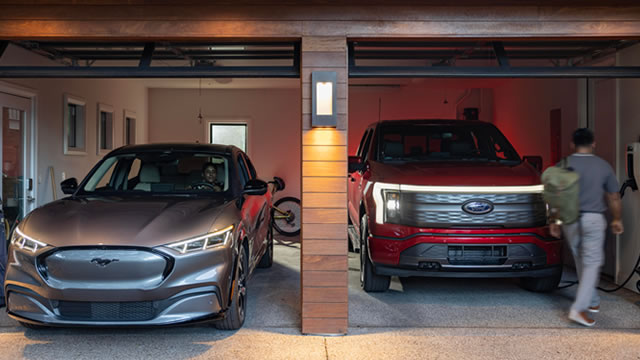
Group 1 - Executives from General Motors and Ford expressed gratitude to President Trump for the tariffs on medium- and heavy-duty trucks, indicating a positive impact on their stock prices [1] - The tariffs are positioned as a national security measure, with Trump asserting that they strengthen the US economy [2] - The tariffs will impact various vehicle types, including delivery trucks, garbage trucks, public utility trucks, transit buses, school buses, and semi-trucks [2] Group 2 - Prior to the new tariffs, the US had a 15% tariff on light-duty vehicles as part of trade agreements with Japan and the EU [3] - In April, a 25% tariff was imposed on all automobile imports, which was later extended to auto parts in May [3] - Producers are permitted to deduct the value of US components from tariffs on light-duty vehicles assembled in Canada and Mexico [3]
Trump says GM, Ford execs thanked him for tariffs, soaring stocks
Reuters· 2025-10-22 17:10
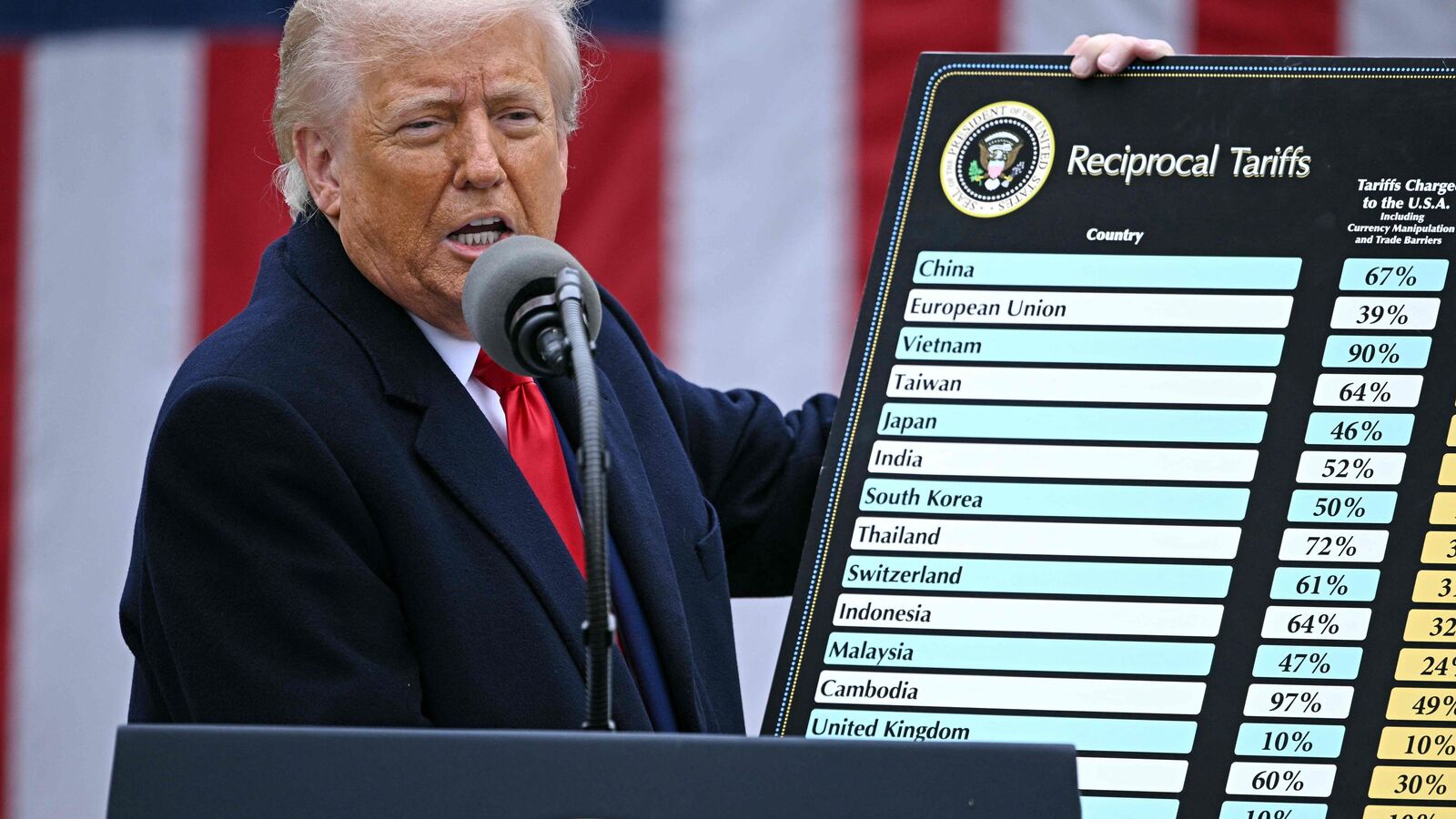
President Donald Trump said the chief executives of General Motors Co and Ford Motor Co called to thank him on Wednesday for putting tariffs on mid- and large-sized trucks, saying their companies stock has soared. ...
Can Ford Be More Like GM?
247Wallst· 2025-10-22 13:20
General Motors Co. (NYSE: GM) releases quarterly earnings before Ford Motor Co. ...
Ford To Recall Over 1.4 Million US Cars Over Rearview Camera Defect - Ford Motor (NYSE:F)
Benzinga· 2025-10-22 10:56
Recall Information - Ford Motor Company is recalling over 1.4 million vehicles in the U.S. due to a rearview camera malfunction that may cause distorted, intermittent, or blank images when reversing [1][2] - The recall affects 1,448,655 vehicles, including models from 2015 to 2020 such as the Flex, Explorer, Lincoln MKT, Lincoln MKZ, C-Max, Escape, Taurus, Fusion, Fiesta, and Mustang [2] Recent Setbacks - The recent recall is part of a series of setbacks for Ford in 2025, including a previous recall of over 680,000 vehicles due to various issues, including steering defects in F-250, F-350, and F-450 pickup trucks [3] - In September, Ford recalled 115,000 F-250, F-350, and F-450 trucks due to potential steering column detachment [4] - A fire at a key Ford supplier in September is expected to disrupt production operations for several months [4] Sales Performance - Despite the recalls, Ford achieved a record third quarter in electric vehicle (EV) sales, with a 19.8% increase to 85,789 units [5] - The Mustang Mach-E experienced a significant sales surge of 50.7%, marking its best quarter to date [5] - The F-Series trucks surpassed 600,000 units sold year-to-date, maintaining its position as America's best-selling truck for the 49th consecutive year [5] - Ford has a growth score of 52.96% and a momentum rating of 68.23% according to Benzinga Edge Stock Rankings [5]
Corporate Earnings and Strategic Deals Dominate Financial News; Ford Announces Major Recall
Stock Market News· 2025-10-22 08:08
Group 1: Teck Resources Performance - Teck Resources reported a strong Q3 2025, with adjusted earnings per share of C$0.76, exceeding the analyst estimate of C$0.53 [2] - Revenue for the quarter reached C$3.38 billion, an 18.2% year-over-year increase, surpassing the forecast of C$2.92 billion [2][3] - The performance was driven by higher base-metal prices, particularly copper and zinc, and lower copper smelting charges [3] Group 2: Ford Motor Company Recall - Ford is recalling over 1.4 million vehicles in the U.S. due to a rearview camera issue that can distort or blank the image when in reverse [4][5] - The recall affects various models from 2015-2019, with 18 accidents reported but no injuries [5] Group 3: Woodside Energy Update - Woodside Energy reported a 9% year-on-year decline in Q3 revenue to $3.36 billion, attributed to an 8% decrease in average realized oil prices [6][7] - Despite the revenue dip, Woodside raised its full-year 2025 production guidance to between 192 and 197 million barrels of oil equivalent [7] Group 4: European Space Sector Consolidation - Major European aerospace companies, including Airbus, Thales, and Leonardo, are nearing a $11.6 billion merger of satellite operations, known as Project Bromo [8][10] - This merger aims to create a regional champion to compete against global players like SpaceX, consolidating Europe's fragmented satellite industry [11] Group 5: M&A Activity in Financial Services - PAI Partners is in exclusive negotiations to acquire a majority stake in French wealth manager Cyrus, which manages over €20 billion in assets [12] - Oaktree Capital Management is using private credit to finance its proposed acquisition of Perpetual's wealth management unit, with the sale expected to fetch between $500 million and $1 billion [13]