
JPMorgan

Search documents
Nasdaq's Token Gamble - Nasdaq (NASDAQ:NDAQ)
Benzinga· 2025-10-17 13:02
Core Viewpoint - Nasdaq is seeking SEC approval to list tokenized shares, representing a significant step towards integrating blockchain technology into traditional finance [1][7]. Group 1: Nasdaq's Initiative - Nasdaq's proposal involves tokenized shares that are digital replicas of traditional equities, backed one-for-one by actual shares, allowing for programmable assets that can trade 24/7 and settle instantly [1][4]. - This move signifies a shift for Nasdaq from merely experimenting with blockchain to actively participating in the crypto space, reflecting a broader trend in institutional adoption of digital assets [2][4]. Group 2: Regulatory Environment - The SEC's changing stance under new leadership suggests a more favorable view of blockchain technology in traditional finance, with Nasdaq's proposal designed to align with regulatory requirements [3][7]. - The emphasis on regulated custody and a permissioned network indicates a cautious approach to integrating blockchain while maintaining control [3][9]. Group 3: Market Context - The digital-assets market is recovering from previous downturns, with successful initiatives like spot bitcoin ETFs and tokenization pilots by major financial institutions indicating a new phase of experimentation [4][8]. - The potential benefits of tokenization include reduced settlement delays, fractional ownership, and easier cross-border trading, although trust in the underlying technology remains crucial [5][6]. Group 4: Broader Implications - The initiative by Nasdaq, alongside other exchanges testing tokenized platforms, could signify a pivotal moment for the acceptance of tokenization in mainstream finance [7][9]. - While the move may not revolutionize markets immediately, it represents a significant step towards blurring the lines between digital assets and traditional securities [8][9].



The latest source of market turmoil: credit-strapped regional banks
Yahoo Finance· 2025-10-17 03:46
Core Insights - Regional bank shares experienced significant declines due to negative updates from Zions Bancorp and Western Alliance Bancorp regarding their lending operations [6] - The SPDR S&P Regional Banking ETF fell by 7%, reflecting broader sector concerns [2] - Credit quality issues are becoming increasingly prominent, particularly in light of recent high-profile bankruptcies in the private credit market [4][5] Company-Specific Summaries - Zions Bancorp's shares dropped by as much as 13% to $46.85 after announcing a $50 million charge-off related to a loan from its subsidiary, California Bank & Trust [1] - Western Alliance Bancorp's stock fell 11% to $69.87 following the announcement of a lawsuit against a borrower for fraud [2] - Jefferies' shares declined by 10% to $49.12 due to concerns over its exposure to the bankrupt auto parts supplier First Brands [3] Industry Context - The recent turmoil in the banking sector is attributed to rising credit concerns, particularly in the private credit market, where opaque lending practices have raised alarms about the creditworthiness of borrowers [4] - High-profile collapses, such as that of First Brands and subprime auto lender Tricolor Holdings, have intensified scrutiny on the private credit sector [5] - Analysts note that investors tend to react quickly to credit concerns, often selling off shares before fully assessing the situation [6]
Antimony: The Overlooked Critical Mineral Powering a New US–Australia Alliance
Small Caps· 2025-10-16 21:53
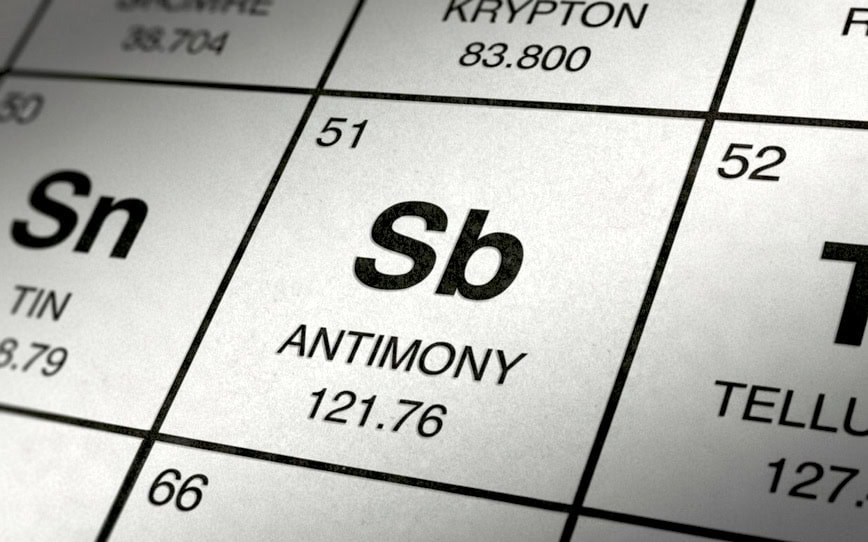
Core Insights - Antimony is increasingly recognized for its strategic importance in defense, energy storage, and industrial applications, leading to heightened capital flows and diplomatic focus on Australian small-cap companies [1][2][22]. Industry Overview - Antimony (Sb) is classified as a critical mineral by the US Geological Survey, essential for national security due to its unique applications in munitions and high-temperature electronics [2]. - China dominates the global antimony supply, producing approximately 60% of the total output as of 2024, and controls much of the downstream processing capacity [3][4]. Supply Chain Dynamics - China's environmental regulations and resource depletion are causing a decline in domestic antimony output, with significant export restrictions expected to impact global supply starting in 2025 [4][5]. - Recent customs data indicates that China's antimony exports fell by around 88% in June 2025 compared to January levels, attributed to stricter export controls and crackdowns on smuggling [5][9]. Geopolitical Context - The US is heavily reliant on imports for its antimony supply, with no significant domestic production since the closure of its last major mine, increasing vulnerability to supply disruptions [10]. - In response to these challenges, the US government is actively seeking to bolster domestic production and secure supply chains through initiatives like JPMorgan's US$1.5 trillion "Security and Resiliency Initiative" [12][21]. Australian Market Opportunities - Australian companies such as Nova Minerals and Resolution Minerals are positioned as key suppliers to the US, with strategic projects focused on antimony [13][16]. - Other notable Australian small-cap companies with antimony exposure include Larvotto Resources, Trigg Minerals, and Critical Resources, all of which are advancing projects with significant antimony potential [17][20]. Future Outlook - The intersection of policy and capital is shaping a new phase of mining investment, with antimony emerging as a critical mineral that could redefine industrial self-sufficiency for allied nations [21][23]. - As geopolitical tensions rise, antimony is expected to gain prominence not only in commodity markets but also on the global diplomatic stage [22].

It's a mistake for investors to move to cash when rates are declining: JPMorgan's Monica DiCenso
CNBC Television· 2025-10-16 11:18
AI and Market Outlook - The market is forward-looking, focusing on the next 1-5 years of earnings rather than past performance [3][4] - Current valuations at 20+ times earnings make it difficult to get excited about deploying new capital, but moving entirely to cash is not advisable, especially with declining rates [4][5] - Using trailing P/E for technology companies is inaccurate; forward earnings should be considered, especially with potential 80% earnings growth [7] - AI's impact on margins and growth is hard to predict beyond a couple of quarters, making long-term forecasting challenging [8] - The actual existence and deployment of trillions of dollars pledged for AI buildout are uncertain [8] AI Investment Strategies - Investors should consider second and third derivative plays in sectors like healthcare that will benefit from AI but have underperformed [12] - Diversification is crucial in AI investments, avoiding putting all eggs in one basket, with a mix of private and public investments [17][18] - Caution is advised regarding valuations in the AI sector [17] AI Impact and Concerns - The productivity gains from AI are expected to translate into hundreds of billions or trillions of dollars [20] - It is uncertain whether the payoff from AI will be commensurate with the trillions being invested [10] - Close monitoring of free cash flow and leveraging by companies investing in AI is necessary to avoid bubble concerns [10][11] - The market is closely watching whether companies are levering to invest in AI, as this could signal a bubble [11] Market Dynamics - Strong ratings and bank performance indicate positive market dynamics beyond just AI [22] - A barbell approach is needed in the market [22]
Critical Metals (CRML) Soars to All-Time High as JPMorgan Sets Sights on Mineral Investments
Yahoo Finance· 2025-10-15 20:53
Group 1 - Critical Metals Corp. (NASDAQ:CRML) has achieved a new all-time high, climbing to $32.15 during intra-day trading and closing up 28.74% at $29.97 [2] - The surge in CRML's stock price is attributed to investor interest in industries linked to JPMorgan's $1.5 trillion investment program over the next decade, with $10 billion earmarked for critical minerals mining and processing [2][3] - JPMorgan's investment strategy aims to enhance US economic security by reshoring key industries and building resilient supply networks, thereby reducing dependence on imports [3] Group 2 - Critical Metals Corp. has entered agreements with REalloys and Ucore Rare Metals to supply 15% and 10% of minerals produced from its Tanbreez project in Greenland, respectively [4]

Forget VYM, These Dividend ETFs Are Better For Retirees
247Wallst· 2025-10-15 18:51
Core Insights - The article discusses various dividend ETFs that are suitable for retirees, highlighting their yields, expense ratios, and performance metrics [3][4][5]. Dividend ETFs Overview - The Vanguard High Dividend Yield ETF (VYM) has a yield of 2.85% and pays quarterly dividends, but there are other ETFs with higher yields worth considering [3][4]. - The SPDR S&P Dividend ETF (SDY) has $20 million in assets, a yield of 2.58%, and has generated returns of 10.80% over three years and 11.68% over five years [5][6][8]. - The Schwab U.S. Dividend Equity ETF (SCHD) offers a yield of 3.93%, with a low expense ratio of 0.06%, and has generated cumulative returns of 11.27% in three years and 12.05% in five years [9][10][11]. - The SPDR Portfolio S&P High Dividend ETF (SPYD) has a yield of 4.77% and focuses on steady income, with a three-year return of 12.54% and a five-year return of 15.19% [11][12][14]. - The JPMorgan Equity Premium Income ETF (JEPI) provides a high yield of 7.17% through an options call strategy, generating cumulative returns of 44.26% in three years and 65.65% in five years [15][16][17].

2 ‘Perfect 10’ Stocks Wall Street’s Biggest Banks Are Betting On
Yahoo Finance· 2025-10-15 10:07
Core Viewpoint - QXO has transitioned from a software and technology firm to a significant player in the building products distribution market following its acquisition of Beacon Roofing Supply, leading to substantial growth in sales and market presence [1][7]. Company Overview - QXO operates in the building materials sector, offering products across three segments: exterior materials, interior materials, and tools & supplies [2][3]. - The company provides a wide range of products including decks, railings, lumber, windows, drywall, insulation, and various tools [2]. Financial Performance - In 2Q25, QXO reported net sales of $1.91 billion, a significant increase from $14.5 million in 2Q24, exceeding forecasts by $32.7 million [7]. - The company's non-GAAP EPS for the same quarter was 11 cents, surpassing expectations by 7 cents [7]. Market Position and Analyst Sentiment - QXO has garnered attention from major banks, with Morgan Stanley highlighting its potential for a 40% CAGR in EBITDA over the next decade, significantly outpacing its peers [8]. - The stock is currently rated as a Strong Buy based on 12 analyst reviews, with a price target of $35, indicating a potential upside of 89% from its current trading price of $18.50 [8].
X @Poloniex Exchange
Poloniex Exchange· 2025-10-15 03:00
Daily News 🗞 | Oct 15• JPMorgan is planning to offer crypto trading for clients• ARK Invest highlights Solana’s $223M real economic value in Q3• Bhutan migrates its national ID system to Ethereum• Solana to develop KRW-pegged stablecoin via partnership• Mysterious Hyperliquid trader is doubling down on Bitcoin short#CryptoNews #PoloniexNEWS ...
Top Stocks: Palantir, Goldman Sachs, Wells Fargo and JPMorgan
Yahoo Finance· 2025-10-15 00:49
Market Overview - The trading day started with a bearish sentiment but gained slight momentum due to easing tensions in the U.S.-China trade dispute [1] - The S&P 500 index experienced midday gains from earnings reports but ultimately slipped 0.2% at the close, while the Nasdaq Composite fell 0.8% [7] Earnings Reports - Major banks including Wells Fargo, Goldman Sachs, JPMorgan Chase, Citigroup, and BlackRock reported earnings that exceeded expectations [2] - Wells Fargo's stock surged 7% following its earnings announcement, with the company projecting net interest income of $47.7 billion for 2024 and 2025 [11] - Goldman Sachs reported net revenue of $15.18 billion and net earnings of $4.10 billion for Q3, but its stock declined 2% at the close [12] Stock Performance - Palantir's stock has increased by 137% year-to-date, while it gained 1.4% amidst positive analyst ratings [4] - The worst-performing stocks included Arista Networks (-5.9%), Western Digital Corp (-4.8%), and NVIDIA Corp (-4.4%) [8][9] - The Russell 2000 index reached a record high, closing up 1.3% [7] Precious Metals - Gold continued its rally, increasing by 0.7% and reaching a new record, while silver recorded a high before slipping 0.7% at the close [3]
‘Absolutely' a market bubble: Wall Street sounds the alarm on AI-driven boom as investors go all in
Yahoo Finance· 2025-10-14 20:04
Core Viewpoint - Concerns are rising on Wall Street regarding the potential overheating of the artificial intelligence (AI) trade, with warnings that the current boom may resemble a bubble [1][2] Group 1: Market Sentiment and Risk Indicators - JPMorgan CEO Jamie Dimon highlighted elevated asset prices as a significant concern, indicating that when prices are high, there is a greater risk of decline [1] - The Bank of America's Global Fund Manager Survey identified an "AI equity bubble" as the top global tail risk for the first time, reflecting extreme investor exuberance [2] - Cash levels among fund managers have dropped to 3.8%, nearing the "sell" threshold of 3.7%, which historically signals peak risk appetite [3] Group 2: Institutional Investor Behavior - State Street's Risk Appetite Index shows that large institutional investors have been increasingly bullish, adding to riskier assets for five consecutive months [4] - Nicholas Colas from DataTrek Research noted that absent a significant shock, these investors are unlikely to alter their optimistic views soon [4] Group 3: Sector Correlations and Investment Trends - Correlations across sectors have reached their lowest levels since the current bull market began, a sign that investor confidence may be excessively high and could precede short-term pullbacks [5] - Companies are responding to investor confidence by significantly increasing their investments in AI, with Google announcing a $15 billion investment in India for a new data center hub [6] - Walmart has partnered with OpenAI to enhance AI-powered retail tools, while OpenAI has secured multiple chip and infrastructure deals, which some analysts believe could exacerbate bubble risks [7]