
Rivian Automotive

Search documents
Why Rivian Stock Sold Off Today
The Motley Fool· 2025-03-28 17:09
Core Viewpoint - Automotive stocks experienced mixed reactions following President Trump's announcement of new tariffs on imported vehicles and auto parts, with Rivian Automotive benefiting initially due to its domestic production strategy [1] Group 1: Impact of Tariffs on Rivian - The new 25% tariffs on imported vehicles are expected to enhance Rivian's competitiveness against larger rivals like General Motors (GM) and Ford, which offer lower-priced electric vehicles [3] - Rivian's upcoming R2 model, priced around $45,000, aims to compete more directly with GM's Equinox and Blazer EVs [3] - Rivian currently manufactures all its electric vehicles at its Illinois plant and plans to establish a second facility in Georgia, potentially giving it a cost advantage if competitors raise prices due to tariffs [4] Group 2: Market Reactions and Price Implications - Initial investor optimism led to a 7.6% increase in Rivian's stock, but it later fell by 5.7% as concerns about overall market dynamics emerged [1][2] - Estimates suggest that the new tariffs could increase the average cost of some new cars by $5,000 to $10,000, which could benefit Rivian if competitors raise their prices accordingly [5] - However, Trump has cautioned U.S. automakers against raising prices to offset the tariffs, which could hinder Rivian's sales growth and profitability [5][6]


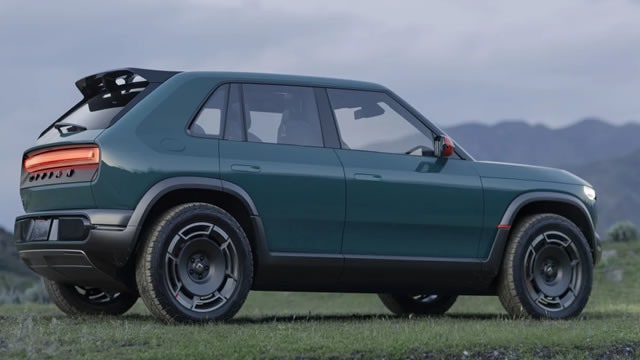
Better EV Stock: Nio vs. Rivian
The Motley Fool· 2025-03-28 08:30
Core Insights - Nio and Rivian, once leading electric vehicle stocks, have seen significant declines in their stock prices due to lower vehicle deliveries and substantial losses [2][14] - Nio is experiencing a recovery in its business with increasing deliveries and expanding vehicle margins, while Rivian is facing challenges with production and supply chain issues [2][8] Nio Overview - Nio's vehicle deliveries have grown significantly from 20,565 in 2019 to an expected 221,970 in 2024, with a peak growth rate of 113% in 2020 [4] - The company has faced challenges in 2022 and 2023, including supply chain issues and competition, leading to a decline in vehicle margins from 20.1% in 2021 to 9.5% in 2023 [3][4] - Nio's recent product launches, including the lower-end Onvo L60 and the Firefly hatchback, are expected to drive future growth [6][4] - Analysts project Nio's revenue to increase by 38% in 2025 and 32% in 2026, despite remaining unprofitable [7] Rivian Overview - Rivian's vehicle deliveries increased from 920 in 2021 to 50,122 in 2023, but growth is expected to stall in 2024 due to production shutdowns for upgrades [10] - The company has struggled with negative gross margins, which improved from -845.5% in 2021 to -24.1% in 2024, but profitability is still not expected soon [10][12] - Rivian anticipates delivering between 46,000 to 51,000 vehicles in 2025, with the launch of the R2 SUV planned for 2026 [11] - Analysts expect Rivian's revenue growth to be modest at 8% in 2025, with a potential increase of 40% in 2026 [13] Investment Comparison - Nio is viewed as a more attractive investment due to its higher vehicle deliveries, clearer future plans, and lower valuations compared to Rivian [14] - Rivian's future performance is uncertain, particularly with the upcoming R2 launch, making it a riskier investment at this time [14]


Rivian Automotive (RIVN) Exceeds Market Returns: Some Facts to Consider
ZACKS· 2025-03-25 22:56
Company Performance - Rivian Automotive (RIVN) closed at $12.36, reflecting a +1.39% increase compared to the previous day, outperforming the S&P 500's daily gain of 0.16% [1] - Over the past month, Rivian's stock has risen by 1.92%, contrasting with the Auto-Tires-Trucks sector's loss of 8.54% and the S&P 500's loss of 3.59% [1] Upcoming Earnings - Rivian is expected to report an EPS of -$0.80, which represents a 32.77% increase compared to the same quarter last year [2] - Revenue is anticipated to be $998.66 million, indicating a 17.05% decline compared to the year-ago quarter [2] Full Year Estimates - For the full year, analysts project earnings of -$2.87 per share and revenue of $5.46 billion, reflecting changes of +28.96% and +9.8% respectively from the previous year [3] Analyst Projections - Recent shifts in analyst projections for Rivian are crucial as they reflect evolving short-term business trends, with positive revisions indicating a favorable outlook on the company's health and profitability [4] Zacks Rank and Performance - The Zacks Rank system, which ranges from 1 (Strong Buy) to 5 (Strong Sell), shows Rivian currently holds a Zacks Rank of 4 (Sell) [6] - Over the last 30 days, the Zacks Consensus EPS estimate for Rivian has decreased by 2.41% [6] Industry Context - The Automotive - Domestic industry, part of the Auto-Tires-Trucks sector, has a Zacks Industry Rank of 210, placing it in the bottom 17% of over 250 industries [7] - Research indicates that the top 50% rated industries outperform the bottom half by a factor of 2 to 1 [7]
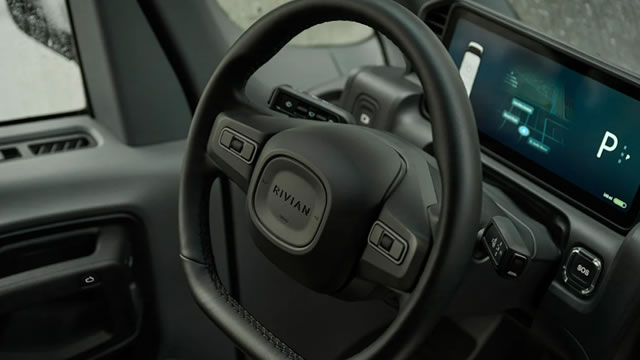
Tesla, Rivian, Aurora Highlight Tech: Autonomous Opportunities, Analyst Sees 'Attractive Profit Opportunity'
Benzinga· 2025-03-17 15:08
Core Insights - The ramp-up and near-term deployments in the electric vehicle (EV) and autonomous vehicle (AV) sectors are seen as key catalysts for growth [1] Group 1: Company Focus - Tesla is targeting a June launch for its robotaxi service in Texas, while Aurora plans a commercial launch in April in Texas [2] - Tesla is leveraging AI to enhance performance and safety for its Full Self-Driving (FSD) technology, with a focus on factors like ride smoothness and geographic area [4] - Rivian is looking to monetize personal autonomy products and plans to launch its R2 model in the first half of 2026 [8] Group 2: Cost and Profitability - Tesla's current cost to own a Model Y is approximately $0.70 per mile, with robotaxi costs expected to be below the average rideshare price of over $2 per mile in the U.S. [5] - The cost of goods sold per vehicle for Tesla was under $35,000 globally last quarter, with the Cybercab estimated to cost around $30,000 including autonomy hardware [5] - Aurora claims that autonomous driving can save roughly a third of costs compared to human driving, particularly in the trucking segment [7] Group 3: Market Dynamics - Companies are focusing on first-mover advantages and technology leads to create high switching costs and scale benefits [3] - Rivian noted that macroeconomic factors, such as tax credits and tariffs, could influence vehicle volume growth estimates [9] - Companies are looking to optimize sourcing and pricing strategies in response to tariffs [10]



How Rivian Plans to Generate Extra Revenue
The Motley Fool· 2025-03-10 11:30
Core Viewpoint - Rivian Automotive is leveraging its in-house technology to create new revenue streams, exemplified by its performance upgrade offering for its vehicles [1][5]. Group 1: Performance Upgrade - Rivian is set to release a software update that enhances the performance of its second-generation R1S and R1T vehicles, increasing horsepower from 533 to 665 and torque from 610 to 829 lb-ft [2][3]. - The upgrade reduces the 0 to 60 mph time from 4.5 seconds to 3.4 seconds and includes specialized driving modes for different terrains [3]. - Consumers will need to pay an additional $5,000 to access this performance upgrade, which is significant given the starting price of a second-generation R1S is just under $76,000 [4]. Group 2: Technology and Joint Ventures - Rivian's vertically integrated technology platform allows it to develop its own tech in-house, which can be monetized by selling to other automakers [5]. - The company has formed a joint venture with Volkswagen Group valued at up to $5.8 billion, combining their strengths to create advanced software and electronic architecture [6]. - This partnership is expected to provide Rivian with cash flow and scale while collaborating with a major automotive player [7]. Group 3: Financial Progress and Future Outlook - Rivian has achieved a positive gross profit in the fourth quarter and is currently establishing an R2 production line in Illinois, with plans for R3 and R3X models to follow [8]. - The R2 model is also set to expand into international markets, indicating potential growth opportunities for the company [8]. - The introduction of consumer-focused strategies like the Rally mode could contribute significantly to revenue, even with a modest adoption rate [9].
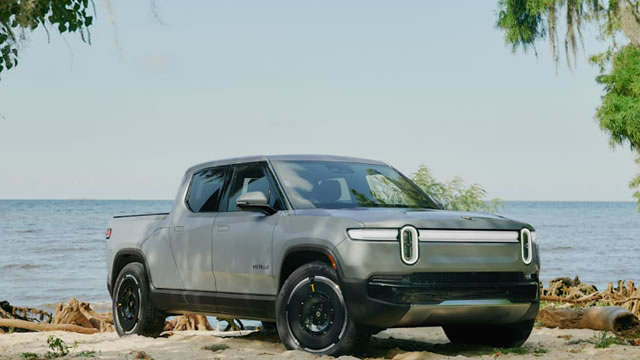
Rivian Is Living Up to Its Promises. Is This Top EV Stock Worth the Risk?
The Motley Fool· 2025-03-10 10:45
Core Insights - Rivian Automotive is not yet comparable to Tesla, but it presents both opportunities and risks for investors [1] - The company has made significant progress but still faces challenges in achieving sustainable profitability [1][6] Production and Financial Performance - Rivian produced approximately 57,000 EVs in 2023, with a projected decrease to around 49,000 in 2024 due to a focus on improving production efficiency rather than merely increasing output [3] - The company aims to achieve a gross profit in Q4 2024 and plans to extend this success throughout 2025, indicating a strategic shift towards sustainable profitability [4][6][5] Strategic Goals and Challenges - Rivian's primary objectives for 2024 include achieving a gross profit and revamping its production facility to lower manufacturing costs [4][6] - The company acknowledges potential headwinds such as changes in government policies and a challenging demand environment, which could impact the competitiveness of its high-end trucks [7] Partnerships and Financial Position - Rivian has strong partnerships with companies like Amazon and Volkswagen, which provide financial backing despite the company burning through cash [8] - The company has approximately $7 billion in cash, suggesting a more robust financial position than it may appear from its balance sheet [8] Market Context and Investor Sentiment - Rivian faces significant competition in the EV market, and its stock price has fallen 90% from its peak, indicating a loss of investor confidence [9][10] - Despite challenges, Rivian has demonstrated resilience and the ability to meet its goals, making it a potential consideration for risk-tolerant investors [10]
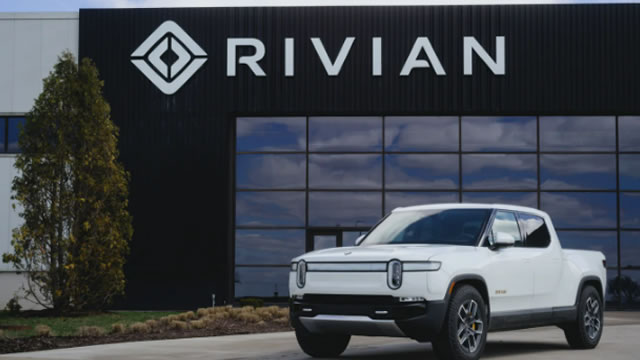
Rivian Sees Big Turning Point. Is It Time to Buy the Stock?
The Motley Fool· 2025-02-26 11:35
Core Viewpoint - Rivian Automotive has achieved its first positive gross margin in Q4 2024, marking a significant milestone in its journey towards becoming a sustainable business, although challenges remain ahead [2][10]. Financial Performance - Rivian reported a quarterly gross profit of $170 million with a gross margin rate of 9.8%, a significant improvement from a negative 46% a year ago [2][3]. - Q4 revenue increased by 32% to $1.73 billion, with automotive revenue rising 26% to $1.52 billion and software and services revenue doubling to $214 million [4]. - Adjusted EBITDA loss improved from $1 billion in the prior year to a loss of $277 million [5]. Production and Delivery - The company delivered 14,183 vehicles in Q4, a 2% increase from the previous year, but manufactured only 12,727 vehicles due to supply constraints [4]. - Rivian plans to deliver between 46,000 and 51,000 vehicles in 2025, with a temporary shutdown of its current plant to prepare for the launch of the R2 SUV [8]. Cost Management - Rivian reduced manufacturing costs by $31,000 per vehicle year over year, primarily through lower material costs and improved manufacturing processes [3]. - The company aims to achieve a modest full-year gross profit in 2025, despite projected negative adjusted EBITDA of $1.7 billion to $1.9 billion [8]. Strategic Partnerships and Future Plans - Rivian secured a loan of up to $6.6 billion from the Department of Energy to support its new manufacturing facility in Georgia and formed a joint venture with Volkswagen, which will invest up to $5.8 billion [6][11]. - The R2 SUV, expected to launch in the first half of 2026, will have a base price around $45,000, aimed at increasing market appeal compared to the R1S SUV [7][10].
Rivian Automotive(RIVN) - 2024 Q4 - Annual Report
2025-02-24 22:08
Manufacturing and Production - Rivian's manufacturing facility in Normal, Illinois has an annual production capacity of up to 150,000 vehicles, with plans to increase this to a total capacity of 215,000 vehicles by 2026[44]. - The company is planning to construct a second manufacturing facility in Georgia with an anticipated capacity of 400,000 vehicles annually, expected to begin production in 2028[45]. - Rivian's vehicles are designed with vertically integrated technologies, which include electric motors, battery packs, and vehicle electronics, aimed at reducing manufacturing costs[46]. - The expansion of the Normal Factory and the construction of the Stanton Springs North Facility are expected to increase production volumes[133]. - Rivian experienced production disruptions in Q3 2024 due to a shortage of components, resulting in fewer vehicles produced than originally expected[153]. Financial Performance and Revenue - Rivian incurred net losses of $6.8 billion, $5.4 billion, and $4.7 billion for the years ended December 31, 2022, 2023, and 2024, respectively[103]. - Rivian recognized $325 million from sales of regulatory credits earned for model years 2022 and 2023[69]. - Rivian expects to continue to recognize revenue in 2025 from credits earned for model years 2022 through 2024 as regulatory agencies approve compliance reports[69]. - A significant portion of Rivian's revenues is derived from Amazon Logistics, which accounted for 13.5% of the company's voting power as of December 31, 2024[159]. - The company plans to incur significantly higher marketing and promotional expenditures to attract and maintain consumers, which may impact financial performance[112]. Regulatory and Compliance - Rivian's vehicles are subject to motor vehicle safety standards, and failure to meet these standards could adversely affect its business and financial condition[1]. - Rivian's battery packs conform to mandatory regulations governing the transport of lithium-ion batteries[63]. - The company is preparing for possible changes to regulatory programs that yield regulatory credits[68]. - The 45X Advanced Manufacturing Production Tax Credit provides a $35/kWh incentive for cell manufacturing and $10/kWh for module assembly through 2032[77]. - Regulatory compliance regarding the transportation and storage of lithium-ion batteries is critical, as failures could result in fines and operational disruptions[202]. Strategic Partnerships and Ventures - The joint venture with Volkswagen Group aims to develop next-generation electrical architecture and software technology, consolidating its financial results within Rivian's Software and Services segment[39]. - Volkswagen Group made an equity investment of $1.0 billion in the Company, consisting of an unsecured convertible promissory note due June 2026[126]. - The Company received $1.3 billion from Volkswagen Group for licensed intellectual property in November 2024[126]. - Volkswagen Group committed to an additional equity investment of up to approximately $2.5 billion, with $0.5 billion recognized as revenue for services provided by the Joint Venture[126]. - The Company granted Volkswagen Group a perpetual, irrevocable, non-exclusive license to certain electrical architecture and software technology[129]. Market and Competition - The company may face increased competition in the commercial fleet EV market, particularly as more competitors enter the space and as it seeks to secure commercial agreements[116]. - Future growth is dependent on the demand for EVs and customers' willingness to adopt them, influenced by factors such as pricing, incentives, and government regulations[120]. - The company faces volatility in demand for its vehicles due to factors such as changes in customer preferences, economic conditions, and competition, which could adversely affect sales and revenue[108]. - The company is subject to risks related to the perception of EV quality, safety, and performance, which could impact consumer demand and sales[122]. Environmental and Sustainability Initiatives - Rivian is focused on producing electric vehicles (EVs) to reduce carbon emissions and actively reduce its environmental footprint[87]. - The company aims to match 100% of the energy consumed by its vehicles with renewable energy purchases[87]. - Rivian is investing in renewable energy projects to positively impact communities and the climate[90]. - Rivian aims to generate substantial GHG and CAFE credits as an early manufacturer of heavy-duty ZEVs at scale[67]. - The company is pursuing pathways to operationalize circularity to reduce waste and decarbonize its business[87]. Operational Risks - The company has faced manufacturing-related product component shortages due to reliance on single or limited-source suppliers, impacting production efficiency[49]. - The company relies on single or limited source suppliers for critical components, which poses supply chain risks[151]. - The inability to secure battery cell supply could adversely affect manufacturing and delivery timelines[148]. - The manufacturing plant relies on complex machinery, which poses risks of unexpected malfunctions that could affect operational efficiency[180]. - Operational risks, including environmental hazards and industrial accidents, could lead to significant financial losses and production delays[182]. Leadership and Management - The company is highly dependent on the services and reputation of its CEO, Robert J. Scaringe, which poses a risk to its operational stability[1]. - The company is dependent on the services of its CEO, Robert J. Scaringe, and any adverse events affecting his reputation could significantly impact the business[165]. Sales and Distribution - As of December 31, 2024, Rivian has dealer licenses to sell vehicles directly in thirteen states and has pending applications in another three states[70]. - The company faces regulatory limitations on direct-to-consumer sales, which could adversely affect its ability to sell vehicles in various states[176]. - Legal challenges from dealer associations may restrict the company's ability to obtain dealer licenses and operate service centers, impacting sales and service capabilities[179]. - The company has limited experience in marketing and selling, which may hinder its ability to ramp up new capabilities effectively[107]. Customer Experience and Support - Insufficient charging infrastructure could negatively impact customer confidence and demand for electric vehicles, affecting sales and profits[197]. - The company is expanding its Rivian Adventure Network of DC fast charging stations, but deployment challenges may hinder growth[193]. - Increased pressure on customer support may lead to longer wait times for service, negatively affecting customer experience and potentially increasing maintenance costs[205]. - There are state-imposed limitations on manufacturers' ability to directly service vehicles, which could hinder the establishment of a widespread service network and negatively impact customer satisfaction[204].
Rivian Automotive(RIVN) - 2024 Q4 - Earnings Call Transcript
2025-02-21 02:09
Rivian Automotive, Inc. (NASDAQ:RIVN) Q4 2024 Earnings Conference Call February 20, 2025 5:00 PM ET Company Participants Tim Bei - VP, IR RJ Scaringe - Founder and CEO Claire McDonough - CFO Javier Varela - Chief Operations Officer Conference Call Participants Dan Levy - Barclays Adam Jonas - Morgan Stanley Mark Delaney - Goldman Sachs George Gianarikas - Canaccord Genuity Shreyas Patil - Wolfe Research Operator Good day. Thank you for standing by. Welcome to Rivian's Fourth Quarter and Full Year 2024 Earni ...
Rivian Automotive(RIVN) - 2024 Q4 - Annual Results
2025-02-20 21:02
Q4 2024 Shareholder Letter © 2025 Rivian. All rights reserved. 2 The significant progress made against our core value drivers in 2024 will be foundational to Rivian's long term success. Throughout the year, the team was laser focused on driving improvement in cost and operational efficiencies, technology leadership, and customer experience. Thank you to our employees, customers, suppliers, partners, communities, and shareholders who made our 2024 accomplishments possible and for their continued support for ...