
Hess

Search documents
3 Top High-Yield Dividend Stocks I Plan to Buy in July to Boost My Passive Income
The Motley Fool· 2025-07-02 09:03
Core Insights - The article discusses the importance of generating passive income through investments in high-yielding dividend stocks, highlighting three specific companies: Brookfield Infrastructure, Chevron, and W.P. Carey as attractive options for income generation [2][13]. Brookfield Infrastructure - Brookfield Infrastructure is a leading global infrastructure investor with a diversified portfolio that includes utilities, energy midstream, transportation, and data assets, generating stable cash flow and supporting a dividend yield of over 4% [4]. - The company derives 85% of its funds from operations (FFO) from contracted or regulated assets, which are indexed to inflation, potentially adding 3% to 4% to its FFO per share annually, alongside an expected 1% to 2% growth from global economic expansion [5]. - Brookfield pays out 60% to 70% of its stable cash flow in dividends, allowing for reinvestment in growth projects, which are anticipated to boost FFO per share by 2% to 3% annually, with an overall expectation of more than 10% annual FFO per share growth [6]. Chevron - Chevron's dividend yield is nearing 5%, supported by a strong foundation with the lowest breakeven levels in the sector at approximately $30 per barrel, significantly below recent price points [7]. - The company has maintained a robust balance sheet with a leverage level of 14%, well below its target range of 20%-25%, enabling consistent dividend increases for 38 consecutive years [8]. - Chevron expects its growth projects to contribute an additional $9 billion to free cash flow next year at a $60 oil price and is pursuing an acquisition of Hess to enhance its production and cash flow growth outlook [9]. W.P. Carey - W.P. Carey is a diversified real estate investment trust (REIT) that owns critical operational real estate, including warehouse and retail properties, with leases that feature rental escalations tied to inflation, supporting a dividend yield of 5.5% [10]. - The REIT pays out about 70% to 75% of its stable cash flow in dividends, allowing for reinvestment in additional income-generating properties, supported by a strong balance sheet [11]. - W.P. Carey has consistently raised its dividend every quarter since late 2023, following a strategic exit from the office sector, and had previously increased its dividend annually for 25 years [12].




Hess Outperforms Industry in 6 Months: Should You Buy the Stock?
ZACKS· 2025-06-18 16:15
Core Insights - Hess Corporation (HES) shares have increased by 13% over the past six months, outperforming the oil-energy sector and the Zacks S&P 500 composite, which grew by 4.7% and 1.5% respectively. The company's market capitalization stands at $44 billion [1] - The company is currently trading above its 50-day simple moving average (SMA), indicating a bullish trend [2] - Hess's disciplined cost control has led to a 6.4% sequential increase in upstream income to $563 million, despite weaker oil prices and volumes [5][8] - The Yellowtail project in Guyana is on track for startup in Q3 2025, with an expected initial production capacity of 250,000 barrels of oil per day [7] - The average price target for Hess shares is $160.97, suggesting a potential upside of 13.56% from the last closing price [11] Financial Performance - Adjusted net income for Hess's exploration and production (E&P) segment rose 6.4% sequentially to $563 million in Q1 2025, despite lower oil prices and reduced sales volumes [8] - Cash operating costs were reported at $12.27 per barrel of oil equivalent (Boe), and depreciation, depletion, and amortization (DD&A) costs were $13.25/Boe, both within manageable ranges [9] - Capital and exploratory expenditure increased to $1.09 billion in Q1 2025 from $927 million a year earlier, with over half directed towards high-return projects in Guyana [10] Strategic Focus - Hess's investment strategy emphasizes high-return assets, particularly in offshore Guyana, with major developments like Uaru, Yellowtail, and Whiptail expected to drive long-term production and cash flow growth [10] - The company has a strong earnings surprise history, surpassing earnings estimates in the last four quarters with an average surprise of 9.58% [14]

1 Top High-Yielding Warren Buffett Dividend Stock You Shouldn't Hesitate to Buy Right Now
The Motley Fool· 2025-06-06 09:00
Core Viewpoint - Berkshire Hathaway, led by Warren Buffett, has a strong preference for dividend income, holding significant positions in high-yielding dividend stocks like Chevron [1][2]. Group 1: Chevron's Dividend Performance - Chevron currently pays a quarterly dividend of $1.71 per share, amounting to an annualized dividend of $6.84, which represents a 5% yield [4]. - Berkshire Hathaway collects over $800 million annually from Chevron's dividends, holding 118.6 million shares, or 6.8% of Chevron's outstanding shares [4]. - Chevron has a history of increasing its dividend, marking 38 consecutive years of growth, demonstrating resilience through various commodity price cycles [7]. Group 2: Financial Strength and Cash Flow - Chevron generated $31.5 billion in cash flow from operations last year, with $15 billion in free cash flow after capital expenses, comfortably covering its $11.8 billion dividend outlay [5]. - The company returned a record $27 billion to shareholders last year through dividends and share repurchases, maintaining a leverage ratio of 10.4%, well below its target range of 20%-25% [6]. Group 3: Growth Potential - Chevron's break-even level is around $30 per barrel, providing a significant cushion with current crude prices in the mid-$60s [9]. - The company is completing major expansion projects, including the Future Growth Project in Kazakhstan and the Ballymore project in the Gulf of Mexico, which will enhance production rates [10]. - Chevron estimates an additional $9 billion in free cash flow next year from its U.S. onshore production projects at $60 per barrel [11]. Group 4: Acquisition and Future Outlook - Chevron is in arbitration regarding its $60 billion acquisition of Hess, which could enhance its production and cash flow growth into the 2030s [12][13]. - The company is confident in winning the arbitration, having invested $2.2 billion to acquire nearly 5% of Hess' outstanding shares [13]. - Despite the potential acquisition, Chevron has the resources to continue growing its cash flow independently [13]. Group 5: Risk Profile - Chevron is characterized by a low risk profile in the oil sector, making its high-yielding dividend safe and sustainable for future growth [14].

Occidental vs. Hess: Which Energy Stock Deserves a Spot in Your Folio?
ZACKS· 2025-05-29 17:21
Industry Overview - The Zacks Oil & Gas – Integrated - United States industry presents a strong investment case due to energy security, solid infrastructure, and supportive regulations [1] - The U.S. shale boom has enhanced cost efficiency, scalable production, and access to high-quality pipelines and refineries, leading to improved profitability and resilience [1] - U.S. companies are well-positioned to meet long-term domestic natural gas demand, driven by power generation, coal-to-gas transition, and increasing LNG exports [1] Company Analysis: Occidental Petroleum (OXY) - Occidental Petroleum combines steady cash flow from its Permian Basin and global oil and gas assets with a growing focus on carbon management solutions [3] - The company is supported by Berkshire Hathaway, providing long-term value through a balanced approach to traditional energy production and scalable low-carbon technologies [3] - The Zacks Consensus Estimate indicates a year-over-year earnings decline of 32.66% for 2025, followed by growth of 14.38% for 2026 [6] - Current dividend yield for Occidental Petroleum is 2.33%, higher than the S&P 500's yield of 1.6% [12] - Occidental's return on equity (ROE) is 16.6%, compared to the industry average of 16.94% [13] - The company's debt-to-capital ratio stands at 40.64% [14] - Occidental is trading at a trailing 12-month EV/EBITDA of 4.87X, which is lower than Hess Corporation's 7.23X [15] - In the last month, shares of Occidental Petroleum gained 4.5% [16] - Approximately 83% of Occidental's production comes from domestic assets, with stable international operations and ongoing debt reduction acting as tailwinds [19] Company Analysis: Hess Corporation (HES) - Hess Corporation is focused on sustainable growth and has invested in renewable energy projects to reduce greenhouse gas emissions [4] - The company is undergoing a major transition with a pending acquisition by Chevron, currently under arbitration due to disputes over its Guyana assets [4] - The Zacks Consensus Estimate indicates a year-over-year earnings decline of 38.53% for 2025, followed by growth of 20.14% for 2026 [9] - Current dividend yield for Hess Corporation is 1.53% [12] - Hess's return on equity (ROE) is 21.78%, higher than Occidental's [13] - The company's debt-to-capital ratio is 41.48% [14] - Hess Corporation's trailing 12-month EV/EBITDA is 7.23X [15] - International operations, particularly in Guyana, are a significant source of oil and gas production for Hess [19] Conclusion - Based on the analysis, Occidental Petroleum is suggested for inclusion in oil and gas portfolios, while Hess Corporation is recommended to be avoided for the time being [20]


Hess Corporation: Another Platform Begins Operations Soon (Rating Upgrade)
Seeking Alpha· 2025-05-23 20:29
I analyze oil and gas companies like Hess Corporation and related companies in my service, Oil & Gas Value Research, where I look for undervalued names in the oil and gas space. I break down everything you need to know about these companies -- the balance sheet, competitive position and development prospects. This article is an example of what I do. But for Oil & Gas Value Research members, they get it first and they get analysis on some companies that is not published on the free site. Interested? Sign up ...
This Top Warren Buffett Stock Is a Super Dividend Stock to Buy for Passive Income
The Motley Fool· 2025-05-18 19:17
Core Insights - Chevron is a significant holding in Warren Buffett's Berkshire Hathaway, representing 6.8% of its outstanding shares valued at $16.7 billion, making it the fifth-largest holding in Buffett's portfolio [1] - The company offers a high dividend yield of 4.9%, significantly above the S&P 500 average of 1.3%, with an annualized dividend of $6.84 per share [4][5] - Chevron's strong financial position, characterized by a low net debt ratio of 14%, allows for continued investment and shareholder returns even during low oil price periods [6] Dividend Stability - Chevron has a history of consistent dividend growth, having increased its dividend for 38 consecutive years, outperforming peers in growth over the last decade [7] - The company is expected to generate over $800 million in dividend income for Berkshire Hathaway in the current year [1] Growth Prospects - Chevron anticipates a 6% compound annual growth rate in oil and gas production, driven by projects in the Gulf of Mexico, Permian Basin, and Kazakhstan, potentially generating an additional $9 billion in free cash flow at $60 oil [9][10] - The company is expanding its exploration efforts, having added over 11 million net exploration acres since last year, and is also advancing lower-carbon energy initiatives [10][11] Strategic Acquisitions - Chevron is in the process of acquiring Hess, which is expected to enhance its production and cash flow growth outlook into the 2030s, with confidence in winning a related arbitration case against Exxon [12][13] Conclusion - Chevron's robust business model, strong financial health, and growth initiatives position it as a superior dividend stock for passive income, appealing to investors seeking reliable returns [14]

3 Top Oil Stocks That Can Still Thrive Even Though Oil Prices Have Dropped Into the $60s
The Motley Fool· 2025-05-18 09:40
Group 1: Oil Price Trends - Crude oil prices have fallen over 10% this year, with Brent crude now in the low $60s, impacting cash flows for oil companies [1] - The significant concern for oil companies arises when prices drop below $50 per barrel, as this is the break-even point for some firms [6] Group 2: Company Resilience - TotalEnergies is well-positioned to handle lower oil prices due to its diversified business model and strong cash reserves, with a net debt-to-equity ratio around 15% [4][5] - ExxonMobil's upstream segment, which accounts for nearly 70% of its earnings, is expected to maintain resilience, with a projected breakeven price dropping to $35 per barrel by 2027 and $30 by 2030 [9][10] - Chevron has the lowest upstream breakeven level in the industry at around $30 per barrel, supported by strategic acquisitions and a strong balance sheet with a net debt ratio of 14% [13][15] Group 3: Financial Strategies - TotalEnergies maintains a sustainable 6.7% dividend yield due to its diversified operations and efficient management [7] - ExxonMobil anticipates generating nearly $110 billion in incremental cash flow by 2030 at a Brent price of $55, with plans to invest nearly $140 billion in major projects [11][12] - Chevron's investments are expected to generate an additional $9 billion in annual free cash flow at $60 oil, alongside a potential $60 billion acquisition of Hess to enhance its resource portfolio [16][17]


Better Energy Stock: Chevron vs. ExxonMobil
The Motley Fool· 2025-05-15 09:05
Group 1: Company Overview - ExxonMobil and Chevron are direct competitors operating under the integrated energy model, which includes oil and natural gas production, transportation, and refining [2] - Both companies have extensive gas station networks and are exposed to the entire energy value chain, helping to mitigate the impact of price fluctuations in oil and natural gas [4] Group 2: Financial Strength - Both Exxon and Chevron have strong balance sheets, with Exxon’s debt-to-equity ratio at approximately 0.15 and Chevron’s at around 0.2, indicating ample room for leverage [5] - The companies have impressive dividend histories, with Exxon increasing its dividend for 43 consecutive years and Chevron for 38 years, showcasing their resilience in the volatile energy sector [6] Group 3: Investment Considerations - Exxon has a dividend yield of roughly 3.8%, while Chevron's yield is significantly higher at 5%, making Chevron more attractive for yield-focused investors [8] - Chevron faces notable challenges, including a proposed merger with Hess and political issues in Venezuela, which contribute to its higher yield as compensation for added risks [9][10][11] - The current weak energy prices suggest it may be a good time to consider investing in either company, with Exxon being more suitable for conservative investors and Chevron for those willing to accept higher risk for greater yield [12][13]
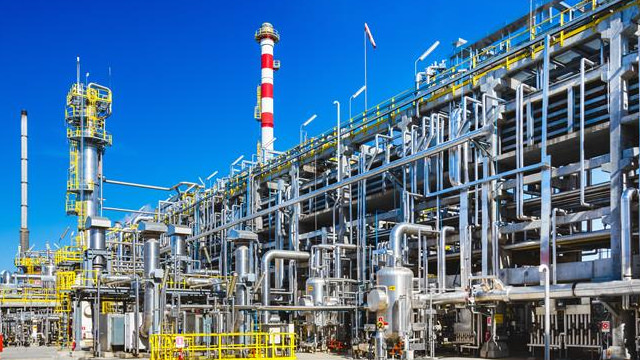
Is a Big Oil Megamerger Brewing? Exxon, Chevron, and Others Are Eyeing This Oil Stock.
The Motley Fool· 2025-05-11 19:22
Consolidation in the Oil Industry - A consolidation wave has occurred in the oil sector, with ExxonMobil initiating a $64.5 billion acquisition of Pioneer Natural Resources and Chevron planning to buy Hess for $60 billion [1][2] BP's Strategic Shifts - BP has faced challenges and undergone two significant strategy shifts, initially pledging to cut capital spending on oil and gas projects by 40% to focus on clean energy [4] - Due to a recovery in oil prices and underperformance, BP has revised its strategy, reducing renewable investment from $5 billion to $1.5 billion to $2 billion annually while increasing oil and gas capital investment to $10 billion per year [5][6] BP's Production Goals - BP aims to increase its overall oil and gas output to an average of 2.5 million barrels of oil equivalent (BOE) per day by 2030, up from less than 2.4 million BOE last year [6] Comparison with Competitors - BP's strategy contrasts with U.S. oil giants like Exxon and Chevron, which have clear multi-year strategies for shareholder value growth, including Exxon's $140 billion investment plan and Chevron's focus on advantaged assets [7][8] Potential Takeover Interest - BP's underperformance has made it a potential takeover target, with companies like Shell, Exxon, Chevron, TotalEnergies, and Adnoc Gas reportedly considering acquisitions [10][12] - Shell has expressed hesitance, preferring stock repurchases over acquiring BP, citing the need to stabilize its own operations first [11] Challenges to Acquisition - BP's significant debt of $77 billion, partly from the Deepwater Horizon disaster, poses a challenge for potential acquirers, as it could negatively impact their balance sheets [13] - Regulatory scrutiny in the U.K. may also hinder any acquisition attempts, as there may be resistance to foreign control of BP [13] Investment Appeal - Despite speculation around a potential acquisition, BP's shifting strategy and financial challenges make it a less appealing investment compared to Exxon and Chevron, which have more defined growth strategies [14]


Hess(HES) - 2025 Q1 - Quarterly Report
2025-05-08 20:09
UNITED STATES SECURITIES AND EXCHANGE COMMISSION WASHINGTON, D.C. 20549 Form 10-Q ☒ QUARTERLY REPORT PURSUANT TO SECTION 13 OR 15(d) OF THE SECURITIES EXCHANGE ACT OF 1934 For the quarter ended March 31, 2025 or ☐ TRANSITION REPORT PURSUANT TO SECTION 13 OR 15(d) OF THE SECURITIES EXCHANGE ACT OF 1934 For the transition period from to Commission File Number 1-1204 HESS CORPORATION (Exact Name of Registrant as Specified in Its Charter) DELAWARE (State or Other Jurisdiction of Incorporation or Organization) | ...