
BAIC

Search documents
Lear(LEA) - 2025 Q4 - Earnings Call Transcript
2026-02-04 15:02
Financial Data and Key Metrics Changes - Lear Corporation reported a 5% increase in revenue for Q4 2025, totaling $23.3 billion for the full year [4] - Core operating earnings were $1.1 billion, representing 4.6% of net sales for the full year [4] - Adjusted earnings per share increased by 1% to $12.80, marking the fifth consecutive year of growth [4] - Operating cash flow was $1.1 billion, with free cash flow at $527 million for 2025 [4][5] Business Line Data and Key Metrics Changes - In the Seating segment, sales for 2025 were $17.3 billion, a slight increase of 0.4% from 2024, with adjusted operating margins at 6.4% [34][35] - E-Systems sales decreased by 2% to $6 billion, with adjusted earnings at $293 million, or 4.9% of sales [36][37] - The company secured over $1.4 billion in E-Systems business awards, the strongest performance in over a decade [8] Market Data and Key Metrics Changes - Global vehicle production increased by 1% year-over-year, with production volumes flat in North America and down 2% in Europe, while China saw a 3% increase [30] - Lear expects more than 50% of its revenue in China to come from domestic automakers next year [22] Company Strategy and Development Direction - Lear's strategic priorities include extending leadership in Seating, expanding margins in E-Systems, and supporting sustainable value creation through disciplined capital allocation [5] - The company is focused on innovation and technology, particularly in modularity and automation, to enhance manufacturing efficiency and product design [56][59] - Lear aims to achieve a seating market share of 29%, supported by strong relationships with both traditional and domestic Chinese automakers [60] Management's Comments on Operating Environment and Future Outlook - Management expressed confidence in the company's ability to grow revenue, operating income, margins, and free cash flow in 2026 and beyond [47] - The company anticipates continued strong performance from its IDEA initiatives and digital transformation efforts, which are expected to drive future savings and operational improvements [64] - Management acknowledged the challenges posed by industry volatility but emphasized the company's solid foundation for growth [46] Other Important Information - Lear repurchased $325 million in shares during 2025, exceeding the initial target of $250 million, returning nearly $500 million to shareholders [10] - The company has a robust backlog of $1.325 billion, with significant contributions expected from new business awards in both Seating and E-Systems [24] Q&A Session Summary Question: Can you discuss the conquest win and its impact on seating share? - Management highlighted the significance of the conquest win as the largest in Lear's history, driven by innovation and technology, and expressed confidence in achieving a 29% seating market share [52][60] Question: What is the outlook for Net Performance in 2026? - Management indicated that they expect similar levels of Net Performance in 2026 as in 2025, with continued opportunities for savings from digital and automation initiatives [62][64] Question: How should investors think about earnings cadence throughout the year? - Management noted a strong start to the year, with expectations for Q1 revenues around $6 billion and operating income of approximately $260 million, despite some anticipated downtime [68][70] Question: Can you provide details on onshoring wins and their launch timing? - Management confirmed that the Orion award will benefit 2027, with limited additional onshoring activity expected until 2028 and 2029 [73][74] Question: What is the expected revenue impact of the large conquest win? - Management clarified that the large conquest win is outside the current backlog and is expected to launch in late 2028, potentially generating $400 million-$500 million in annual revenue [79][80]

2026 中国新能源汽车与动力电池手册_从自动驾驶到人工智能-2026 China EV & EV Battery Handbook_ From Autonomous Driving to AI
2026-01-20 01:50
Summary of Key Points from the Conference Call Industry Overview: Greater China Auto, EV, and EV Battery Industry Forecasts - **China's Auto Industry**: Expected to face challenges in 2026 with a forecasted decline in auto wholesales by **1.6% YoY** compared to a **10% YoY** increase in 2025. This decline is attributed to front-loaded demand in 2025 [1] - **Domestic EV Sales**: Anticipated to grow only **7% YoY** in 2026 due to a **5% increase in purchase tax** and reduced trade-in subsidies [1] - **Export Sales**: Projected to increase by **12% YoY**, reaching **7.9 million units** in 2026, with EV exports expected to surge by **40% YoY** [1] - **Competition Dynamics**: Shift from price competition to configuration-based competition, necessitating more investment in autonomous driving (AD) and smart cabin technologies [1] Key Automotive/EV Themes for 2026 Theme 1: Export Growth - **Export Growth**: Companies like Chery and BYD are expected to benefit significantly from exports, especially with the EU's minimum EV price replacing tariffs [2] Theme 2: Autonomous Driving Development - **ADAS to AD Transition**: L3 permits issued to Changan and BAIC, with highway/city NOA penetration expected to exceed **40%** in 2026 and **85%** by 2030. L4/L5 penetration is projected to reach **8%** by 2030 [3] Theme 3: Cost Concerns - **Battery and Memory Costs**: Rising costs and supply stability of memory are key concerns for auto OEMs [3] Key Battery Themes for 2026 Theme 1: Energy Storage Systems (ESS) - **ESS Demand**: Global battery ESS installations expected to grow by **33% YoY** in 2026, with shipments increasing by **41% YoY** [4] Theme 2: Global Expansion - **Overseas Capacity Expansion**: Chinese battery manufacturers are accelerating their overseas capacity expansion, particularly in Europe and Southeast Asia, in response to rising tariffs and trade tensions [4] Theme 3: VAT Rebate Changes - **Export VAT Rebate Cut**: Anticipated to lead to a rush in battery production and shipment in Q1 2026, potentially increasing raw material prices and exerting cost pressure on battery makers and auto OEMs [5] Theme 4: Technological Innovation - **Sodium-Ion Battery**: Launch of Gen-2 sodium-ion battery expected, with ASSB (all-solid-state battery) small-batch production anticipated to start in 2027 and scale up significantly post-2029 [5] Investment Recommendations - **Top Picks**: - **XPeng**: Launch of Mona SUV and HR in 2H26, with a focus on AI-related businesses [6] - **CATL**: Growth driven by CEV, ESS, and overseas capacity despite short-term cost pressures [6] - **Tuopu**: Major supplier for humanoid robots with overseas expansion [6] - **Minth**: Resilient earnings growth supported by high overseas market exposure [6] - **Hesai**: Increased LiDAR adoption in China alongside L3 ADAS development [6] Additional Insights - **Market Dynamics**: The shift in competition and the focus on technological advancements highlight the evolving landscape of the automotive and EV sectors in China, emphasizing the need for companies to adapt to changing consumer preferences and regulatory environments [1][3][4][5]






Chassis Supply Chain's "iPhone Moment": China's Tier 1 Shift as LeeKr Emerges
Prnewswire· 2026-01-19 04:11
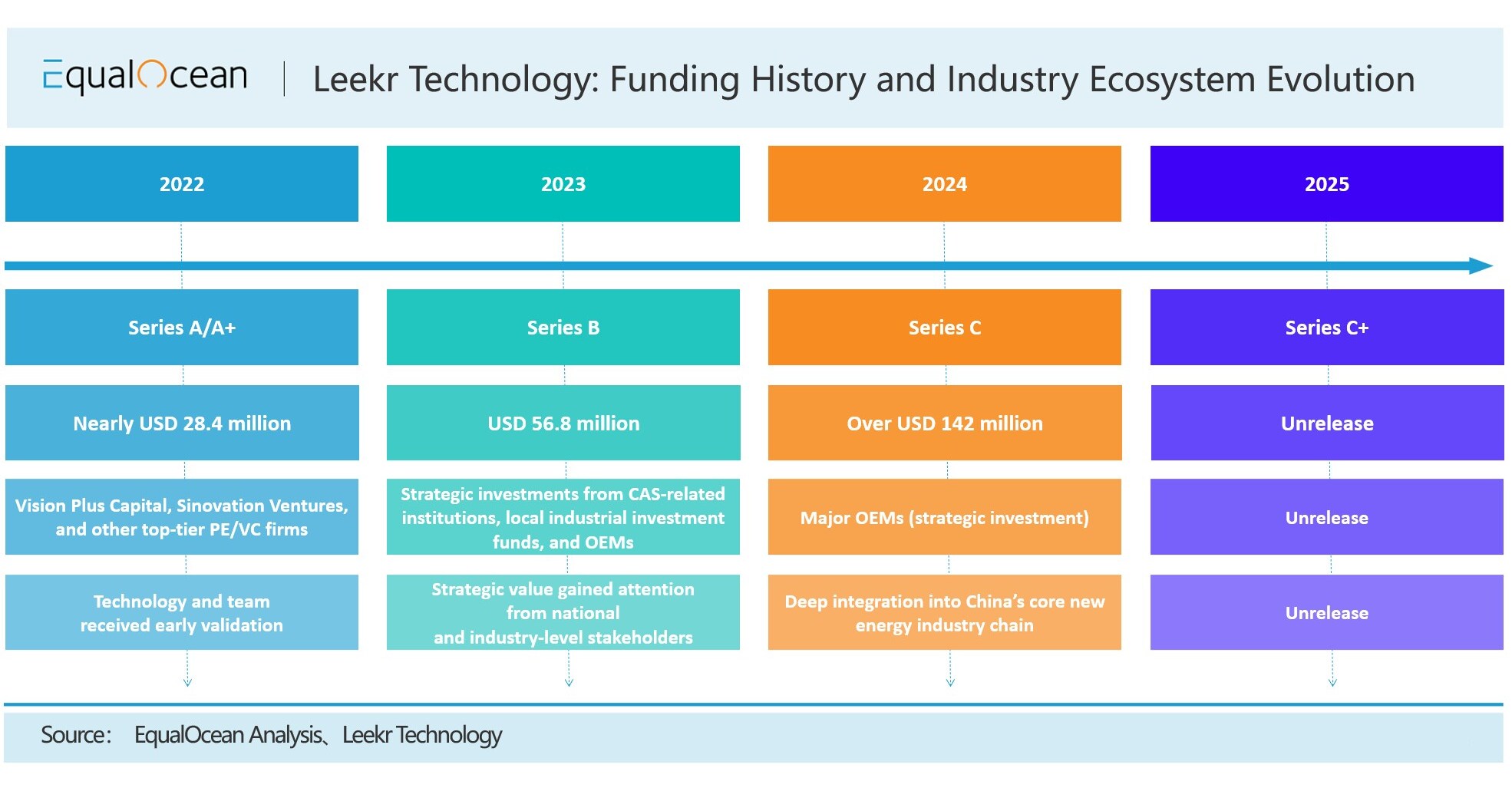
Industry Overview - China's electric vehicle (EV) industry has transformed into a leading force globally, with over 2 million EVs exported in the first ten months of 2025, nearly double the previous year [1] - Global vehicle sales reached approximately 70.53 million units from January to September 2025, with new energy vehicles (NEVs) accounting for over 22% of total sales, and nearly 70% of NEV sales growth originating from China [2] - China holds a 70%–85% global market share in critical components like batteries, driving the global shift towards electrification [2][3] Supply Chain Transformation - The automotive supply chain is undergoing a structural change, with China establishing systemic advantages in battery supply chains, electric drive platforms, and manufacturing efficiency [3] - Chassis-level system solutions are evolving from mechanical components to core enablers of intelligent driving, with technologies like brake-by-wire and steer-by-wire becoming essential [4] Company Spotlight: LeeKr Technology - LeeKr Technology, founded in 2021, has raised over USD 284 million in financing, indicating strong investor confidence in its technical direction and the broader industry trend [7][9] - The company has secured significant funding rounds, including USD 56.8 million in Series B financing in 2023, marking its transition from a promising startup to a strategic player in China's intelligent EV ecosystem [10][11] - By 2024, LeeKr closed a Series C funding round of over USD 142 million, with participation from government-guided funds and major OEMs, further integrating it into China's NEV supply chain [13][15] Strategic Partnerships and Market Position - LeeKr serves over ten automaker customers, with its products deployed across more than thirty vehicle models, showcasing its technical validation and industry trust [17] - The company is positioned to evolve from a supporting role to a key provider of foundational capabilities in the smart EV supply chain, addressing challenges of sustainable operation and scalability [24][26] Global Expansion Strategy - LeeKr's globalization strategy involves expanding alongside automotive customers into overseas markets, establishing localized manufacturing for critical components [21][22] - The cooperation with Geleximco Group exemplifies LeeKr's approach to translating China's engineering depth into globally applicable industrial capabilities [26]

Chinese car sales double in Europe despite tariffs
Yahoo Finance· 2025-12-11 08:00
Core Insights - Chinese car sales in Europe have surged significantly, with a 91% increase in the first nine months of 2025 compared to 2024, totaling 509,700 units sold [1][2] - Major Chinese brands like BYD, Leapmotor, Dongfeng, and Chery have experienced substantial sales growth, indicating a strategic shift towards hybrids and plug-in hybrids to counteract the impact of tariffs [2][5] Sales Performance - BYD's sales increased by 305%, while other companies like Skyworth, BAIC, and Dongfeng saw increases of 582%, 532%, and 430% respectively [5] - Saic Motor, which owns MG, led the sales with 226,047 cars sold, marking a 21% increase from the previous year [4] Market Dynamics - The European Union has imposed tariffs of up to 45% on Chinese electric vehicles, alongside an additional 35% tariff on imports, yet Chinese brands have managed to grow by focusing on hybrids and plug-in hybrids [2][3] - The shift in strategy has allowed Chinese manufacturers to maintain competitive pricing and product quality, contributing to their sales growth [5] Future Outlook - Continued growth is anticipated as Chinese carmakers plan to introduce more models and explore new technologies, including extended-range vehicles and local production [6]

Lear(LEA) - 2025 Q3 - Earnings Call Presentation
2025-10-31 13:00
Financial Performance - Q3 2025 - Sales reached $5.7 billion, a slight increase from $5.6 billion in Q3 2024[11] - Core operating earnings were $241 million, down from $257 million in Q3 2024[11] - Adjusted earnings per share decreased to $2.79 from $2.89 year-over-year[11] - Operating cash flow significantly increased to $444 million compared to $183 million in the same quarter last year[11] Segment Performance - Seating sales were $4.25 billion with adjusted earnings of $261 million, resulting in a 6.14% margin[32] - E-Systems sales were $1.43 billion with adjusted earnings of $60 million, resulting in a 4.20% margin[36] Full Year 2025 Outlook - Net sales are projected to be between $22.85 billion and $23.15 billion[41] - Core operating earnings are expected to be between $995 million and $1.055 billion[41] - The company anticipates generating free cash flow between $475 million and $525 million[41] Market and Currency - Global vehicle production increased by 1% year-over-year, with China showing the strongest growth at 10%[25] - The Euro appreciated against the dollar, increasing 6% from $1.10/€ to $1.17/€[26]
优必选机器人_处于颠覆性技术浪潮前沿;给予增持评级(OW)-UBTECH Robotics - H_ At the forefront of a disruptive technology wave; initiate with OW
2025-08-05 03:20
Summary of UBTech Robotics Conference Call Company Overview - **Company**: UBTech Robotics - **Industry**: Humanoid Robotics - **Location**: Shenzhen, China - **Rating**: Overweight (OW) with a price target of HK$135 by December 2026, implying approximately 50% potential upside based on a P/S methodology reflecting the industry's early stage and high growth potential [2][11][29] Key Points Industry Insights - The global humanoid robot industry is characterized as a disruptive technology with vast growth potential, projected to unlock a total addressable market (TAM) of 5 billion units over the next decade [6][13] - Growth will be driven by technological advancements and penetration into industrial, logistics, and household applications within an 8-year horizon [6] - The humanoid robot market is expected to mirror the success of the electric vehicle (EV) and smartphone sectors, with significant expansion anticipated due to government support and labor shortages [13][56] UBTech's Position - UBTech is positioned as a front runner in the humanoid robot industry, benefiting from a robust customer base including over 10 clients in trial runs or confirmed orders, such as BYD, Dongfeng Liuzhou Motor, and Foxconn [2][8][12] - The company's strategic location in Shenzhen provides access to a sophisticated manufacturing supply chain and a supportive policy environment, enhancing growth prospects [6][12] - Revenue growth estimates indicate a projected 260% CAGR for UBTech's humanoid robot revenue from FY25 to FY27E, with overall revenue expected to reach Rmb5 billion by FY27E [6][7] Financial Projections - Financial estimates for UBTech include: - FY24 Revenue: Rmb1,305 million - FY25 Revenue: Rmb1,865 million - FY26 Revenue: Rmb3,334 million - FY27 Revenue: Rmb5,262 million - Expected breakeven in 2H27E [7][26] - Adjusted EBITDA is projected to improve from a loss of Rmb1,069 million in FY24 to a profit of Rmb142 million in FY27E [7] Risks and Challenges - Potential risks include increased competition from new entrants and reliance on key customers like BYD, which may present challenges as the market evolves [6][14] - The company faces inherent risks associated with the nascent stage of humanoid robot technology, which may impact its ability to maintain leadership [14] Market Performance - UBTech's share price has shown significant volatility, with a year-to-date increase of 67% as of July 28, 2025, compared to a 26% increase in the HSCEI index [32][38] - The company has experienced fluctuations in share price due to factors such as IPO lock-up expirations and market sentiment towards the humanoid robot theme [34][36] Strategic Partnerships and Product Offerings - UBTech's diverse product offerings include Education Smart robotics, Logistics Smart robotics, and Consumer-level robots, with advanced features like mapping and facial recognition [12] - The company has established strategic partnerships that enhance its R&D capabilities and market presence, including collaborations with Baidu and FAW Volkswagen [43] Future Outlook - The humanoid robot industry is expected to see exponential growth, with UBTech positioned to capitalize on significant market opportunities [13][44] - The projected global demand for humanoid robots suggests a potential 1:1 ratio with the human population in the long run, with applications extending across various industries and domestic settings [62][63] Conclusion UBTech Robotics is strategically positioned in a high-growth industry with substantial market opportunities. While the company faces risks associated with competition and reliance on key customers, its strong partnerships, innovative product offerings, and favorable market dynamics suggest a promising outlook for future growth.
