CONMED Corporation

Search documents
全球与中国内镜诊疗器械市场现状及未来发展趋势
QYResearch· 2025-12-22 04:15
Core Viewpoint - The endoscopic diagnostic and therapeutic device industry is experiencing significant growth driven by increasing demand for minimally invasive procedures, advancements in material technology, and a shift towards single-use consumables to enhance safety and efficiency [4][10][19]. Industry Current Status - The usage rate of single-use consumables in endoscopic devices is continuously increasing, becoming a major trend in the industry. These products, such as biopsy forceps and hemostatic clips, effectively reduce the risk of cross-infection and simplify hospital disinfection processes [4][5]. - Material technology for endoscopic devices has seen significant advancements, with the use of medical-grade polymers, silicone, nickel-titanium alloys, and low-friction coatings enhancing performance and safety [4][10]. - High-end consumables still rely on imports or technical collaborations, as domestic companies face challenges in R&D capabilities and precision manufacturing, leading to a market dominated by a few international brands [4][7]. Customer Demand Differentiation - There is a clear stratification in customer demand for endoscopic consumables. Large hospitals and endoscopy centers prioritize high-quality, high-performance products, while smaller hospitals and clinics focus on cost-effectiveness and ease of use [5][6]. Market Competition Landscape - The endoscopic device market features a coexistence of international brands and domestic companies. International firms lead in high-end consumables, while domestic companies compete aggressively in the mid-to-low-end market, leveraging cost advantages and localized services [7][10]. Development Trends - The growth of the endoscopic diagnostic market in China is primarily driven by the increasing population aged over 40 and rising rates of endoscopic examinations. The population aged 40 and above has grown by 6.64% from 2010 to 2019, reaching nearly 700 million [8][15]. - The trend towards micro-invasive procedures is expanding, with increasing awareness of early screening and treatment for gastrointestinal diseases. This shift is supported by advancements in endoscopic technology and materials [9][10]. - The demand for single-use devices is accelerating due to heightened infection control measures post-COVID-19, with single-use endoscopes and consumables becoming standard in various medical settings [19][20]. Market Opportunities and Drivers - The aging population and changing disease patterns are driving demand for endoscopic devices, particularly for early diagnosis and intervention in gastrointestinal cancers and related conditions [18][19]. - Policies promoting early screening for cancers and major gastrointestinal diseases are increasing the usage of endoscopic devices, contributing to long-term growth in the industry [19][20]. - Technological innovations, including AI-assisted diagnostics and new energy platforms, are enhancing the capabilities of endoscopic devices, leading to the development of new procedures and products [21][22]. Emerging Market Infrastructure - Emerging markets in Southeast Asia, Latin America, the Middle East, and Africa are rapidly upgrading their medical infrastructure, creating opportunities for domestic endoscopic device manufacturers to penetrate these markets due to their cost advantages [22].


2031年市场规模达3.5亿美元!全球手持式手术牵开器市场稳健增长
QYResearch· 2025-12-05 01:53
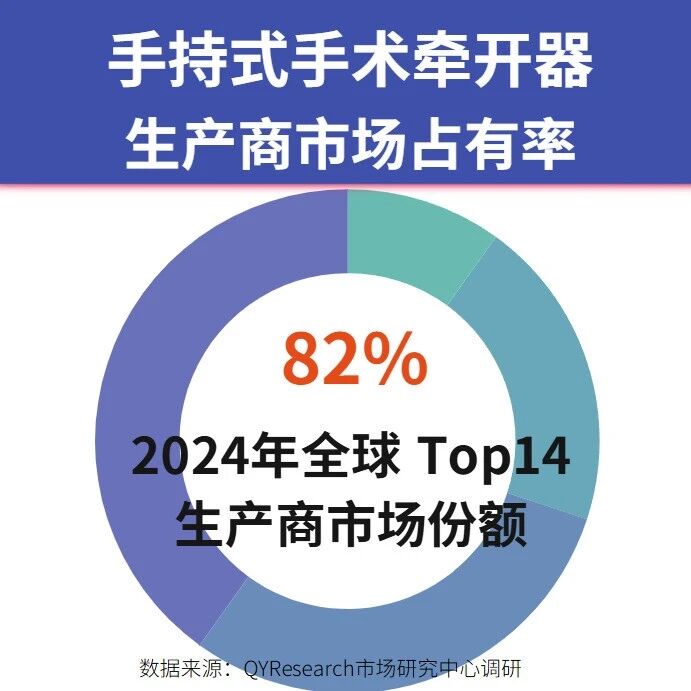
Core Viewpoint - The handheld surgical retractor market is projected to reach $350 million by 2031, with a compound annual growth rate (CAGR) of 3.18% in the coming years [3]. Market Overview - The global market for handheld surgical retractors is characterized by stable demand for traditional instruments and technological upgrades leading to structural optimization [4]. - The top 14 manufacturers hold approximately 82% of the market share, with key players including Johnson & Johnson, Medtronic plc, and Becton, Dickinson & Co. [8]. Industry Development Trends - The industry is experiencing a shift from standardized stainless steel tools to high-performance, low-damage, and specialized products [4]. - The demand for handheld retractors is driven by the increasing volume of surgical procedures, particularly in general surgery, orthopedics, and neurosurgery [9]. - There is a growing trend towards disposable handheld retractors and replaceable blade kits in specific departments, driven by infection control and efficiency needs [4][9]. Upstream Supply Chain - The upstream supply chain consists of medical-grade metals, precision processing equipment, surface treatment technologies, and sterile packaging materials [10]. - Key raw materials include medical-grade stainless steel and titanium alloys, which are crucial for the retractor's durability and safety [10]. Midstream Manufacturing - The midstream sector focuses on instrument design, precision manufacturing, quality verification, and brand management [11]. - Midstream companies are adapting to various surgical scenarios by developing multiple blade shapes and handle structures [11][12]. Downstream Applications - Handheld surgical retractors are widely used across various surgical departments, including general surgery, orthopedics, and emergency trauma [13]. - The demand structure is evolving towards a combination of general high-volume needs and specialized, refined retractors for specific surgical applications [13].
Henry Schein (HSIC) Q3 Earnings and Revenues Beat Estimates
ZACKS· 2025-11-04 13:11
Core Insights - Henry Schein (HSIC) reported quarterly earnings of $1.38 per share, exceeding the Zacks Consensus Estimate of $1.27 per share, and up from $1.22 per share a year ago, representing an earnings surprise of +8.66% [1] - The company posted revenues of $3.34 billion for the quarter ended September 2025, surpassing the Zacks Consensus Estimate by 2.02% and increasing from $3.17 billion year-over-year [2] - The stock has underperformed the market, losing about 6.6% since the beginning of the year compared to the S&P 500's gain of 16.5% [3] Earnings Outlook - The current consensus EPS estimate for the upcoming quarter is $1.31 on revenues of $3.3 billion, and for the current fiscal year, it is $4.82 on revenues of $12.98 billion [7] - The estimate revisions trend for Henry Schein was mixed ahead of the earnings release, resulting in a Zacks Rank 3 (Hold) for the stock, indicating expected performance in line with the market [6] Industry Context - The Medical - Dental Supplies industry, to which Henry Schein belongs, is currently in the top 23% of over 250 Zacks industries, suggesting a favorable outlook compared to lower-ranked industries [8] - Empirical research indicates a strong correlation between near-term stock movements and trends in earnings estimate revisions, which can be tracked by investors [5]


Align Technology (ALGN) Q3 Earnings and Revenues Surpass Estimates
ZACKS· 2025-10-29 22:21
Core Insights - Align Technology reported quarterly earnings of $2.61 per share, exceeding the Zacks Consensus Estimate of $2.37 per share, and showing an increase from $2.35 per share a year ago [1][2] - The company achieved revenues of $995.69 million for the quarter ended September 2025, surpassing the Zacks Consensus Estimate by 2.49% and up from $977.87 million year-over-year [3] - Align Technology's stock has underperformed, losing approximately 36.2% since the beginning of the year, while the S&P 500 has gained 17.2% [4] Earnings Performance - The earnings surprise for the recent quarter was +10.13%, following a previous quarter where the company reported earnings of $2.49 per share against an expectation of $2.57, resulting in a surprise of -3.11% [2] - Over the last four quarters, Align Technology has surpassed consensus EPS estimates three times [2] Future Outlook - The current consensus EPS estimate for the upcoming quarter is $3.06 on revenues of $1.04 billion, and for the current fiscal year, it is $10.07 on revenues of $4.01 billion [8] - The estimate revisions trend for Align Technology was mixed ahead of the earnings release, resulting in a Zacks Rank 3 (Hold) for the stock, indicating expected performance in line with the market [7] Industry Context - Align Technology operates within the Medical - Dental Supplies industry, which is currently ranked in the top 21% of over 250 Zacks industries, suggesting a favorable industry outlook [9] - The performance of Align Technology's stock may be influenced by the overall industry outlook, as research indicates that the top 50% of Zacks-ranked industries outperform the bottom 50% by more than 2 to 1 [9]

CONMED Corporation (CNMD): A Bull Case Theory
Yahoo Finance· 2025-10-08 16:49
Core Thesis - CONMED Corporation is viewed positively due to its strong fundamentals, recovery in supply chain efficiency, and potential for significant value appreciation over the next three years [1][5]. Company Overview - CONMED Corporation is a global medical device company focused on less invasive and effective surgical solutions across various medical fields, including orthopedics and general surgery [2]. - The company was founded in 1970 and has expanded through acquisitions and internal R&D, with notable acquisitions including Linvatec in the 1990s and Buffalo Filter in 2019 [2]. Financial Performance - In 2024, CONMED generated approximately $1.3 billion in revenue, with 42% from orthopedic surgery and 58% from general surgery [3]. - The orthopedic segment relies heavily on single-use disposables, contributing 79% of its revenue, while the general surgery segment features high-margin products, with over 92% of revenue from single-use items [3]. - Revenue has increased by 30%, free cash flow has risen by 50%, and returns on capital have improved, indicating strong financial health [4]. Market Position and Growth Potential - Despite a decline of over 70% from 2021 highs, CONMED's fundamentals remain robust, with significant margin expansion and management forecasting peak EPS in 2025 [4]. - Approximately 45% of sales are derived from international markets, providing a diversified revenue stream [3]. - The company is expected to benefit from industry tailwinds, although past supply chain disruptions have temporarily affected its market share, particularly in orthopedics [4]. Investment Case - The investment case for CONMED is strengthened by its differentiated products, high recurring revenue, and recovery in supply chain efficiency [5]. - Assuming mid-single-digit growth and modest margin improvement, the company could potentially double in value over the next three years, indicating a potential compound annual growth rate (CAGR) of approximately 27% [5].

ISRG Bets on SP Platform to Capture Rising ASC Procedure Volume
ZACKS· 2025-10-08 16:46
Core Insights - Intuitive Surgical's da Vinci 5 is the leading system for complex inpatient procedures, while the SP platform is emerging as a solution for ambulatory surgical centers (ASCs) [1][5] - The dual-platform strategy may be crucial for capturing growth in both hospital and ASC settings as outpatient care expands in the U.S. [1][5] Company Performance - In Q2 2025, SP procedures increased by 88% year-over-year, with a 30% rise in utilization [2][11] - The SP platform is particularly well-suited for ASCs due to its compact design and cost efficiency [2][11] Product Development - Intuitive Surgical is introducing SP-enabling tools, such as a stapler and new colorectal indications, to align with outpatient surgery trends [3] - The SP platform is designed to complement existing systems, allowing hospitals to upgrade while efficiently serving ASCs [4] Market Dynamics - As healthcare providers shift procedures to lower-cost outpatient settings, Intuitive Surgical's adaptability will be key [5] - The SP platform's growth indicates its potential to become a primary option for ASCs, providing a dual advantage alongside the da Vinci 5 for hospitals [5] Competitive Landscape - Other companies like STERIS and CONMED are also targeting ASC growth with tailored products and services [6][8] - STERIS focuses on infection prevention and perioperative solutions, while CONMED emphasizes efficiency and compliance in outpatient procedures [6][8] Financial Metrics - Intuitive Surgical's shares have decreased by 15.5% year-to-date, compared to an 8.7% decline in the industry [10] - The company has a forward price-to-earnings ratio of 49.26, which is above the industry average but lower than its five-year median of 71.63 [13]


Lightning Round: I still think Palantir will hit $200, says Jim Cramer
CNBC Television· 2025-09-05 00:26
Football is back. My Philadelphia Eagles are taking on the Dallas Cowboys tonight beginning at 7:00 p. m.on NBC and Peacock. So tonight we're having a special fly Eagles fly edition of the lightning round and that is why you play it south. And then the lightning round is over.Are you ready. Steve Dro with Tom in New York. Tom, >> who are Jim.>> Tom, what's up. >> Uh, with Palunteers pulling back. Is it a buy.>> Oh, yeah. I mean, Alex Karpy's a scholar and a gentleman, a sweet guy. I just like him.I I want t ...

Analysis of China's $1.13 Billion Biopsy Devices Market, 2025-2033: Cardinal Health, Hologic, and Danaher Corporation Lead the Competition
Globenewswire· 2025-03-25 09:11
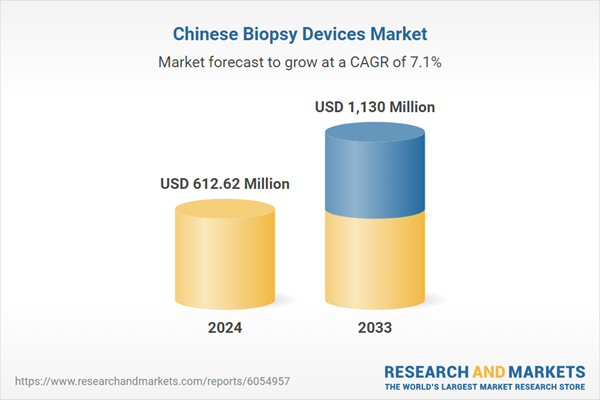
Market Overview - The China biopsy devices market is projected to grow from approximately US$ 612.62 million in 2024 to about US$ 1.13 billion by 2033, reflecting a compound annual growth rate (CAGR) of 7.06% during the period from 2025 to 2033 [2][16]. Growth Drivers - The rising prevalence of cancer in China, with an estimated 4,824,700 new cases and 2,574,200 cancer-related deaths in 2022, is significantly driving the demand for biopsy devices [4]. - Technological advancements in biopsy devices, such as ultrasound-guided systems and robotic-assisted devices, are enhancing diagnostic precision and patient comfort, thereby expanding the market [5]. - The expansion of healthcare infrastructure, including the establishment of high-tech diagnostic centers and easing of foreign investment restrictions, is improving access to advanced biopsy technologies across various regions [6]. Challenges - High costs associated with advanced biopsy technologies pose a significant barrier to widespread adoption, particularly in underdeveloped regions where budget constraints limit healthcare facilities' ability to invest [7]. - A limited number of skilled professionals trained to operate sophisticated biopsy devices and interpret data is hindering effective utilization, especially in rural areas [8]. Market Segmentation - The market for needle-based guns biopsy devices is experiencing substantial growth due to their minimally invasive nature and high precision in tissue sample acquisition [9]. - The breast biopsy devices market is expanding due to the increasing incidence of breast cancer and the growing awareness of the need for early diagnosis, with innovations like vacuum-assisted biopsy systems gaining prominence [10][11]. - The lung biopsy devices market is rapidly growing, driven by rising lung cancer cases linked to environmental pollution and smoking, with advanced imaging-guided techniques enhancing diagnostic accuracy [12]. - The CT scan biopsy devices market is also growing, fueled by the reliance on CT-guided biopsies for their accuracy in diagnosing deep-seated lesions [13]. - The MRI-guided biopsy devices market is witnessing significant growth due to the high-resolution imaging capabilities of MRI technology, which improves diagnostic outcomes [14]. Key Players - Major companies in the biopsy devices market include Cardinal Health, Hologic, Danaher, Becton, Dickinson and Company, Boston Scientific, Medtronic, and Olympus [18].