Equity Residential

Search documents
Grotto AI Launches With $10M Seed Round
Vcnewsdaily· 2026-02-20 20:47
Group 1 - Grotto AI has launched with a $10 million seed funding round aimed at addressing the $500 billion property value loss due to vacancy in the housing market [1][2] - The funding round is led by ICONIQ, a prominent AI investor, marking one of the earliest-stage investments in the firm's history [2] - Grotto AI provides an AI platform designed to assist multifamily operators in reducing vacancy loss by enhancing their leasing teams with real-time guidance and post-call coaching [3] Group 2 - The company is supported by notable advisors and angel investors from the industry, including David Dear, Caren Maio, and Avi Dorfman, along with participation from Asymmetric Capital Partners [2] - Grotto AI is trusted by some of the largest and most respected owners, operators, and developers in the nation [3]



Equity Residential(EQR) - 2025 Q4 - Annual Report
2026-02-13 21:20
Company Overview - Equity Residential owns and manages rental properties primarily in major coastal markets, including Boston, New York, Washington, D.C., Southern California, San Francisco, and Seattle, with a focus on optimizing portfolio performance [38]. - The company reported a strong demand for rental housing driven by elevated single-family home ownership costs, positive household formation trends, and a significant deficit in housing supply across the U.S. [40]. - The long-term strategy includes investing in apartment properties in targeted markets to generate consistent, durable, and superior risk-adjusted total returns, balancing current cash flow with long-term capital appreciation [42]. - Equity Residential's markets are characterized by high-quality job growth, particularly in STEM fields, which supports a strong renter base and the ability to increase rents during favorable economic conditions [45]. Technology and Innovation - The company emphasizes the importance of technology and innovation in enhancing operational efficiency and improving the resident experience, including online leasing and data analytics [50]. Sustainability and Corporate Responsibility - The company is committed to sustainability and corporate responsibility, focusing on reducing environmental impact and enhancing portfolio value through energy, water, waste, and emissions management [51]. Demographic Trends - The demographic trends indicate a growing demand for rental housing from Generation Z and Millennials, with approximately 71 million and 74 million individuals in these cohorts, respectively [46]. Financial Management - The company maintains a disciplined balance sheet management approach, enhancing returns while remaining flexible to capitalize on future opportunities [39]. - Rising interest rates could increase the company's interest expenses and reduce asset valuations, impacting overall financial health [97]. - Insufficient cash flow may hinder the company's ability to service debt, creating refinancing risks [99]. - A significant downgrade in credit ratings could increase borrowing costs and limit access to capital markets [100]. - The company is subject to annual distribution requirements as a REIT, needing to distribute at least 90% of its REIT taxable income to avoid corporate income taxes [119]. Employee Engagement and Development - The company aims to create a diverse and inclusive workplace, investing in employee engagement and development to drive performance and sustainable value creation [55]. - In 2025, the company achieved an employee engagement score of 87%, the highest in over a decade, with a 90% survey participation rate [64]. - The inclusion index score reached 85%, indicating significant employee favorability towards the company's initiatives and a greater sense of belonging [64]. - The company maintains above-benchmark 401(k) participation consistently above 90%, supported by automatic enrollment at 8% [67]. - The company hosted over 500 leaders at Elevate Summits, providing 16 hours of focused leadership training [64]. - The company offers a comprehensive benefits program, including medical, dental, vision coverage, and mental health resources [67]. - The company emphasizes continuous learning, providing access to curated learning paths and role-based training [64]. - The company actively promotes from within, with many senior leaders starting in entry-level roles [64]. - The company connects with emerging real estate talent and supports internship programs to expand its talent pipeline [64]. - The company provides five no-cost counseling sessions per year through its Employee Assistance Program [67]. - The company encourages volunteerism by offering paid time off for employees to engage in community service [67]. Risks and Challenges - The company faces risks from joint venture partners that may have conflicting interests, potentially jeopardizing its REIT status and affecting financial results [84]. - The company is involved in real estate technology investments, which carry inherent risks due to limited influence over business decisions and the early-stage nature of the market [85]. - Long-term ground leases may restrict the company's ability to finance or sell properties, potentially impairing their value as lease termination dates approach [86]. - Non-Residential operating activities may not generate expected rental income, with risks from tenant financial distress impacting overall financial condition [90]. - The company may recognize impairment charges if the fair value of its assets declines, adversely affecting financial results [91]. - Changes in regulatory environments, such as rent control, could adversely affect operations and property values [105]. - The company may modify its dividend policy, which could negatively impact the market price of its securities [103]. - Changes in U.S. accounting standards could materially impact the company's reported consolidated results and financial position [110]. - The company may face significant compliance costs due to evolving climate-related disclosure laws and regulations [108]. - A failure to qualify as a REIT would subject the company to U.S. federal income tax at regular corporate rates, significantly impacting available funds for investments and distributions [113]. - Cybersecurity incidents could disrupt operations and damage the company's reputation, potentially leading to financial losses [125]. - The company may incur significant costs related to compliance with evolving privacy laws, such as the California Privacy Rights Act (CPRA) [133]. - Any identified weaknesses in internal control over financial reporting could lead to a decrease in share price due to loss of investor confidence [111]. - Legislative or regulatory tax changes could negatively impact the company's financial condition and operations [118]. Property and Portfolio Management - The company owns a total of 312 properties with 85,190 apartment units as of December 31, 2025 [156]. - The properties are categorized into 99 garden properties with 27,046 units and 213 mid/high-rise properties with 58,144 units [156]. - In established markets, the company has 258 properties with 69,120 units, representing 89.3% of the total portfolio [158]. - The average rental rate across all properties is $3,092, with established markets averaging $3,342 [158]. - The company experienced a reduction of 2,468 units due to 2025 dispositions, resulting in 272 same store properties with 73,465 units as of December 31, 2025 [159]. - The company completed and stabilized 604 apartment units during the quarter with a total capital cost of $169,238,000 [163]. - The total development projects consolidated amount to 1,269 apartment units with a total capital cost of $554,031,000 [163]. - The total development projects unconsolidated amount to 848 apartment units with a total capital cost of $377,204,000 [163]. - The Company anticipates returning the Lorien Ivy property to the same store portfolio in 2026 after stabilization [167]. Financial Performance - The diluted earnings per share/unit for the full year 2025 increased to $2.94, up from $2.72 in 2024, representing a growth of 8.1% [187]. - Total net operating income (NOI) for 2025 was $2,078,801, a 3.0% increase from $2,018,282 in 2024 [190]. - Same store rental income rose to $2,821,804 in 2025, reflecting a 2.6% increase compared to $2,749,354 in 2024 [190]. - The company reported a net gain on sales of real estate properties of $626,388 in 2025, an increase of 14.6% from $546,797 in 2024 [196]. - Non-same store/other NOI results increased significantly due to acquisitions made in 2024 and 2025, positively impacting overall results [191]. - The Company reported cash flows from operating activities of $1,648.8 million for the year ended December 31, 2025, an increase of approximately $75.2 million compared to 2024 [210]. - The Company has approximately $1.9 billion in readily available liquidity and a strong balance sheet, positioning it well for future obligations [208]. - The Company declared a quarterly dividend of $0.6925 per share/unit in 2025, reflecting an annualized increase of 2.6% over 2024 [221]. - The average rental rate across total consolidated properties was $3,203, with a physical occupancy rate of 96.4% [204]. Debt Management - The Company has a $2.5 billion unsecured revolving credit facility, with the ability to increase borrowings by an additional $1.0 billion [216]. - The Company’s total debt as of December 31, 2025, includes significant unencumbered properties valued at $27.4 billion, representing 90.1% of total real estate investments [222]. - The Company experienced strong resident retention and low unemployment levels, contributing to solid operating performance despite macroeconomic uncertainties [205]. - Total debt as of December 31, 2025, is $8,175,010, with secured debt at $1,589,904 (19.4%) and unsecured debt at $6,585,106 (80.6%) [226]. - Fixed rate debt constitutes 90.5% of total debt, amounting to $7,402,129, while floating rate debt accounts for 9.5%, totaling $772,881 [226]. - The debt maturity schedule indicates that $1,186,850 (14.4%) is due in 2026, with significant amounts also maturing in 2030 ($1,159,262, 14.1%) and 2028 ($909,000, 11.0%) [226]. - Interest expenses on secured and unsecured debt are expected to approximate $221.9 million annually for the next five years, with total remaining obligations around $2.2 billion [229]. - The company's consolidated debt-to-total market capitalization ratio as of December 31, 2025, reflects its capital structure, which includes both common shares and perpetual preferred shares [231].
UDR, Inc. (NYSE:UDR) Exceeds EPS Estimates and Demonstrates Solid Financial Health
Financial Modeling Prep· 2026-02-10 08:00
Core Viewpoint - UDR, Inc. is a real estate investment trust (REIT) focused on residential properties in the United States, demonstrating strong financial performance and market competitiveness [1]. Financial Performance - UDR reported earnings per share (EPS) of $0.67, surpassing the estimated $0.64, and showing a significant improvement from -$0.02 EPS in the same quarter the previous year [2][6]. - The company generated revenue of approximately $428.8 million, slightly below the estimated $430.1 million, marking a 2% increase compared to the previous year, but resulting in a revenue surprise of -0.16% [3][6]. Market Valuation - UDR has a price-to-earnings (P/E) ratio of approximately 33.01, indicating the price investors are willing to pay for each dollar of earnings [4]. - The price-to-sales ratio stands at about 7.29, reflecting the market's valuation of its revenue, while the enterprise value to sales ratio is around 7.85 [4]. Financial Health - The company has a debt-to-equity ratio of approximately 0.29, indicating a relatively low level of debt compared to equity [5][6]. - UDR's current ratio is around 3.31, demonstrating a strong ability to cover short-term liabilities with short-term assets [5][6]. - An earnings yield of about 3.03% further illustrates UDR's solid financial position and potential for future growth [5].

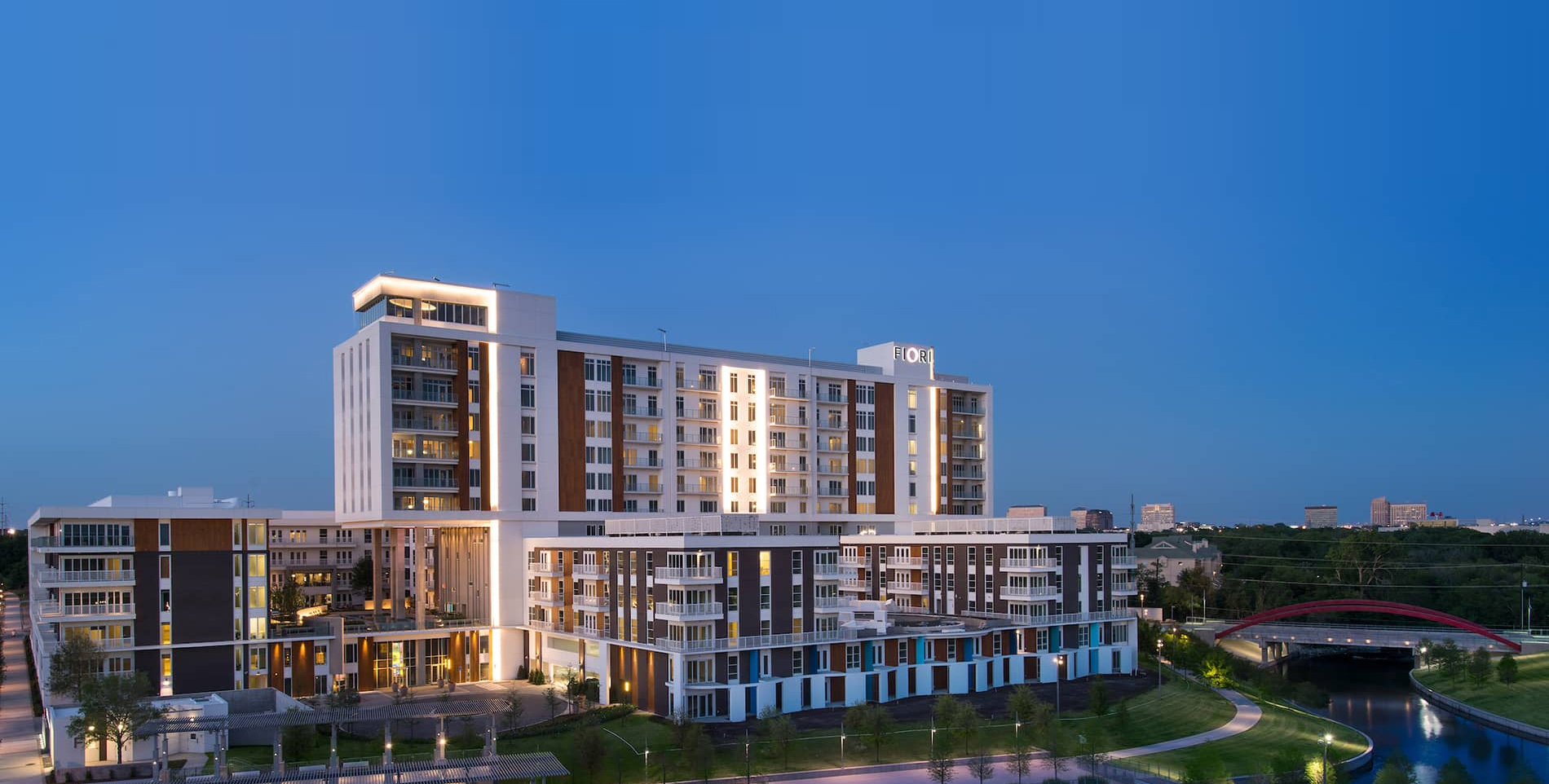
Equity Residential (NYSE: EQR) Stock Update and Future Outlook
Financial Modeling Prep· 2026-02-09 19:03
Core Viewpoint - Equity Residential (EQR) is a leading real estate investment trust (REIT) focused on high-quality apartment properties in urban and high-density suburban areas, primarily in major coastal cities, competing with other large REITs like AvalonBay Communities and Essex Property Trust [1] Group 1: Company Performance - In 2025, EQR faced challenges due to uneven demand and increased new supply in certain markets, but remains optimistic about 2026, anticipating a decrease in competitive deliveries and aiming to maintain high portfolio occupancy [3][6] - EQR's same-store net operating income (NOI) for 2025 aligned with initial guidance, with strong rental growth in coastal markets, particularly in San Francisco and New York, despite midyear revenue momentum slowing due to policy and geopolitical uncertainties [4][6] Group 2: Stock Performance and Analyst Ratings - On February 9, 2026, Cantor Fitzgerald adjusted its rating for EQR to Neutral, maintaining a hold action, while raising the price target from $61 to $64, indicating cautious optimism about the company's future performance [2][6] - As of the latest update, EQR's stock price is $63.89, reflecting a 3.43% increase, with a market capitalization of approximately $24.31 billion and a trading volume of 3,794,591 shares [5]
Cadastral Raises $9.5M
Vcnewsdaily· 2026-02-06 20:53
Funding Announcement - Cadastral has raised $9.5 million in funding from notable investors including Navitas, JLL Spark Global Ventures, AvalonBay, Equity Residential, and 1Sharpe [2][3] Company Overview - Cadastral is an AI-native software company focused on providing vertically specific intelligence for the commercial real estate (CRE) industry [2] - Founded in 2023 and headquartered in New York, Cadastral aims to democratize access to AI agents and tools for real estate and private equity professionals globally [3] Product Development - The raised capital will be utilized to accelerate product development and enhance go-to-market strategies [2] - Cadastral is developing an 'AI analyst in a box' solution tailored for real estate, private equity, and private credit sectors [2]
Equity Residential(EQR) - 2025 Q4 - Earnings Call Transcript
2026-02-06 16:02
Financial Data and Key Metrics Changes - 2025 Same Store NOI results matched initial guidance, but the path to those results was not straightforward [5] - Portfolio occupancy currently over 96%, with significant improvement expected in supply conditions [9] - The company purchased approximately $206 million of its stock during Q4 and a total of $300 million in 2025 [11] Business Line Data and Key Metrics Changes - Revenue results for Q4 reflect a physical occupancy of 96.4%, driven by solid demand and strong retention [16] - Blended rate growth of 0.5% in Q4 was driven by a strong renewal rate of 4.5%, offset by negative new lease rates in most markets except San Francisco [16] - Other income growth was slightly below expectations due to less income from bulk internet rollout and bad debt net improvement [16] Market Data and Key Metrics Changes - Strong rental growth was observed in coastal markets during the first half of 2025, followed by a deceleration in revenue momentum in the latter half, except for San Francisco and New York [6] - The D.C. market showed strength in the first half of 2025 but eroded later due to federal job cuts and uncertainty [24] - Atlanta is showing improved pricing power, while Denver is experiencing the worst performance among expansion markets [25] Company Strategy and Development Direction - The company remains committed to a diversified portfolio strategy, investing in all 12 markets through renovations, acquisitions, and development activities [10] - The focus is on selling properties with lower forward return profiles to buy back stock, improving the growth rate of the existing portfolio [11] - The company plans to start some development projects in 2026, having acquired land parcels at the end of Q4 2025 [88] Management's Comments on Operating Environment and Future Outlook - Management acknowledges a broad range of possible outcomes for the U.S. economy, particularly regarding job growth [7] - The company expects a significant improvement in the supply picture in the second half of 2026, which could lead to accelerated revenue growth [9] - Management remains optimistic about the forward prospects of the business, citing a decline in competitive new supply in their markets [12] Other Important Information - The company returned over $1.3 billion to shareholders in 2025 through dividends and stock repurchases [12] - The anticipated Same Store expense growth for 2026 is between 3%-4%, with controllable expenses expected to remain stable [28] - The company ended 2025 with a net debt to normalized EBITDAre of 4.3x, reflecting a strong balance sheet [35] Q&A Session All Questions and Answers Question: Can you talk about the assets you're selling and the fund that repurchases? - The assets being sold are typically older, non-core properties with higher CapEx loads, which are expected to improve the growth rate of the existing portfolio [38] Question: Can you provide more color on your comment around the renewals at 4.5%? - The renewals are expected to land around 4.5%, with confidence in the stability of the portfolio despite economic conditions [45] Question: On the 2026 supply outlook, can you give us some background on how you come up with your competitive supply set? - The company uses both data from providers and a boots-on-the-ground approach to evaluate competitive supply, confirming a meaningful decline in 2026 [50] Question: Are you factoring in regulatory costs when assessing different markets? - Yes, the company factors in litigation costs and biases its portfolio allocation away from markets with excessive regulatory costs [54] Question: What is the expected cadence of Same Store revenue growth through the year? - The cadence is expected to be steady, with the second half being stronger due to reduced competitive supply [85]
Equity Residential(EQR) - 2025 Q4 - Earnings Call Transcript
2026-02-06 16:02
Financial Data and Key Metrics Changes - 2025 Same Store NOI results matched initial guidance, but the path to those results was not straightforward, with stronger rental growth in the first half followed by a deceleration in the latter half of the year [5][6] - Portfolio occupancy currently over 96%, with expectations for revenue growth to accelerate in 2026 if job growth improves [9][14] - The company purchased approximately $206 million of its stock during the 4th quarter and a total of $300 million in 2025, indicating a focus on shareholder returns [11][12] Business Line Data and Key Metrics Changes - The blended rate for the 4th quarter was 0.5%, driven by a strong renewal rate of 4.5%, but new lease rates were negative across most markets except San Francisco [16][17] - Other income growth was slightly below expectations due to less income from the bulk internet rollout and bad debt net improvement [16] - The New York and San Francisco markets showed particular strength, while Southern California markets experienced muted growth [16][17] Market Data and Key Metrics Changes - The company anticipates a decline in competitive new supply in its markets, with deliveries expected to decrease by 35% or about 40,000 units in 2026 compared to 2025 [12][13] - D.C. market showed strength in the first half of 2025 but faced challenges later due to federal job cuts and uncertainty, with only 4,000 units expected to be delivered in 2026 [23] - Atlanta is showing improved rent acceleration, while Denver is experiencing the worst performance among expansion markets [24] Company Strategy and Development Direction - The company remains committed to a diversified portfolio strategy, investing in renovations, acquisitions, and development activities selectively [10] - The focus is on selling properties with lower forward return profiles to buy back stock, improving the growth rate of the existing portfolio [11][12] - The company plans to automate additional processes and introduce more AI applications to enhance operational efficiency [25][26] Management's Comments on Operating Environment and Future Outlook - Management expressed cautious optimism for 2026, with expectations for steady demand and improved supply conditions, particularly in the second half of the year [7][8] - The company noted that job growth remains a critical factor for revenue growth, with a broad range of possible outcomes for the U.S. economy [7][8] - Management highlighted the importance of customer service and low resident turnover as key drivers for maintaining occupancy and revenue growth [17][18] Other Important Information - The company expects Same Store expense growth to range between 3%-4% in 2026, with controllable expenses remaining stable year-over-year [27] - The anticipated Normalized FFO per share for 2026 is $4.08, reflecting a 2.25% improvement over 2025 [29] - The company ended 2025 with a net debt to normalized EBITDAre of 4.3x, maintaining a positive outlook from S&P [34] Q&A Session Summary Question: Can you talk about the assets you're selling and the expected accretion from these trades? - The assets being sold are typically older, non-core properties with higher CapEx loads, which should improve the growth rate of the existing portfolio over time [37][38] Question: Can you provide more color on your renewal rates? - Renewal quotes are around 6%, with confidence in achieving a 4.5% renewal rate due to low economic hardship among residents [42][45] Question: What is your expectation for tech employment in San Francisco and Seattle? - The company does not have a clear forecast but is monitoring local job gains and losses, particularly in tech [99]
Equity Residential(EQR) - 2025 Q4 - Earnings Call Transcript
2026-02-06 16:00
Financial Data and Key Metrics Changes - 2025 Same Store NOI results matched initial guidance, but the path to those results was not straightforward, with stronger rental growth in the first half followed by a deceleration in the latter half of the year [4][5] - The company purchased approximately $206 million of its stock during Q4 2025, totaling $300 million in stock purchases for the year [10] - The normalized FFO per share for 2025 was $3.99, with a guidance midpoint for 2026 at $4.08, reflecting a 2.25% improvement [27] Business Line Data and Key Metrics Changes - The blended rate for Q4 was 0.5%, driven by a strong renewal rate of 4.5%, while new lease rates were negative across most markets except San Francisco [14] - Other income growth was slightly below expectations due to less income from the bulk internet rollout and bad debt net improvement [14] Market Data and Key Metrics Changes - Coastal markets, particularly New York and San Francisco, showed strong performance, while Southern California markets and expansion markets experienced muted growth [14][21] - The company expects a significant decline in competitive new supply, with deliveries projected to decrease by 35% or about 40,000 units in 2026 compared to 2025 [11][12] Company Strategy and Development Direction - The company remains committed to a diversified portfolio strategy, investing in renovations, acquisitions, and development activities selectively [9] - The focus is on maximizing shareholder returns through a well-earning renter portfolio across various metropolitan areas [7] - The company plans to sell properties with lower forward return profiles and use proceeds for stock buybacks, enhancing forward growth rates [10] Management's Comments on Operating Environment and Future Outlook - Management noted heightened policy and geopolitical uncertainty impacted consumer and employer confidence, leading to a slowdown in job and rent growth [5] - The outlook for 2026 includes a broad range of possible outcomes for the U.S. economy, with expectations for steady demand and improved supply conditions [6][12] - The company anticipates a return to a more normalized peak leasing season due to reduced competitive supply and stable job growth [17] Other Important Information - The company returned over $1.3 billion to shareholders in 2025 through dividends and stock repurchases [11] - The company expects Same Store expense growth in 2026 to range between 3%-4%, with controllable expenses remaining stable [25] Q&A Session Questions and Answers Question: Can you talk about the assets you're selling and the fund that repurchases? - The assets being sold are typically older, non-core properties with higher CapEx loads, which are expected to improve the growth rate of the existing portfolio [35] Question: Can you provide more color on your comment around the renewals at 4.5%? - The renewal quotes are around 6%, with confidence in landing at 4.5% due to a strong centralized process and low economic hardship among residents [42][44] Question: On the 2026 supply outlook, can you give us some background on how you come up with your competitive supply set? - The company uses both data from providers and a boots-on-the-ground approach to evaluate competitive supply, confirming a meaningful decline in 2026 [46][47] Question: Are you factoring in regulatory costs when assessing different markets? - Yes, the company considers litigation costs and regulatory conditions in its underwriting and portfolio allocation decisions [51][53] Question: What is the expected cadence of Same Store revenue growth through the year? - The second half of the year is expected to be stronger than the first, primarily due to reduced competitive supply [83]
Equity Residential 2025 Q4 - Results - Earnings Call Presentation (NYSE:EQR) 2026-02-06
Seeking Alpha· 2026-02-06 15:31
Group 1 - The article does not provide any relevant content regarding company or industry insights [1]

Equity Residential Q4 FFO & Revenues Miss Estimates but Increase Y/Y
ZACKS· 2026-02-06 15:01
Core Insights - Equity Residential (EQR) reported fourth-quarter 2025 normalized funds from operations (FFO) per share of $1.03, missing the Zacks Consensus Estimate of $1.04, but showing a 3% improvement year-over-year [1][8] - The results were influenced by a rise in same-store net operating income (NOI) and physical occupancy, although higher expenses had a negative impact [1][8] Financial Performance - Rental income for the fourth quarter was $781.9 million, below the consensus mark of $789.3 million, but up 2% year-over-year [2] - For the full year 2025, normalized FFO per share was $3.99, missing the Zacks Consensus Estimate of $4, but higher than the previous year's $3.89, supported by a 3.8% growth in rental income to $3.09 billion [2] - Same-store revenues increased by 2.5% year-over-year, while same-store expenses rose by 2.9% [3] - The average rental rate increased by 2.2% year-over-year to $3,152, with same-store portfolio physical occupancy improving by 20 basis points to 96.2% [3] Expense Analysis - Property and maintenance expenses grew by 4.8%, general and administrative expenses increased by 8.5%, and other expenses rose by 37.6% [5] Portfolio Activity - In Q4 2025, EQR sold six properties comprising 1,138 apartment units for approximately $527.6 million, with a disposition yield of 5.6% [6] - Proceeds from the sales were primarily used for share repurchases [6] Balance Sheet Overview - EQR ended Q4 2025 with cash and cash equivalents of $55.9 million, down from $93.1 million at the end of Q3 2025 [7] - The net debt to normalized EBITDAre ratio was 4.27X, a decrease from 4.41X in the previous quarter [7] 2026 Guidance - For full-year 2026, EQR projects normalized FFO per share in the range of $4.02-$4.14, with the Zacks Consensus Estimate at $4.13 [10] - The guidance includes expectations for same-store revenue growth of 1.2-3.2%, expense increases of 3-4%, and NOI expansion of 0.5-2.5% [10] - Physical occupancy is anticipated to be at 96.4% [10] Share Repurchase Activity - During and after Q4 2025, EQR repurchased approximately 3.4 million common shares for a total cost of $205.7 million [9] First Quarter 2026 Projections - For Q1 2026, EQR projects normalized FFO per share in the range of 94-98 cents, with the Zacks Consensus Estimate at 99 cents [11]