
Macy's

Search documents
Macy's Launches “Celebrations Start at Macy's,” a Year-Long Immersive Platform Bringing Life's Moments to the Center of Culture
Businesswire· 2026-02-27 16:00
NEW YORK--(BUSINESS WIRE)--Today, Macy's unveils "Celebrations Start at Macy's,†a year-long platform designed to put Macy's at the center of customers' important moments. From everyday celebrations to once-in-a-lifetime milestones, Macy's inspires customers at every step of their journey. "Celebrations Start at Macy's†will come to life throughout the year for customers through immersive experiences and national celebrations including prom, Mother's Day, Father's Day, the 50th Macy's 4th of Ju. ...



Myriad Uranium and Rush Rare Metals Execute Definitive Merger Agreement Pursuant to Which Myriad Will Acquire Rush
TMX Newsfile· 2026-02-13 12:00
Core Viewpoint - Myriad Uranium Corp. has entered into a merger agreement with Rush Rare Metals Corp., where Myriad will acquire 100% of Rush's common shares through a statutory plan of arrangement, enhancing its ownership of the Copper Mountain Uranium Project in Wyoming [1][2]. Acquisition Details - Myriad will issue one common share for every 1.85 Rush shares, resulting in an exchange ratio of 0.5405 Myriad shares for each Rush share [2]. - All convertible securities of Rush will be replaced with Myriad's convertible securities, adjusted according to the exchange ratio [2]. Strategic Importance - The merger aims to unify ownership of the Copper Mountain Uranium Project, which is seen as a significant value catalyst for Myriad, simplifying decision-making and improving capital efficiency [3][8]. - Copper Mountain is regarded as a strategic domestic source of uranium, with historical investments supporting its potential [4][5]. Project Development - Myriad has made significant progress in rebuilding the project's data archive and conducting drilling and surveys, with results expected soon [5]. - The project has re-emerged as a key uranium asset in the U.S., particularly in favorable jurisdictions like Wyoming [5]. Shareholder Benefits - The exchange ratio offers an 18% premium to Rush shareholders based on the closing prices prior to the merger announcement, and a 22% premium based on a 20-day volume-weighted average price [6]. Spin-off Details - Rush will create a subsidiary, Rush Spinco, to which it will transfer its Boxi Property in Quebec, with shareholders receiving shares in Rush Spinco in addition to Myriad shares [7]. Approval Process - The merger requires approval from Rush shareholders, the British Columbia Supreme Court, and the Canadian Securities Exchange, with a special meeting expected by May 2026 [9][10]. Fairness Opinions - Both companies have engaged financial advisors to provide fairness opinions regarding the merger, which are conditions for closing [11].

Avolon's Net Income Increases 29% to US$591 Million in 2025
Businesswire· 2026-02-12 07:00
Core Insights - Avolon, a prominent player in aviation finance, reported a strong financial performance for the full year 2025, with significant increases in revenue and net income [1]. Financial Highlights - Lease Revenue for FY25 reached US$2,751 million, an increase of US$169 million or 7% compared to FY24 [1]. - Total Revenue for FY25 was US$3,000 million, reflecting a US$202 million increase or 7% from the previous year [1]. - Operating Cashflow improved to US$2,144 million, up by US$136 million or 7% year-over-year [1]. - Net Income surged to US$591 million, marking a US$133 million increase or 29% from FY24 [1]. Balance Sheet Overview - As of December 31, 2025, Total Available Liquidity stood at US$10,659 million, a decrease of US$1,683 million or 14% from December 31, 2024 [1]. - Total Assets increased to US$34,418 million, up from US$33,637 million in the previous year [1].

Macy's (M) Rises As Market Takes a Dip: Key Facts
ZACKS· 2026-02-04 23:50
Core Viewpoint - Macy's stock has shown mixed performance recently, with a notable increase in the latest session, but a significant decline prior to that, indicating volatility in its market position [1][2]. Financial Performance - Upcoming earnings disclosure is expected to reveal an EPS of $1.55, reflecting a 13.89% decrease year-over-year, with revenue anticipated at $7.52 billion, a 3.14% decline compared to the same quarter last year [2]. - For the full year, earnings are projected at $2.20 per share, representing a 16.67% decrease, while revenue is expected to remain flat at $21.65 billion [3]. Analyst Estimates - Recent changes in analyst estimates for Macy's suggest a positive outlook on its business operations, with upward revisions indicating confidence in profit generation [4]. - The Zacks Rank system currently rates Macy's at 3 (Hold), with a 0.6% increase in the Zacks Consensus EPS estimate over the past month [6]. Valuation Metrics - Macy's is trading at a Forward P/E ratio of 9.48, which is below the industry average Forward P/E of 13.77, indicating a potential undervaluation [7]. - The Retail - Regional Department Stores industry, to which Macy's belongs, holds a Zacks Industry Rank of 4, placing it in the top 2% of over 250 industries [7][8].

America's 50 most iconic brands, from Main Street to Silicon Valley
Yahoo Finance· 2026-02-02 17:43
Core Insights - The article highlights the significant American companies that have shaped the nation's identity and economy as it approaches its 250th birthday, emphasizing their cultural and historical impact rather than just financial metrics [1][2]. Group 1: Visa - Visa was established in 1958 as BankAmericard, launching the first consumer credit card in the U.S. [3][6] - The company rebranded as Visa in 1976 and went public in 2008, currently holding a market cap of $632 billion [4][6]. - Visa operates in over 220 countries and territories, accepted at more than 175 million merchants [7]. Group 2: Meta (Facebook) - Facebook was founded in 2004 by Mark Zuckerberg and quickly grew to 1 billion users by 2012, later rebranding to Meta in 2021 [9][13][14]. - The platform has faced controversies regarding user data and misinformation but remains a dominant social media service with over 3 billion regular users [15]. Group 3: Boeing - Boeing, established in 1916, is a leading aerospace company known for producing commercial jets and military aircraft [15][16]. - The company has faced challenges in recent years, including safety allegations and COVID-19 impacts, but continues to be a major player in the industry with a market cap of $185 billion [20][21]. Group 4: Tesla - Tesla was founded in 2003, with Elon Musk joining in 2004, and has become synonymous with electric vehicles, launching the Model 3 in 2017 as the best-selling electric car [23][27]. - The company has a market cap of $1.4 trillion and is recognized for driving electric vehicles into the mainstream [28]. Group 5: Patagonia - Patagonia was founded in 1973 by Yvon Chouinard, known for its commitment to sustainability and donating 1% of sales to environmental causes [30][33]. - The company has expanded from climbing gear to a wide range of outdoor apparel and is estimated to have a market cap of $3 billion [33]. Group 6: Intel - Intel was founded in 1968 and became a leader in semiconductor technology, introducing the first programmable microprocessor in 1971 [34][35]. - The company has maintained a significant market presence, controlling approximately 75% of the CPU market as of 2025 [38]. Group 7: HP - HP was established in 1939, initially focusing on sound equipment and later becoming a leader in personal computers and printers [40][42]. - The company split into HP Inc. and Hewlett Packard Enterprises in 2015, with HP Inc. having a market cap of $18 billion [45]. Group 8: Nike - Nike was founded in 1964 as Blue Ribbon Sports and rebranded in 1971, becoming a dominant player in the sportswear market with a 14% share in 2024 [46][50]. - The company gained fame through its endorsement deal with Michael Jordan, significantly boosting its brand recognition [48]. Group 9: Kodak - Kodak was founded in 1888 and became a pioneer in photography, introducing innovations like roll film and the first digital camera [51][54]. - The company filed for bankruptcy in 2012 and now focuses primarily on commercial printing and imaging [56]. Group 10: IBM - IBM was established in 1911 and became synonymous with computing, initially focusing on tabulating machines and later dominating the PC market [59][62]. - The company has shifted its focus to consulting, software, and cloud computing, with a market cap of $291 billion [67]. Group 11: Paramount Pictures - Paramount Pictures, founded in 1912, is recognized as the longest-operating major studio in Hollywood, producing numerous iconic films [68][70]. - The studio has undergone various mergers and continues to be a significant player in the entertainment industry with a market cap of $12 billion [74]. Group 12: Netflix - Netflix was founded in 1997 as a DVD rental service and transitioned to streaming in 2007, becoming a leader in the industry [77][80]. - The company has a market cap of $351 billion and announced plans to acquire Warner Bros. Discovery in 2025 [81]. Group 13: FedEx - FedEx was founded in 1971, revolutionizing overnight delivery with a centralized hub model [83][84]. - The company has introduced several innovations in the shipping industry and has a market cap of $74 billion [88]. Group 14: Motown - Motown Records, established in 1959, played a crucial role in integrating Black artists into mainstream pop music [91][92]. - The label produced numerous hits and helped launch the careers of many iconic artists, although it faded in prominence during the 1970s [94][96]. Group 15: PepsiCo - PepsiCo was formed in 1965 through the merger of the Pepsi-Cola Company and Frito-Lay, becoming a leading global food and beverage brand [99][100]. - The company is known for its innovative marketing strategies and has a significant rivalry with Coca-Cola [101]. Group 16: Levi Strauss - Levi Strauss, founded in 1853, is known for creating the first riveted blue jeans, which have become a cultural staple [104][106]. - The company continues to sell a wide range of apparel and remains a significant player in the fashion industry [106]. Group 17: Microsoft - Microsoft was founded in 1975 and became a leader in software development, particularly with its Windows operating system [109][110]. - The company has expanded into gaming, cloud services, and AI, with a market cap of $7.8 billion [112]. Group 18: The Home Depot - The Home Depot was established in 1978, focusing on providing a wide range of building supplies and home improvement products [115][116]. - The company has a strong commitment to community initiatives, particularly supporting veterans, and has a market cap of $3.2 trillion [118]. Group 19: WK Kellogg Company - WK Kellogg Company was formed from the original Kellogg's brand, known for its iconic cereals and snacks [121][123]. - The company underwent a reorganization in 2023, with its cereal business spun off into a new entity [123].
Vornado Realty Trust Engages Newmark for Next Phase of THE PENN DISTRICT Retail Renaissance
Globenewswire· 2026-02-02 13:30
Core Insights - Vornado Realty Trust has appointed Newmark as the exclusive leasing agent for the retail transformation in THE PENN DISTRICT on Manhattan's West Side [1] - The retail transformation is part of a broader $2.5 billion revitalization project for THE PENN DISTRICT, which includes over 5 million square feet of redeveloped Class A office space and 1.1 million square feet of new retail [2][6] Company Developments - Vornado has created a diverse retail environment featuring over 70 food and beverage options, with notable restaurants in Plaza 33 and the Moynihan Train Hall [3][5] - The company is developing a cohesive street-level retail experience along Seventh Avenue, complementing existing anchors like Macy's and Primark [4] Strategic Partnerships - Vornado's partnership with Newmark aims to enhance the retail landscape of THE PENN DISTRICT, leveraging Newmark's expertise in commercial real estate [5][7] - Newmark generated over $3.1 billion in revenues for the twelve months ending September 30, 2025, and operates approximately 170 offices globally [7]



Should Value Investors Buy Macy's (M) Stock?
ZACKS· 2026-01-29 15:41
Core Viewpoint - Macy's (M) is currently identified as a strong investment opportunity due to its favorable valuation metrics and strong earnings outlook, supported by a Zacks Rank of 1 (Strong Buy) and a Value grade of A [4][7]. Valuation Metrics - Macy's has a Price-to-Earnings (P/E) ratio of 9.15, significantly lower than the industry average of 13.85, indicating potential undervaluation [4]. - The Price-to-Book (P/B) ratio for Macy's stands at 1.06, compared to the industry average of 2.22, suggesting that the stock is trading at a reasonable valuation relative to its book value [5]. - Macy's Price-to-Cash Flow (P/CF) ratio is 3.47, which is attractive when compared to the industry average of 7.70, further supporting the notion that the stock may be undervalued [6]. Historical Performance - Over the past year, Macy's P/E ratio has fluctuated between a high of 9.61 and a low of 4.69, with a median of 6.13 [4]. - The P/B ratio for Macy's has ranged from a high of 1.21 to a low of 0.61, with a median of 0.86 over the past 52 weeks [5]. - Macy's P/CF ratio has varied from a high of 5.04 to a low of 1.92, with a median of 2.70 in the last 12 months [6].
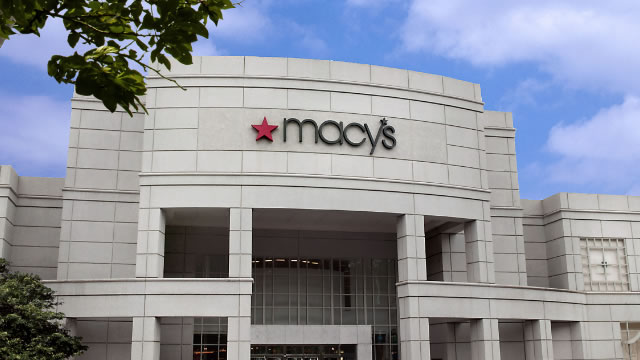
Macy's: Excellent Value Play As Sales Heat Up Again
Seeking Alpha· 2026-01-22 14:07
Core Insights - The stock market has experienced significant volatility at the start of 2026, prompting investors to focus on key themes that may influence the market [1] Group 1: Market Overview - The current market conditions are characterized by volatility, suggesting a cautious approach for investors [1] Group 2: Analyst Background - Gary Alexander has extensive experience in covering technology companies on Wall Street and has worked in Silicon Valley, providing him with insights into industry trends [1] - He has been a contributor to Seeking Alpha since 2017 and has been featured in various web publications, indicating his influence in the investment community [1]

If You'd Invested $100 in Nike 5 Years Ago, Here's How Much You'd Have Today
Yahoo Finance· 2026-01-20 22:25
Core Viewpoint - Nike's stock performance has significantly declined in recent years, failing to reflect the company's strong global brand recognition and legacy [1][3]. Group 1: Stock Performance - An investment of $100 in Nike stock five years ago would now be worth only $45.75, or $49.12 including dividends [1]. - Nike's stock has decreased by over 50% in the past five years [3]. Group 2: Business Strategy and Competition - The decline in stock price is attributed to Nike's unsuccessful shift towards direct-to-consumer sales, neglecting the importance of third-party retailers [2]. - Increased competition from younger brands like On and Hoka has intensified challenges in the athletic footwear market [3][4]. Group 3: Innovation and Market Position - There have been complaints regarding a lack of innovation from Nike in recent years, contributing to investor caution [4]. - Nike is attempting to refocus on its sports performance roots, although this has yet to positively impact stock performance [4].

These are the most endangered large retailers in America. What this means for local economies and your wallet
Yahoo Finance· 2026-01-19 21:00
Retail Industry Overview - America's major retailers, once central to shopping culture, are now facing significant challenges, with some on the brink of extinction, such as Sears and Kmart, while Saks Global has declared bankruptcy [1][4][6] - Retail analyst Mark Cohen predicts that Macy's may not survive another decade, highlighting the dire state of traditional retail [2] Company-Specific Challenges - **Macy's**: The company plans to close 14 stores this year as part of its "Bold New Chapter" strategy initiated by CEO Tony Spring in 2024, focusing on cost-cutting and profitability [2][3] - **Saks Global**: The parent company of Saks Fifth Avenue and Neiman Marcus is struggling with debt and poor performance, making bankruptcy a real possibility [4] - **Kohl's**: After years of searching for a turnaround and experiencing declining sales, Kohl's announced 27 store closures in 2025, heavily impacting its middle-income customer base affected by inflation and rising costs [5] Historical Context - The closure of Macy's historic downtown Philadelphia location, operational since 1911, underscores the vulnerability of even long-standing flagship stores in the current retail environment [3]