ST旭蓝

Search documents
2025光伏大盘点:有人破产离场,有人国资“托底”
3 6 Ke· 2026-02-21 01:47
Core Viewpoint - The photovoltaic industry is undergoing a severe reshuffle, with bankruptcies and delistings of companies, while state-owned enterprises are acquiring quality assets, leading to a restructured landscape [2][4]. Group 1: Company Bankruptcies and Delistings - ST Jiayu and ST Xulan announced their delisting in April 2025, marking them as the first photovoltaic companies to be delisted in A-shares that year [2]. - Gansu King Kong Photovoltaic faced forced execution due to overdue loans exceeding 80 million yuan, leading to the restructuring of four subsidiaries [2]. - The overall situation reflects a harsh reality where companies lacking financing and self-sustaining capabilities are unable to survive in the competitive landscape [4]. Group 2: State-Owned Enterprises' Role - State-owned enterprises are strategically acquiring stakes in companies like Yida New Energy, which was previously struggling with its IPO application [5]. - The acquisition by state-owned enterprises is not random; it focuses on companies that can synergize with local industries, indicating a selective approach to investment [5][6]. - The "bottoming" effect of state-owned enterprises is evident as they target companies that still have potential and can align with their supply chain or local industrial plans [6]. Group 3: Global Industry Challenges - International photovoltaic giants like Meyer Burger and Sunnova are facing severe challenges, including delistings and bankruptcy filings due to strategic misjudgments and financial overreach [7]. - The global photovoltaic industry is experiencing a "layoff storm," with many companies unable to survive without government subsidies or strong capital support [7]. - The difficulties faced by overseas companies are creating opportunities for leading Chinese firms, which are beginning to collaborate rather than compete destructively [7]. Group 4: Future Industry Outlook - The photovoltaic industry continues to experience significant losses, with major companies reporting a total loss of 62.983 billion yuan in 2024 and the first three quarters of 2025 [8]. - The fourth round of industry reshuffling is expected to begin in 2026, with many companies likely to exhaust their previously accumulated profits [8]. - The future landscape will not be characterized by a complete collapse but rather a concentration of resources among a few surviving companies, with state-owned enterprises and leading firms dominating the market [8].





10月16日,证监会发出通报!终止上市,3大消息出炉
Sou Hu Cai Jing· 2025-10-16 16:55
Group 1 - The core point of the news is the increasing severity of regulatory actions against financial fraud in the Chinese stock market, exemplified by the termination of ST Yuancheng's listing due to serious financial misconduct [1] - The new delisting rules implemented in April 2024 allow for companies to be delisted after one year of serious fraud, expanding the scope of delisting [3] - Since the new rules were enacted, over 50 companies have been terminated or entered delisting procedures, indicating a significant increase in delisting efficiency [3] Group 2 - ST Zhuolang's case illustrates the extent of financial fraud, with the company inflating revenue by 1.815 billion yuan through fictitious business operations from 2018 to 2022 [3] - ST Zhongcheng's fraudulent activities spanned six years, with profits inflated by over 1.3 billion yuan through methods such as falsifying project progress [5] - The trend of delisting due to stock prices falling below 1 yuan has become prevalent, with over 60% of delisted companies in 2025 falling into this category [5] Group 3 - Regulatory technology has improved the detection of fraud, with GPS data revealing discrepancies in reported logistics activities [10] - Satellite imagery has been utilized to verify claims made by companies, such as agricultural coverage, effectively curbing asset inflation attempts [11] - The number of regulatory inquiries has increased by 40% in the first half of 2025, with over 60% targeting abnormal financial data [18] Group 4 - The market is experiencing a shift in investor sentiment, with a notable decrease in trading volume coinciding with an increase in delisted companies [13] - Institutional investors are adjusting their strategies, reducing exposure to small-cap and low-liquidity stocks to historic lows [13] - Retail investors face significant challenges, with average losses exceeding 70% for those holding delisted stocks [15] Group 5 - The emergence of innovative drug companies contrasts sharply with the wave of delistings in traditional industries, highlighting a structural shift in market resource allocation [15] - The introduction of supportive policies for the smart terminal industry aims to accelerate capital flow towards emerging sectors [15] - Breakthroughs in nuclear fusion technology showcase the potential of tech-driven companies, contrasting with the fates of fraudulent firms [16]

灵犀量化:揭秘!昨日A股微盘股大跌与美股夜色中的狂欢
Sou Hu Cai Jing· 2025-03-25 06:19
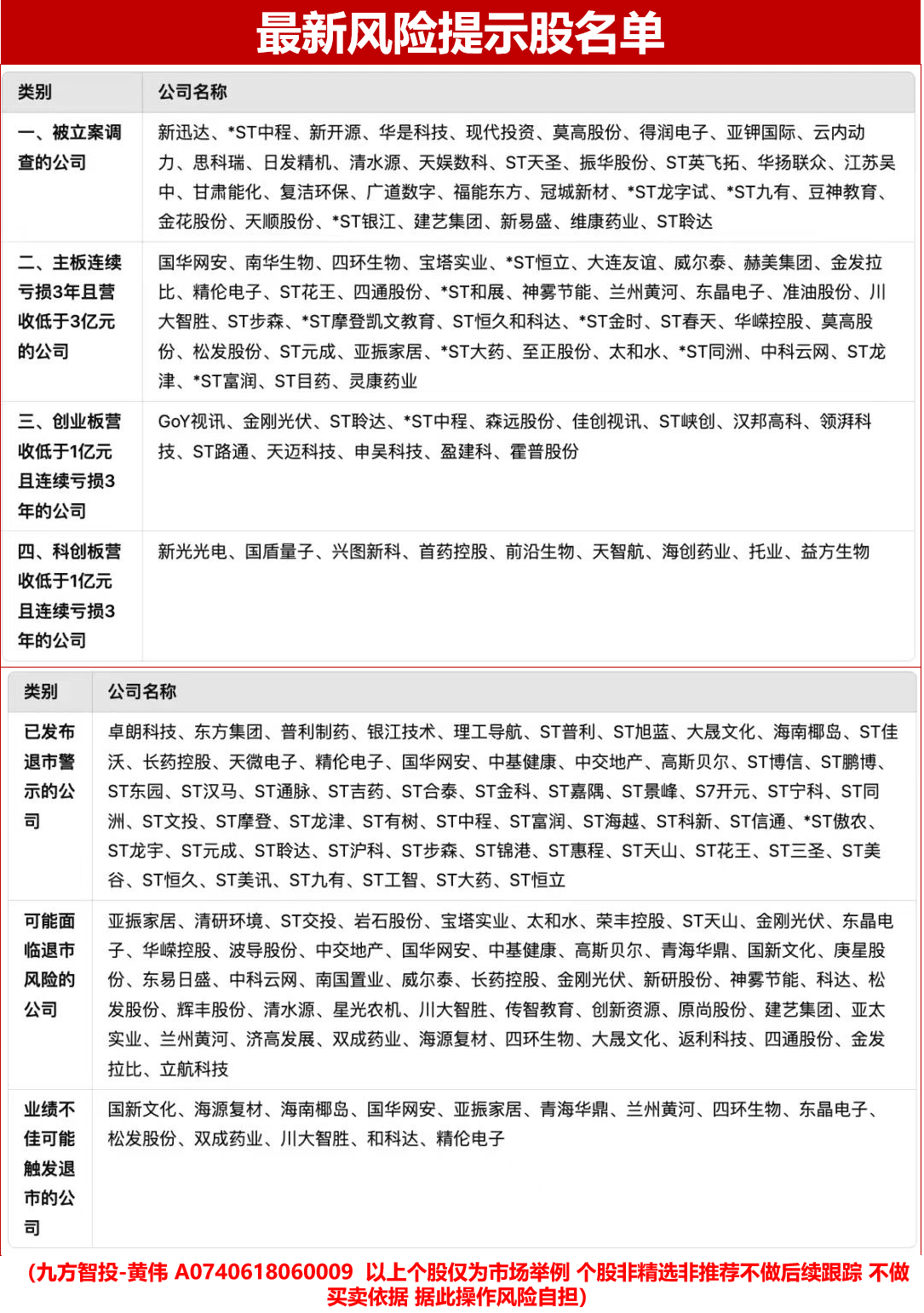
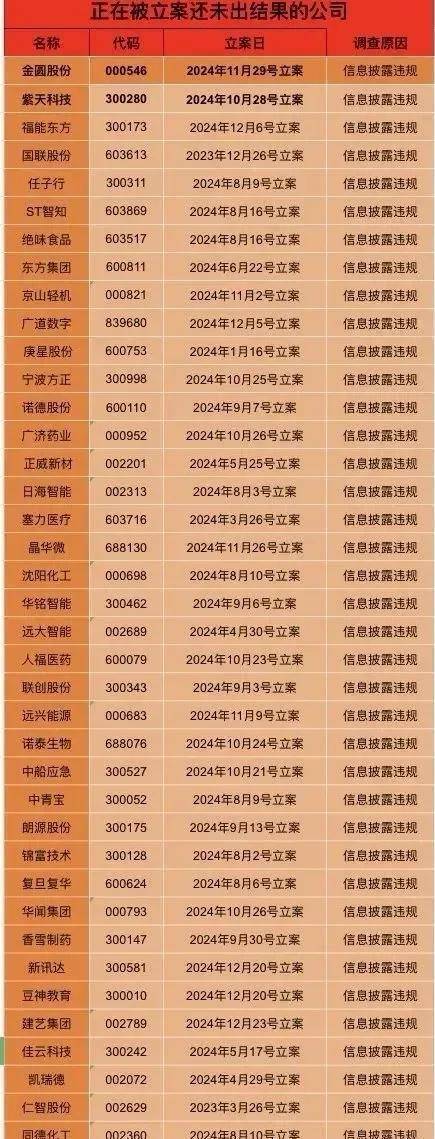
Group 1 - The article highlights a list of companies facing various financial difficulties, including those under investigation, continuous losses, and potential delisting risks [2][5] - Approximately 200 companies are mentioned in the "latest risk warning stock list," indicating a significant concern regarding the stability of the A-share market [5][6] - The A-share market experienced a notable decline, with the CSI 2000 index dropping by 1.90%, reflecting investor anxiety and market volatility [5][6] Group 2 - In contrast, the U.S. stock market saw a significant rise, with the Dow Jones Industrial Average increasing by 597.97 points, or 1.42%, indicating a positive market reaction to adjustments in tariff policies by President Trump [6] - The Nasdaq index rose by 404.54 points, or 2.27%, while the S&P 500 index gained 100.01 points, or 1.76%, showcasing a robust performance in the U.S. market [6] - The Nasdaq Golden Dragon China Index showed a slight decline of 0.02%, reflecting the complex dynamics of U.S.-China trade relations and the contrasting sentiments in the two markets [6]