Solar Turbines

Search documents
Ampco-Pittsburgh (NYSE:AP) Conference Transcript
2026-01-21 15:17
Ampco-Pittsburgh Conference Call Summary Company Overview - **Company Name**: Ampco-Pittsburgh - **Ticker**: AP - **Founded**: 1929 - **Segments**: - Forged and cast engineered products - Air and liquid processing - **2024 Revenue**: Approximately $400 million - **Employees**: About 1,500 [1][2] Core Business Insights Forged and Cast Engineered Products - **Market Position**: Global leader in forged and cast rolls for steel and aluminum rolling mills, primarily in North America and Europe [2][4] - **Revenue Contribution**: Revenue from rolling mill rolls is estimated at $250-$300 million, with the global market for rolling mill rolls around $2 billion annually [8][9] - **Customer Base**: Major customers include U.S. Steel, Steel Dynamics, and Cleveland-Cliffs [5][11] - **Production Facilities**: Operations in the U.S., Sweden, and Slovenia, with a joint venture in China [6][10] - **Market Dynamics**: The company expects $7-$8 million annual EBITDA improvement from the business reset, focusing on operational efficiencies and growth [3][16] Air and Liquid Processing - **Business Segments**: - Aerofin: Heat exchange products for nuclear power and industrial processes - Buffalo Air Handling: Custom air handling units for specialized environments - Buffalo Pumps: Centrifugal pumps primarily for the U.S. Navy and power generation [17][18] - **Growth**: 55% revenue growth over the last three years, with continued expansion expected [18][19] - **Strategic Importance**: Long-term supplier to the U.S. Navy, with significant investments to modernize facilities [20][21] Financial Performance - **EBITDA Improvement**: Anticipated annualized improvement of $7-$8 million from exiting underperforming assets [23][24] - **Debt Leverage**: Expected to improve as the company modernizes plants and exits unprofitable operations [23][24] - **Pension Plan**: Moving towards a fully funded status, which will positively impact financial health [24] Market Trends and Opportunities - **End Market Growth**: Major end markets projected to grow 3-5% over the next five years, contrasting with previous years of flat or declining growth [15][24] - **Tariff Impact**: Anticipated increase in demand due to tariff changes in Europe, potentially increasing demand by 10%-15% [14][28] - **Nuclear and Navy Markets**: Significant growth opportunities in the nuclear sector and U.S. Navy contracts, with barriers to entry providing competitive advantages [19][21] Risks and Challenges - **Market Demand Fluctuations**: Previous delays in roll purchases due to tariffs and market conditions, but signs of improvement are noted [28][29] - **Competitive Landscape**: Limited competition in the U.S. for rolling mill rolls, but ongoing monitoring of competitors like Villares is necessary [9][34] Conclusion - **Future Outlook**: Positive growth trajectory anticipated, with a focus on improving performance, reducing debt, and capitalizing on market opportunities in both segments [36]

从代币到汉堡-一场水足迹的较量 --- From Tokens to Burgers – A Water Footprint Face-Off
2026-01-19 02:29
Summary of the Conference Call Industry and Company Overview - The discussion centers around the water consumption of datacenters, specifically comparing the water footprint of the Colossus 2 datacenter, associated with Elon Musk's xAI, to that of an average In-N-Out burger restaurant [1][2][3][4][5][6]. Core Points and Arguments Datacenter Water Usage - Datacenter water usage is increasingly scrutinized, with some projects being paused or canceled due to concerns over water consumption [3][5]. - The debate surrounding datacenter water usage is considered overstated, as key variables such as cooling architecture, power source, and local water scarcity are often ignored [4][5]. - There is no standard for water accounting, complicating comparisons between datacenters and other industries [6]. Colossus 2 Datacenter - Colossus 2 is projected to have a Critical IT Capacity of 400MW, with expectations to expand to over 1GW [9][10]. - Initial estimates suggest Colossus 2 could consume up to 1 million gallons of water per day, but detailed calculations reveal a more nuanced picture [10][11]. - The datacenter employs both dry and adiabatic cooling systems, which significantly affect water consumption [17]. - The annual water footprint of Colossus 2 is calculated to be approximately 346 million gallons (1.31 billion liters), translating to a water usage efficiency (WUE) of 0.51 liters per kWh [28][42]. In-N-Out Burger Water Footprint - Public estimates suggest that each In-N-Out burger consumes around 650-700 gallons of water, but internal calculations yield a lower estimate of 245 gallons (927 liters) per burger [30][37]. - The water footprint of an average In-N-Out store is estimated at 147 million gallons per year, based on sales of approximately 600,000 burgers annually [39][42]. Comparative Analysis - The water consumption ratio between Colossus 2 and an average In-N-Out store is approximately 2.5:1, indicating that the datacenter consumes about 2.5 times the water of a single In-N-Out location [42][43]. - The analysis suggests that concerns over datacenter water consumption may be misplaced, especially when considering the scale of burger consumption across numerous establishments [43]. Additional Important Insights - Colossus 2 is developing a water recycling plant to utilize municipal wastewater, potentially allowing it to achieve net-zero water consumption [48]. - The discussion emphasizes the need to contextualize water usage debates, suggesting that comparisons to food production, such as burgers, can provide a more balanced perspective on resource consumption [50]. Conclusion - The analysis presents a lighthearted yet researched perspective on the water consumption debate, advocating for a more nuanced understanding of the issue [50].
From Tokens to Burgers – A Water Footprint Face-Off
2026-01-19 02:28
Summary of the Conference Call on Datacenter Water Usage Industry Overview - The discussion centers around the water consumption of datacenters, specifically comparing the water footprint of Elon Musk's Colossus 2 datacenter with that of an average In-N-Out burger restaurant [5][7][32]. Key Points and Arguments 1. **Datacenter Water Usage Scrutiny**: Datacenter water usage is increasingly criticized, with some projects being paused or canceled due to concerns over water consumption. However, the debate is considered overstated as key variables like cooling architecture, power source, and local water scarcity are often overlooked [5][6]. 2. **Lack of Standardization**: There is no standard for water accounting in datacenters, complicating comparisons. Different metrics can lead to misleading conclusions about water consumption [6][5]. 3. **Colossus 2 Water Footprint**: - Colossus 2 is projected to consume approximately 1 million gallons of water per day, but detailed calculations reveal an annual water footprint of 346 million gallons (1,310 million liters) or about 0.9 million gallons per day [21][32]. - The water footprint includes direct usage for cooling and indirect usage from chip manufacturing, with a significant portion coming from cooling processes [21][10]. - The cooling system employs both dry and adiabatic cooling methods, which impacts water consumption rates [15][11]. 4. **In-N-Out Water Footprint**: - An average In-N-Out store has an estimated annual water footprint of 147 million gallons, primarily from the beef used in their burgers [30][32]. - The water footprint of a Double-Double burger is calculated to be 245 gallons (927 liters), with beef accounting for 95% of this footprint [29][26]. 5. **Comparative Analysis**: The water footprint of Colossus 2 is approximately 2.5 times that of an average In-N-Out store, suggesting that the water consumption debate may be misdirected [32][33]. 6. **Economic Value of Datacenters**: The economic value of the output from datacenters, measured in tokens, is highlighted as a critical factor in the water consumption debate. The analysis suggests that a single burger's water footprint could equate to using the datacenter's services for 668 years [35][34]. Additional Important Insights - **Water Recycling Initiatives**: Colossus 2 is planning to build a water recycling plant to utilize municipal wastewater, potentially making it a net-zero water datacenter [37]. - **Contextualizing Water Usage**: The discussion emphasizes the need to contextualize water usage debates, comparing it to everyday consumption in the food industry, particularly in beef production [38][5]. This summary encapsulates the critical aspects of the conference call, focusing on the water consumption of datacenters versus the food industry, particularly burgers, while highlighting the need for a nuanced understanding of water usage metrics.
Technip Energies awarded a large authorization by Commonwealth LNG for key equipment purchase orders
Globenewswire· 2025-12-22 17:00
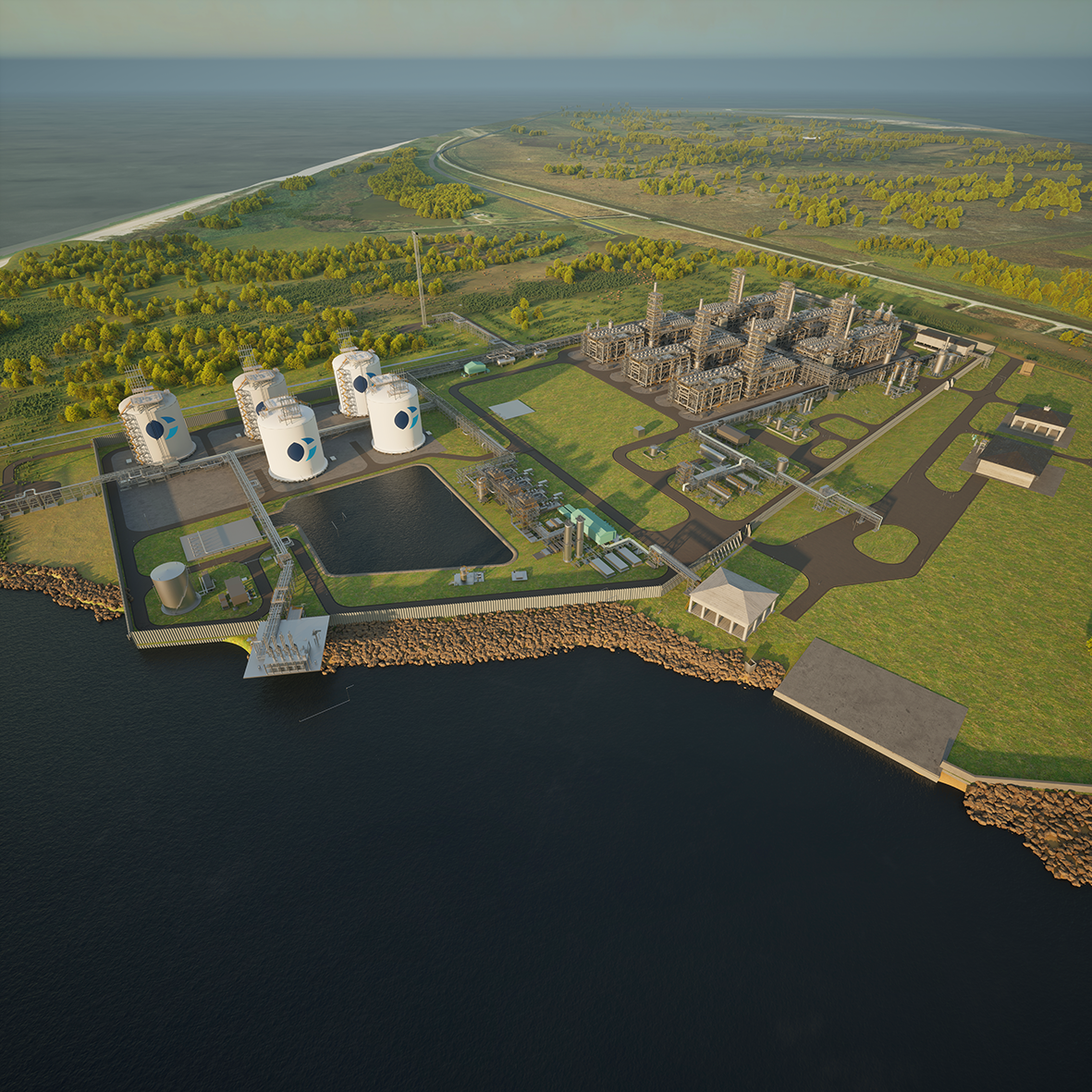
Core Insights - Technip Energies has received a significant authorization from Commonwealth LNG for key equipment orders related to a 9.5 Mtpa LNG facility in Louisiana, USA [1][2] - This authorization is part of an EPC contract and is a crucial step towards the final investment decision (FID) expected in Q1 2026 [2] Equipment Orders - The purchase orders include long lead time equipment essential for the accelerated construction of the modular LNG facility [3] - Key orders include six mixed-refrigerant compressors from Baker Hughes, six main cryogenic heat exchangers from Honeywell, and four Titan 350 gas turbine-generators from Solar Turbines [3] Company Statements - Arnaud Pieton, CEO of Technip Energies, emphasized the importance of this award in advancing the Commonwealth LNG project and highlighted the collaboration between the two companies [4] - David Lawler, CEO of Caturus, noted that this capital investment is a key milestone in developing the Commonwealth LNG project, which is integral to Caturus' strategy [4] Project Details - The Commonwealth LNG project will utilize a modular construction approach with six identical liquefaction trains based on Technip Energies' SnapLNG by T.EN solution [4] - This design allows for schedule acceleration and cost optimization, providing predictability and scalability [4] Financial Impact - A "large" award for Technip Energies is defined as representing between €250 million and €500 million in revenue, which will be recorded in the Project Delivery segment's backlog in Q4 2025 [5]