Teledyne

Search documents
深企海清智元赴港上市,回应业绩波动、估值承压等挑战
Sou Hu Cai Jing· 2025-08-14 09:40
Core Viewpoint - Shenzhen Haiching Zhiyuan Technology Co., Ltd. has officially launched its IPO plan in Hong Kong after terminating its A-share listing plan four years ago, aiming to leverage capital for business expansion amidst various challenges in the market [1][4][12] Company Overview - Haiching Zhiyuan, established in 2013, specializes in multi-spectral AI perception and intelligent detection, with a comprehensive technology and market layout in industrial inspection, public safety, and traffic monitoring [1][4] - The company has recently completed a D-round financing of 50 million yuan, with a post-money valuation of 3.55 billion yuan [4] Financial Performance - The company reported revenues of approximately 225 million yuan, 117 million yuan, 523 million yuan, and 82.42 million yuan for the years 2022, 2023, 2024, and the first three months of 2025, respectively [4] - Net profits were -4.93 million yuan, -18.41 million yuan, 40.41 million yuan, and 14.14 million yuan for the same periods, indicating significant volatility in performance [4][5] Market Challenges - The Hong Kong stock market has seen a decline in liquidity and valuation for tech stocks, leading to uncertainty in fundraising and investor enthusiasm [1][4] - The company faces skepticism regarding the sustainability of its performance due to revenue and profit fluctuations, as well as a highly concentrated customer base [1][10] Competitive Landscape - The multi-spectral AI perception and intelligent detection sector is experiencing rapid growth, with the market size expected to increase from 20 billion yuan in 2025 to 58.8 billion yuan by 2029, reflecting a compound annual growth rate of 31.0% [6][7] - Haiching Zhiyuan holds a leading position in the domestic market, ranking first among multi-spectral AI companies in 2024, but faces intense competition from both domestic and international players [7][8] R&D and Innovation - The company has a significant R&D team, comprising over 40% of its total workforce, and has invested in R&D expenditures of approximately 19.8 million yuan, 11.1 million yuan, 25.2 million yuan, and 4.7 million yuan over the past four years [8][9] - Future fundraising is planned to enhance R&D capabilities, expand production, and penetrate overseas markets, which will be crucial for scaling growth and improving profitability [11][12] Customer Concentration Risks - The company has a high customer concentration, with revenues from the top five customers accounting for 42.1%, 38.3%, 59.0%, and 64.8% of total revenues in the respective years [10] - This concentration poses risks to operational performance, as changes in procurement plans from major clients can lead to significant revenue fluctuations [10]


3 Defense Equipment Stocks to Buy Amid Valuable M&As
ZACKS· 2025-07-15 14:06
Core Insights - Aerospace-Defense Equipment stocks are expected to benefit from strategic mergers and acquisitions, enhancing operational scale and market presence, despite ongoing supply-chain challenges affecting aircraft deliveries and profitability [1][3][5]. Industry Overview - The Zacks Aerospace-Defense Equipment industry includes firms manufacturing essential components for aerospace and defense, such as aerostructures, propulsion systems, and defense electronics, while also providing aftermarket support services [2]. Trends Shaping the Industry - Recent mergers and acquisitions, such as TransDigm's $110 million acquisition of Servotronics and Teledyne's acquisition of Maretron assets, are expected to improve economies of scale and revenue growth [3]. - Global air passenger traffic is projected to grow by 5.8% year-over-year in 2025, indicating strong growth potential for aerospace-defense equipment stocks, particularly in commercial aviation [4]. Supply Chain Challenges - Supply-chain disruptions are impacting aircraft deliveries, with current deliveries 30% below peak levels, contributing to a backlog of 17,000 aircraft, which represents an 18% shortfall of the active global fleet [5]. Industry Performance - The Zacks Aerospace-Defense Equipment industry has outperformed both the S&P 500 composite and its sector, with a collective stock surge of 46.2% over the past year compared to 27.1% for the Aerospace sector and 10.9% for the S&P 500 [8]. Valuation Metrics - The industry is currently trading at an EV/Sales ratio of 11.14X, significantly higher than the S&P 500's 5.41X and the sector's 3.27X, indicating a premium valuation for capital-intensive aerospace-defense stocks [11]. Notable Companies - **Heico Corp.**: Expected to see a 13.3% sales improvement in fiscal 2025, with a long-term earnings growth rate of 17.6% [15][16]. - **AAR Corp.**: Anticipated 17.2% sales growth in fiscal 2025, with a Zacks Rank of 2 (Buy) [17][18]. - **Curtiss-Wright**: Projected 8.8% sales growth in fiscal 2025, recently awarded an $80 million contract by the USAF [20][22].




Defense industry to evolve into growth industry, says Stifel's Jonathan Siegmann
CNBC Television· 2025-06-26 21:10
Investment Strategy - The defense industry is evolving into a growth industry, with companies investing in new capacities and cheaper, more effective products [2][3] - Recommends investors to reinvest in the defense industry and discard the legacy defense investing playbook [1][2] - Focus on companies leaning into change and investing in new technologies [3] - Bipartisan support exists for investing in war drones, anti-drone technology, hypersonics, and space technology [10] Drone Technology & Companies - Air Environment reported 80% growth in their loitering munition product line and over 40% overall sales growth [5] - Air Environment's capital expenditure (capex) has increased to 6-8% of sales, a five-fold increase compared to a few years ago [5] - Kratos announced a $500 million primary share offering to invest in low-cost cruise missiles, drone programs, and hypersonics [5][6] - Teledyne, categorized in electronic instrumentation, has nearly a third of its business in government sales, with $900 million in new defense tech, including drones, anti-drone, and space sensors [6][7] Defense Industry Trends - The US military is moving towards a high-low mix of defense technologies, combining exquisite legacy programs with new defense technologies [8] - The Ukraine's spiderweb attack, which destroyed $7 billion worth of Russian aircraft using drones, demonstrates the effectiveness of low-cost attributable mass [9] - Budget cuts are occurring in some legacy programs like the F-35 and some army programs, with funds being redirected to areas like war drones and hypersonics [10]

PCIE,博通的新芯片路线图
半导体行业观察· 2025-02-28 03:08
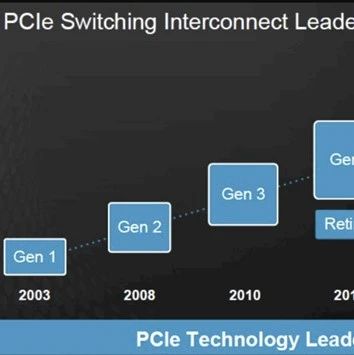
Core Viewpoint - The article discusses the evolution and significance of PCI-Express technology, particularly the upcoming PCI-Express 6.0, which aims to enhance bandwidth and reduce latency for AI and HPC systems. The transition to this new standard is crucial for meeting the demands of modern computing environments, especially in AI server architectures [1][2][3]. Group 1: PCI-Express Evolution - PCI-Express bandwidth increases every three years, with the latest version, PCI-Express 6.0, expected to double the data rate while maintaining latency [1][2]. - The transition to PAM-4 encoding in PCI-Express 6.0 allows for higher data rates but introduces challenges such as increased error rates, necessitating advanced error correction techniques [3][4]. - Broadcom has been a key player in the development of PCI-Express switches and retimers, with their latest products supporting both PCI-Express 5.0 and 6.0 standards [6][7]. Group 2: Market Demand and Applications - The demand for PCI-Express switches and retimers has surged, driven by the need for higher bandwidth in AI servers, which often require multiple GPUs and accelerators [7][8]. - A typical AI server equipped with eight GPUs utilizes four PCI-Express switches, highlighting the importance of high channel counts for performance [7]. - The complexity of AI server architectures necessitates robust PCI-Express solutions to facilitate communication between various components without a central CPU [8][9]. Group 3: Future Prospects - The introduction of PCI-Express 6.0 is seen as a pivotal step for the industry, with expectations for widespread adoption in AI server manufacturing by late 2024 [6][11]. - There is speculation about the potential for new architectures that could further enhance bandwidth beyond current PCI-Express capabilities, possibly resembling Nvidia's NVLink technology [9][10][11]. - The article emphasizes the need for a coherent telemetry system to support the growing complexity of AI ecosystems, which Broadcom aims to address through its interoperability development platform [8].