
全国1%人口抽样调查

Search documents
看余杭良渚调查员如何跑出“加速度”
Hang Zhou Ri Bao· 2025-12-11 02:40
首次参与抽样调查的基层调查员计建峰,对此深有体会。一天上午,他敲开一户居民的家门,一位 刚忙完早市回来的中年女性虽面带倦容,仍热情地招呼他:"知道你们要来,特意在家等着。"计建峰连 忙道谢,并高效完成了登记。这样的接触让他感受到,调查不仅是数据采集,更是人与人之间的真诚沟 通。 "此次调查不仅是一次数据采集,也成为政府与群众之间的一个深度交流机会。调查员们通过耐心 解释政策、认真核对信息,在完成本职工作的同时,也增强了群众对政府工作的认识与配合。"良渚街 道相关负责人表示。 接下来,良渚街道将对采集数据进行审核汇总,并按要求上报,为后续人口发展相关研究和工作部 署提供可靠依据。 近日,余杭区良渚街道顺利完成2025年全国1%人口抽样调查工作。本次调查历时15天,覆盖辖区 22个村社、880户家庭,良渚街道承担了该区近30%的抽样任务,是全区调查工作量最大的区域。 全国1%人口抽样调查是人口普查周期内的重要补充,旨在及时掌握人口结构、分布等方面的变化 趋势,为政策制定提供数据依据。面对时间紧、任务重的挑战,街道需与各村社协同配合,通过科学分 工、高效推进,如期完成全部入户调查与数据上报。 调查期间,良渚街道的各 ...
全国1%人口抽样调查启动!具体查什么?怎么查?
Yang Shi Xin Wen· 2025-11-02 08:25
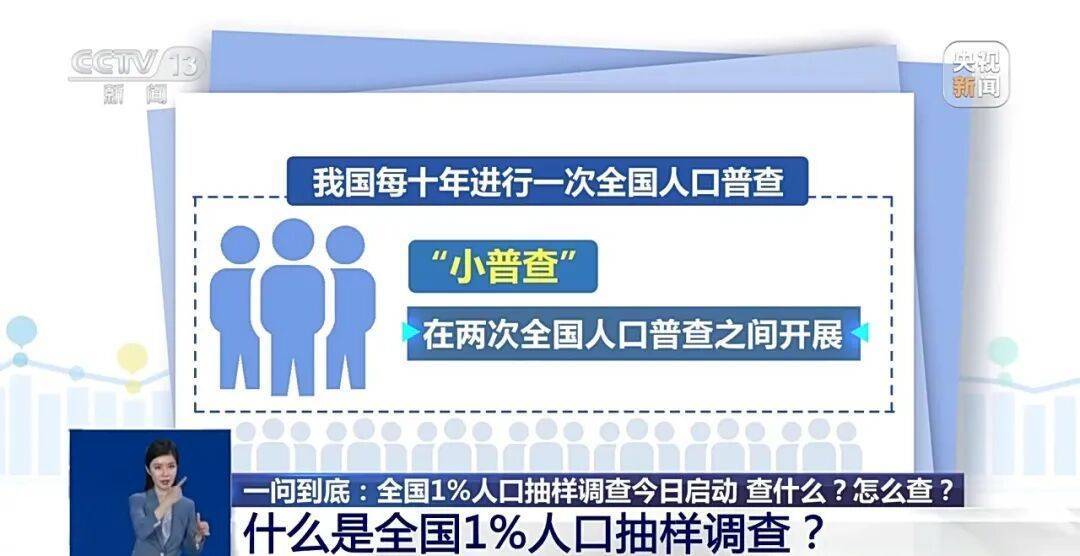
Core Points - The national 1% population sampling survey officially commenced on November 1, aiming to timely grasp changes in population development [1] - This survey is a "small census" conducted between the decennial national population censuses, as mandated by the National Population Census Regulations [1] Group 1: Purpose and Methodology - The 1% sampling ratio was determined based on a balance between survey precision and cost, ensuring that the sample size is adequate to reflect the national situation without incurring excessive costs [2] - Approximately 5 million households and 14 million individuals will be surveyed, focusing on various demographic and socio-economic factors such as name, ID number, gender, age, education level, occupation, migration, marital status, fertility, and housing conditions [3] Group 2: Participation and Data Collection - Selected households will be contacted by surveyors, who will conduct either in-person visits or allow for self-reporting via a mobile app [4] - The in-person data collection will occur from November 1 to November 15, followed by a data verification phase from November 16 to November 30 [4] Group 3: Data Utilization and Significance - The collected data will be protected in accordance with statistical laws and will be published in statistical bulletins and yearbooks next year [5] - The data will be anonymized and made available for research purposes, supporting policy-making in areas such as elderly care and resource allocation [6] - The survey is significant for understanding changes in population quantity, quality, structure, distribution, and living conditions, which is crucial for developing population support systems and addressing aging issues [7]
全国约500万住户、1400万人将被抽样调查!具体查什么?
Sou Hu Cai Jing· 2025-11-02 07:13
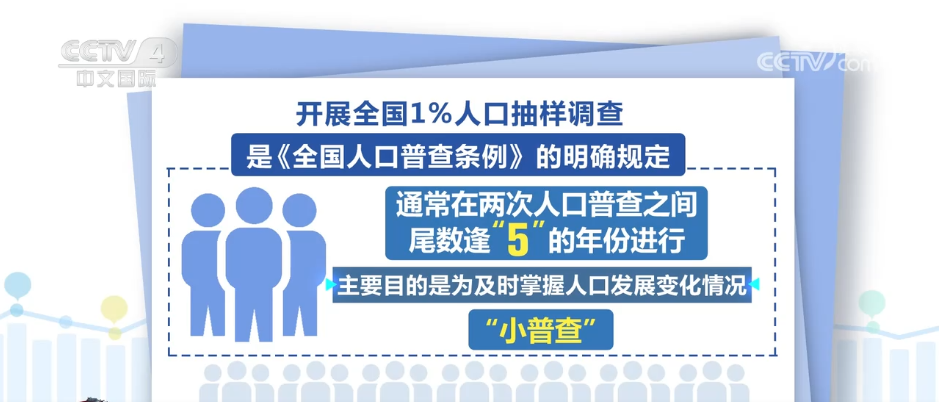
Core Points - The national 1% population sampling survey has officially started on November 1, aiming to understand population changes between the decennial censuses [1] - This survey is mandated by the National Population Census Regulations and is conducted in years ending with "5" to gather timely data on population development [1] Group 1: Survey Details - The 1% sampling rate was determined based on a balance between survey accuracy and cost, ensuring that the sample size is sufficient to reflect the national situation without incurring excessive costs [3] - Approximately 5 million households and 14 million individuals will be surveyed, focusing on various demographic and socio-economic factors such as name, ID number, gender, age, education level, occupation, migration, marriage, fertility, and housing conditions [3][5] Group 2: Participation and Data Utilization - Selected households will be contacted by surveyors before the survey begins, and data verification will occur from November 16 to 30 [5] - The collected data will be protected under statistical laws and will be published in statistical bulletins and yearbooks next year [7] - The data will be anonymized and made available for research purposes, supporting policy-making in areas such as elderly care and resource allocation [8][10] Group 3: Significance of the Survey - The survey is crucial for understanding changes in population quantity, quality, structure, distribution, and living conditions, which will aid in developing population support systems and strategies to address aging and promote high-quality population development [10]

长沙全面启动全国1% 人口抽样调查入户登记工作
Chang Sha Wan Bao· 2025-11-02 02:45
Group 1 - The national 1% population sampling survey in Changsha officially commenced its household registration work on November 1 [1] - A total of over 1,800 instructors and surveyors are involved in the survey, covering 616 survey communities over a period of two weeks [2] - The survey is coordinated by the Changsha Statistics Bureau in collaboration with 13 departments, ensuring a well-organized approach to the survey process [2] Group 2 - The survey is considered a fundamental task related to public welfare, impacting areas such as education, elderly care, and public service allocation [2] - Residents selected for the survey are encouraged to cooperate with surveyors to ensure the quality of the data collected [2]
摸清人口“家底” 这项“百里挑一”的国家行动关系到每个人
Yang Shi Wang· 2025-11-02 02:33
Group 1 - The national 1% population sampling survey has officially launched, involving approximately 14 million people across the country [1] - This survey is mandated by the "National Population Census Regulations" and is conducted in years ending with "5" between two population censuses, serving as a "mini-census" to monitor population changes [4] - The survey targets about 5 million households, collecting data on various demographic factors such as name, ID number, gender, age, education level, occupation, migration, marital status, fertility, and housing conditions [7] Group 2 - There are two methods for conducting the survey: in-person visits by surveyors from November 1 to November 15, and a self-reporting option via a QR code and online form [10] - The data collected from this survey is crucial for formulating public policies related to people's livelihoods, enhancing population development support systems, and addressing issues like population aging [12] - For instance, understanding the increase in elderly populations in certain regions will help in the targeted construction of elderly care facilities and more precise allocation of public resources [12]
“全国1%人口抽样调查”了解吗?被抽中需要做什么?
Xin Hua She· 2025-11-01 04:38
Core Points - The national 1% population sampling survey was launched on November 1, 2023, to gather data on population changes in China [3][6] - The survey aims to provide timely insights into population quantity, quality, structure, distribution, and living conditions, which is crucial for developing population policies and addressing aging issues [6][7] - Approximately 5 million households, representing around 14 million individuals, will be surveyed, focusing on basic demographic information [11] Group 1 - The survey is mandated by the National Population Census Regulations and typically occurs in years ending with "5" between two national censuses [6] - The results will inform public service infrastructure planning and resource allocation, addressing needs such as educational resource optimization and elder care facilities [7][8] - The survey will be conducted by government-appointed enumerators who will visit selected households to collect data [12] Group 2 - Respondents can also report their information through a self-reporting method using mobile devices [14] - The survey will adhere to the Statistical Law of the People's Republic of China, ensuring the protection of personal information throughout the process [14]

即将开始!当阳人请注意开门
Sou Hu Cai Jing· 2025-10-27 04:10
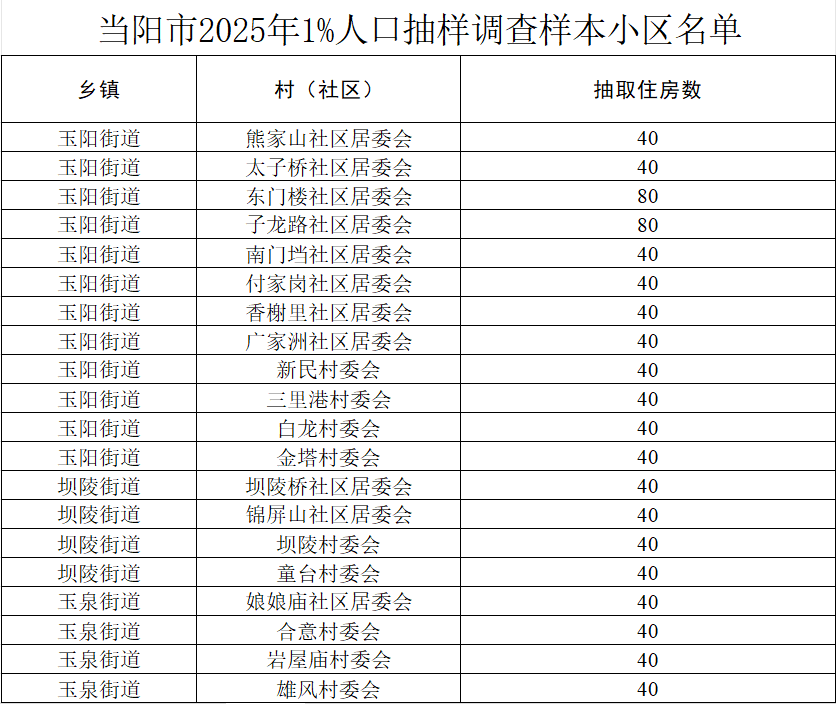
Group 1 - The national 1% population sampling survey aims to timely grasp changes in population development and will begin household registration on November 1, 2025 [1] - The survey will cover approximately 5 million households and 14 million individuals nationwide, with 1,600 households selected in a specific city [2] - The survey will include both family and collective households, focusing on individuals residing in the selected households as of the survey reference time [5] Group 2 - The survey will collect basic information about the population and households, including name, ID number, gender, age, ethnicity, education level, industry, occupation, migration, marriage, fertility, mortality, and housing conditions [6] - The survey reference time is set for November 1, 2025, with household registration occurring from November 1 to 15, 2025 [7] Group 3 - The survey will utilize both in-home interviews and self-reporting methods, allowing selected households to report information online via a QR code from November 1 to 5, 2025 [8][9] - Information security and personal privacy protection are emphasized, with strict adherence to the Statistical Law of the People's Republic of China during the survey process [10]
全国1%人口抽样调查将于下月启动入户登记
Xin Hua She· 2025-10-17 13:48
Core Points - The National Bureau of Statistics announced that a 1% population sampling survey will start on November 1, 2025, with the registration period from November 1 to 30, 2025 [1] - The survey aims to understand changes in population quantity, quality, structure, distribution, and housing, which is crucial for developing population support systems and strategies to address aging and promote high-quality population development [1] Group 1 - The survey will be conducted at the household level, targeting approximately 5 million households and 14 million individuals across the country [1] - Key survey content includes basic demographic information such as name, ID number, gender, age, ethnicity, education level, industry, occupation, migration, marital status, fertility, mortality, and housing conditions [1] - Data collection will be carried out by government statistical agencies using electronic devices or through self-reporting via the internet [1] Group 2 - The survey will adhere to the provisions of the Statistical Law of the People's Republic of China, ensuring strict protection of personal information throughout the process [2]
我国将开展2025年全国1%人口抽样调查
财联社· 2025-10-17 07:19
Core Viewpoint - The National Bureau of Statistics of China announced the implementation of a nationwide 1% population sampling survey in 2025, aiming to gather comprehensive demographic data from approximately 14 million individuals across 5 million households [1][2]. Group 1: Survey Details - The survey will target all individuals in selected households, including both family and collective households, focusing on those residing in the household at the time of the survey and those registered at the household but not currently residing there [1]. - Key survey content will include basic demographic information such as name, ID number, gender, age, ethnicity, education level, industry, occupation, migration status, marital status, fertility, mortality, and housing conditions [1]. Group 2: Survey Timeline and Methodology - The standard reference time for the survey will be November 1, 2025, with field data collection occurring from November 1 to 30, 2025 [2]. - Data collection will be conducted by government statistical agencies using electronic devices, with options for respondents to self-report via the internet [2]. Group 3: Legal and Compliance Aspects - The survey is governed by the Statistics Law of the People's Republic of China, which mandates that respondents provide accurate and complete information [2]. - Violations of the law by statistical agencies or personnel will result in legal accountability, and obstructing the survey process may lead to penalties from law enforcement [2].

2025年全国1%人口抽样调查将于11月1日全面启动入户登记
Zhong Guo Xin Wen Wang· 2025-09-26 11:31
Core Points - The National Bureau of Statistics of China is organizing a nationwide 1% population sampling survey, set to officially start on November 1, 2025, with household registration [1][2] - Approximately 5 million households, representing about 14 million people, will be sampled, which constitutes 1% of the national population [1] - A pilot program has already been conducted in Shandong Province to test the survey methodology and improve data quality using big data and administrative records [1] Summary by Sections - **Survey Launch and Methodology** - The survey will begin at midnight on November 1, 2025, with enumerators conducting household registrations [2] - Households can also opt to fill out the survey using a mini-program, with self-reporting required to be completed by November 5 [2] - **Data Quality Assurance** - The registration process will conclude by November 15, 2025, followed by data quality checks and verification [2] - The National Bureau of Statistics will conduct post-survey quality checks on selected neighborhoods to ensure the accuracy of the data collected [2]