
美伊核问题谈判

Search documents
记者观察丨美伊进入最后摊牌时刻
Xin Lang Cai Jing· 2026-02-26 16:37
Group 1 - The core viewpoint of the article indicates that the US-Iran negotiations have reached a critical stage, with potential for either a temporary or phased agreement to ease regional tensions or a breakdown leading to military options becoming more likely [1][5] Group 2 - Iran is showing a positive stance, with plans to make substantial concessions, including sending half of its high-enriched uranium abroad and diluting the remaining stock, while emphasizing that it will not develop nuclear weapons [2] - The US maintains a hardline position, with indications that if negotiations fail, limited military strikes could be initiated against Iranian Revolutionary Guard facilities, missile bases, or nuclear-related targets to compel Iran back to the negotiating table [3] - The current negotiations are seen as the final opportunity for diplomatic resolution, with military deterrence now being actionable if discussions do not yield results [5]


伊朗再军演 美部署F-22 谈判前夕美伊加紧“排兵布阵”
Zhong Guo Xin Wen Wang· 2026-02-25 08:59
Group 1 - The U.S. military has deployed 11 F-22 fighter jets to southern Israel, marking a significant military buildup in the region, aimed at preparing for potential Iranian missile attacks [3][4] - Iran's Islamic Revolutionary Guard Corps conducted military exercises in southern coastal areas, focusing on new tactics and precision strikes to maintain security in the region [1][4] - The U.S. has assembled one of the largest military forces in the Middle East since the Iraq War, with aircraft carriers "Lincoln" and "Ford" positioned nearby, indicating a strategy to pressure Iran into negotiations [6][4] Group 2 - Both the U.S. and Iran are signaling a preference for diplomatic solutions, with the White House emphasizing that diplomatic means are the first choice, while Iran's Foreign Minister expressed a desire to reach a fair agreement quickly [7][12] - President Trump believes Iran is more eager to reach an agreement to avoid military action, although Iran has not clearly stated it will not pursue nuclear weapons [9][12] - Iran's Deputy Foreign Minister indicated readiness for sincere negotiations with the U.S., emphasizing that the only topic for discussion will be the nuclear issue [14][12]
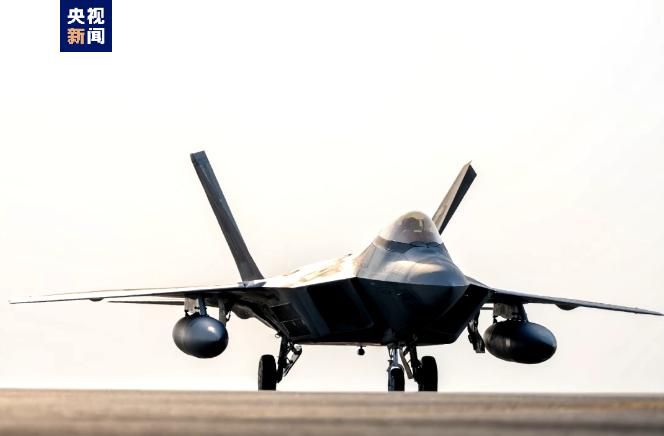
美伊谈判前夕,美军中东再调兵,11架F-22战斗机部署以色列
Hua Xia Shi Bao· 2026-02-25 02:41
Group 1 - The core viewpoint of the articles highlights the escalating military tensions between the U.S. and Iran, with significant military deployments and ongoing diplomatic efforts [1][10][11] - The Iranian Revolutionary Guard conducted military exercises in southern coastal areas to address existing threats and enhance regional security [3][1] - The U.S. military has deployed 11 F-22 fighter jets to southern Israel, indicating preparations for potential Iranian missile threats [4][5] Group 2 - Israel is enhancing its military readiness through updated defense plans and increased military operations against Hezbollah to limit their actions [7][1] - The U.S. has amassed one of its largest military forces in the region since the Iraq War, with aircraft carriers positioned near Iran [9][1] - Both the U.S. and Iran are signaling a preference for diplomatic solutions, with the U.S. emphasizing diplomacy as the primary approach while Iran expresses readiness to negotiate a fair agreement [10][12][11]
伊朗准备好与美方尽快达成协议
Xin Lang Cai Jing· 2026-02-24 22:23
Core Viewpoint - Iran is prepared to reach an agreement with the United States quickly, emphasizing sincerity and goodwill in negotiations, with the nuclear issue as the sole topic of discussion [1] Group 1: Negotiation Readiness - Iran's Deputy Foreign Minister, Lavanchy, expressed readiness to negotiate with the U.S. and hopes for a response from the American side [1] - Lavanchy believes that if all parties have political will, an agreement can be reached swiftly [1] Group 2: Upcoming Negotiations - A new round of negotiations between the U.S. and Iran is scheduled for the 26th in Geneva, Switzerland, as confirmed by Oman's Foreign Minister Badr [1] - The second round of indirect talks took place on the 17th in Geneva, where both sides acknowledged progress despite existing differences [1] Group 3: Military Context - The U.S. has been amassing military forces in the Middle East, with President Trump admitting to considering "limited military strikes" against Iran [1]
连线专家谈美军集结中东:系美伊局势延续,施压只为迫使让步
Nan Fang Du Shi Bao· 2026-02-20 04:19
Group 1 - The core viewpoint of the articles indicates that the tensions between the US and Iran are a continuation of previous conflicts, with no substantial consensus reached between the two parties [1][2] - The US aims to establish a comprehensive agreement with Iran covering nuclear issues, missile technology, and regional policies, while Iran prefers to focus solely on nuclear discussions [2] - US President Trump has issued threats to Iran, stating that a meaningful agreement must be reached or there will be negative consequences, with military action being a possibility [1][3] Group 2 - The US military has significantly increased its presence in the Middle East, deploying numerous naval and air forces, including aircraft carriers and advanced fighter jets, marking the largest military buildup since the 2003 Iraq War [3] - In response to escalating military pressure, Iran is conducting military exercises and reinforcing its defensive capabilities, including joint naval drills with Russia [4] - Iran has stated that it does not seek conflict but will respond decisively if attacked, emphasizing its right to self-defense under international law [3][4]
美伊谈判后,俄外长警告:美国若对伊朗发动新打击将带来“不利后果”
Huan Qiu Wang· 2026-02-19 05:11
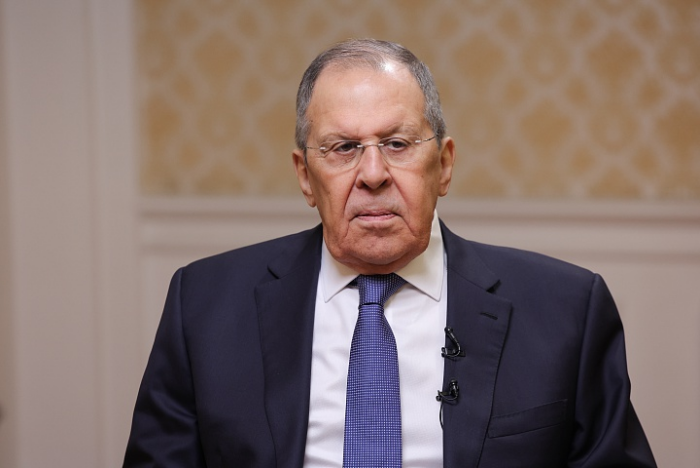
Core Viewpoint - The second round of indirect negotiations between the US and Iran took place in Geneva, with both sides acknowledging progress despite ongoing differences. However, the US continues to escalate military threats against Iran while engaging in diplomatic talks [4]. Group 1: Diplomatic Developments - The US and Iranian officials reported progress in negotiations, agreeing to continue discussions despite existing differences [4]. - Russian Foreign Minister Lavrov emphasized the need for restraint and a solution that allows Iran to pursue a peaceful nuclear program, warning against military strikes on Iran [3][4]. Group 2: Military Tensions - The US is deploying a second aircraft carrier strike group to the Middle East, indicating a heightened military threat against Iran [4]. - The Iranian Revolutionary Guard Corps Navy conducted military exercises in the Strait of Hormuz, reflecting Iran's readiness to respond to potential military actions [4]. - Lavrov noted that escalating tensions could undermine recent positive developments in Iran's relations with neighboring countries, particularly Saudi Arabia [3].
美国林肯号航母最新画面
Xin Lang Cai Jing· 2026-02-16 10:56
Group 1 - The U.S. aircraft carrier "Abraham Lincoln" was spotted near the coast of Oman on February 15, as per satellite images [1] - The U.S. released footage of the "Abraham Lincoln" carrier strike group's operations on the same day [1] - Iranian Foreign Minister Amir-Abdollahian led a delegation to Oman for nuclear negotiations with the U.S., indicating ongoing diplomatic efforts despite significant disagreements on core issues [1] Group 2 - The second round of negotiations between the U.S. and Iran is scheduled to take place on February 17 in Geneva, Switzerland [1]
国际原子能机构总干事:已与伊朗外长完成技术讨论
Xin Lang Cai Jing· 2026-02-16 10:54
Group 1 - The Director General of the International Atomic Energy Agency (IAEA), Grossi, announced on social media that he has completed "in-depth technical discussions" with Iranian Foreign Minister Zarif in preparation for negotiations scheduled for the 17th in Geneva [2] - Iranian Foreign Ministry stated that Zarif is leading a diplomatic and technical delegation to Geneva for the second round of indirect talks with the U.S. regarding nuclear issues [2] - U.S. Secretary of State Rubio confirmed that President Trump's envoy, Hook, and son-in-law Kushner will represent the U.S. in the upcoming U.S.-Iran negotiations [2] Group 2 - On the 6th of this month, Iranian and U.S. representatives held indirect talks in Muscat, Oman, where both sides agreed to continue negotiations, although significant disagreements remain on core issues [2]
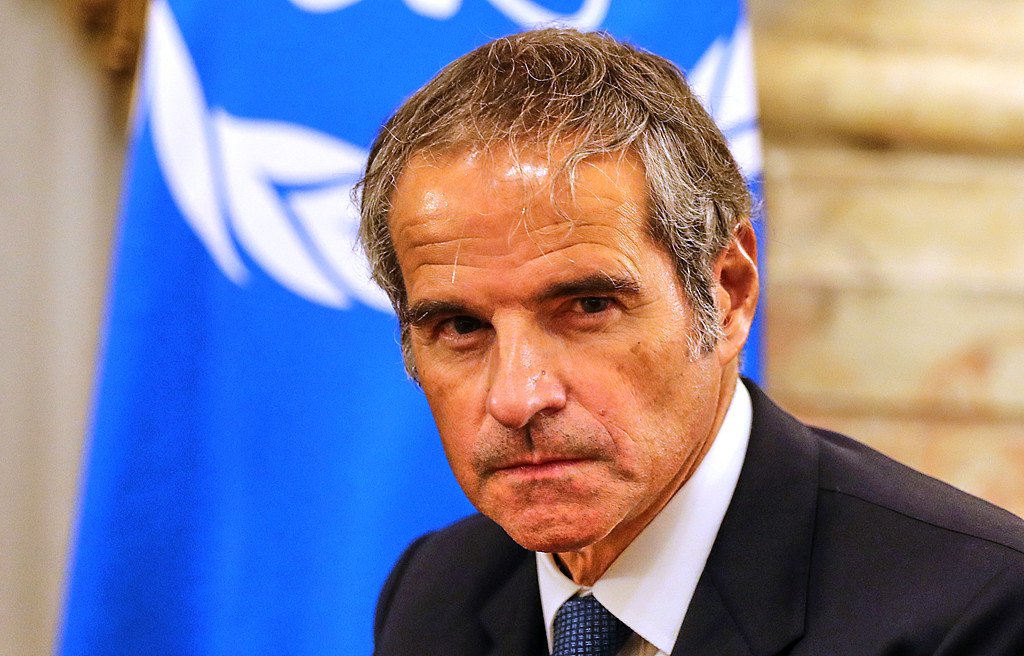
伊朗外长说不会屈服于威胁
Xin Lang Cai Jing· 2026-02-16 09:53
Core Viewpoint - Iran's Foreign Minister Zarif stated that Iran will not yield to threats and is committed to achieving a fair agreement in ongoing nuclear negotiations [1] Group 1: Diplomatic Engagements - Zarif is in Geneva for technical discussions with the Director General of the International Atomic Energy Agency, Grossi, accompanied by nuclear experts [1] - Prior to talks with the U.S. on February 17, Zarif plans to meet with Omani Foreign Minister Badr [1] Group 2: Negotiation Context - An Iranian diplomatic and technical delegation led by Zarif arrived in Geneva for the second round of indirect negotiations with the U.S. regarding nuclear issues [1] - U.S. Secretary of State Rubio confirmed that President Trump's envoy, Hook, and son-in-law Kushner will represent the U.S. in the upcoming negotiations [1] - Previous indirect talks took place on February 6 in Muscat, Oman, where both sides agreed to continue discussions despite significant disagreements on core issues [1]
美伊第二轮谈判前 内塔尼亚胡提条件、特朗普放狠话
Xin Hua She· 2026-02-16 08:00
Core Viewpoint - The ongoing indirect negotiations between Iran and the U.S. regarding nuclear issues are critical, with both sides expressing differing expectations and conditions for a potential agreement [1][2][3]. Group 1: Negotiation Dynamics - Iran's Foreign Minister, Zarif, is leading a diplomatic delegation to Switzerland for the second round of indirect talks with the U.S. on nuclear issues, scheduled for the 17th [2]. - The U.S. Secretary of State, Rubio, has indicated a preference for resolving issues through diplomatic means and confirmed the participation of U.S. representatives in the upcoming talks [2]. - Iran's Deputy Foreign Minister, Lavandi, stated that the ball is in the U.S.'s court, emphasizing the need for the U.S. to demonstrate its willingness to reach an agreement [2]. Group 2: Conditions and Concerns - Israeli Prime Minister Netanyahu reiterated that any agreement between the U.S. and Iran must address Israeli concerns, including the transfer of all enriched uranium out of Iran and the dismantling of Iran's enrichment capabilities [1][3]. - Netanyahu outlined specific conditions for a U.S.-Iran agreement, including the limitation of Iran's ballistic missile program and the dismantling of Iran's regional influence [3]. - Reports indicate that the U.S. military and intelligence officials are discussing potential support for Israeli airstrikes on Iranian missile facilities if negotiations fail [5]. Group 3: Economic Interests - Iranian media reported that Iran hopes to reach a nuclear agreement that would provide economic benefits, potentially involving joint oil fields and mining investments [2]. - Lavandi mentioned Iran's willingness to dilute its 60% enriched uranium as a sign of compromise, contingent on discussions about sanctions and other nuclear-related issues [2].