Hua Xia Shi Bao

Search documents
吉利汽车营收首破3400亿元、销量突破300万辆,全固态电池推出在即
Hua Xia Shi Bao· 2026-03-19 13:17
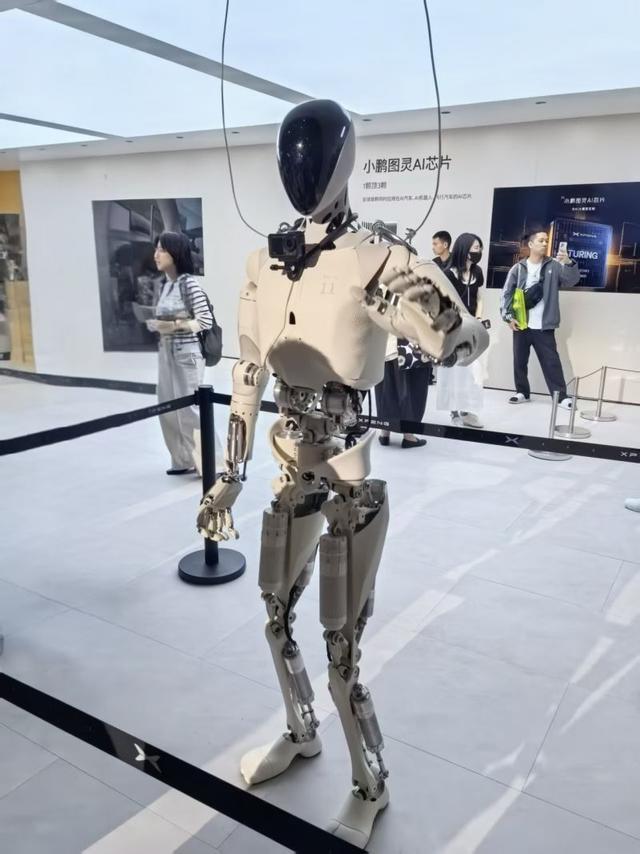
本报(chinatimes.net.cn)记者于建平 见习记者 刘杰 北京报道 2026年3月18日,吉利汽车控股有限公司(0175.HK)(下称"吉利汽车")发布2025年全年财报。在电 动化转型持续推进、国内市场竞争加剧的背景下,公司营收突破3400亿元创下新高,销量稳定在300万 辆以上,新能源业务增长明显,带动整体利润实现较快提升。 作为头部自主车企代表,吉利汽车这份财报不仅体现了自身经营策略的实际成效,也从侧面反映出中国 自主品牌的发展变化以及市场竞争格局的走向。 营收利润双增 据吉利汽车披露的2025年财报显示,过去一年公司整体经营表现稳中向好,规模增长与盈利改善同步推 进,多项指标创下新高,业务结构也在向新能源、高价值产品和海外市场持续倾斜,财务状况保持稳 健。 具体来看,全年实现营业收入3452.32亿元,同比增长25%,再创历史新高;归母净利润为168.52亿元, 同比基本持平。若剔除汇兑及股权投资公允价值变动等因素,核心归母净利润为144.1亿元,同比增长 36%,主营业务的盈利能力有所增强,整体盈利质量进一步改善。 销量方面,2025年吉利汽车全年累计销量为302.46万辆,同比增长39 ...


征祥医药对标罗氏速福达:国产流感神药成唯一底牌,415.84%负债率押注港股
Hua Xia Shi Bao· 2026-03-18 07:26
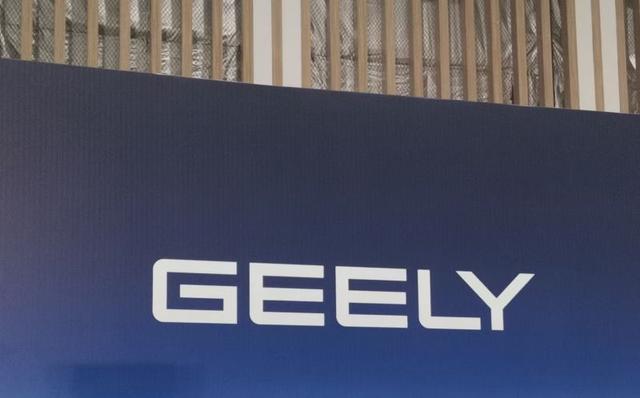
流感创新药新星征祥医药(南京)集团股份有限公司近期正式向港交所主板递交上市申请,试图通过资 本市场募资破解发展困局。其核心产品为2025年7月获国家药监局批准上市的新型抗流感药"玛硒洛沙韦 片"(商品名:济可舒),也是公司冲击IPO的核心底气。 "玛硒洛沙韦片"为我国自主研发、拥有全球自主知识产权的新一代靶向流感病毒RNA聚合酶PA抑制 剂,亦是2025年国家药监局批准上市的4款国产抗流感新药之一,定价与罗氏的玛巴洛沙韦一致为222 元/盒,是目前最贵的国产流感创新药。 有投资者注意到,受招股书披露时间节点限制,玛硒洛沙韦片获批后实际销售表现并未纳入此次披露的 文件中。这意味着,投资者无法通过招股书准确判断这款核心产品的真实市场竞争力与商业化潜力。 与此同时,征祥医药的资金状况已捉襟见肘。2024年以来持续亏损,截至2025年9月30日,公司负债总 额高达12.6亿元,资产负债率达415.84%,远超生物医药行业合理区间。核心产品业绩未显、财务压力 濒临红线,征祥医药仓促递表后的上市之路布满荆棘。 核心产品销售缺位 征祥医药独家商业化产品玛硒洛沙韦片,作为被寄予厚望的创新产品,其市场表现尚未能为公司IPO提 ...

从GPU到LPU:英伟达大举进攻推理芯片,黄仁勋再落关键一子
Hua Xia Shi Bao· 2026-03-18 00:59
Core Insights - The AI industry is shifting focus from model training to inference, with companies like NVIDIA adapting to this change by introducing new products and strategies [1][3][6] - NVIDIA's CEO Jensen Huang announced the launch of the Groq 3 LPU, a dedicated AI inference chip, during the GTC 2026 event, aiming to capture a significant share of the inference chip market [1][2] - NVIDIA's revenue forecast for its Blackwell and Rubin product lines has doubled to $1 trillion by the end of 2027, indicating strong market confidence [1] Group 1: NVIDIA's Strategic Moves - NVIDIA has launched the Vera Rubin platform, which includes seven new chips, enhancing its capabilities in AI inference [2] - The Groq 3 LPU is designed to significantly increase token throughput from 100 tokens per second to 1500 tokens or more, supporting advanced AI interactions [2] - NVIDIA's acquisition of Groq's core technology assets for approximately $20 billion in December 2025 has positioned the company to leverage Groq's innovations in its product offerings [3] Group 2: Market Trends and Predictions - The market is witnessing a shift in AI chip shipments, with non-GPGPU chips expected to rise from 36% in 2024 to 45% by 2027, while GPGPU shipments will decline from 64% to 55% [3] - The demand for inference capabilities is being driven by the rise of intelligent agents, which focus more on inference rather than training [6] - NVIDIA's introduction of the LPU is a strategic response to the evolving AI compute demands, addressing the need for efficiency and lower latency in inference scenarios [3][6] Group 3: Ecosystem and Infrastructure Development - NVIDIA is enhancing its ecosystem by introducing the NeMoClaw reference architecture, which includes security and privacy features for enterprise AI systems [6] - The company has also launched the Vera Rubin DSX AI Factory reference design, aimed at optimizing AI infrastructure for scalability and performance [6][7] - Huang emphasized that in the AI era, intelligent tokens are the new currency, and AI factories are essential for generating these tokens, highlighting the importance of infrastructure in AI development [7]

「AI新世代」从GPU到LPU:英伟达大举进攻推理芯片,黄仁勋再落关键一子
Hua Xia Shi Bao· 2026-03-17 12:44
Core Insights - NVIDIA is making a significant move into the inference chip market with the introduction of the Groq 3 LPU, as announced by CEO Jensen Huang at GTC 2026 [1] - The AI industry is shifting focus from model training to inference, with NVIDIA aiming to capture this market opportunity [1][6] - By the end of 2027, NVIDIA's Blackwell and Rubin product lines are projected to generate annual revenues of $1 trillion, doubling previous forecasts [1] Group 1: Product Launch and Features - NVIDIA has officially launched the Vera Rubin platform, which includes seven chips, such as Rubin GPU, Vera CPU, and the new Groq 3 LPU, designed to enhance AI inference capabilities [2] - The Groq LPU is expected to increase token throughput from 100 tokens per second to over 1500 tokens, supporting interactive AI agent scenarios [2] - A new rack, Groq LPX, has been introduced to accommodate the Groq accelerator, enhancing decoding performance for AI models [2] Group 2: Market Trends and Strategic Positioning - NVIDIA's interest in the inference chip market has been long-standing, highlighted by its $20 billion acquisition of Groq's core technology assets in December 2025 [3] - The market share of non-GPGPU chips in AI servers is expected to rise from 36% in 2024 to 45% by 2027, while GPGPU chip share will decline from 64% to 55% [3] - The shift in AI computing demand from training to inference is a strategic response by NVIDIA to market changes and competitive pressures [3][8] Group 3: Ecosystem and Infrastructure Development - NVIDIA is addressing the growing demand for inference with new initiatives, including a partnership with OpenAI for specialized inference chips [4] - The company has introduced the Vera Rubin DSX AI Factory reference design, which outlines how to build and operate AI factory infrastructure for optimal performance [7] - NVIDIA's advancements in AI infrastructure aim to maximize productivity and energy efficiency in generating AI tokens [7] Group 4: Competitive Landscape and Future Outlook - The introduction of the LPU does not imply a decline in NVIDIA's GPU business; rather, it is expected to create broader market opportunities through synergy [7] - The ASIC market is becoming increasingly competitive, with several challengers emerging, including Cerebras and Chinese companies like Cambricon and Huawei [8] - The entry of NVIDIA into the inference chip sector is seen as both a challenge and a catalyst for domestic manufacturers, potentially accelerating industry reshuffling and technological upgrades [8]
理想汽车2025年营收破千亿,连续三年盈利,李想:2026年实现超20%增长
Hua Xia Shi Bao· 2026-03-14 02:17
Core Viewpoint - Li Auto aims to achieve over 20% growth in 2026, following a successful 2025 where it maintained industry-leading revenue and profitability, marking three consecutive years of over 100 billion yuan in revenue [1][2][3] Financial Performance - In 2025, Li Auto's total revenue reached 112.3 billion yuan, with Q4 revenue at 28.8 billion yuan, reflecting a quarter-on-quarter growth of 5.2% [1][3] - The company delivered 406,343 vehicles in 2025, with Q4 deliveries at 109,000 units, showing a quarter-on-quarter increase of 17.1% [1][3] - Li Auto reported a net profit of 1.1 billion yuan for 2025, making it the only new force car company in China to achieve over 100 billion yuan in revenue and profitability for three consecutive years [3][4] Cash Reserves and R&D Investment - By the end of 2025, Li Auto's cash reserves stood at 101.2 billion yuan, the highest among Chinese electric vehicle companies, providing a solid foundation for long-term investments in technology and innovation [3][4] - The total R&D investment for 2025 reached 11.3 billion yuan, with an average monthly expenditure of nearly 1 billion yuan, and Q4 R&D spending at 3 billion yuan [3][4] Technological Advancements - Li Auto's R&D focus in 2025 included a 50% allocation towards AI-related investments, with significant progress in self-developed chips, foundational models, and full-line control chassis technologies [3][4][5] - The self-developed chip, Mahe 100, is set to begin mass production in Q2 2026, designed for AI inference calculations with lower power consumption [5][6] - The company completed the development of the world's first "complete" fully controlled chassis, marking a significant evolution in chassis technology [6] Market Position and Future Outlook - Li Auto has established over 4,000 self-built supercharging stations and 539 direct sales stores by the end of 2025, creating a robust infrastructure for future product launches and market growth [4][5] - The launch of the Li MEGA and two new pure electric SUVs, the Li i8 and Li i6, has positioned the company for a new growth phase driven by both range-extended and pure electric vehicles [4][5] - Analysts suggest that with strong financials, a solid infrastructure, and upcoming product releases, Li Auto is well-positioned to strengthen its position in the high-end electric vehicle market [7]

滴滴中国出行连续12个季度保持订单双位数增长
Hua Xia Shi Bao· 2026-03-13 09:45
Core Insights - Didi's Q4 2025 performance shows steady growth, with core platform order volume increasing by 13.5% year-on-year to 4.844 billion orders, and a peak daily order volume exceeding 65 million [2] - The total transaction value (GTV) for the core platform in Q4 reached 123.8 billion yuan, reflecting a year-on-year growth of 19.9%, while the annual GTV for 2025 was 450.8 billion yuan, up 14.8% [2] - Didi's CEO highlighted the strong performance in both domestic and international markets, with a focus on strategic investments in overseas new businesses and the successful launch of the new Robotaxi model R2 [2] Domestic Business Performance - In Q4 2025, Didi's domestic ride-hailing orders grew by 10.1% year-on-year to 3.578 billion, with an average daily order volume of 38.9 million [3] - The annual order volume for domestic services reached 13.735 billion, marking a 10.8% increase year-on-year, maintaining double-digit growth for 12 consecutive quarters since 2023 [3] Service Innovation and User Experience - Didi has diversified its service offerings to meet personalized travel demands, introducing various products such as charter services, pet travel, and women-friendly initiatives, while enhancing user experience through AI travel assistants [4][5] - The number of core members increased by over 15% year-on-year, with more than 20 membership benefits launched, including partnerships with Hilton and Hainan Airlines to create a comprehensive membership ecosystem [5] International Business Growth - Didi's international business saw a significant increase, with Q4 orders rising by 24.5% year-on-year to 1.265 billion, and an annual growth of 24.7% to 4.505 billion orders [6] - The GTV for international operations in Q4 surged by 47.1% to 36.6 billion yuan, with a yearly increase of 28.2% to 117 billion yuan [6] Expansion in Brazil - Didi's food delivery service in Brazil has expanded to over 60 cities, with plans to reach 100 cities by mid-2026, enhancing its one-stop lifestyle service platform [7] - The company has also initiated all-weather, fully unmanned passenger testing for its autonomous driving services in select areas, marking a significant advancement in its technology capabilities [7]

央企新能源转型迎来重大突破!东风集团股份资本重组方案落地,岚图汽车将独立登陆港股
Hua Xia Shi Bao· 2026-03-10 09:19
Core Viewpoint - The capital restructuring plan of Dongfeng Group marks a significant breakthrough in the company's transition to renewable energy, allowing Lantu Automobile to independently list on the Hong Kong stock market, providing a reference for capital operations in the industry [1][3]. Group 1: Capital Restructuring Details - The capital restructuring involves two main operations: privatization of the listed company and an introduction listing for Lantu Automobile, where existing shareholders will receive shares without issuing new stocks [2]. - The transaction employs a "share distribution + absorption merger" model, with Lantu Automobile's 79.67% stake being distributed to all shareholders, followed by its introduction listing on the Hong Kong Stock Exchange [2]. - The restructuring plan balances the preservation and appreciation of state-owned assets, protection of minority shareholders' rights, and strategic development of the enterprise [2]. Group 2: Strategic Implications - The completion of the transaction will result in Dongfeng Group achieving 100% state-owned control, removing obstacles for future transformation reforms [3]. - The successful vote at the shareholders' meeting reflects strong support from minority shareholders for the restructuring plan, indicating market and public recognition of Dongfeng's renewable energy strategy [3]. - This transaction is seen as a pivotal starting point for Dongfeng in the new energy era, enabling a comprehensive strategic reshaping and enhancing competitiveness in the electric vehicle sector [3][7]. Group 3: Lantu Automobile's Role - Lantu Automobile is positioned as a key asset in Dongfeng's high-end new energy strategy, showing significant growth in sales, revenue, and profitability [4]. - Sales are projected to grow from 50,285 units in 2023 to 150,169 units in 2025, with a compound annual growth rate of 73%, indicating strong market acceptance [5]. - Revenue is expected to increase from 12.75 billion yuan in 2023 to 34.86 billion yuan in 2025, with a net profit of 1.02 billion yuan in 2025, marking a turnaround to profitability [5]. Group 4: Market Positioning and Future Prospects - Lantu's successful models, such as the Dreamer, have gained market recognition, driving the brand's growth and establishing a solid product foundation in the high-end electric vehicle market [5]. - The introduction listing on the Hong Kong Stock Exchange will enhance Lantu's international brand influence and provide a new channel for capital market engagement, supporting its global expansion [6]. - The restructuring is expected to provide Dongfeng with a competitive edge in the new energy vehicle industry and serve as a practical model for state-owned enterprises in their capital operations and industrial upgrades [7].

信达生物百亿元营收难掩增速烦恼,GLP-1刚上市或遇价格战
Hua Xia Shi Bao· 2026-03-06 08:49
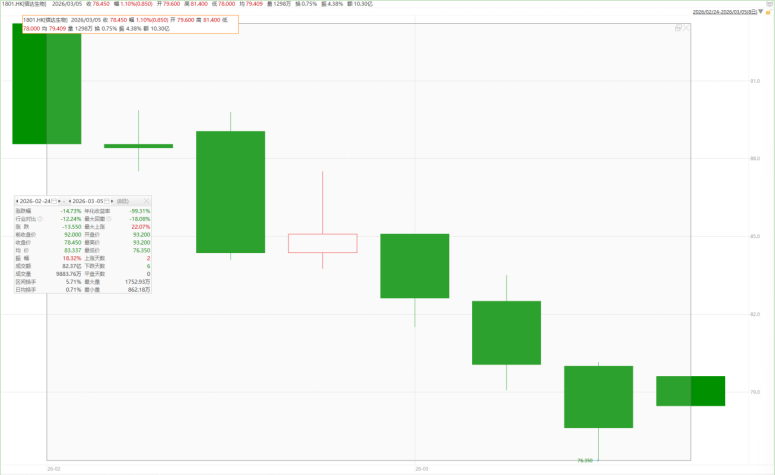
Core Viewpoint - Recently, Innovent Biologics (1801.HK) announced a global strategic collaboration with Eli Lilly to jointly advance the global development of innovative drugs in oncology and immunology [1] Group 1: Strategic Collaboration - Innovent will lead the research and development from drug discovery to clinical concept verification in China, while Eli Lilly will have exclusive development and commercialization rights outside Greater China [1] - Innovent will receive an upfront payment of $350 million and could earn up to approximately $8.5 billion in milestone payments based on subsequent development, regulatory, and commercialization achievements [1] - Innovent will also enjoy a tiered sales share of net sales outside Greater China for the related products [1] Group 2: Financial Performance - Innovent disclosed that it expects total product revenue to reach approximately RMB 11.9 billion in 2025, a year-on-year increase of about 45%, marking its first time surpassing the RMB 10 billion threshold [1] Group 3: Market Reaction and Concerns - Despite the positive financial outlook, the secondary market reacted coldly, with Innovent's stock price declining by 14.73% from February 24 to March 5, exceeding the industry average decline of 12.24% [3] - The company faces increasing pressure from intensified competition in the innovative drug sector and ongoing healthcare cost control measures [5] Group 4: Core Product Performance - Innovent's cornerstone product, PD-1 inhibitor Tyvyt (sintilimab), has seen a significant slowdown in growth after a peak in 2020, with sales dropping nearly 30% in 2022 [7][9] - The sales revenue for Tyvyt was approximately RMB 3.82 billion in 2024, with a projected growth rate of only about 5% for 2025 [9] Group 5: Competitive Landscape - The PD-1 market is becoming increasingly competitive, with similar products from competitors like BeiGene and Hengrui rapidly catching up in terms of indications and healthcare coverage [9] - Innovent's new GLP-1 drug, Ma Shidu (mounjaro), is entering a highly competitive market, facing aggressive price cuts from major players like Eli Lilly and Novo Nordisk [10][11] Group 6: Strategic Adjustments - Innovent is adjusting its strategy by focusing on core projects and optimizing cash flow, which may involve reducing its research pipeline to concentrate resources on commercially viable projects [18] - The company aims to stabilize its fundamentals while nurturing the next growth driver to achieve its revenue target of RMB 20 billion by 2027 [18]
“没有人比我们更懂电池”!比亚迪发布第二代刀片电池:5分钟充好,9分钟充饱
Hua Xia Shi Bao· 2026-03-06 00:16
Core Viewpoint - BYD has introduced its second-generation blade battery and flash charging technology, significantly improving charging speed and energy density, aiming to enhance user experience and reduce vehicle energy consumption [2]. Group 1: Battery Technology - The second-generation blade battery can charge from 10% to 70% in just 5 minutes and from 10% to 97% in 9 minutes, even in temperatures as low as -20°C, where it can charge from 20% to 97% in under 12 minutes [2]. - The battery's design has been restructured across four levels—materials, electrodes, cells, and systems—to address the challenges of charging speed and energy density, achieving over a 5% increase in energy density compared to the first generation [2]. Group 2: Vehicle Models - At the launch event, BYD announced 10 initial vehicle models equipped with the second-generation blade battery and flash charging technology, including models like Song Ultra and 2026 Sea Lion 06EV [3]. Group 3: Charging Infrastructure - BYD has launched the "Flash Charging China" strategy, planning to build 20,000 flash charging stations nationwide by the end of 2026, with 18,000 being "flash charging sub-stations" integrated into existing public charging networks [4]. - The remaining 2,000 will be "flash charging highway stations," with the goal of having one station approximately every 100 kilometers on highways, and the first 1,000 stations are expected to be completed before the May Day holiday this year [4]. Group 4: Sales Forecast - In the first two months of this year, BYD's cumulative sales of new energy vehicles exceeded 400,000 units, with projections for 2026 indicating total sales could reach 5.12 million units, a year-on-year increase of 11% [5]. - Domestic sales are expected to remain stable at around 3.56 million units, while export volumes are projected to grow by 44% to 53%, reaching between 1.5 million and 1.6 million units [5].

争夺未来话语权!从试点落地到多元布局,宝马、比亚迪、特斯拉等车企加码人形机器人
Hua Xia Shi Bao· 2026-03-03 08:33
Group 1 - BMW officially launched a humanoid robot pilot project at its Leipzig plant, marking the introduction of Physical AI into its European production system [2][4] - The pilot project aims to explore the application of humanoid robots in the entire automotive production process, focusing on areas such as component assembly, material handling, and high-risk job replacement [2][3] - The project leverages BMW's engineering capabilities and quality control systems, aiming to enhance production efficiency and product quality through effective collaboration between robots and human workers [3][4] Group 2 - The Leipzig plant, established in 2005, has a production capacity of over 300,000 vehicles annually and has accumulated significant experience in digital and intelligent manufacturing [5] - BMW's previous successful implementation of humanoid robots in its Spartanburg plant in the U.S. serves as a foundation for expanding this technology to Europe [5][6] - Analysts suggest that if the Leipzig pilot is successful, BMW may gradually roll out humanoid robots across its global production bases within the next 3 to 5 years [6] Group 3 - Over 20 major automotive companies globally are investing in humanoid robot technology, including Tesla, Hyundai, and leading Chinese manufacturers like BYD and Xpeng [3][8] - Tesla's Optimus project aims for mass production of humanoid robots, with initial annual production targets set between 50,000 to 100,000 units, and a long-term goal of over 1 million units [6][7] - Hyundai has acquired Boston Dynamics to enhance its humanoid robot technology and plans to implement Atlas robots in its factories by 2024-2025 [8] Group 4 - Chinese automakers are rapidly entering the humanoid robot sector, with companies like Xpeng and Chery making significant advancements [8][9] - Xpeng's IRON robot project has shown a 30% increase in production efficiency and a 35% reduction in labor costs since its introduction [9] - Chery has quickly established a dedicated robotics company and achieved global scale delivery of its humanoid robots [9][10] Group 5 - The global automotive industry is experiencing accelerated development in humanoid robots, driven by technological advancements, supply chain support, and favorable policies [10] - The integration of humanoid robots is seen as a strategic move for automakers to address industry challenges and secure a competitive edge in future technology [10]