
黄河调水调沙

Search documents
科技日报:从“小水大灾”到安澜入海,黄河调水调沙“调”出了什么?
Shui Li Bu Wang Zhan· 2025-12-17 01:29
Core Viewpoint - The article highlights the significant achievements of the Xiaolangdi Water Control Project in managing the Yellow River's water-sediment relationship, which has historically posed challenges to flood control and agricultural stability in the region [1][2][4]. Group 1: Historical Context and Challenges - The Yellow River has faced a "small water, big disaster" dilemma, with historical data showing that in the 1980s, a flow of 6000 cubic meters per second was manageable, while a flow of only 1920 cubic meters per second in 1996 led to significant agricultural losses [3][9]. - The core issue has been the imbalance between water and sediment, leading to the riverbed rising above the surrounding land, creating a "hanging river" that threatens the lower plains [2][4]. Group 2: Achievements of the Xiaolangdi Project - Since the initiation of the water-sediment regulation efforts in 2002, there have been 32 operations, resulting in an average riverbed lowering of 3.1 meters and an increase in minimum flow capacity from less than 1800 cubic meters per second to approximately 5000 cubic meters per second [1][9]. - The project has successfully transported 36.5 billion tons of sediment to the sea, reversing the historical trend of riverbed elevation [9]. Group 3: Methodology and Innovations - The approach of "regulating water and sediment" involves coordinated management of water resources to optimize the sediment transport ratio, allowing for more effective sediment removal from the riverbed [5][11]. - The Xiaolangdi reservoir plays a crucial role in this process, controlling over 90% of the river's water and nearly 100% of its sediment, thus serving as the core of the sediment regulation strategy [7][10]. Group 4: Environmental Impact and Future Prospects - The sediment management efforts have extended the lifespan of the Xiaolangdi reservoir, with only 47% of its sediment capacity filled after 26 years, compared to the expected full capacity within 20 years [10][11]. - The project has also contributed to ecological restoration, with 16.5 billion cubic meters of water supplied to the Yellow River Delta, aiding in the recovery of endangered species like the Yellow River carp [11][12].
黄河调水调沙,“调”出了什么
Xin Hua She· 2025-12-06 23:08
Group 1 - The "Yellow River Water and Sediment Regulation Theory and Practice" has been recognized as one of the 20 major scientific achievements in the field of ecological civilization in China [1] - The regulation of water and sediment is crucial for the long-term stability of the Yellow River, addressing the imbalance of water and sediment [1][2] - The Yellow River's lower reaches have a unique sediment characteristic, which can be effectively managed through proper water-sediment ratio [1] Group 2 - Water and sediment regulation has significantly improved the flow capacity of the Yellow River's lower reaches, reducing flood risks and enhancing river morphology [3] - Historical data shows that the flow capacity of the Yellow River has been restored from less than 1800 cubic meters per second in 2002 to approximately 5000 cubic meters per second [5] - The cumulative sediment transported to the sea has reached 36.5 billion tons, demonstrating the effectiveness of the water-sediment regulation efforts [5] Group 3 - The regulation efforts have extended the lifespan of the Xiaolangdi Reservoir, with a cumulative sediment discharge of 31.5 billion tons by 2025 [6] - The reservoir's capacity is critical for maintaining its operational efficiency, and sediment accumulation can severely impact its functionality [6] Group 4 - The ecological benefits of water and sediment regulation include the restoration of wetland areas and an increase in biodiversity within the Yellow River Delta National Nature Reserve [7] - The ecological restoration efforts have led to the resurgence of species such as the Yellow River knife fish, which had nearly disappeared for 30 years [8] Group 5 - Future advancements in water and sediment regulation are expected to further enhance the management of the Yellow River, contributing to the overall ecological and economic development of the region [9]


黄河调水调沙,究竟“调”出了什么?
Xin Hua She· 2025-12-06 09:32
Core Viewpoint - The "Yellow River Water and Sediment Regulation" project has been recognized as a significant technological achievement in ecological civilization, contributing to ecological protection and high-quality development in the Yellow River basin [1] Group 1: Water-Sediment Relationship - The Yellow River faces challenges due to an imbalance in water and sediment, necessitating a focus on regulating this relationship to ensure long-term stability [1] - Water resources experts have identified that the lower reaches of the Yellow River exhibit characteristics of high sediment influx and deposition, which complicates management [1] - Effective water-sediment regulation can enhance sediment transport to the sea, improving the overall health of the river system [1] Group 2: Implementation and Impact - The initiation of the water-sediment regulation experiment coincided with the completion of the Xiaolangdi Reservoir, establishing a framework for sediment control [2] - Experts agree that the primary outcome of the water-sediment regulation is a significant increase in the flow capacity of the lower Yellow River, which mitigates flooding risks and improves river morphology [3] - Historical data shows that the flow capacity of the river has improved from less than 1800 cubic meters per second in 2002 to approximately 5000 cubic meters per second, reversing a trend of sediment accumulation [3] Group 3: Benefits to Infrastructure - Water-sediment regulation contributes to extending the lifespan of reservoirs by preventing sediment accumulation that can diminish their storage capacity [4] - By 2025, it is projected that the Xiaolangdi Reservoir will have discharged 31.5 billion tons of sediment, significantly enhancing its operational longevity [4] Group 4: Ecological Restoration - The regulation efforts have led to ecological improvements in the Yellow River Delta, with successful restoration of wetland areas and increased biodiversity [5] - The ecological benefits include the resurgence of species such as the Yellow River knife fish, which had nearly disappeared [5] - Future projects, such as the construction of the Guxian Water Conservancy Hub, are expected to further enhance the effectiveness of water-sediment regulation [5]
黄河水沙不等式,这样求解|生态治理中的中国智慧
Ren Min Ri Bao· 2025-10-24 09:28
Core Viewpoint - The 20th Central Committee of the Communist Party of China emphasizes accelerating the comprehensive green transformation of economic and social development to build a beautiful China [1] Group 1: Water-Sand Relationship Management - The Yellow River's management focuses on the relationship between water and sediment, which is crucial for ensuring the river's long-term stability [2] - Since 2002, 31 water-sand regulation operations have been conducted, sending over 3.5 billion tons of sediment to the sea, significantly improving flood discharge and sediment transport capabilities [2][8] - The coordinated operation of multiple reservoirs is essential for effectively managing the water-sand relationship [5][6] Group 2: Technological Integration - The use of digital twin technology enhances the efficiency of water-sand regulation, allowing for real-time monitoring and adjustments [4][9] - The digital twin system incorporates 5.5 billion data points, creating a virtual representation of the Yellow River for better management and forecasting [9][11] - Advanced monitoring equipment, including drones and sensors, supports the operational efficiency of water-sand management [9][12] Group 3: Ecological Considerations - The Yellow River Protection Law mandates measures to minimize the impact of water-sand regulation on aquatic life and habitats [12] - Research indicates that water-sand regulation has stabilized river dynamics, improving habitats for aquatic species, including rare fish [12][13] - Continuous ecological monitoring is being implemented to understand the relationship between water-sand changes and aquatic biodiversity [12][13]
黄河水沙不等式,这样求解——三十一次调水调沙,把超三十五亿吨黄河泥沙送入大海
Ren Min Ri Bao· 2025-10-24 00:23
Core Viewpoint - The 20th Central Committee of the Communist Party of China emphasizes accelerating the comprehensive green transformation of economic and social development to build a beautiful China. The Yellow River's water and sediment regulation is highlighted as a successful integration of traditional wisdom and modern technology in ecological practices [1]. Group 1: Water-Sediment Relationship Management - Since 2002, the Yellow River has conducted 31 water and sediment regulation operations, sending over 3.5 billion tons of sediment to the sea, significantly improving flood discharge and sediment transport capabilities [2][8]. - The management of the water-sediment relationship is crucial for ensuring the long-term stability of the Yellow River, with a focus on regulating and controlling sediment flow through coordinated reservoir operations [2]. Group 2: Reservoir Operations and Technology - The Xiaolangdi Reservoir serves as a key component in the water-sediment regulation process, with precise scheduling to manage sediment discharge effectively [3]. - Digital twin technology is utilized to enhance the efficiency of water and sediment regulation, allowing for real-time monitoring and adjustments to water flow [4][9]. Group 3: Data and Monitoring - The integration of 5.5 billion data points into the digital twin system allows for improved forecasting and operational precision in managing the Yellow River's water and sediment dynamics [9][11]. - Continuous monitoring and data collection are essential for understanding the relationship between water-sediment changes and aquatic life, with ongoing ecological assessments being conducted [12][13]. Group 4: Ecological Impact and Biodiversity - The implementation of water and sediment regulation has led to a stable river environment, positively impacting aquatic biodiversity, including the resurgence of rare fish species [12][13]. - The Yellow River Protection Law mandates measures to minimize the impact of water-sediment regulation on aquatic habitats, highlighting the importance of ecological considerations in water management practices [12].
黄河水沙不等式,这样求解(生态治理中的中国智慧)
Ren Min Ri Bao· 2025-10-23 22:42
Core Insights - The article emphasizes the integration of ecological practices and modern technology in the management of the Yellow River, highlighting the importance of water-sediment regulation for sustainable development and ecological restoration [2][3]. Group 1: Water-Sediment Regulation - Since 2002, the Yellow River has conducted 31 water-sediment regulation operations, transporting over 3.5 billion tons of sediment to the sea, significantly improving flood discharge and sediment management capabilities [3][8]. - The regulation process involves coordinated operations among multiple reservoirs, primarily focusing on the Xiaolangdi Reservoir, which serves as a key control point for sediment management [4][5]. Group 2: Technological Integration - The implementation of digital twin technology has enhanced the efficiency of water-sediment regulation, allowing for real-time monitoring and precise control of water flow and sediment discharge [9][10]. - The Xiaolangdi management center utilizes advanced data analytics and monitoring systems, including drones and numerous sensors, to optimize reservoir operations and ensure effective sediment management [9][10]. Group 3: Ecological Considerations - Recent studies indicate that water-sediment regulation has positively impacted aquatic ecosystems, with an increase in fish species diversity observed in the Yellow River basin [12][13]. - The Yellow River Protection Law emphasizes the need to minimize ecological impacts during water-sediment regulation, leading to the development of comprehensive monitoring systems to assess the relationship between sediment dynamics and aquatic life [12][13].
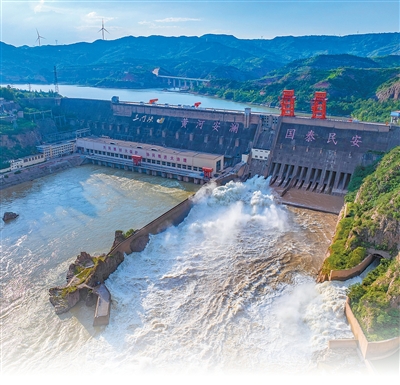
黄河汛期调水调沙结束 累计排沙超780亿千克
Zhong Guo Xin Wen Wang· 2025-09-17 11:40
Core Points - The Yellow River flood season water and sediment regulation has concluded, with a total sediment discharge exceeding 780 billion kilograms [1][2] - The regulation process involved coordinated management of the Xiaolangdi and Sanmenxia reservoirs, initiated on September 8 due to significant rainfall in the middle reaches of the Yellow River [1][2] Group 1: Water and Sediment Regulation - The Yellow River Water Resources Commission announced the end of the flood season water and sediment regulation on September 17, with the Xiaolangdi reservoir discharging at 1500 cubic meters per second [1] - Since 2002, the commission has implemented 31 water and sediment regulation operations, with 15 occurring during flood seasons [1] - The regulation process lasted for 9 days, with the Sanmenxia reservoir discharging a total of 692.1 billion kilograms of sediment and the Xiaolangdi reservoir discharging 88.7 billion kilograms [1][2] Group 2: Reservoir Management - During the regulation, the Sanmenxia reservoir began pre-releasing water at 3000 cubic meters per second from September 7 to facilitate sediment discharge from the Xiaolangdi reservoir [2] - The Xiaolangdi and Xixiaoyuan reservoirs adjusted their discharge flow based on incoming water and sediment discharge to alleviate riverbed sedimentation and ensure downstream flood safety [2] - The discharge flow from the Xiaolangdi reservoir was adjusted multiple times, peaking at 2500 cubic meters per second and later reduced to 2300 cubic meters per second during rainfall events [2]
黄河调水调沙进行时 揭秘“人工洪峰”输沙入海的科学手段
Yang Shi Xin Wen· 2025-07-04 07:06
Core Insights - The Yellow River basin officially entered the flood season on July 1, 2023, with the water and sediment regulation task for 2025 initiated on June 23, lasting 17 days [1] - The Yellow River Delta is a crucial wetland ecosystem in China, recognized as an "international airport for birds," and has received over 900 million cubic meters of ecological water replenishment since 2008 [1] Group 1: Water and Sediment Regulation - Water and sediment regulation is a governance method that involves scientifically managing reservoirs to reduce riverbed siltation and improve river morphology [3] - This process includes controlling the discharge flow from upstream reservoirs to create artificial flood peaks, which transport sediment downstream to the sea, ensuring long-term river stability and ecological health [3] - Since 2002, the national government has implemented water and sediment regulation for the Yellow River based on extensive scientific research, addressing drought resistance and flood preparation [3] Group 2: Ecological Impact - During the water and sediment regulation period, ecological replenishment is initiated, revitalizing the ecological functions of the Yellow River Delta [5] - The wetland area receiving ecological water replenishment has reached 360,000 acres, with bird species increasing from 187 in 1992 to 374 in 2024 [5] - The stable plant community of reeds has developed in the replenished wetlands, leading to increased density and abundance of benthic organisms [5]
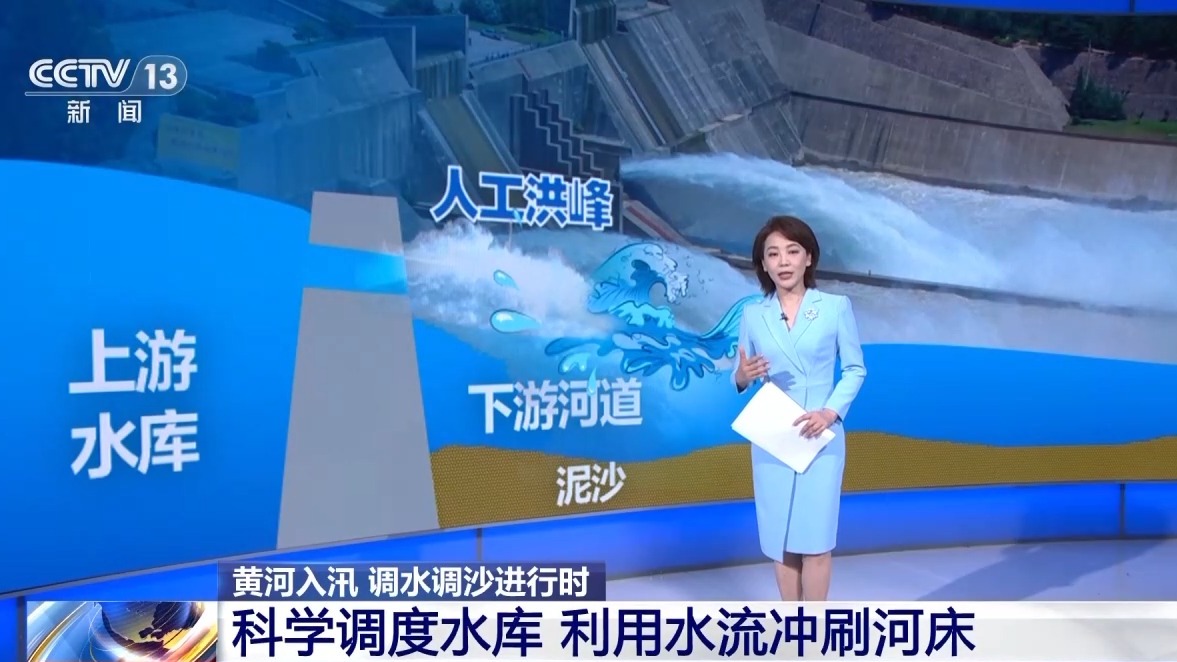
排沙量将超1亿吨 小浪底水库正式进入排沙阶段
news flash· 2025-07-03 14:38
Core Viewpoint - The Xiaolangdi Reservoir has officially entered the sediment discharge phase, with a significant increase in sediment concentration, indicating a crucial step in the Yellow River's water and sediment regulation project scheduled for 2025 [1] Group 1 - The outflow water from the Xiaolangdi Reservoir has changed from clear to turbid, with sediment concentration reaching 39.1 kilograms per cubic meter at the sediment discharge outlet [1] - By 16:00, the sediment concentration at the discharge outlet increased to 101 kilograms per cubic meter, highlighting the effectiveness of the sediment discharge process [1] - The sediment discharge process is expected to last until July 9, with a total discharge volume anticipated to exceed 10 million tons, which will help restore reservoir capacity and enhance flood control capabilities [1]
黄河河南段7座浮桥全部拆解完毕
He Nan Ri Bao· 2025-07-02 23:27
Group 1 - The core viewpoint of the articles emphasizes the completion of the dismantling of seven floating bridges in the Henan section of the Yellow River before the main flood season, ensuring safety during the flood period [1][2] - The floating bridges serve as crucial connections across the Yellow River, and their structure is designed to maintain a flat surface while being supported by steel floating boxes [1] - The management of the floating bridges is critical during the flood season to prevent obstruction of water flow, which could elevate water levels and pose risks to the safety of residents and property on both banks [1] Group 2 - The Henan Yellow River Conservancy Bureau has implemented strict regulations and oversight to ensure the safe dismantling and anchoring of floating bridges, in accordance with the "Flood Management Measures for Floating Bridges in the Middle and Lower Reaches of the Yellow River" [1][2] - A supervisory team has been dispatched to monitor the dismantling process, focusing on the implementation of flood safety measures, maintenance of monitoring facilities, and the establishment of safety warning systems [2] - Floating bridge operators are required to enhance their awareness of flood safety management, maintain a 24-hour duty system, and develop effective emergency measures to prevent accidents such as drifting or losing anchored vessels [2]