
Agentic Payments

Search documents
X @Bitcoin Magazine
Bitcoin Magazine· 2026-03-30 20:57
WATCH: 🇺🇸 Why Agentic Payments are BULLISH for Bitcoin Tax Exemption | Bitcoin Policy Hour Ep 32On the agent-based economy as a key lever for bitcoin de minimis tax-exemption, and inside the Capitol Hill meeting with BPI. Coinbase, River and and Block to advocate for bitcoin as money.Feat. @bitcoinpolicy @zackcohen_ @zackbshapiro @Bayman11771Chapters:0:00 — AI Agents & Agentic Commerce Moving the Needle on Bitcoin Tax00:30 — Ken Egan's Sonnet vs Opus Controversy2:48 — How to Use AI Effectively: Prompts, Ski ...
This Should Be Bullish… Right? What Markets Might Do Next
Bankless· 2026-03-20 10:30
It is the third week of March, David. They actually did it. The SEC and the CFTC just dropped something that is absolutely historic.This is rulemaking coming from them that gives us the thing we've always asked for, which is some clarity. Tell us which assets are securities and which aren't in crypto. And they're actually doing that by name.I think this is uh one of the biggest things I've actually ever seen on the regulatory front happen in crypto. Insanely bullish. We'll talk about this rulemaking today.> ...


X @OKX
OKX· 2026-02-16 07:37
At Consensus, one theme stood out: agentic payments are set to accelerate onchain growth.As our CIO @jasonklau shared, adoption hinges on trust. That’s why we're working with Google and the Ethereum Foundation to build secure infrastructure for agents on X Layer and OKX Wallet. https://t.co/xlSmOtk83O ...
支付行业:智能支付新规落地,路径延续旧轨-Technology - Payments-Agentic Payments New Rules, Same Rails
2026-01-30 03:14
Summary of Agentic Payments Conference Call Industry Overview - **Industry**: Technology - Payments - **Key Concept**: Agentic Commerce, representing a ~$192 billion GMV opportunity by 2030, is set to transform online shopping by enabling agents to execute transactions on behalf of customers, thus reshaping the traditional e-commerce funnel and increasing complexity in payment processes [1][2][10]. Core Insights - **Market Growth**: Agentic commerce is projected to grow from $8 billion in 2026 (~1% of US e-commerce) to $192 billion in 2030 (~10% of US e-commerce), indicating a ~121% CAGR compared to 7.5% for overall e-commerce [3][10]. - **Complexity in Transactions**: The introduction of agents will complicate online transactions, necessitating explicit identity verification, consent, and new fraud detection models tailored for non-human behavior [3][4]. - **Key Beneficiaries**: Companies like Adyen, Mastercard, and Visa are expected to benefit significantly from this shift, as they can provide the necessary infrastructure and services to support agentic commerce [4][5]. Competitive Landscape - **Winners**: Adyen is identified as a top pick due to its single-platform architecture, which positions it well to act as a "universal connector" across agentic protocols [4][57]. - **Challenges for Others**: Companies with fragmented or legacy infrastructures, such as Nexi and PayPal, may face significant challenges as consumer-facing checkouts become less visible in an agent-mediated environment [5][9]. Adoption and Use Cases - **Adoption Rates**: Current adoption of LLM platforms is below 50%, but over 60% of younger individuals report using them recently, indicating a growing trend towards agentic commerce [12][13]. - **Use Cases**: Examples include agents autonomously purchasing items when they become available or securing concert tickets on behalf of users, showcasing the potential for agents to handle complex transactions [11][12]. Payment Processing Dynamics - **Evolution of Payment Relationships**: While the core payment infrastructure remains unchanged, the introduction of agents adds complexity, requiring payment service providers (PSPs) to adapt their fraud detection and authentication processes [16][32]. - **New Protocols**: The development of protocols like the Trusted Agent Protocol (TAP) and Agent Payments Protocol (AP2) aims to address the challenges posed by agentic commerce, focusing on agent legitimacy and delegated payment authority [33][34]. Economic Implications - **Incrementality vs. Substitution**: The impact of agentic commerce on overall industry growth is debated, with expectations that it will primarily drive incremental growth rather than cannibalizing existing volumes [36][37]. - **Take Rates**: The economic model for agentic commerce is still evolving, with potential scenarios suggesting that agentic transactions could either maintain or compress existing take rates for PSPs [43][49]. Strategic Recommendations - **PSP Adaptation**: Winning PSPs will need to evolve from commodity processors to optimization and orchestration engines, focusing on enhancing security, identity verification, and fraud prevention capabilities [54][55]. - **Investment Focus**: Adyen is highlighted as a strong investment opportunity due to its robust infrastructure and growth potential in the agentic commerce space, with expectations of a 21% CAGR in net revenue through 2028 [57]. Conclusion - The agentic commerce landscape is poised for significant transformation, with key players needing to adapt to new complexities and opportunities. The focus on security, identity, and optimization will be crucial for success in this evolving market.

X @Polygon | POL
Polygon· 2026-01-27 19:10
RT Artemis (@artemis)Agentic Payments: @0xPolygon has overtaken Base for eight consecutive days in x402 transactions. https://t.co/Jzft24rFLR ...

PayPal Trades Like a Slow Bank Despite Double-Digit Cash Returns
Investing· 2026-01-01 17:39
Core Viewpoint - PayPal Holdings Inc is currently trading near its 52-week low, reflecting market concerns about its growth potential and competitive pressures, despite showing solid cash flow and earnings growth [1][9][12] Financial Performance - The stock is valued at approximately 54.62 billion Dollars, with a forward Price To Earnings multiple of 10-11 times and a trailing Price To Earnings Ratio of around 11.71 [1] - Recent quarterly revenue was about 8.42 billion Dollars, marking a 7% year-over-year increase, while normalized Earnings Per Share reached approximately 1.34 Dollars, up 12% from the previous year [5] - Total Payment Volume for the quarter was roughly 458 billion Dollars, reflecting an 8% year-over-year increase [5] Strategic Direction - PayPal is transitioning from a single product gateway to a multi-engine platform, focusing on traditional financial behaviors to increase user engagement and revenue per user [3] - The company is integrating with AI agents for transactions and has secured a deal to provide payment infrastructure for over 700 million weekly users of ChatGPT, positioning itself within new commerce flows [4] Cash Flow and Shareholder Returns - PayPal generates adjusted Free Cash Flow of approximately 6-7 billion Dollars annually, representing over 10% of its market value, and has repurchased about 5.7 billion Dollars of stock in the past year [6] - The company plans to deploy around 6 billion Dollars into buybacks for 2025, which corresponds to more than 10% of its current equity value [6][7] Competitive Landscape - The legacy branded checkout franchise is facing challenges, with total payment volume growth slowing to about 5%, indicating a maturing and competitive market [3][8] - New payment systems like Brazil's Pix are creating competitive pressures by offering instant payments at zero cost, which could erode PayPal's market position [8] Market Sentiment - Despite earnings expanding around 15% in 2025 and Free Cash Flow near record highs, market sentiment has turned cautious, with many analysts rating the stock as a hold [9] - The current Price To Earnings multiple is about 55% below the five-year average, indicating a significant valuation dislocation [9][10] Valuation Outlook - Conservative modeling suggests a fair value estimate of around 91.40 Dollars per share, implying a potential appreciation of 50-55% from current levels [10] - If revenue growth continues and margins improve, the stock could see a significant re-rating, with potential price outcomes reaching up to 206 Dollars per share [10]


X @Polygon
Polygon· 2025-11-19 18:06
Everything you need to know about agentic payments on Polygon:https://t.co/V0H8ilF6Oq ...
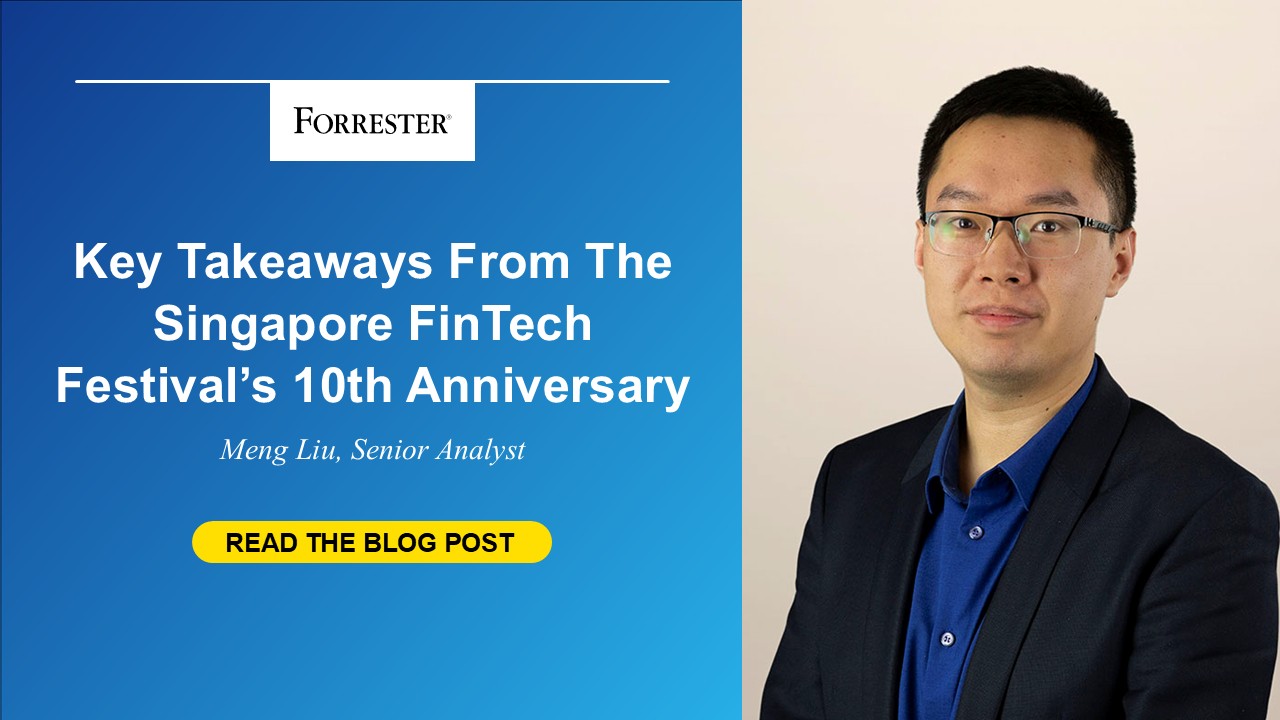
Key Takeaways From The Singapore FinTech Festival’s 10th Anniversary
Forrester· 2025-11-17 03:40
Core Insights - The payments industry is undergoing transformation driven by five key forces: agentic payments becoming competitive tools, emergence of payments-specific foundational models, necessity of robust fraud management, transaction banking leveraging AI, and fragmentation of stablecoins as they scale [1] Group 1: Agentic Payments - Agentic payments are transitioning from experimental phases to becoming essential competitive assets, with a focus on protocol standardization and multi-rail enablement to reduce friction in transactions [2] - Companies must enhance risk models to recognize agents as active participants, incorporating new signals such as agent reputation and intent authorization [2] Group 2: Payments-Specific Models - A shift is anticipated from general-purpose large language models (LLMs) to industry-specific models tailored for payments, prompting firms to decide between building or partnering for access to these specialized models [3] Group 3: Fraud Management - Fraud management has become a baseline requirement for banks and merchants, necessitating a unified risk stack that includes device, identity, transaction, and agentic signals to cover the entire customer journey [4] - Companies are advised to integrate deepfake detection and real-time scoring to combat emerging fraud tactics [4] Group 4: Transaction Banking and AI - Transaction banking is emerging as a key area for AI application, with firms encouraged to develop an AI adoption heatmap to identify and expand use cases [5][8] Group 5: Stablecoins - The stablecoin ecosystem is expanding with various use cases, but it is also becoming increasingly fragmented, necessitating exploration of alternative solutions like tokenized deposits and central bank digital currencies (CBDCs) [8][12] - Multiple regulated stablecoin issuers are competing, with Ripple's RLUSD surpassing $1 billion in circulation and Circle working on reducing fragmentation in USDC [12] Group 6: Alternative Payment Rails - Alternative payment methods are gaining traction alongside traditional card payments, with both infrastructures coexisting and advancing digital payment solutions [9] Group 7: Future of Payments - The future of payments is expected to be characterized by agent-led, model-driven, and multi-rail systems, with standards like ACP and domain-specific foundational models shaping the landscape [10] Group 8: Innovations and Developments - Companies like Ant International and Stripe are launching innovative solutions such as the Agentic Commerce Protocol and AI-driven payment models to enhance transaction efficiency and security [6][13] - Visa is scaling its generative Large Transaction Model, which has significantly improved fraud detection rates [7]

X @s4mmy
s4mmy· 2025-10-27 20:32
People are chasing the next "x402 project" but anyone can plug into itThe focus should be on how agents use this to create an entirely new economyWhere will the money flow in a "Machine-to-Machine" economy, & who will take the biggest slice?Monitor spikes in agentic TVL/AUM:- @almanak leads the group as depositors farm its points program for the upcoming TGE- @gizatechxyz provides juiced rewards for users deploying stables- @sire_agent recently launched its alpha vault which is essentially an agentic bookma ...