CRISPR

Search documents
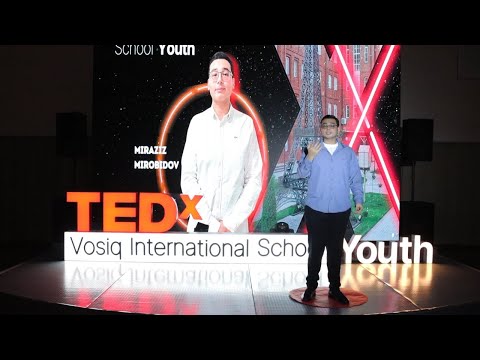
Genetic Engineering Around Us | Miraziz Mirobidov | TEDxVosiq International School Youth
TEDx Talks· 2026-02-17 16:52
If you alive today, you are already a user of genetic engineering. Not in a laboratory, not in a future, but in your everyday life. Most people imagine genetic engineering as touching distance, designers, babies, artificial humans, just a science fiction.But the truth is much wider and much closer. When people hear words genetic engineering, they think of control dangerous experiments. But you know what.They rarely think of survival. The insulin used by millions of people with diabetes is produced attention ...

X @Litecoin
Litecoin· 2026-02-10 19:30
Too late. We out here.All day Astronomy (@forallcurious):🚨: Japan scientists used CRISPR to remove the extra chromosome in Down syndrome https://t.co/FJAHjAbXfK ...
Mama, der Roboter ist da. | Robert Tomoski | TEDxPFH Goettingen
TEDx Talks· 2026-01-28 16:54
Ich bin so dreist und möchte heute zwei ihrer wertvollsten Dinge. Zum einen ihre Zeit, ziemlich exakt 10 Minuten und zum anderen ihre Vorstellungskraft. Stellen Sie sich bitte folgendes Szenario vor. Während Sie in Ihrer Mittagspause noch damit beschäftigt sind, den obligatorischen Ketchupfleck aus ihrem weißen Hemd zu entfernen, blendet sie plötzlich ein greller Lichtstrahl. Instinktiv wissen Sie sofort, es ist soweit, die Zeit ist gekommen, das muss ein Raumschiff sein. Was sonst würden Sie in diesem Mome ...

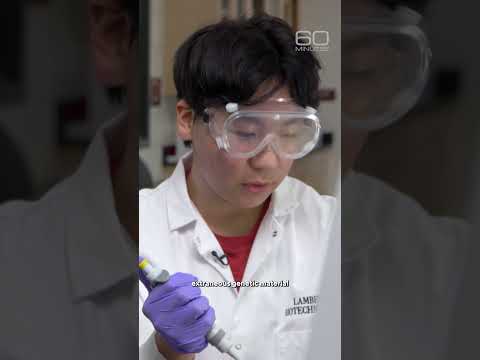
Teens using CRISPR to tackle Lyme disease #shorts
60 Minutes· 2025-12-05 11:30
To compete at IGM, you need to use synthetic biology to solve realworld problems. >> Lyme disease cases have doubled over the last decade. >> These teens set their sights on finding a better way to detect and treat Lyme disease, something that has eluded adult scientists for decades.Transmitted by infected ticks, lime can cause arthritis, nerve damage, and heart problems if left untreated. One of the biggest problems with lime is the lack of like being able to diagnose it. So a lot of people will go years l ...
Intellia Therapeutics, Inc. (NTLA): A Bear Case Theory
Yahoo Finance· 2025-12-04 18:41
Core Thesis - Intellia Therapeutics, Inc. is facing a significant credibility and valuation crisis due to major safety concerns in its lead gene-editing programs for hereditary angioedema (HAE) and transthyretin amyloidosis (ATTR) [2][3] Financial Overview - The company reported over $261 million in operating expenses in the first half of 2025, leading to a current cash balance of approximately $500 million, or $4.66 per share based on 107.3 million shares outstanding [2] - Cash per share is projected to fall into the $3 range by year-end, indicating potential financial instability [4] Pipeline and Regulatory Concerns - Both lead candidates have triggered Grade 4 liver events, with the latest case meeting Hy's law criteria, which raises concerns about potential drug-induced liver failure and invites regulatory scrutiny [2][3] - The presence of multiple safe and effective treatments for HAE and ATTR raises questions about the viability of continuing development for NTLA's programs, potentially leading to severe FDA scrutiny [3] Market Sentiment and Stock Performance - Despite the negative developments, NTLA's stock recently surged to the mid-teens, more than doubling from June levels, likely driven by speculative trading rather than fundamentals [3] - The current market pricing is viewed by bears as a "ridiculous opportunity" before reality resets expectations regarding the company's valuation [4] Hedge Fund Interest - As of the end of the second quarter, 33 hedge fund portfolios held NTLA, an increase from 29 in the previous quarter, indicating some level of interest despite the ongoing issues [6]

A class light-years beyond most biology classes #shorts
60 Minutes· 2025-12-03 23:06
In Lambert High School's lab, Shaun Lee and his classmates are teenage genetic engineers manipulating the building blocks of life. >> And what we're going to do is we're going to move each of these samples into these mixes. And these mixes have everything we need in order to amplify our DNA.>> It's It's currently amplifying. >> Yes. All right.And we'll have to do this three more times for our different samples. So you would kind of swipe across. >> We went to check out the IGM team's project for the big Par ...

CRISPR Kids | Sunday on 60 Minutes
60 Minutes· 2025-11-26 16:36
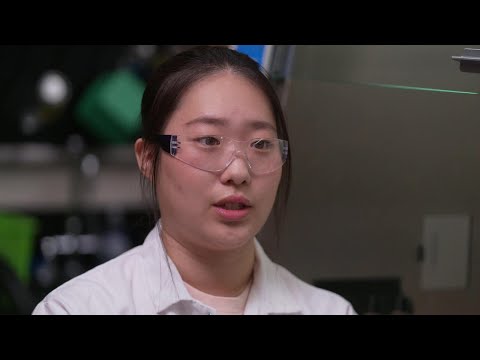
America's future as a science leader may depend on students like the ones you're going to meet. >> We're doing something in our high school lab that could potentially have a huge impact for like millions of people. This thing could help save lives.>> They did it to prove they are the best in the world at this prestigious international science competition. >> I'm hoping we finish top 10, but even that I don't know. We'll see.>> How did the judges see it. So, the winners are >> stay tuned. ...
X @Nick Szabo
Nick Szabo· 2025-11-17 06:29
RT Nicolas Hulscher, MPH (@NicHulscher)OpenAI CEO Sam Altman and His Husband Are Funding the Creation of Genetically Engineered BabiesBy merging AI with CRISPR, they aim to “fix” humans while offshoring early embryo testing to evade oversight.First iterations of GMO children will likely endure immense suffering. ...
The Gene Editing Dilemma: Where Science Meets Society | Chloe Richards | TEDxKings College School
TEDx Talks· 2025-11-07 16:37
Ethical Concerns & Risks - The gene editing experiment by He Jiankui was globally condemned as unsafe, reckless, and ethically indefensible [4] - The experiment lacked sufficient consent, with a 23-page document written in English, a non-native language for many participants, and contained technical terms [5][6] - CCR5 gene, targeted in the experiment, has pleiotropic effects, potentially increasing susceptibility to other viruses like influenza [5] - Gene editing raises concerns about potential use for enhancement, creating a two-tiered society [9] - Eradicating genetically inherited diseases may imply that the lives of those living with these conditions are less valuable [10] Gene Editing Technology & Applications - CRISPR technology involves a guide RNA molecule binding to target DNA, directing the CAS9 enzyme to create a double-stranded break [2] - Cell repair mechanisms can replace or add nucleotides, disabling genes or introducing new DNA sequences [3] - Mitochondrial replacement therapy (MRT) is an ethically acceptable form of gene therapy, preventing mutated mitochondrial DNA from being passed on [8] - Gene editing advancements are being explored for treating Huntington's disease [10] Public Opinion & Future Outlook - A survey indicated that 76% of the British population does not support a complete ban on gene editing technology [7] - Gene editing is an undeniable part of the future, requiring societal discussion and informed opinions [10][12]

Editas Medicine (NasdaqGS:EDIT) FY Conference Transcript
2025-10-21 13:45
Summary of the Genetic Medicines Conference - Editas Medicine Industry Overview - The conference focused on the genome editing industry, highlighting advancements in technologies and programs related to gene editing therapies [1][2] - The discussion included various companies involved in the field, such as Editas Medicine, Arbor Bio, Prime Medicine, Yultec Therapeutics, and GenEdit Bio [2] Key Points and Arguments Company Introductions - **Yultec Therapeutics**: Focuses on in vivo genome editing therapies with five clinical programs, targeting diseases from ultra-rare to chronic cardiovascular conditions [4] - **Editas Medicine**: An in vivo CRISPR gene editing company with a lead program, EDIT401, showing a 90% reduction in LDL cholesterol levels, aiming for clinical trials by the end of 2026 [6] - **GenEdit Bio**: Developing affordable DNA surgeries for genetic diseases, with a focus on eye diseases and CAR T cell therapies [8][10] - **Prime Medicine**: Specializes in prime editing technology, targeting liver diseases and working on various genetic disorders [11][12] - **Arbor Bio**: Focuses on in vivo genome editing with a broad platform of editing approaches, including programs targeting the CNS [13][14] Technological Advancements - The genome editing field has expanded to include various technologies such as nuclease editing, base editing, and prime editing, with discussions on how these technologies will coexist and evolve [15][16] - The importance of product differentiation and the need for effective delivery systems were emphasized, with a consensus that delivery is as critical as the editing technology itself [28][29] Lessons Learned from Initial Therapies - The technical success rates from preclinical to clinical stages have been unprecedented, highlighting the rapid advancement of gene editing technologies [25][26] - The need for companies to focus on differentiation and the commercial viability of one-time therapies was discussed, with an emphasis on the economic arguments for such treatments [27][46] Commercial Viability and Market Considerations - The commercial case for one-time gene editing therapies was debated, with examples of partnerships and the importance of understanding the rare disease market [50][51] - The potential for gene editing therapies to transform patient care was highlighted, with a focus on the need for effective pricing strategies and understanding the current standard of care [55][61] - The discussion included the importance of low-cost delivery systems to enhance commercial viability and patient access to therapies [59][61] Future Outlook - The panelists expressed optimism about the future of gene editing, predicting multiple approvals and launches in the coming years, alongside an evolving payer landscape that may better accommodate these therapies [68] Additional Important Insights - The variability of clinical responses in edited patients is narrower compared to other therapeutic modalities, which may lead to higher responder rates and lower treatment costs [53][54] - The need for companies to adapt their business models and focus on specific commercial opportunities was emphasized, indicating a more disciplined approach in the industry [65][66] This summary encapsulates the key discussions and insights from the conference, providing a comprehensive overview of the current state and future potential of the genome editing industry.