Carbon Sequestration

Search documents
Canada Nickel Announces Significant Awaruite at Midlothian Property
Prnewswire· 2026-02-26 11:45
MagneticNiGradeDTRMagneticFeGradeCOMP-C0.15 %2.6 %48 %62 %4.4 %3.30 %58.4 %COMP-B0.14 %3.2 %46 %66 %4.9 %2.76 %64.2 %COMP-A0.12 %2.7 %40 %61 %4.2 %2.96 %63.5 %COMP-D0.07 %3.6 %25 %71 %6.7 %1.03 %54.5 %Table 3 summarizes the results of microprobe investigations for each of the four samples that were subjected to Davis Tube testing. The results demonstrate the high nickel tenor of heazlewoodite and awaruite minerals and the low nickel grade of serpentine. These results coupled with the Davis Tube nickel resul ...
Canada Nickel and the University of Texas Successfully Complete Carbon Sequestration Pilot at the Crawford Nickel Project
Prnewswire· 2026-02-19 11:45
Core Insights - Canada Nickel Company has successfully completed an in-situ carbon sequestration pilot study at its Crawford Nickel Project, demonstrating a new pathway for permanent CO2 storage [1] - The pilot project sequestered approximately 12 tonnes of CO2, indicating the potential for large-scale decarbonization in mining operations [1] Group 1: Project Details - The carbon sequestration pilot was conducted in collaboration with the U.S. Department of Energy's Advanced Research Projects Agency – Energy, led by the University of Texas at Austin [1] - The pilot involved short-duration injection trials and continuous CO2-saturated water injection into a well drilled to a depth of 396 meters, confirming that the injected CO2 remained dissolved without surface leakage [1] - Monitoring of seismicity and water chemistry will continue in the coming months to ensure the effectiveness of the carbon sequestration process [1] Group 2: Economic and Environmental Impact - The direct injection approach has the potential to lower future mining costs by pre-conditioning and fracturing the rock mass, making it less energy-intensive for subsequent mining processes [1] - The initiative is part of Canada Nickel's vision for a Zero-Carbon Industrial Cluster in the Timmins region, expanding the company's carbon capture and storage capabilities [1] - The results from this study will inform future post-mining carbon sequestration strategies, enhancing the environmental and economic value of mining operations [1]



Open-Ocean Seaweed Farming for Climate Mitigation | Mar Fernández Méndez | TEDxHochschuleBremerhaven
TEDx Talks· 2026-02-03 16:23
Did you know that the Arctic Ocean didn't always look like this. During my PhD and my early posttock, I went every year to the Arctic Ocean to study how the tiny algae growing in the sea ice and in the water below it were changing due to climate change. And I was thinking that maybe when the ice was going to melt, the entire Arctic will turn green because this algae would flourish.Turns out the Arctic had already done that 49 million years ago when the dinosaurs were extinct. Our planet looked very differen ...

释放中国农作物秸秆的价值
落基山研究所· 2026-01-29 00:25
Investment Rating - The report does not explicitly provide an investment rating for the industry. Core Insights - The report emphasizes the significant potential of crop straw as a biomass resource for energy transition and carbon sequestration, highlighting its role in achieving climate goals and supporting rural renewable energy industries [14][17]. Summary by Sections Introduction - Crop straw is identified as a crucial biomass resource for energy transition and achieving climate goals, with global biomass energy demand projected to exceed 100 exajoules (EJ) by 2050 [14][15]. Crop Straw Can Support the Development of the Biofuel and Carbon Removal Industries - China generates approximately 860 million tons of crop straw annually, representing a major biomass resource with an energy potential of up to 9.5 EJ [15][28]. - Crop straw can be converted into high-value energy products such as sustainable aviation fuel (SAF), biomethanol, and biomethane, aiding decarbonization in hard-to-abate sectors [15][31]. Current Status and Challenges of Crop Straw Resource Utilization - China's crop straw resources are abundant, with an actual collectible amount of about 770 million tons, providing a solid foundation for biomass industry development [50][49]. - The comprehensive utilization rate of crop straw has increased from 70.6% in 2010 to 88.5% in 2024, but the fuel-based utilization remains low [77][88]. Market Outlook and Opportunities - The industrialization of crop straw-based biofuels faces cost challenges, with production costs for SAF estimated at RMB 13,000–15,000 per ton and biomethane at RMB 3.6–5.9 per cubic meter [87][88]. - Opportunities exist to improve the crop straw collection, storage, and transportation systems, and to build integrated production models combining green hydrogen and crop straw [26][87]. Development Model and Action Considerations - The report suggests building the crop straw-based biofuel industry in line with local resources and emphasizes the need for coordination across the crop straw value chain [36][41].
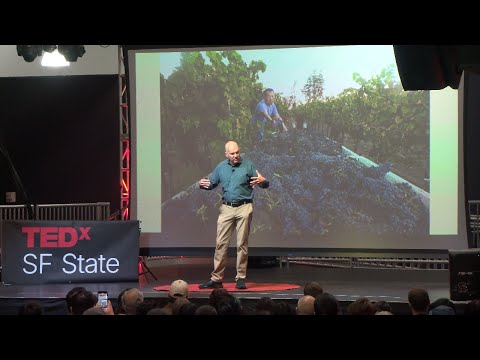
The biggest opportunity in waste | Robert Reed | TEDxSF State
TEDx Talks· 2025-12-15 17:57
Good afternoon. I have a real fire in my belly and and I I want to really accomplish something significant environmentally and and in the next 10 minutes I hope to share that passion with all of you and and to stoke this fire I need a lot of fuel. Okay. I go down to the farmers market every Saturday morning and I buy Beautiful produce, fruits and vegetables. One of the ones I bought this morning is this lovely pmen. It's pimmen season. Yeah. Hooray. It's also uh apple season as we all know, right? They're c ...
India’s Land Restoration Opportunity | Madhav Pai | TEDxIITDelhi
TEDx Talks· 2025-12-12 17:58
Land Degradation & Restoration Opportunity - 50% of the land in Badwani district is unproductive due to water erosion, reflecting a widespread issue across India [1] - India has 100 million hectares (247 million acres) of land suitable for restoration through forest protection and landscape restoration [3] - Restoration has the potential to improve incomes for 700 million people in India who depend on the land [3][17] - Restoration could sequester 3 to 42 billion tons of above-ground carbon by 2040, aiding India in meeting its NDC commitments [3][17] Restoration Approach & Implementation - Restoration involves landscape principles, topography, and geology, considering both development and conservation [4] - Interventions should be community-driven and locally led, adapting to each village's unique challenges and ecology [6][5] - An integrated approach to restoration includes soil moisture conservation, water holding structures, tree-based interventions, and sustainable agriculture [7] - The "right place, right use, right species" mantra guides the selection of forestry plantations (slopes > 25%), horticulture (slopes 10-15%), riparian restoration, open grasslands, and agroforestry [8] - Local wisdom, knowledge, leaders, self-help groups, and farmer producer organizations are crucial for driving implementation [9] Scaling Restoration Efforts - Simplifying landscape restoration plans, codifying them, and making them accessible to local institutions is necessary [13] - Leveraging technology, including geospatial technologies and citizen science tools, is essential for measuring improvements in biodiversity, soil health, and carbon capture [14] - Unlocking working capital and low-interest debt for small enterprises can spur local economies [15]

First Atlantic Nickel Acquires Ophiolite-X Project Targeting White and Orange Geologic Hydrogen, Carbon Capture, and Critical Minerals in Western Newfoundland
Globenewswire· 2025-12-11 11:00
Core Insights - First Atlantic Nickel Corp. has entered into agreements to acquire a 100% interest in 18 mineral licenses covering 500 mineral claims (12,500 hectares) in the Bay of Islands Ophiolite Complex, branding it as the "Ophiolite-X" project, which has multi-commodity potential including hydrogen, carbon capture, and various metals [1][8][42] - The Bay of Islands Ophiolite Complex (BOIC) is recognized for its geological significance, with studies indicating its potential for natural hydrogen generation and carbon dioxide storage, making it a strategic area for exploration [2][3][5] Geological and Mineral Potential - The BOIC consists of four major ophiolite massifs, with the Blow Me Down Mountain and Lewis Hills being significant for their mineralization potential, including nickel, chromium, and platinum group elements [2][28] - Research indicates that the BOIC has a theoretical CO₂ storage capacity of 5.1 × 10^11 tonnes, equivalent to over 13 years of global CO₂ emissions based on 2022 data [5][23] - The presence of brucite, formed during serpentinization, is highlighted as the most efficient mineral for CO₂ capture, requiring only ~2.5 tonnes of mineral to sequester 1 tonne of CO₂ [5][9][18] Hydrogen Generation and Carbon Capture - Active serpentinization within the BOIC generates dissolved hydrogen in ultrabasic springs, with pH values up to 12.3, indicating ongoing natural hydrogen production [3][12][13] - The BOIC is identified as an optimal geological setting for both natural and stimulated geological hydrogen production, with studies suggesting that ultramafic rocks can produce 2-4 kg of hydrogen per cubic meter [17][26] - Historical chromite occurrences in the BOIC are associated with significant hydrogen discoveries, suggesting a correlation between chromite mineralization and hydrogen generation potential [35][36] Strategic Agreements and Future Plans - The company has entered into three agreements to acquire additional mineral licenses, with consideration involving the issuance of common shares and subject to net smelter returns royalties [37][38] - The exploration programs will include systematic sampling to evaluate the occurrence of awaruite, a nickel-iron alloy, which serves as both a potential resource and an indicator of hydrogen generation potential [27][42] - The strategic location of the Pipestone XL Nickel Alloy Project near existing infrastructure enhances the company's position in the North American nickel market, particularly in light of the U.S. critical minerals list [42][44]


India’s land restoration opportunity | Madhav Pai | TEDxIITDelhi
TEDx Talks· 2025-12-04 17:57
[music] [music] [applause] Good afternoon everyone. Uh so I'm going to start by taking you to party block of Bwani district of Madhya Pradesh. What you see here is a story of heartbreaking loss.The soil is parched. The top soil is gone. Land is parched.The rainwater that falls rushes away. This land is no longer productive. 50% of the land in Badwani district is no longer productive primarily due to water erosion. And Badwani is not the only district in India where this is happening.Millions of hectares of ...

Canada Nickel and the University of Texas at Austin Launch Carbon Sequestration Pilot at Crawford Nickel Project
Prnewswire· 2025-11-03 11:45
Core Insights - Canada Nickel Company Inc. has initiated an in-situ carbon sequestration pilot study at its Crawford Nickel Project in collaboration with the U.S. DOE ARPA-E team, led by the University of Texas at Austin [1][7] - The pilot aims to evaluate large-scale carbon capture by injecting carbon-enriched water into a 400-meter-deep well within the ultramafic body, building on previous bench-scale studies [2][4] Company Initiatives - The pilot program follows successful bench-scale studies that demonstrated the ability of magnesium-rich mineral brucite to capture CO2 by transforming into secondary minerals [2][3] - The pilot is designed to monitor the CO2-to-rock mineralizing process, which is expected to begin within hours of injection, with most CO2 turning into solid rock within six months [3][4] - This initiative is independent of Canada Nickel's existing In-Process Tailings (IPT) Carbonation Program and is a significant step in enhancing the company's carbon capture and storage capabilities [4][7] Strategic Goals - The results from this pilot study will inform future post-mining carbon sequestration strategies, aligning with Canada Nickel's vision for a Zero-Carbon Industrial Cluster in Timmins [4][6] - Canada Nickel is focused on advancing nickel-sulphide projects to meet the growing demand in electric vehicle and stainless-steel markets, while also pursuing processes for net zero carbon production of nickel, cobalt, and iron products [6][8]

Some Star Energy Stocks Are Found in This ETF
Etftrends· 2025-10-28 14:52
Core Insights - The energy sector is currently overshadowed by higher growth sectors and commodities, with limited attention beyond oil market fluctuations [1] - Energy stocks, while not performing poorly, are lagging behind the broader market as indicated by the S&P Energy Select Sector Index, but there is potential for a rebound by the end of the year [2] - The ALPS CoreCommodity Natural Resources ETF (CCNR) is highlighted as a potential investment opportunity for those looking to capitalize on a future energy sector recovery [2][3] Company Insights - CCNR has a significant exposure to the energy sector, accounting for 34.49% of its holdings, making it a diversified option for investors interested in commodities-linked equities [3] - Devon Energy is noted for its strong presence in key US shale basins with low breakeven costs, which positions it well for modest production growth and operational improvements [5] - Occidental Petroleum, another component of CCNR, is expected to improve its financial standing despite past criticisms, with a focus on carbon sequestration that differentiates it from peers [6][7]